

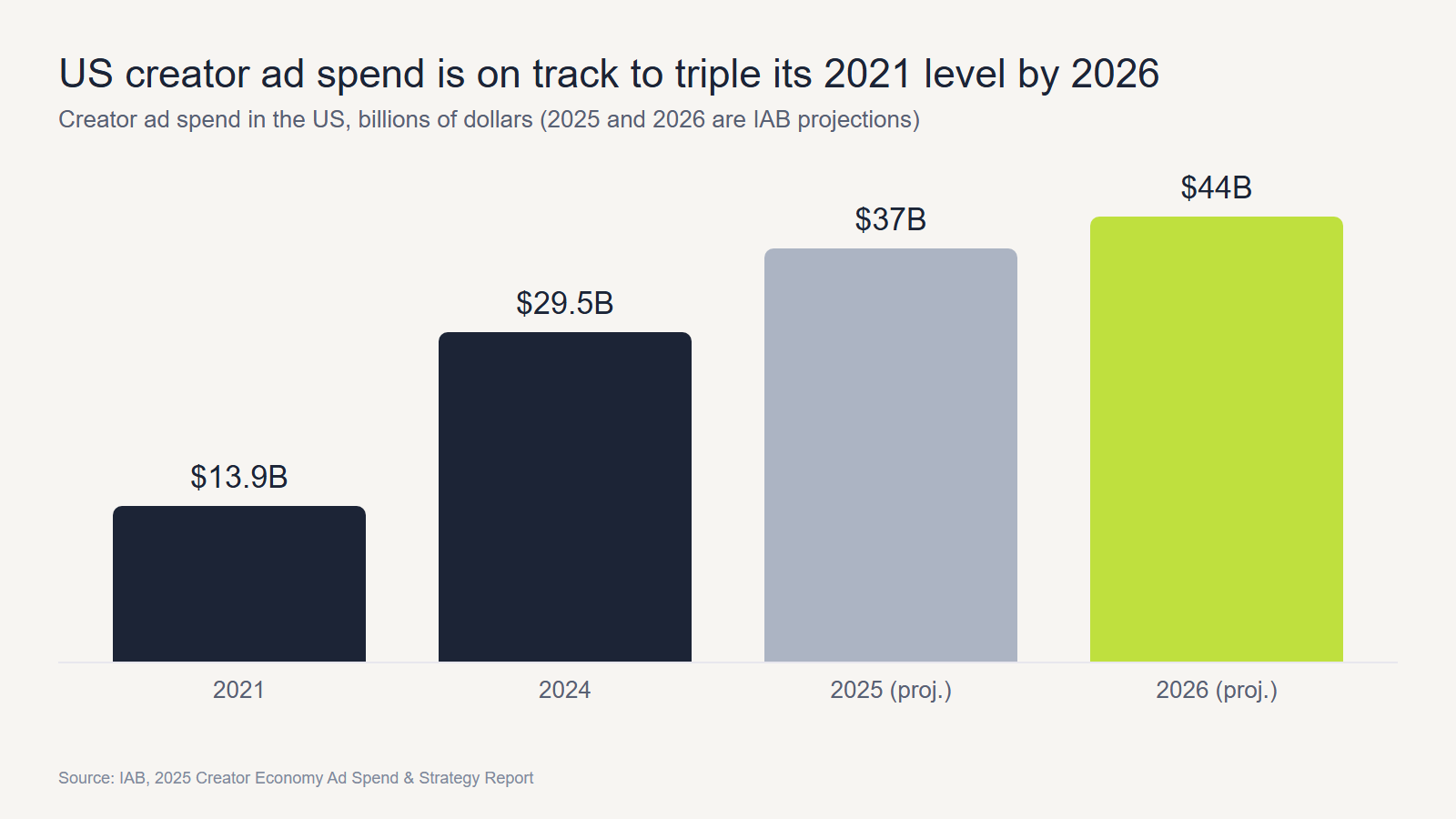
Creator budgets keep climbing while trust in brand-made ads keeps thinning. The IAB projects US creator ad spend will reach $37 billion in 2025 and $44 billion in 2026, growing nearly four times faster than media overall. Yet brands still pour much of that money into one-off posts, then start the search for creators all over again.
A brand ambassador program turns those temporary partnerships into something more durable. It gives proven creators a reason to stay, creates clear tiers for compensation and access, and shows you who deserves a bigger share of the budget over time.
This guide breaks down how to build that system from the ground up, from program structure and terms to recruiting, compensation, compliance, and measurement.
Let’s begin.
TL;DR: How to Create a Brand Ambassador Program in Six Steps
- Pick one model. Customer advocates drive referrals and feedback, creator ambassadors supply content, and a hybrid combines the two once you have a ladder.
- Build three tiers. Entry, proven and top, each with its own reward and a clear rule for moving up.
- Write a one-page terms document before recruiting. It covers deliverables, pay, usage rights, disclosure and exit.
- Recruit from buyers first, creators second. Recruit from buyers, then creators (or both at once for a creator-model program).
- Match pay to the entry path. Product or store credit can work for customer advocates, while creators with required deliverables should get a fee plus performance upside.
- Judge the program on new customers and reusable ads. Reach and likes come last.
Our view: an ambassador program belongs inside a single creative system. Creators supply a steady stream of native content with trust built in, paid media is where that content proves itself, and measurement decides who earns the next dollar. That changes how you design everything below:
- Tiers become a budget allocation rule.
- The terms document becomes a content supply contract.
- The best ambassador post of the month becomes a candidate for your next ad.
What Is a Brand Ambassador Program (and Who Is It For)?
A brand ambassador program is a structured, ongoing relationship in which people who already like a brand create content or refer buyers in exchange for defined rewards. The word "ongoing" separates it from a campaign, and the word "defined" separates it from hoping fans post.
This guide covers programs run by brands for customers and creators. Employee advocacy programs work differently (different incentives, different compliance) and are left out on purpose.
Before you build anything, check four things:
- You have people to recruit. That means repeat buyers, reviewers, or customers who already tag you. The size of your social following matters less than this.
- You can ship product reliably. Ambassadors need reliable access to whatever they are expected to promote. For physical brands, that usually means a dependable sampling and shipping process.
- Someone owns it every week. Programs without a weekly owner tend to go quiet fast.
- Tracking exists before launch. Codes, links and a post-purchase question need to be live on day one, because you can't attribute the first month later.
Competitors disagree here. Club recommends building a community of 10,000 to 15,000 members before recruiting. We'd put the bar lower: you need recruits, and a brand with a few hundred genuinely loyal buyers can start with them.
Brand Ambassador Program vs Affiliate, Influencer and Seeding Programs
Choose an ambassador program when you want repeat content and referrals from the same people over months. Choose the others when the goal is narrower.
The lines blur in practice. Many ambassador programs start as seeding. Many also run commission through the same tools affiliates use. The practical difference is the relationship: an affiliate is paid per sale, while an ambassador is paid to keep showing up.
How to Set Up a Brand Ambassador Program: Model, Goals, Tiers, Owner and Terms
Build it in five decisions, in this order: the model, one goal per tier, a three-tier ladder, an owner, and a one-page terms document. Every later choice (who to recruit, how to pay, what to measure) follows from these.
Choose the Model: Customer Advocates, Creator Ambassadors or a Hybrid
Pick the model that matches what you need most, content or referrals.
For most consumer brands with a paid social budget, creator ambassadors pay back fastest because their content can be tested as ads within weeks. Customer advocates are the better start for high-trust, high-consideration products where a buyer's own story carries more weight than production quality.
Set One Goal and One Scoreboard Metric per Tier
Give each tier a single job and one metric that shows whether it's doing that job.
- An entry tier exists to test fit, so track activation: did an advocate choose to post or refer, or did a creator complete the first paid assignment?
- A proven tier exists to produce content, so track usable assets per month.
- A top tier exists to drive revenue, so track new customers, whether they arrive through the ambassador's code and link or through ads built on their content.
The full metric list is in the measurement section below.
Design a Three-Tier Ladder
Use three tiers with visible promotion rules, so ambassadors know exactly what earns a step up.
Customer advocates climb the same ladder on status and referral rewards, not fees. Paid work starts only when an advocate takes on required deliverables, and at that point they move onto the creator path (the FAQ below covers how to make that move).
Real programs use the same logic. Pink Lily, a women's fashion retailer, pays ambassadors 10% commission "with opportunities to level up and earn more," and in an interview with impact.com the brand described Insider, VIP and Loyalist tiers, with product gifting at the entry level and higher commission at the top.
The same impact.com piece reports UPLIFT Desk testing a sliding commission of 3% to 7% per transaction, with bonuses at set milestones, for a high-price product with a long research cycle.
Decide Who Owns It
Name one owner, and seat them next to the people who make and buy your ads. Club's guide puts a community manager at the center, which is the baseline. We'd add two roles around that person: a creative strategist who reads the content and picks what's worth testing, and a media buyer who puts the winners into paid.
When the three work side by side, ambassador content reaches your ad account in days, and the best posts get tested while they're still fresh.
Brand Ambassador Program Outline and Template: The One-Page Terms Document
Write a one-page terms document with ten fields before you recruit anyone. It's the outline of the whole program, and it prevents most disputes before they start.
The example wording is a starting template. Have counsel review the final version, especially the rights and exit clauses, which the legal section below explains.
How to Start a Brand Ambassador Program: A 90-Day Launch Plan
A brand ambassador program takes about 90 days to launch: two weeks of setup, two weeks of recruiting, a month of shipping and collecting content, and a month of review. Start with a small cohort and open recruiting wider only after that first review. A 90-day plan keeps the first version small enough to fix.
- Days 1 to 14: set up the foundation. Finalize the terms document, create unique codes and tracked links, add a "How did you hear about us?" question to checkout, and set up the product shipping flow.
- Days 15 to 30: recruit the first cohort. Invite from your buyer list first, then add creators who fit your customer profile. Keep the group small enough that one person can brief everyone personally.
- Days 31 to 60: ship, brief and collect. Send product to advocates without a guaranteed posting requirement. For creator recruits, confirm the paid test deliverable, brief and posting window before shipping.
- Days 61 to 90: review and act. Compare each ambassador against their tier's metric, promote the first tier-ups, flag the ones who haven't activated yet and end them if they miss the next cycle too, and run the best content as paid tests.
At day 90 you have what a plan on paper can't give you: real activation rates, real content, and an early read on which ambassadors drive sales. Scale the cohort after that review, using what it showed.
How to Recruit Brand Ambassadors
Recruit in two passes: customers who already buy from you, then creators who look like your buyers. The first pass gives you credibility, and the second gives you content volume. If you chose the creator model, run both passes at once rather than in sequence: buyers give you early advocates and reviews, while creator recruiting starts on day one. A buyer who already makes good content can move onto the creator path.
Start With Customers Who Buy Repeatedly
Your best recruits are already in your data. Look for:
- Customers with two or more orders
- Reviewers who wrote more than a star rating
- People who tag the brand without being asked
- Email subscribers who reply to newsletters
- Members of your community, Discord or loyalty program
The customers they bring in tend to be worth more, which is what makes their referrals worth rewarding. A study of a German bank's referral program in the Journal of Marketing found referred customers were worth at least 16% more than similar customers acquired other ways, with higher retention. A later Journal of Marketing Research paper found referred customers go on to make 31% to 57% more referrals than non-referred customers with similar purchase activity. Each good advocate tends to bring in people who refer too.
Source Nano and Micro Creators at Volume
Add creators whose audience matches your buyer, and judge them on fit and content quality before follower count. Smaller accounts often hold attention better: Influencer Marketing Hub data, reported by eMarketer, put nano-creator engagement on TikTok at 10.3% in 2024, against 8.7% for micro and 7.5% for mid-tier creators. Engagement varies a lot by platform, so benchmark each one separately.
Brands are moving this way too, with 51.43% of respondents to Influencer Marketing Hub's 2026 benchmark survey planning to increase or start work with nano creators.
For sourcing methods, see our guide on how to find micro-influencers.
Build the Application
A short application filters out poor fits before anyone costs you product. Ask for:
- Name, handles and main platform
- Audience location and the main topics they post about
- Two or three links to recent content they're proud of
- Whether they've bought the product, and what they think of it
- Current brand partnerships in your category
- Shipping address and agreement to the disclosure rules
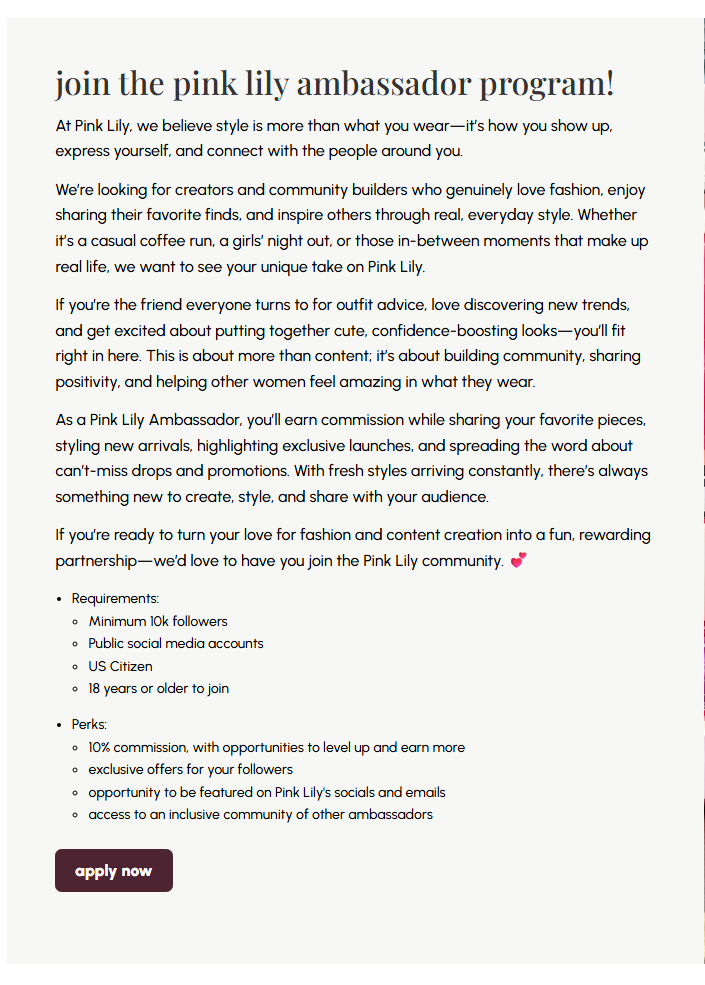
Gymshark shows the other route: its athlete program has no application at all, and the partnerships team scouts people directly. Scouting suits brands with a team to do it; for volume, keep an application.
Vet Before You Ship Product
Check four things before anyone gets a package:
- Audience match: does the comment section look like your customers?
- Content quality: would you run their best post as an ad?
- Engagement signals: sudden follower spikes, generic comments and low view counts against high follower counts are red flags.
- Conflicts: current deals with direct competitors, or past content that clashes with your brand.
Make the Ask
Frame the invitation as an offer of standing. Ambassadors get early access, a direct line to your team, visibility on your channels, and a title they can use. Name the specific post or review that made you reach out, state the first tier's reward in the first message, and link the terms page. Our influencer outreach email templates include ambassador invitations you can adapt.
How Much Should You Pay Brand Ambassadors?
Most brand ambassador programs that scale pay a flat fee per deliverable plus commission on sales. On Instagram, that fee typically runs $40 to $150 per post for nano creators and $80 to $350 for micro creators, according to our guide on how much content creators cost. Free product alone can work for customer advocates at the entry tier. On its own, it rarely keeps a working creator active past the first post.
Performance pay is now the most common method: 49.6% of brands pay influencers a percentage of sales, according to Influencer Marketing Hub. At the same time, an impact.com customer success manager quoted in the impact.com guide cited above says flat fees are now "fully the expectation" for creators. The hybrid model reconciles the two.
When Product-Only Works, and When It Gets You Ghosted
Product-only works when the recipient already loves the brand and there's no expectation of a specific deliverable. It fails when the brand implies an obligation it isn't paying for. We cover that failure pattern in detail in the influencer gifting loop. Treat gifting as the customer-advocate side of your entry tier and as a recruiting filter: the people who post or refer without being asked are the strongest candidates to promote.
Flat Fees per Deliverable
Pay a flat fee when you need a specific amount of content on a schedule. Price per deliverable (one video, one story set) and bundle monthly packages for proven tiers, which usually gets you a better rate for a longer commitment. Rates for other platforms and creator sizes are in the same guide.
Commission and Codes
Pay commission on tracked sales and set the rate by margin and price point. High-price, long-cycle products need a different structure from impulse buys, which is why UPLIFT Desk tests a sliding scale with milestone bonuses. Notion's affiliate program, closed to new affiliates since September 2026, shows the details worth copying: up to $50 per activated signup plus 20% of year-one revenue, a 180-day conversion window, and a clawback if the customer refunds or downgrades in the first two months.
Pro tip: give every ambassador both a code and a link. Codes travel into podcasts, stories and word of mouth where links don't, and links catch the buyers who never type a code.
Status Rewards vs Cash: Which to Use When
Use status for customer advocates and cash for creators. Early access, a direct line to the product team, features on your channels and invitations to events mean a lot to a loyal customer and cost you little. A creator treats content as work, so status alone reads as asking for free labor. Sephora Squad mixes both: it is a yearlong, paid partnership that adds gratis products, events and master classes on top of pay.
Budget Your Program
Budget from six line items, and set each one per tier.
The last line is the one brands forget. The program's real cost includes the hours that turn posts into ads, and those hours are also where most of the return comes from.
If you'd rather have that content produced and tested for you, our UGC agency runs the same creator-to-ad process as a service.
What Legal Rules Apply to Brand Ambassador Programs?
Any free product, discount, fee or perk creates a "material connection" that ambassadors must disclose, and the brand shares responsibility for making sure they do. Put the rules in the terms document and check posts against them.
FTC Disclosure Rules for Ambassadors
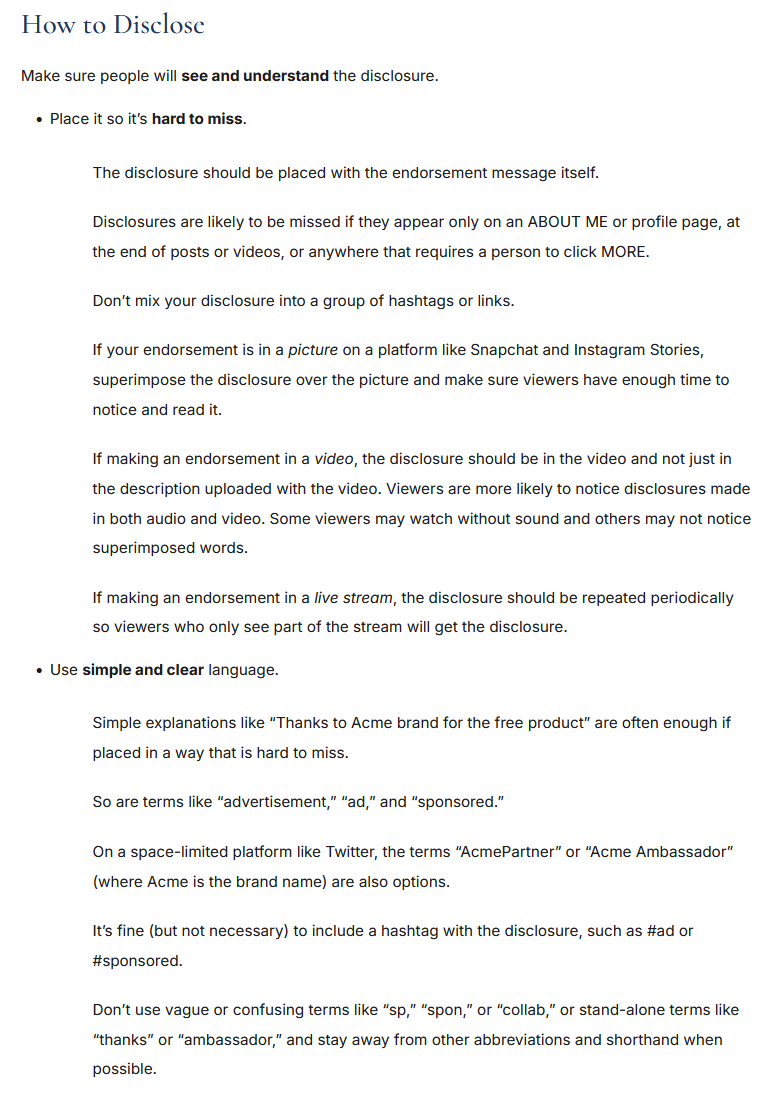
The FTC's Disclosures 101 for Social Media Influencers sets out the rules that matter most for a program:
- Free or discounted products count as a material connection, even without payment.
- Stand-alone terms like "ambassador," "thanks," "sp," "spon" or "collab" are too vague. "Acme Ambassador," with your brand name, is acceptable.
- The disclosure belongs in the post itself. A bio or disclosure buried at the end of a caption or in a hashtag cluster can be easy to miss, so place it with the endorsement itself.
- In video, the disclosure goes in the video, ideally both spoken and on screen.
The brand side is spelled out in the FTC's Endorsement Guides FAQ: "Advertisers need to have reasonable programs in place to train and monitor members of their network." The FTC revised those guides in June 2023. In practice, that means a short disclosure section in onboarding, a spot-check of posts each month, and a written warning process for anyone who skips it.
A second rule applies to reviews. The FTC's Consumer Reviews and Testimonials rule, in force since October 2024, bans rewards conditioned on a particular sentiment, positive or negative, and the purchase of fake followers or views. You can still ask ambassadors for reviews, as long as the reward doesn't depend on the rating. Our FTC guidelines for influencers cover the wider rules.
Usage Rights and Whitelisting
State in writing where you can run ambassador content, for how long, and whether you can run ads from the ambassador's own handle. Organic posting rights don't automatically include paid usage, and a missing clause is a common reason good content sits unused. Set a default term (for example, 90 days of paid usage) and pay more for longer or exclusive use.
Exclusivity and Exit
Keep exclusivity narrow and paid for. Limit it to direct competitors during the term; a broad category ban is too much to ask of a product-only ambassador. Exit terms should state:
- The notice period
- When the code closes
- Whether you can keep running ads you already licensed
- What happens to unpaid commission
How to Onboard Brand Ambassadors and Turn Their Content Into Ads
Onboard with a kit and a short brief, keep ambassadors supplied with reasons to post, and move their best content into paid tests every month. The last step is where most of the value sits and where competitors' guides stop.
Send a Kit and a Short Brief
Give ambassadors enough to be accurate and leave the delivery to them. A starter kit includes:
- The product, packed the way you'd want it filmed
- A one-page brief: what the product does, who it's for, two or three claims they can make, and claims they can't
- The disclosure rules and an example
- Their code, link and posting window
- Two or three examples of past posts that worked
Scripted lines sound like ads, and viewers scroll past them. Brief the message and let the creator choose the words.
Keep Them Supplied
An ambassador with nothing to do goes quiet. Send a monthly prompt (a new product, a seasonal angle, a question to answer on camera), preview launches before the public sees them, and run a private channel where ambassadors talk to your team and each other. That channel also becomes one of your fastest product feedback loops, because ambassadors tell you what their audience asks.
Test Ambassador Content as Paid Media
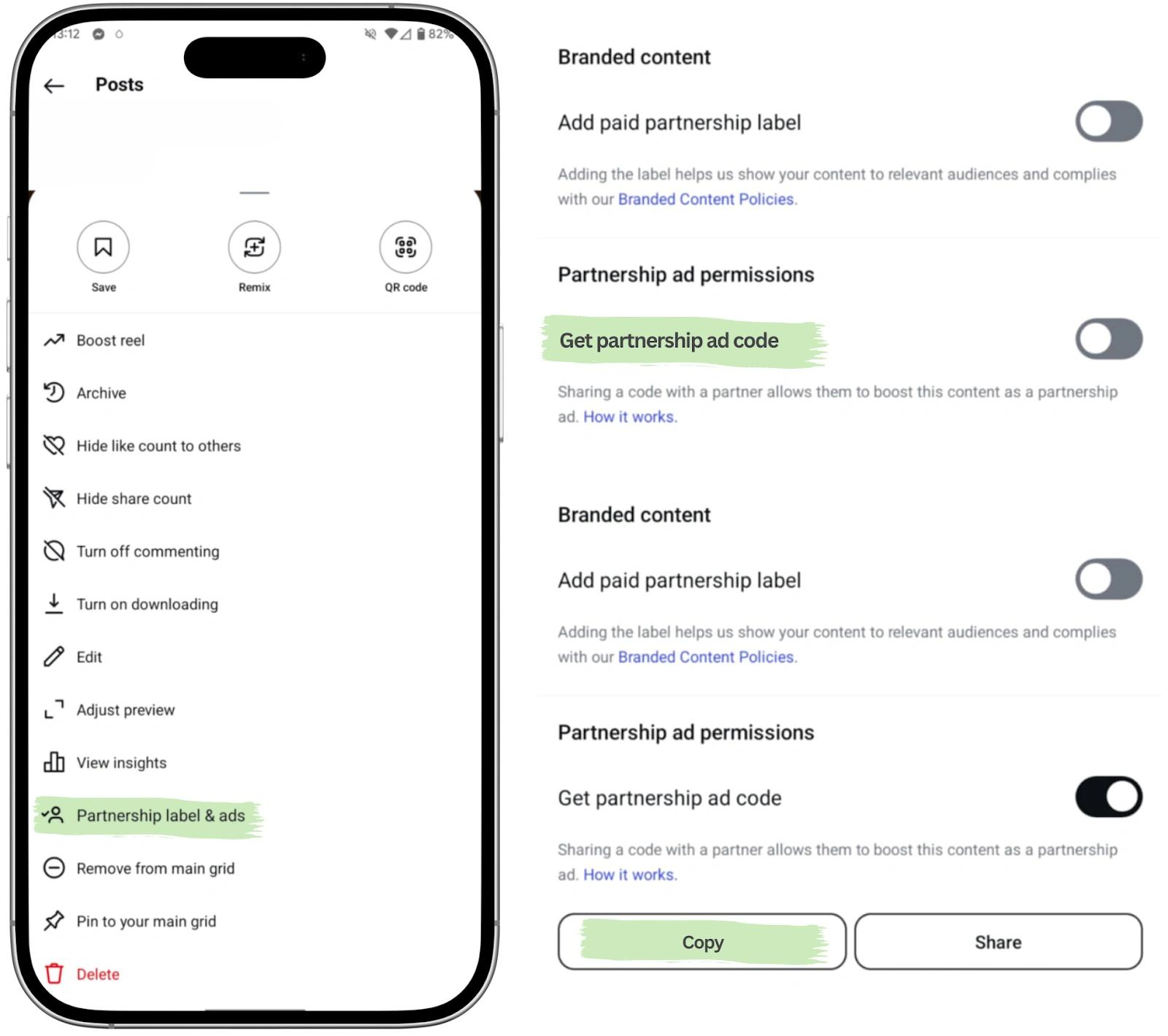
Treat every ambassador post as a candidate ad. Collect the content, dark post the strongest concepts to test them without cluttering the brand feed, and scale the winners from the ambassador's own handle. On Meta that's a partnership ad, and creators can share an ad code to grant permission.
Meta reports that adding partnership ads to business-as-usual campaigns delivered 19% lower cost per acquisition and 13% higher click-through rates on average, based on its internal data. On TikTok the equivalent is Spark Ads, which boost the creator's organic post with their authorization.
How to Measure Brand Ambassador Program Success
Measure a brand ambassador program on three things: new customers it brings, what those customers cost compared with paid channels, and how much of its content becomes ads. Reach and likes are supporting signals only.
Pick Metrics by Tier
Attribution: Codes, Links and Post-Purchase Surveys
Use three sources together, because each one misses different buyers. Codes are the most common tracking method, used by 45.9% of respondents in the same Influencer Marketing Hub 2026 survey, ahead of affiliate links at 26.0%.
- Codes miss buyers who forget them and leak to coupon sites.
- Links miss people who search for you later.
- A post-purchase "How did you hear about us?" question catches both groups, and survey vendor Fairing notes that codes and landing pages alone tend to under-report creator-driven sales.
Pro tip: name the ambassador in every ad built from their content. When the ad account's naming convention carries the handle, content reuse rate and paid performance per ambassador come out of a single export.
How to Calculate Brand Ambassador Program ROI
Calculate ROI as (attributed gross profit - program cost) ÷ program cost, using the six budget lines above as program cost. Attributed gross profit covers sales from codes, links and ads built on ambassador content, which is why the media spend behind those ads belongs in the cost. Two corrections keep the number honest:
- Count incremental gross profit where you can measure it. When incrementality data is unavailable, use new-customer gross profit as a narrower proxy and report repeat-customer revenue separately. It still counts some buyers who would have come anyway, so it can run higher than the true incremental figure.
- Report the ad value of reused content at what the same assets would have cost to produce, and keep it as a separate line so it doesn't inflate the sales ROI.
Leave earned media value out of the ROI figure. It estimates what reach would have cost as ads, which makes it a reach estimate with no sales behind it (more on earned media value). If you want to know how much of the program's revenue is truly incremental, a holdout test by region or audience is the cleanest method; our guide to incrementality testing walks through the setup.
Prune on a Fixed Cadence
Review every ambassador each quarter against their tier's metric. Promote the top performers, move the steady ones along, and end the relationships that haven't activated in two cycles. A smaller, active roster produces more than a large, quiet one, and the review is what keeps the tiers meaningful.
Which Brand Ambassador Program Software Do You Need?
Match the tool to the program's size.
5 Brand Ambassador Program Examples Worth Copying
These five brand ambassador program examples cover the main models: campus reps, a paid creator cohort, a B2B community program, tiered ecommerce commission and scouted athletes. Copy the mechanism that fits your model.
What Mistakes Kill a Brand Ambassador Program?
Eight mistakes stall most ambassador programs, and five of them are setup steps someone skipped.
- No weekly owner. Briefs go out late and posts dry up.
- Recruiting by follower count. Large, poorly matched audiences post content that doesn't convert.
- Gifting-only at scale. Working creators treat unpaid asks as low priority.
- Launching before tracking is live. The first month can't be attributed after the fact.
- Scripting every line. Content starts to look like ads and loses the trust that made it worth running.
- Skipping disclosure checks. The FTC expects brands to train and monitor ambassadors.
- Missing paid-usage rights. The best posts can't run as ads without them.
- Growing the roster before the first review. Problems multiply with every new cohort.
Build a Brand Ambassador Program With inBeat
An ambassador program works when recruiting, content and paid media run as one loop. inBeat recruits nano and micro creators who match your buyers, briefs them, collects the content, and tests it as ads, so tiers and budgets follow what the numbers show. We run it for brands that need a steady supply of creator content month after month.
If you're planning a program, book a strategy call.
We'll go through your model, tier structure and first-cohort budget, and show you where ambassador content could plug into your current paid social.
FAQs
How do you move a top customer advocate onto a paid contract without spoiling the relationship?
Offer paid work as a promotion, with a specific scope, and keep the status perks they already have. Tell them which of their posts or referrals earned it and what the new tier expects. Keep the tone of the relationship the same; only the terms change.
How should commission work when aov is high and the buying cycle runs for months?
Use a longer attribution window, a sliding commission that rises with volume, and milestone bonuses so ambassadors stay motivated between sales. Pair it with a flat fee for content, since a long cycle means fewer commission payments.
How do you stop ambassador codes from leaking to coupon sites?
Use unique, named codes per ambassador, cap discount value, and set codes to expire or rotate each quarter. Monitor coupon sites for your brand name, and deactivate any code that appears there. Links and post-purchase surveys cover the sales you lose by tightening codes.
How do you measure the program when buyers convert later through branded search?
Add a post-purchase survey question and read it alongside code and link data. Track branded search volume in the regions or weeks where ambassador activity is highest. For a firm answer, run a holdout test that pauses the program in one region and compares results.
What changes for a b2b or high-aov brand?
Status rewards and access matter more, and volume matters less. B2B programs often run on community recognition, speaking slots and early product access, as Notion's ambassador program shows, with affiliate-style revenue share alongside it. Keep the cohort small, pay on qualified activation (a paid plan, a booked demo), and give ambassadors material they can use in longer sales conversations.