
Brands need more creator content than ever, but the tricky part is knowing which creator, hook, format, or message deserves real budget.
This pressure is growing fast because IAB says creator advertising spend reached $37B in 2025 and is projected to reach $44B in 2026, which is about an 18.9% YoY increase.
So, you need a smarter way to test before they scale. Dark posting gives you that cleaner testing space. It lets you run creator content through paid ads without crowding the public feed or committing budget too early.
In this article, you’ll see how dark posting works and why it is useful for testing creator content. You’ll also learn what to test, how to build a simple workflow, and when to use it.
So, let’s get started!
What Is Dark Posting?
Dark posting is the practice of running paid social ads that do not appear on the brand’s public profile.
A dark post is shown only to the audience selected inside the ad platform. It can run on Instagram, Facebook, TikTok, LinkedIn, X, or other platforms, depending on the setup and permissions available. Some marketers also call them unpublished posts because the ad exists inside the paid platform without showing up as a regular public update.
The content itself can come from almost anywhere. A brand can use polished brand creative, creator videos, UGC, influencer clips, product demos, testimonials, or paid creator content.
This flexibility is what makes dark posting useful for testing. You can compare different versions of creator content without turning your public feed into a wall of promotional posts.
For example, say a skincare brand has five creator videos for one serum. Instead of posting all five to its Instagram grid, it runs each one as a dark post. Then the team compares CTR, CPA, ROAS, watch time, and conversion rate to see which creator video actually makes people act.
Here's the whole thing explained in 30 seconds:
Why Creator Content Needs a Better Testing System
Creator content can look natural, credible, and on-brand, but that does not always mean it will drive clicks, sign-ups, sales, or product recall.
Testing helps you separate content that feels good from content that actually performs. Creator-led videos typically feel more real than brand-made ads, which is why teams use them to build trust. Nosto/Stackla found that 79% of consumers say UGC highly impacts purchase decisions, while only 12% say the same about branded content.
Still, authenticity alone is not enough. A video can feel real and still fail once it reaches a paid audience. Organic engagement can help you spot early interest, but likes and comments rarely show the full performance picture.
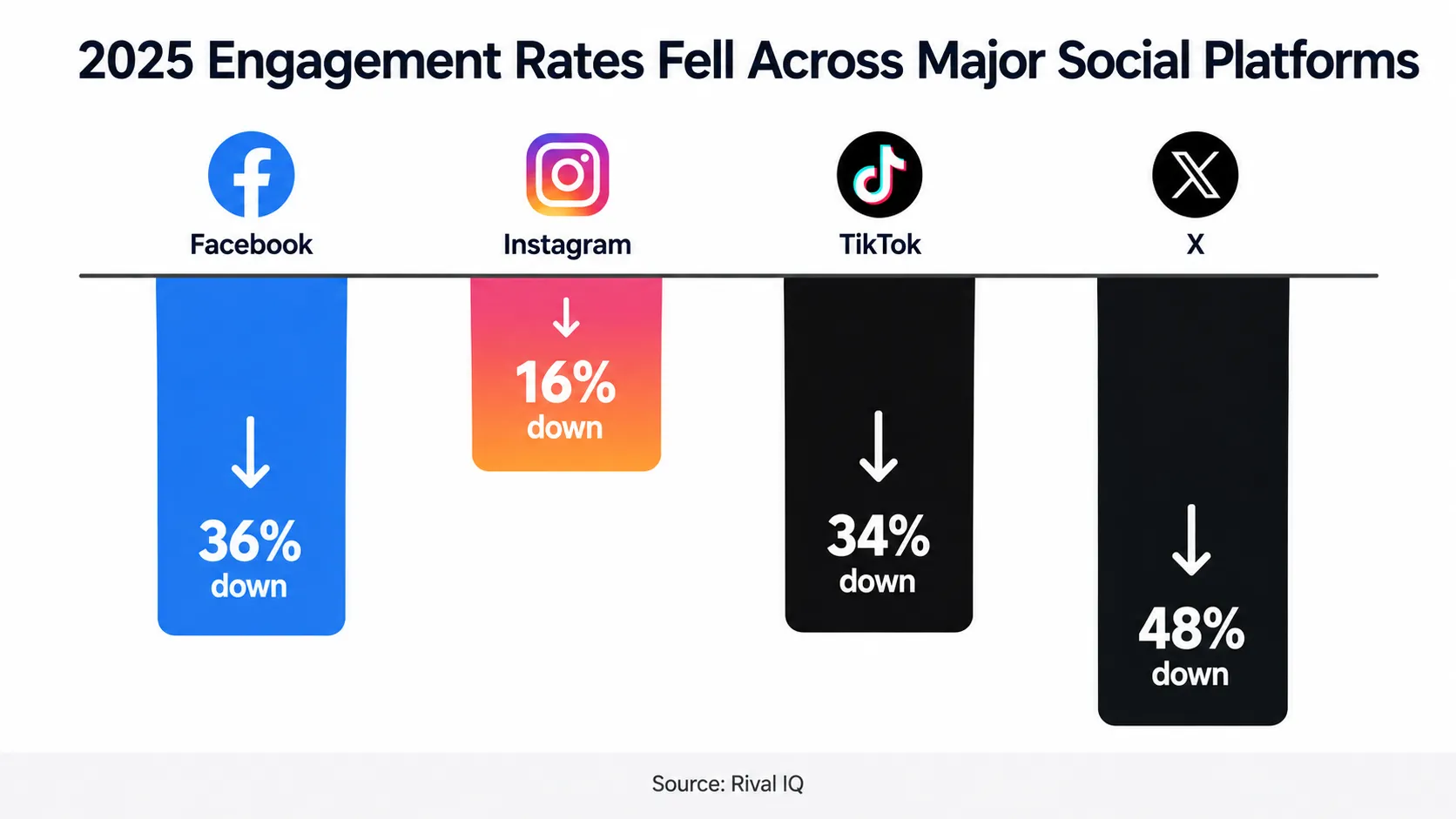
This gap is becoming harder to ignore. Rival IQ found engagement rates fell across every major platform in its 2025 benchmark.
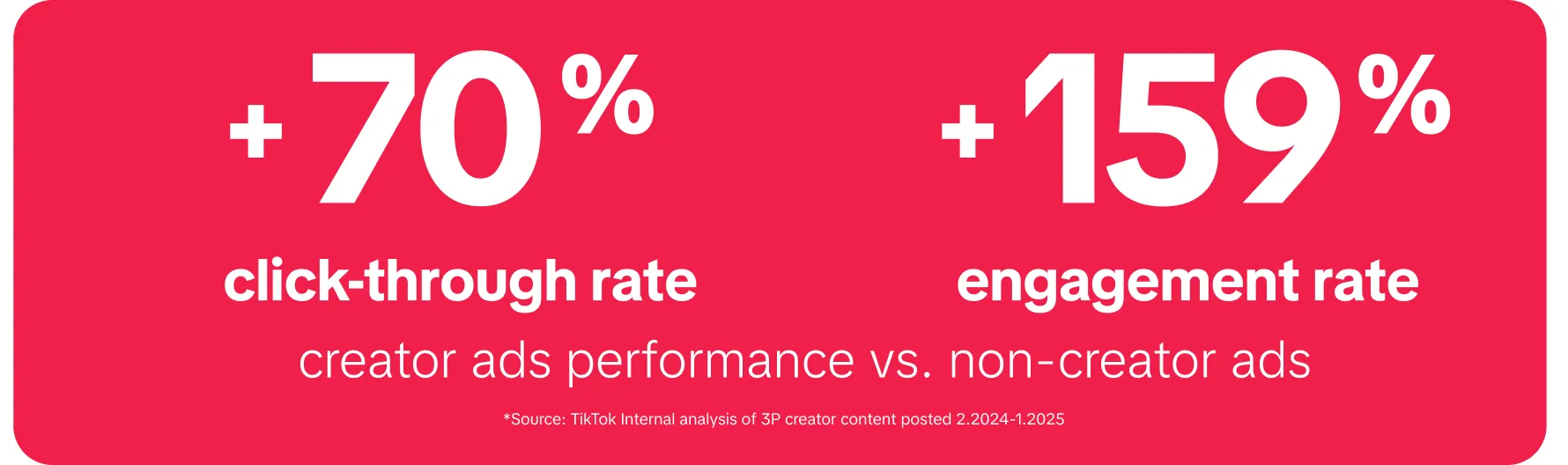
Paid testing gives you more control over audience, budget, placement, CTA, and tracking. It shows which creator assets can drive measurable outcomes instead of relying only on surface-level engagement. This matters because TikTok found creator ads drive a 70% higher CTR and 159% higher engagement rate than non-creator ads at the same CPM.
This is where a creator-led growth model becomes useful. Through our influencer marketing services, we connect creator production with paid media and performance data, so you can test each asset inside a larger growth system before putting more budget behind it.
How Dark Posting Helps Brands Test Creator Content Faster
Dark posting gives paid teams a calmer way to learn. The feed stays clean, while the testing gets busy behind the scenes. It also helps teams move faster because they can test before a full campaign becomes expensive.
These are the main testing benefits:
- Compare many creator videos without filling the brand feed.
- Try different hooks from the same creator.
- Run several creators against the same offer.
- Show one asset to different audience segments.
- Compare creator handle performance against brand handle performance.
- Experiment with different CTAs.
- Adapt the same concept into Reels, Stories, carousels, and Spark Ads.
- Check paid performance before using the content in bigger campaigns.
This matters because creative fatigue can creep in fast when the same asset runs too long. Meta Analytics reported that guidance to reduce creative fatigue improved conversion rate by an average of 8% in high-fatigue cases. So, the faster you learn what needs refreshing, the easier it becomes to protect performance.
Dark posting also brings discipline to the process. Research on A/B testing adoption found that firms using A/B testing improved performance by 30% to 100% after a year of use. This kind of lift usually comes from building a repeatable learning system.
Dark posting turns creator content into that feedback loop. So, you can spot early winners, move spend to stronger ads, and brief creators better next time.
What You Can Test With Dark Posts
The strength of dark posting is that it breaks creator content into testable pieces. One video is rarely just one video. It is a hook, a face, a voice, a CTA, an offer, a proof point, and a placement all working together.
Here are the creator-content elements worth testing.
1. Hooks
The first few seconds decide whether people keep watching. TikTok says 90% of ad recall impact is captured within the first 6 seconds. This makes the opening line feel less like decoration and more like the front door to the whole ad.
A dark post lets you test several hooks without asking the creator to produce five totally different videos. The same raw clip can open with a problem hook, a result hook, a story hook, a question hook, an “I tried this” hook, or a “Here’s what changed” hook.
From there, you can compare which opening gets the strongest thumb-stop rate and which one leads to better downstream action.
This distinction matters. As per our experience, a dramatic hook may earn attention, but a clearer hook may earn the click.
2. Creator Types
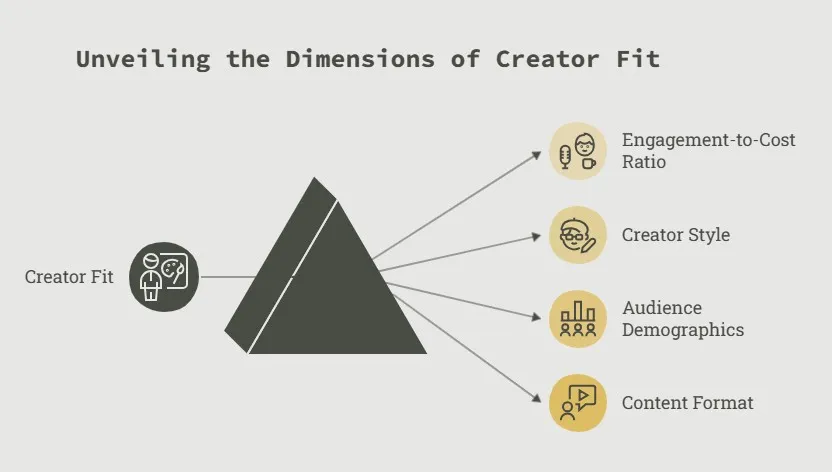
Creator fit can change everything. Data show that 73% of brands prefer micro and mid-tier creators for their engagement-to-cost ratio. This explains why many teams now test creator style before committing to a bigger rollout.
Dark posting helps you compare creator types by:
- Niche
- Style
- Age group
- Location
- Voice
- Content format
- Audience demographics
For example, a micro creator may beat a mid-tier creator because the delivery feels more specific. An expert-style creator may beat a lifestyle creator because the product needs trust. Or a funny creator may beat an educational creator because the offer needs to feel lighter.
The goal is to learn who best conveys the message to the target demographic. Sometimes the winner is the creator with the most polish. Other times, it is the creator who feels like the buyer’s best friend with a ring light and an oddly convincing product demo.
3. Message Angles
One product can be sold through many angles. The challenge is knowing which angle makes the offer feel most relevant to the buyer.
TikTok says 45% of social and video platform users feel brand relevance comes from feeling understood. This makes brand messaging a testing variable, because the right angle can make the same product feel more personal.
Here's an example: A productivity app could lead with saving time, reducing busywork, improving routines, or helping teams get better results. It could also focus on one very specific use case, such as managing daily tasks, organizing client work, or keeping projects on schedule.
A dark post lets you test these angles side by side.
Remember: the winning message is the one that makes the buyer feel seen enough to take the next step.
4. CTAs
A strong creator video can still fall flat if the next step feels weak. That is why CTAs deserve their own test instead of being treated like a line slapped onto the end of the edit.
A brand can compare “Shop now,” “Learn more,” “Try it today,” “Book a demo,” “Get started,” and “See how it works.” Each one changes the level of commitment. Some work better for low-friction offers. Others work better when the buyer needs more context.
Dark posting makes that clear because the same video can run with different CTA endings. If one version earns more clicks and another earns better conversions, the team learns how much intent each CTA actually creates.
5. Audiences
In our work with creator campaigns, we have seen the same creator asset can perform very differently across audience groups. A testimonial may work beautifully for retargeting and flop in prospecting. A founder-style demo may work for warm visitors and feel too detailed for cold traffic.
Dark posting lets you test one asset across:
- Lookalike groups
- Past site visitors
- Email list audiences
- Interest-based groups
- Region-based segments
- Custom audiences
- Product-category audiences
This is where audience matching becomes useful because the creative and the buyer context need to work together.
You may find that one creator is perfect for loyal customers, while another is better for people seeing the product for the first time. This insight can shape future casting, media spend, and creator briefing.
6. Formats and Placements
The same creator asset can perform differently across placements. A tight vertical demo may perform well in Instagram Reels. But a more direct testimonial may work better in Instagram Stories.
A business-focused creator clip may fit LinkedIn Sponsored Content. On the other hand, a fast product reveal may work better as a TikTok Spark Ad or YouTube Shorts placement.
Ad formats can change the result. The concept may be strong, but the edit still has to fit the environment.
HubSpot says short-form video was used by 60% of marketers in 2025, ahead of blog posts and long-form video. This popularity makes format testing even more important because every feed is crowded with short videos fighting for the same few seconds of attention.
inBeat Agency’s UGC and performance creative approach fits this type of testing because we treat creator assets as modular pieces. You can test hooks, formats, and angles without starting a new full production cycle every time. This makes dark posting easier to repeat, so each test can feed the next round of creative instead of becoming a one-time experiment.
Dark Posting vs. Whitelisting vs. Boosting: What’s the Difference?
These terms get mixed up because they all involve paid creator content. Still, they solve different problems. Once you understand the difference, it becomes easier to pick the right setup for the test.
Here are the core distinctions:
| Tactic | What it means | Best use |
|---|---|---|
| Dark Posting | A paid ad that does not appear on the public feed. | Testing, targeting, and paid reach. |
| Whitelisting | A creator gives a brand permission to run ads through the creator’s handle or promote creator content. | Adding creator trust to a paid setup. |
| Boosting | A brand adds paid spend to an existing public post. | Giving more reach to content that already exists. |
Boosting works when you want to extend the life of a public social post. Dark posting works better when you need a cleaner testing and more control.
And influencer whitelisting adds another layer because the ad can appear through the creator’s handle, which can make it feel more trusted than a brand-only ad. This trust can be useful when the goal is performance. For example:
- Meta partnership ads reportedly deliver 19% lower CPA and 13% higher CTR than standard ads.
- TikTok also says Spark Ads have a 134% higher completion rate and 157% higher 6-second view-through rate than standard In-Feed Ads.
So, creator identity can change how people experience the paid message.
A Practical Dark Posting Workflow for Creator Content
A strong dark posting workflow starts before the media buy. The best tests come from clear planning, organized creative, and reliable tracking. When these pieces are ready, dark posts become a real learning system.
Below we have shared the steps you should follow.
Step 1: Start With a Clear Testing Goal
Every test needs one primary decision. The team may want to lower CPA, improve CTR, raise ROAS, test a new product angle, find the best creator style, or learn which target audience responds best.
We believe that goal shapes the entire setup. If the goal is lower CPA, the landing page and offer matter as much as the video. Google says 53% of mobile visits are likely to be abandoned if pages take longer than 3 seconds to load. So, even a great creator ad can lose if the post-click experience drags.
We recommend choosing the KPI before the creative goes live. Then the team can judge the test based on the outcome that matters.
Step 2: Build the Creator Brief Around Variations
The creator brief should ask for pieces that can be tested. Instead of requesting one polished final video, ask for:
- 3 hooks
- 2 CTA endings
- Several short raw clips
- Product demo shots
- Lifestyle shots
- Voiceover options
- One strong testimonial clip
This gives the editing team more room to build variants. It also keeps the creator’s voice intact because the raw material still comes from the person who understands their audience.
For creator-led ad campaigns, the brief should feel like a performance map. It tells the creator what to cover, and then it gives the paid team enough material to learn.
Step 3: Secure Usage Rights and Ad Permissions
Before anything goes live, you need the right to use the creator’s content in paid media. If the ad runs through the creator’s handle, you also need correct platform permissions.
This protects both sides and keeps the test moving once a winning asset appears. There is nothing more annoying than finding a winner and then realizing the usage window, handle permission, or paid partnership setup was never handled.
The strongest programs define usage rights, duration, platform access, editing rights, and approval steps before production starts.
Step 4: Build Dark Post Variants
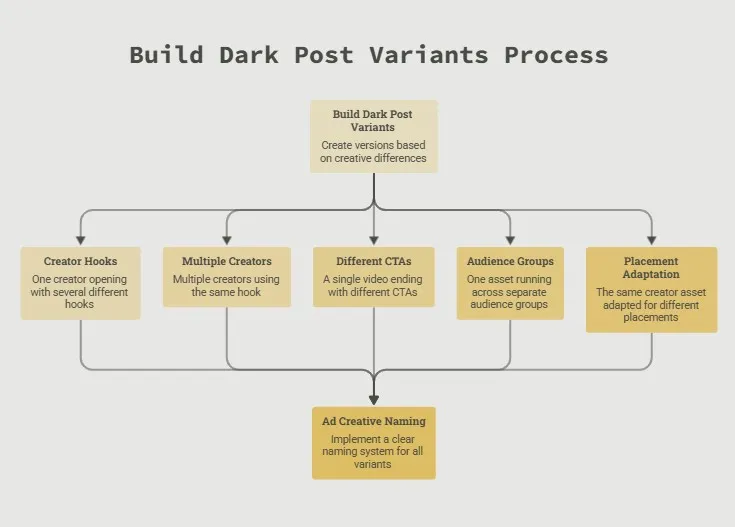
Once the assets are ready, the team can build dark post versions around clear creative differences. These could include:
- One creator opening with several different hooks.
- Multiple creators using the same hook.
- A single video ending with different CTAs.
- One asset running across separate audience groups.
- The same creator asset adapted for different placements.
This is also where ad creatives should be named properly. A clear naming system help you understand what each version is testing without digging through messy dashboards.
Consider this stage like a lab. The more organized the labels are, the less chaotic the results feel.
Step 5: Run a Clean Test
Each test should have a clear variable. If you change the creator, hook, CTA, offer, audience, and landing page all at once, the results become muddy.
By that, we don't mean that the broader creative testing is useless. Sometimes a team needs to test complete concepts against each other. But when the goal is learning, split testing works best when the variable is obvious.
The setup should also connect back to campaign objectives. A brand awareness test should not be judged only by CPA, and a conversion test should not be judged only by views.
Step 6: Read the Data
Dark posting gives you more useful signals than surface engagement alone. You should track thumb-stop rate, CTR, CPC, CPA, CAC, ROAS, watch time, conversion rate, comments, and objections.
Also, the comments can be sneaky valuable. If people keep asking the same question, the next video may need to answer that objection earlier. And if people praise one benefit repeatedly, that benefit may deserve a bigger role in the next round.
Apart from that, you should be careful with early winners. At Google and Bing, only about 10% to 20% of experiments generate positive results. And at Microsoft, about one-third are effective, one-third neutral, and one-third negative.
This means the learning matters even when the first test does not produce a magical winner.
Step 7: Scale Winners and Feed Learnings Back Into New Briefs
The best dark posting programs keep moving. They scale what works, pause what wastes spend, and turn the learning into the next creator brief.
For example, if a problem hook beats a lifestyle hook, the next brief should ask more creators to open with the problem. If a demo format beats a testimonial, the next round should include more demo moments. And if one audience responds better to proof than humor, the next message should lean into proof for that group.
This is where inBeat’s full creator-to-paid-media workflow becomes useful. It can help you source creators, produce assets, set up paid testing, read the results, and use those findings to improve the next round.
Real-Life Dark Posting Examples That Show Why Testing Matters
Dark posting gets easier to understand when you see where it shows up in real campaigns. The best examples connect creator content to measurable action. They also show that testing is useful across awareness, acquisition, and sales.
Here are a few examples.
Mindbloom: Dark Posting and Whitelisting at Scale
At inBeat, we supported a Mindbloom campaign that used whitelisting and dark posting to run authentic creator testimonials through paid media.
The campaign included:
- A $1M+ whitelisting and dark posting media push
- 15+ creators who went through the treatment
- A 25% CAC reduction
- A 40% increase in referral sign-ups
This shows how creator content can do more than create awareness. With the right permissions, testing setup, and paid structure, creator testimonials can help lower CAC, improve acquisition, and turn creator content into a repeatable performance channel.
Schwarzkopf: Testing Creative Across Multiple Sub-Brands
A Schwarzkopf campaign used ads and dark postings across five sub-brands. Each brand had room to test its own creative without cluttering organic feeds or weakening brand consistency.
The case study listed 500K+ likes, 10+ social assets, and 100K+ views per video. This kind of setup is useful for larger brand portfolios because each sub-brand can test its own angle while the main feed stays controlled.
Hopper: Fighting Creative Fatigue With More Creator Assets
Our team at inBeat helped Hopper create more performance based creative for paid media growth and engagement.
The campaign supported:
- A $2M+ monthly paid media budget
- 3 acquisition platforms
- 300+ monthly creative assets
- A 20% reduction in overall user acquisition cost within 3 months
This shows the quiet power of dark posting. It works best when the brand has a steady flow of creator content to test, compare, and rotate before performance starts to drop.
Universal Works: Promoting Brand Collaborations With Dedicated Dark Posts
nativve used dedicated dark posts with brand creative to promote Universal Works collaborations, including Taion and Paraboot creative. Lead gen ads helped reduce CPA by 81.6%.
Across three collaborations, marketing efforts contributed to 466.5% more impressions, 150.5% more clicks, 106.3% more sales, and 16.1% higher ROAS. This shows how dark posting can support collaboration launches because each partnership can get its own paid test without overloading the brand's timeline.
Common Mistakes Brands Make with Dark Posting
Dark posting is powerful, but it can get messy fast. A quiet ad setup still needs a loud amount of discipline behind it. But the biggest mistakes usually happen before the ad even goes live.
Some of the common mistakes are:
- Testing too many variables at once.
- Using creator content that looks too scripted.
- Choosing creators only because they have a large audience.
- Running dark posts without clear usage rights.
- Judging ads only by likes or comments.
- Letting winning ads run too long without a refresh.
- Sending traffic to a weak landing page.
- Using the same creator angle for every audience.
- Forgetting to track UTMs and campaign naming.
We believe the best setup starts before launch. The creator brief, content rights, naming system, landing page, KPI plan, and ad accounts all need to be ready first.
And because testing can fool even smart teams, the readout needs patience. Research by Ron Kohavi reports that false positive risk can reach 26.4%, even in mature testing programs. So, a single spike should spark curiosity before it sparks a budget party.
When Should You Use Dark Posting?
You should use dark posting when you need to test creator content through paid media without publishing every version publicly. It works well when the you need faster learning before bigger spend. Also, it helps you protect brand image while testing messages behind the scenes.
These are the best use cases:
- Launching a new product.
- Testing creator content before a bigger campaign.
- Comparing UGC against brand-made creative.
- Testing new audience segments.
- Testing several creators for one offer.
- Running localized campaigns.
- Refreshing paid social ads before fatigue hits.
- Learning which hooks and CTAs work best.
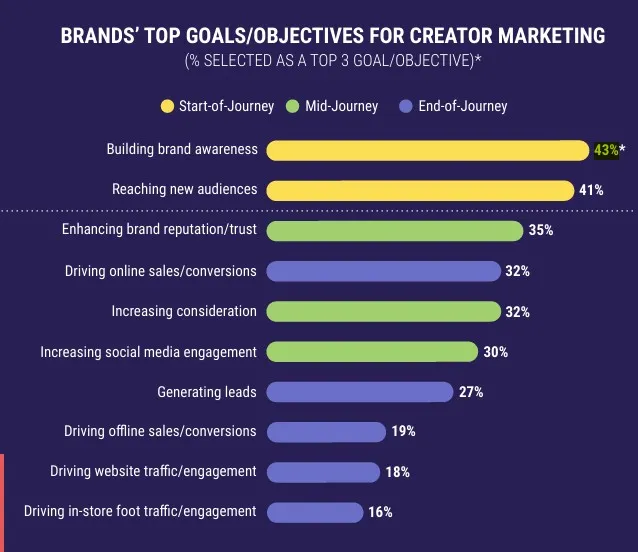
Dark posting also lines up with the reasons brands invest in creators. IAB says top creator campaign goals include brand awareness at 43%, reaching new audiences at 41%, trust and reputation at 35%, and online sales at 32%. These goals are easier to manage when the team can test creative against specific outcomes.
Still, dark posting may not be needed if the brand has no paid media budget, only wants organic reach, lacks content rights, or has no tracking setup.
Build a Smarter Dark Posting Strategy with inBeat Agency
Dark posting is one of the best ways to test creator content because it gives you more control, cleaner testing, and clearer data. Instead of relying on assumptions about which creator video deserves budget, you can test hooks, CTAs, formats, creators, and audiences before scaling.
This makes creator content more useful across content strategies, media buying, and future briefs. And when a team has the right workflow behind it, dark posts can move from quiet tests to serious growth signals.
If you want creator content to do more than look good in a deck, inBeat’s creator-to-paid-media model is a smart place to start. Contact us today to build a creator testing system that helps you find winners faster!
FAQs
What is dark posting influencer content?
Dark posting influencer content is when a brand runs influencer or creator content as a paid ad without publishing it on the public feed. It lets the brand test the creator’s video, message, CTA, and audience fit before deciding whether to scale.
Are dark posts paid?
Yes, dark posts are paid ads. They are created and managed inside the platform’s ad tools, then shown to selected social media users based on targeting, budget, placement, and performance goals. But they do not need to appear publicly first.
What is an example of a dark post?
An example of a dark post is a skincare brand running five creator videos as targeted ads to test which one earns the lowest CPA. The videos never appear on the public profile, but each version gets performance data.
Can you dark post on Instagram?
Yes, you can dark post on Instagram through Meta’s advertising tools. Brands can create ads that appear in placements like Reels, Stories, Feed, or Explore without posting those assets to the public profile first.
What is the difference between a dark post and an existing post?
A dark post is created for paid distribution and stays off the public profile. An existing post is already live on the brand or creator feed. Boosting an existing post adds reach, while dark posting gives more testing control.