%20(1).png)

Influencer gifting looks simple. You find relevant creators, send free products, and hope they share your brand.
But for many direct-to-consumer (DTC) teams, this simple process turns into a silent loop. You send outreach, ship the product, confirm delivery, then wait. Days pass, but nothing happens. The creator never responds, no content gets published, and you're left wondering what went wrong.
The problem is not that influencer gifting no longer works. Most brand teams treat gifting like a transaction, while creators see it as one more unsolicited package in an already crowded inbox.
From what we've seen, the best gifting programs focus on building relationships instead of sending products at scale. Before you send anything, you should already know why the creator is a good fit, what type of content feels natural for their audience, and how you'll measure success.
If you’re launching your first gifting campaign or trying to figure out why previous ones fell flat, this guide will show you where things usually go wrong and what you can do differently.
What Is Influencer Gifting?
Influencer gifting is when a brand sends free products to a creator with the hope they'll try them, share honest feedback, or feature them in their content. Unlike a paid influencer marketing campaign, there are no guaranteed deliverables or contractual obligations.
The creator decides whether to post, what to say, and when to share it. You can certainly ask for a post, but the final decision is always theirs.
A gifting campaign can take many forms. A skincare brand might send a new serum to beauty creators, a supplements company could offer trial bundles to fitness influencers, or a fashion label may invite selected creators to choose an item from a curated lookbook.
Here’s an example of a post from a creator after getting a gift/PR box:
The biggest difference between gifting and a paid collaboration comes down to expectations. In a true gifting setup, you are offering value first. You are not buying a post. This approach matters from both a relationship and compliance perspective.
The U.S. Federal Trade Commission (FTC) says a creator should disclose a relationship when they receive anything of value, including free or discounted products, and then mention that product online.
The FTC also says disclosures should be easy to notice and appear alongside the endorsement itself, rather than being buried at the end of a caption or hidden behind a "more" button. Many other countries have similar disclosure requirements, so it's worth checking the rules wherever you're running your campaign.
Why Brands Use Influencer Gifting
Influencer gifting and product seeding have become go-to strategies for many DTC and ecommerce brands. When done well, they can deliver far more than a few social posts.
Below, we have shared some of the biggest reasons to invest in gifting campaigns:
- Lower upfront cost than paid partnerships: Gifting campaigns usually cost less upfront because you are paying in product, shipping, and team time rather than guaranteed creator fees. Shopify Collabs can support this lower-friction setup by letting merchants offer creator gifts as a free product, a percentage discount code, or a fixed amount discount code.
- Organic content potential: Without a required deliverable, any content a creator shares is more likely to feel natural to their audience. This matters on platforms like Instagram and TikTok, where polished ads don't always perform well. However, keep in mind that a post is always a possibility, never a promise.
- Product discovery and awareness: Gifting can help introduce your products to new audiences, particularly on discovery-heavy channels. TikTok says 61% of its users discover new brands and products on the platform, which makes creator-led product discovery a real awareness lever.
- Long-term creator relationship building: A strong gifting program helps you see who replies, who gives useful feedback, who understands your category, and who might become a long-term partner. Later’s 2025 report found 70% of leaders transformed creator relationships into ongoing partnerships, which is the real value of gifting when it is treated as relationship-building instead of one-off product shipping.
- Testing creators before paid campaigns: Gifting gives you a low-risk way to evaluate creators before investing in paid collaborations. You can assess response quality, product fit, content style, audience relevance, and early performance. We typically track reply rates, posting rates, saves, comments, impressions, discount code usage, and UTM clicks before deciding who should move into a paid campaign.
- UGC ads potential: If a creator shares your product, that content may become valuable beyond organic reach. For example, TikTok allows brands to turn creator posts into Spark Ads with the creator's permission, which helps you extend the reach of authentic content.
Pro tip: If you want to reuse posts across ads, email, and landing pages, ask for written content rights before repurposing.
Why Brands Get Ghosted in Influencer Gifting Campaigns
Many brands send products to creators hoping to earn organic posts. Unfortunately, that doesn't always happen. In some cases, creators don't respond to the outreach. In others, they accept the gift but never mention the product.
Advertising Week found in its study that although 94% of marketers were sending gifts to influencers, only 19% were receiving advocacy in return. Most influencers were not posting about the products. This gap shows that sending products alone isn't enough to earn creator attention or content.
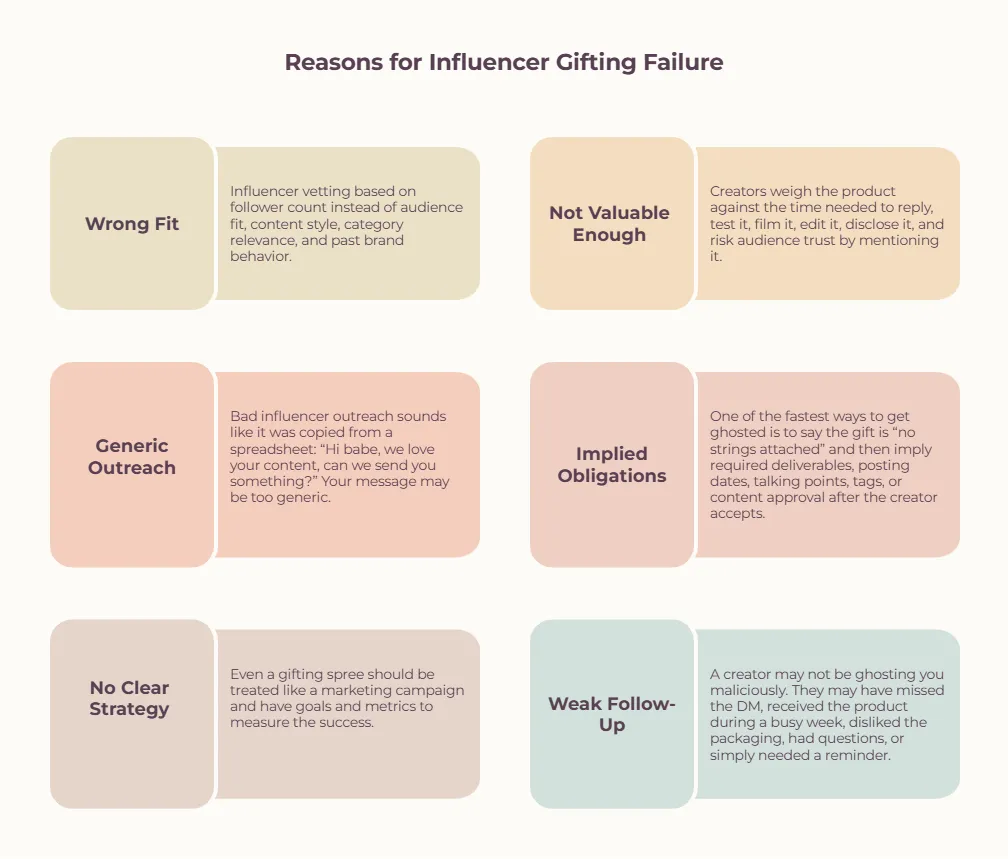
Some of the most common reasons brands get ghosted are:
1. The Creator Was Never the Right Fit
If you're choosing creators based mainly on follower count, you're already making the campaign harder than it needs to be. Audience fit, content style, category relevance, and previous brand partnerships are much stronger indicators of whether someone is likely to engage with your product.
This is where we usually see brands waste the most of the budget and time.
For example, a wellness brand sending protein powder to a general lifestyle creator with high reach but little fitness content is less likely to earn a reply than sending it to a smaller creator whose audience already asks about workouts, macros, or meal prep.
Also, some brands target macro or celebrity influencers who may be too busy to post (or may not want to post for free at all).
When it comes to gifting products and getting a post, smaller, more engaged creators are your best shot. Besides, they dominate social media anyway. HypeAuditor’s 2025 data shows nano influencers account for 87.7% of TikTok creators and have the highest TikTok engagement rate at 10.3%.
2. The Gift Was Not Valuable Enough
When we say the gift wasn’t valuable, we don’t mean the price.
Creators don’t evaluate a gift only by retail price. They weigh the product against the time needed to reply, test it, film it, edit it, disclose it, and risk audience trust by mentioning it.
Presentation matters too. If the packaging feels generic, rushed, or hard to show on camera, some creators may lose interest before they even try the product. This is even more important for creators who care heavily about aesthetics in their content.
That is why a $15 sample with a vague “we’d love a post” message might easily get ignored. However, a personalized bundle, early product access, a limited-edition drop, or a thoughtful kit tied to the creator’s actual content has a better chance.
3. The Outreach Felt Generic
Generic outreach is one of the biggest reasons creators ignore gifting offers. Bad influencer outreach sounds like it was copied from a spreadsheet: “Hi babe, we love your content, can we send you something?” Your message may be too generic.
You need to make the message more personalized.
The numbers back this up outside of influencer marketing, too. Backlinko and Pitchbox analyzed 12 million outreach emails and found that only 8.5% received a response. They also found personalized subject lines were linked to a 30.5% higher response rate.
For creators, personalization does not need to be long. Mention a specific post, explain why your products fit their audience, and make the next step easy.
4. The Brand Implied Obligations Without Paying
One of the fastest ways to get ghosted is to say the gift is “no strings attached” and then imply required deliverables, posting dates, talking points, tags, or content approval after the creator accepts.
From the creator’s side, this feels like unpaid labor disguised as generosity.
A cleaner approach is to separate the offer types. Use no-strings gifting when you want product discovery and feedback.
We recommend using barter deals or paid contracts when you need guaranteed posts, usage rights, captions, talking points, or approval rounds. (We’ll cover the differences later in the article.)
5. There Was No Clear Campaign Strategy
Even a gifting spree should be treated like a marketing campaign and have goals and metrics to measure the success.
Many brands say they are “doing gifting,” but they have no actual campaign strategy. They do not define whether the goal is brand awareness, UGC, affiliate sales, community building, creator testing, or retail launch support.
That lack of focus creates messy execution. If your goal is awareness, track reach, impressions, mentions, and share of voice. If your goal is sales, set up discount codes, affiliate links, UTM links, and revenue attribution before the first package goes out.
6. The Follow-Up Was Weak or Nonexistent
A creator may not be ignoring you on purpose. They may have missed the DM, received the product during a busy week, disliked the packaging, had questions, or simply needed a reminder.
Weak follow-up usually falls into two extremes: complete silence or too much pressure. A better follow-up feels helpful. Confirm the package arrived, share a little product context, ask for honest feedback, and give the creator an easy way to opt in if they want to post.
Does Influencer Gifting Even Work?
Yes, influencer gifting can work, but not when you treat it like a cheaper version of a paid creator contract. It works best as a way to discover creators, start relationships, and test product fit before investing in bigger partnerships.
The process is simple: send the right product to the right creator, track the response, see who engages naturally, and move the strongest matches into paid partnerships, affiliate offers, ambassadorships, or repeat gifting campaigns.
The main reason gifting still matters is that creator influence is real. Sprout Social reported that 49% of consumers make daily, weekly, or monthly purchases because of influencer posts. For a DTC team, this means gifting can support brand awareness and product discovery before a customer ever sees a paid ad.
Gifting can be useful for new brands, product launches, and teams with limited campaign budgets.
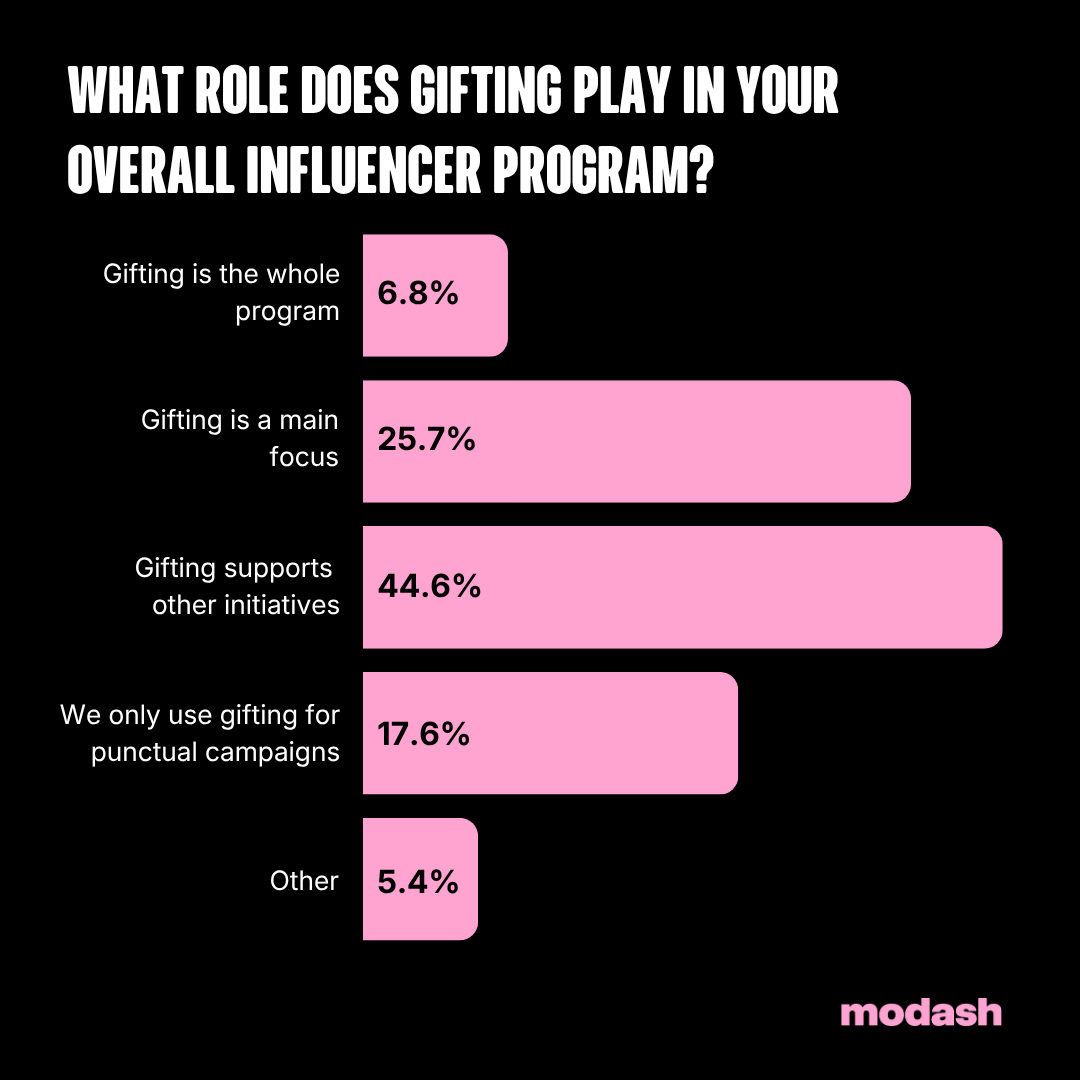
Marketers generally use gifting as part of their overall influencer program, but some even make it their main focus.
But, again, it’s not entirely free because you’re bearing the cost of the product, packing, and shipping.
It’s also important to keep in mind that gifting does not work equally across every creator tier. Smaller creators can be useful because they mostly have closer relationships with their audiences and lower collaboration friction.
The real difference comes down to tracking. A package sent without social and sales measurement is just a hope with a shipping label.
That’s why we advocate for product seeding over gifting. So, let’s learn the difference.
Influencer Gifting vs. Influencer Seeding vs. Barter Deals
Influencer gifting and influencer seeding are sometimes used interchangeably, but they are not exactly the same. Gifting is usually smaller and more selective. Seeding is more structured, usually involves a larger creator pool, and is used to drive discovery, test creators, and create word of mouth.
Then there are barter deals, which are different because they involve an agreed exchange. The creator receives a product, perk, store credit, or experience in return for specific deliverables.
The easiest way to separate these models is by obligation. Gifting and seeding create opportunities. Barter deals and paid partnerships create commitments. That distinction matters for creator trust, campaign planning, and compliance.
Here’s a table to help you understand the nuances of influencer gifting vs. seeding vs. barter deals vs. paid partnerships.
Pro tip: Treat each model differently. When you want organic discovery, keep it no-strings-attached. When you want guaranteed content, pay or barter fairly and put the agreement in writing.
How to Run a Successful Influencer Gifting Campaign
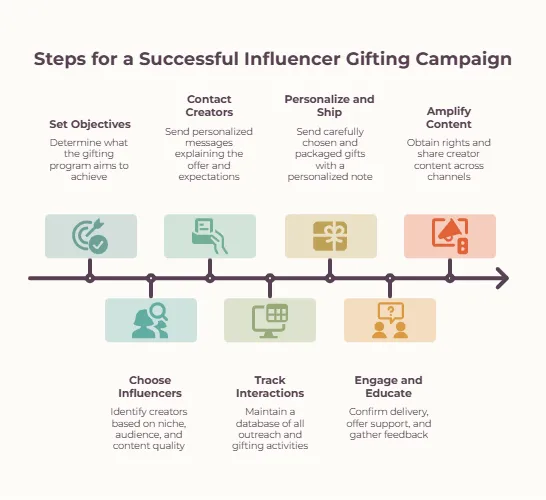
The best way to avoid the influencer gifting loop that leaves you ghosted is to treat gifting like a campaign. This means there should be well-defined goals and a structured way of doing things.
This is how we suggest treating this process:
1. Define Goals
Decide what your gifting program is supposed to do.
This will guide who you gift, what you send, and what you may want to track.
When it comes to gifting products or brand trips to influencers, typically the goals are:
- To create brand awareness
- To introduce a new product or service
- To show the usefulness of a product
- To get honest reviews and feedback
We usually recommend choosing one primary goal and two secondary performance metrics before sending anything.
Inside tip: If you’re an e-commerce merchant using Shopify, tracking gifting goals gets even easier. Shopify Collabs can support this because merchants can send gifts or discount codes, track affiliate sales, and pay creators in one workflow.
2. Define Creator Selection Criteria (Which Creators to Send Gifts)
Your creator criteria should be stricter than “they have followers.” Build your shortlist around niche relevance, audience location, audience age, content quality, previous brand partnerships, comment quality, and whether their tone matches your customer.
Send gifts to influencers whose audience matches yours, whose style complements your product, and who are likely to post about it because they are interested.
For example, a clean beauty brand should not only search for skincare creators; it should look for creators already making routines, ingredient explainers, empties videos, or “get ready with me” content where a product mention would feel natural.
Tools like HypeAuditor and Modash can help validate audience demographics and engagement before you ship products, which reduces product gifting waste.
Here’s what to consider:
- Tier (macro, micro, nano): Use the creator tier based on your goal, not ego. Macro creators can help with reach, but micro or nano creators are usually better for testing product-market fit, creator responsiveness, and community-level trust.
- Persona: Match the creator’s persona to the buying situation your customer is already in. A fitness influencer would likely have an audience that might want to buy a high-protein product.
- Platform: Choose the creator from the platform you need, and how your customer discovers products. TikTok is strong for discovery and fast testing, Instagram works well for Reels, Stories, and Partnership Ads, and YouTube is useful when your product needs a deeper explanation.
Check out our tips for finding micro-influencers
3. Reach Out the Right Way
Good influencer outreach is short, specific, and respectful. Mention one real reason the creator is a fit, explain what you want to send, and make it clear whether the gift is no-strings-attached or tied to a barter agreement.
A simple structure works best:
- Say why you chose them.
- Name the product and why it fits their audience.
- Clarify that there is no posting obligation unless you are proposing a paid or barter deal.
- Ask for the best shipping details or preferred product variant.
- Include an FTC disclosure reminder if they choose to post.
4. Create and Maintain a List
Your influencer gifting campaign can get you valuable insights for future paid influencer partnerships. And to get that information, it’s best to maintain a list of the people you send messages and gifts to.
Your influencer list should be a living system. Track name, handle, platform, niche, audience notes, email addresses, response status, shipping status, product sent, post links, discount code (if any), and follow-up dates.
For lean teams, Airtable, Google Sheets, Notion, Shopify Collabs, Modash, Aspire, or GRIN can all work depending on budget and scale.
5. Send Out the Gift with Some Personalization
A good gift should feel chosen. Let creators pick a shade, size, flavor, or bundle when possible. But even when you’re choosing the product to send, pay attention to what the creator might like and find useful.
For example, instead of sending every creator the same wellness bundle, a supplement brand might send a sleep-focused kit to a night-shift nurse creator, a travel pack to a frequent flyer, and a training bundle to a fitness creator. That kind of personalization increases the odds that the product fits naturally into content creation instead of feeling like a random PR box.
If you have time and resources, pack the gift nicely.
And most importantly, include a personalized note with their name.
6. Follow Up
Confirm delivery, ask whether they had any issues, offer product education, and invite honest feedback before asking about content.
A good cadence is usually:
- First follow-up after delivery confirmation.
- Second follow-up after the creator has had time to test the product.
- Final follow-up with a soft close, such as “Would you be open to staying on our creator list for future launches?”
Do not chase indefinitely. If someone never replies, mark it in your tracking system and use that data to improve your next round.
Ghosting is frustrating, but it is also useful campaign performance feedback.
7. Repurpose Post
When a creator does post, do not immediately screenshot it and turn it into ads. First, confirm content rights in writing, including where you can use the asset, for how long, whether it can be edited, and whether paid amplification is allowed.
And if you just want to use their post organically, you can simply share their post with your audience. We do recommend paid social amplification because creator-led ads do incredibly well.
The practical loop is simple: gift, track, learn, deepen the relationship, and repurpose only with permission. That is how you turn influencer gifting from random product shipping into a repeatable growth system.
Successful Influencer Gifting Examples
Influencer gifting does not need to look like a viral celebrity unboxing. Sometimes, the strongest campaigns are much simpler: send the right product to the right creators, make the offer feel relevant, and track what happens next.
Brands across different sizes and categories use gifting to spark product discovery, collect feedback, and build creator relationships.
Some run smaller gifting campaigns with a focused creator list, while others use product seeding at scale to support launches and awareness.
Inkbox is a useful example because its gifting was designed with the creator fit in mind. The temporary tattoo company activated 70+ creators, generated 800K+ reach from creator content, and saw a 40% unprompted creator posting rate.
That last number is the most important lesson: even in a strong gifting campaign, most creators did not post unprompted, so your team should plan for follow-up, tracking, and relationship-building rather than assuming every gift will generate content.

Bite Toothpaste Bits shows how better product seeding can improve response quality. For its “Smell Good Summer” campaign, Traackr reported a 67% increase in influencer responses, multiple creators posting more than once, and 50,000 total impressions.
The practical takeaway for an e-commerce brand is that relevance and creator choice matter: if the product fits the creator’s lifestyle and the outreach feels thoughtful, you improve the chances of a reply before you ever ask for a post.
Turn Influencer Gifting Into Scalable Results with inBeat Agency
Random packages rarely create reliable results. A stronger gifting program starts with a clear goal, better creator vetting, personalized outreach, thoughtful product selection, response tracking, and a plan for turning the best creators into deeper partners.
That is how gifting becomes a real product seeding system instead of a one-off hope for a friendly post. You may still get ignored by some creators, even when your campaign is well planned. That is part of the process. The point is to learn who responds, who cares about your product, and who has the potential to become a long-term partner.
Once you know that, you can layer in paid collaborations, creator ads, affiliate offers, and whitelisting to make your influencer marketing program more predictable.
If you want help building that system, inBeat Agency can support creator discovery, vetting, gifting logistics, outreach, negotiation, paid partnerships, and creator content strategy.
Book a free strategy call now!
FAQs
Is influencer gifting cheaper than paid partnerships?
Yes, influencer gifting is usually cheaper upfront than paid partnerships because you send products instead of paying a creator fee. Still, it is not free. You need to account for product cost, packaging, shipping, outreach, follow-up, and tracking.
Does influencer gifting guarantee a post?
Influencer gifting does not guarantee a post because creators receive products without a contractual obligation to publish content. Most influencers decide whether to post based on product quality, audience fit, and personal interest. Brands that require guaranteed content should use barter deals or paid partnerships with agreed deliverables.
Does gifting work with celebrity influencers?
Influencer gifting rarely works with celebrity influencers because they receive large volumes of products and typically prioritize paid partnerships. Gifting campaigns perform better with micro and mid-tier influencers who are more likely to review products without guaranteed payment if the brand matches their audience.
Is influencer seeding better than one-off gifts?
Influencer seeding is generally better than one-off gifting because it builds long-term relationships with creators and increases brand familiarity. Consistent product seeding can improve organic mentions, repeat content, and trust over time. One-off gifts work best for short campaigns or special occasions.
What role can inBeat Agency play for influencer gifting or seeding?
inBeat Agency helps you find and vet influencers across social media platforms. It can help you find the right creators who are likely to respond positively to product seeding and PR packages. The agency can also help use creator posts for organic and paid visibility, with usage rights compliance and sharp targeting.