

An Asian beauty brand can have US demand before it has a US market strategy. Customers could already be familiar with the product through TikTok, search for it on Amazon, or recognize the category because another Korean, Japanese, or Chinese brand introduced it first.
For international companies, U.S. market entry is the work of turning that interest into reliable market access in the United States. That includes preparing products for sale, choosing how they will reach customers, creating demand, and building an operation that can support it. Depending on the setup, that may involve direct exports to US distributors or retailers, while indirect exports use a domestic intermediary.
From there, the bigger questions are which products make sense for US customers, what needs to change in the positioning or assortment, which channels can support the economics, and how much of the existing interest will turn into repeat demand.
US K-beauty sales reached $2 billion in 2025, growing 37% year over year. The opportunity is clearly there.
Today, we’ll look at how to decide which products to launch, how to position them for US shoppers, which sales channels to prioritize, and when the numbers justify scaling further.
TL;DR
- Define a US customer, hero product, price, and reason to buy. Check competitors and customer feedback.
- Resolve product claims, MoCRA obligations, imports, fulfillment, and adverse-event escalation.
- Choose a route through your website, Amazon, TikTok Shop, or a retail partner.
- Calculate acquisition headroom after variable costs; budget separately for inventory and creative.
- Explain product routines, texture, benefits, and shade suitability for US shoppers.
- Specify creator deliverables, usage rights, disclosures, and responsibilities before commissioning content.
- Test paid channels against acquisition costs and contribution. Expand, revise, or pause based on evidence.
- Plan 90 days of tests; assess actual repeat demand before expanding distribution.
What Does US Market Entry Mean for an Asian Beauty Brand?
US market entry is the coordinated work that gets your products ready for US sale, gives customers a clear way to buy them, and creates enough demand to support the business behind the launch.
For an Asian beauty brand, the work starts with seeing what transfers well and what does not. A product can perform extremely well in its home market but enter a different competitive set in the US, where customers may have different price expectations, routines, shade needs, or familiarity with the format. Claims, labeling, and even product classification can also require a separate US review.
You may not be starting from zero, either. US customers can already be buying your products through cross-border ecommerce, resellers, specialist retailers, or marketplaces. That gives you demand signals to investigate, but it does not automatically tell you which products to lead with, what price the market will support, or which sales route you can operate profitably.
That is why market entry needs to connect product fit, compliance, distribution, positioning, acquisition, and operations rather than treating the launch as a marketing campaign alone.
How to Build a US Market Entry Strategy in 8 Steps
Market entry and expansion work should produce usable decisions, from choosing which products deserve a US launch to setting a spending limit or creator brief. For Asian beauty brands, those decisions also need to account for existing cross-border demand, different levels of familiarity with certain product formats, and competition that extends well beyond other Asian brands.
Your marketing strategy can then change as results arrive, with earlier assumptions open to revision whenever US customer behavior challenges them.
Here are the eight steps.
1. Validate a Hero Product and a Specific US Customer
Start With Market Validation
Choose a hero product around customer need, differentiation, price, readiness, demonstration potential, and replenishment behavior. Narrow the assortment enough to interpret results while retaining necessary variants, especially shades. Your home-market bestseller is an obvious place to look, but it should not automatically become your US hero product.
Start by comparing the products that show signs of US potential. That can include cross-border orders, Amazon searches, reseller activity, creator mentions, customer questions, or strong performance in a category that is growing in the US. Then look at what is behind that interest.
After that, check whether the price works after US shipping and distribution costs, whether the claims and formula are suitable for the market, how easily the product can be demonstrated, how often customers are likely to repurchase it, and how much explanation the format requires.
Circana reported that US mass-market skincare grew 6% in both dollars and units in 2025, led primarily by facial cleansers and moisturizers. That makes the category worth investigating, but your brand still needs evidence.
Make the Research Specific
Combine market intelligence with product research. If you are launching a $30 moisturizer, the customer is comparing it with other $30 moisturizers that promise a similar result, regardless of where those brands come from. Look at their positioning, reviews, textures, claims, size, price, retail presence, and the objections customers raise.
Be strict about which research you use, too. A report on U.S. Institutional Distribution may be credible and current, but it is about how investment products reach institutional buyers. It tells you nothing useful about how a $30 moisturizer will compete in the US. If the audience, category, price point, or sales channel is wrong, the data can be accurate and still be useless for your launch.
The same applies to the customer. “K-beauty shopper,” “Asian beauty fan,” or “American women” is too broad to guide a launch. Define the problem they are trying to solve, what they already use, what they are willing to spend, and how familiar they are with your product format.
For a Japanese moisturizer brand, for example, the useful question is not whether US shoppers like J-beauty. It is whether a specific group of shoppers wants a lightweight morning moisturizer at your intended price, understands why your formula is different, and has a reason to choose it over the products already in their routine.
Document that as a hypothesis, then look for evidence that supports or challenges it before you commit to a wider assortment.
2. Confirm Product and Operational Readiness
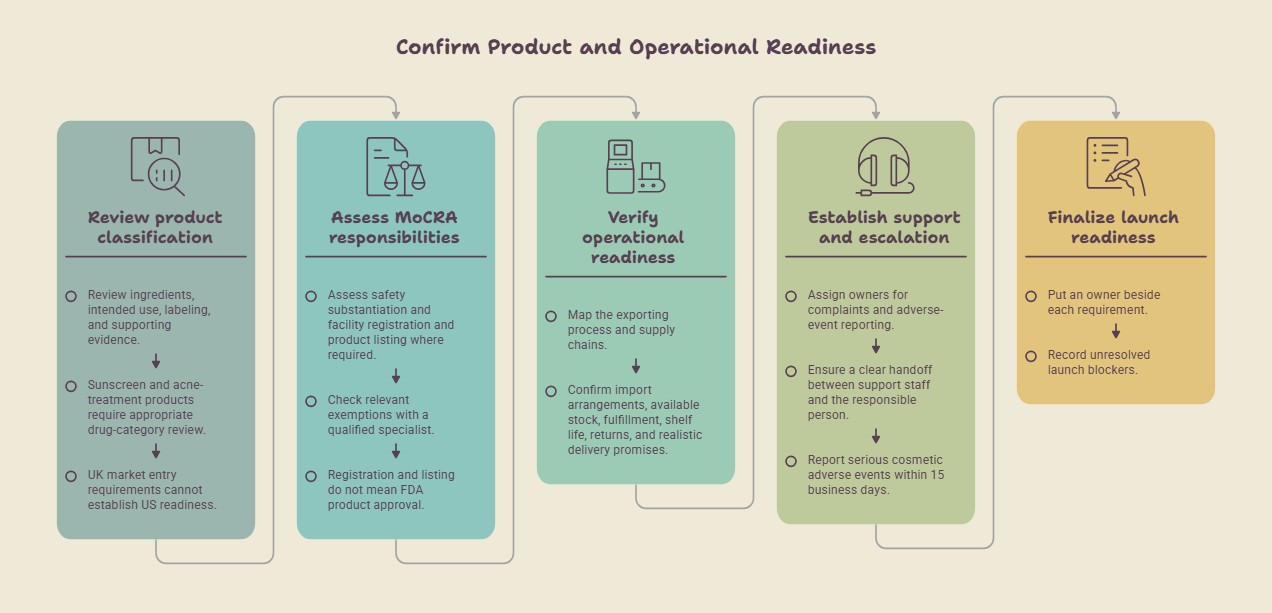
A home-market launch leaves US compliance requirements unresolved. Products sold in Korea, Japan, China, or elsewhere in Asia can face different regulatory frameworks once they enter the US, so compliance and operations need to be checked before media spend begins.
Here are the essentials:
- Product classification and claims. Review ingredients, intended use, labeling, and supporting evidence. Sunscreen and acne-treatment products require appropriate drug-category review. UK market entry requirements cannot establish US readiness.
- Applicable MoCRA responsibilities. Under the Modernization of Cosmetics Regulation Act, assess safety substantiation and facility registration and product listing where required. Check relevant exemptions with a qualified specialist. Registration and listing do not mean FDA product approval.
- Operational readiness. Map the exporting process and supply chains. Confirm import arrangements, US-specific packaging or labeling, stock levels, fulfillment, shelf life, returns, and realistic replenishment times. If inventory is coming from Asia, production and freight lead times need to be built into the launch plan.
- Customer support and safety escalation. Assign owners for complaints and adverse-event reporting, with a clear handoff between support staff and the responsible person.
FDA requires responsible persons to report serious cosmetic adverse events within 15 business days. That deadline makes an escalation process necessary before sales begin.
Put an owner beside each requirement, then record unresolved launch blockers. This keeps a marketing deadline from becoming an accidental substitute for product readiness.
3. Choose an Initial Route to US Customers
Your starting route depends on customer discovery and the work your team can support. Each option changes control over pricing, product education, and customer information.
Here are the main trade-offs:
Route | When It May Fit | Main Trade-Off |
|---|---|---|
Brand-Owned Ecommerce Store | You need control over education and customer relationships | You must attract visitors and support purchases |
Amazon | Shoppers already search for your category | Listing competition, fees, and limited customer access affect opportunity |
TikTok Shop | Demonstrations and creators support discovery | Content, commissions, stock, and store operations need coordination |
Distributor or Retail Partner | Your partner search identifies suitable category access | Wholesale economics, contract terms, data access, and marketing responsibilities need scrutiny |
These routes can coexist. A sales representative may arrange introductions, while a US distributor may purchase and resell inventory. A licensing agreement addresses permission to use intellectual property and requires a separate assessment.
NIQ’s October 2025 report found that 70% of US K-beauty sales happened online. That supports evaluating ecommerce early, although existing retail commitments and product characteristics can change the sequence.
From our experience, we recommend choosing one priority route and documenting why it fits. For example, scaling TikTok Shop with affiliate creators needs ongoing recruitment and content coordination.
If your team cannot support that work, add the required resources before committing. Potential audience reach alone gives you an incomplete basis for the decision.
4. Calculate Acquisition Headroom Before Setting the Launch Budget
Work Backward From Each Order
Acquisition headroom is what an order leaves after variable costs. Calculate it before choosing an advertising budget because channels can produce different economics.
For an Asian beauty brand, use the real landed cost of getting a sellable unit into the US, not the factory cost alone. That can include international freight, duties, customs, US labeling or prep, warehouse intake, and an allowance for damaged or expired stock.
Consider a hypothetical order that collects $36 after discounts and before tax. Assume $9 in landed product costs, $6 for fulfillment and shipping, $2 in payment costs, and a $1 returns allowance.
$36 − $9 − $6 − $2 − $1 = $18 before acquisition costs.
Now assume an affiliate route charges $3 in total platform/payment costs and a $5 creator commission. With everything else unchanged, headroom falls to $12.
Every amount is illustrative. Actual charges belong in your own calculation.
Separate Advertising Capacity From Cash Needs
Neither figure is automatically a safe advertising target. Fixed creative costs, overhead, and profit still need funding, so budgeting for creator content and usage rights belongs alongside this calculation. Count creator commissions once.
Inventory creates a separate cash requirement. If your next production run is coming from Asia, you may need to pay for manufacturing, freight, and media well before the first batch has sold through. International transactions also add currency exchange exposure, while tax structures need professional review.
Set an acquisition spending limit with explicit assumptions and calculate the cash required separately. Repeat purchases should enter the model only when you have actual evidence.
5. Adapt Positioning and Product Pages for US Shoppers
Explain the Product’s Place in a Routine
Some Asian beauty formats are already familiar to US shoppers; others need a bit more user experience context.
Do not assume customers know where an essence, ampoule, toner pad, cushion foundation, or tone-up product belongs in a routine. Explain what the product does, when to use it, how much to apply, what the texture feels like, and which existing step it replaces or complements.
Keep the brand’s origin where it adds useful context. If the product is built around a Korean skincare routine, Japanese formulation approach, or an ingredient tradition customers may not know, explain that specifically.
A hypothetical essence page, for example, should do more than lead with the ingredient name. It should tell the customer where the essence goes between cleansing and moisturizing, how it feels on the skin, and why they would add it to their routine.
Match the Evidence to the Shopper
PowerReviews’ May 2023 survey found that 77% of surveyed shoppers looked for skin type and effects on skin in customer feedback. The survey covered 26,340 US consumers and skewed toward beauty enthusiasts and Millennials, so those preferences describe an engaged sample.
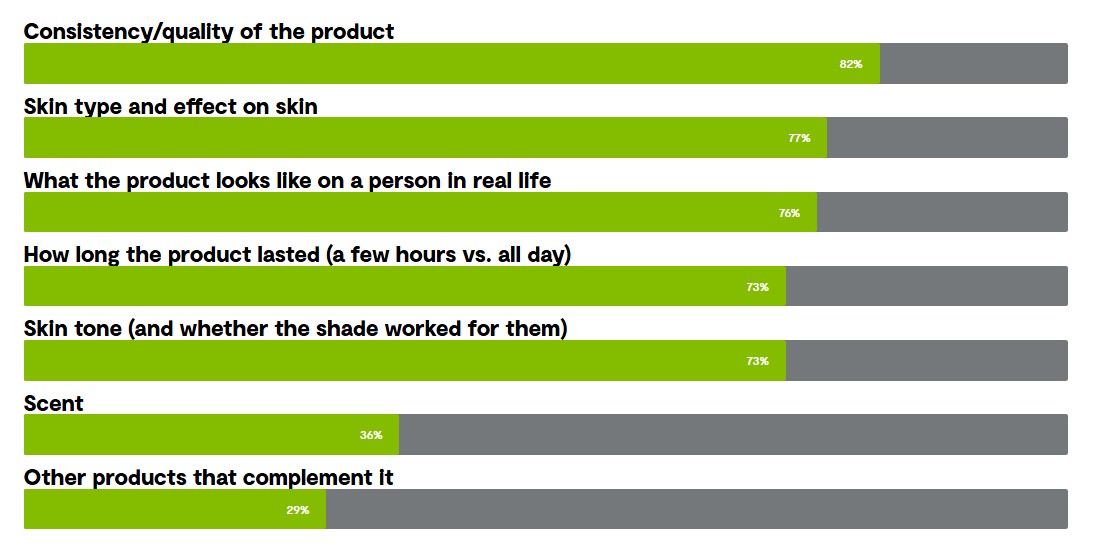
For color cosmetics, shade availability and demonstrations across relevant skin tones deserve the same attention. An unsuitable assortment requires product development decisions before better wording can help.
We would turn those observations into a product-page brief with a clear order of messages and evidence. An annotated comparison of your current and proposed page can show exactly what changed and which customer uncertainty each change addresses.
6. Build a Creator Program Around Defined Deliverables
Creator partnerships are easier to manage when everyone knows what the brand is purchasing. For an Asian beauty launch, the creator also needs enough product context to explain anything US customers may not already understand.
These are the three arrangements to distinguish:
- Product seeding. When planning an influencer seeding campaign, treat gifting as an opportunity for trial and voluntary coverage. A free product guarantees neither a post nor advertising rights.
- Commissioned creator content. You purchase specified assets, such as demonstrations or routine videos. Define formats, revisions, claim boundaries, and permitted uses. That distinction matters when choosing between content creators and influencers.
- Influencer distribution and affiliate activity. You purchase audience access or compensate sales activity. Establish posting obligations, commission terms, disclosures, and paid-ad permissions separately.
Do not recruit only from creators already known for K-beauty, J-beauty, or Asian beauty. If you are launching a toner pad for textured skin, for example, test creators who already speak to that concern alongside creators whose audiences actively follow Korean skincare. One group can bring category familiarity; the other can show whether the product makes sense outside the existing Asian-beauty audience.
For influencer marketing for beauty brands, we recommend assessing US audience location, category relevance, and the creator’s ability to demonstrate the product credibly. The approved product information should guide each brief, and paid or gifted relationships need appropriate disclosures under FTC guidance.
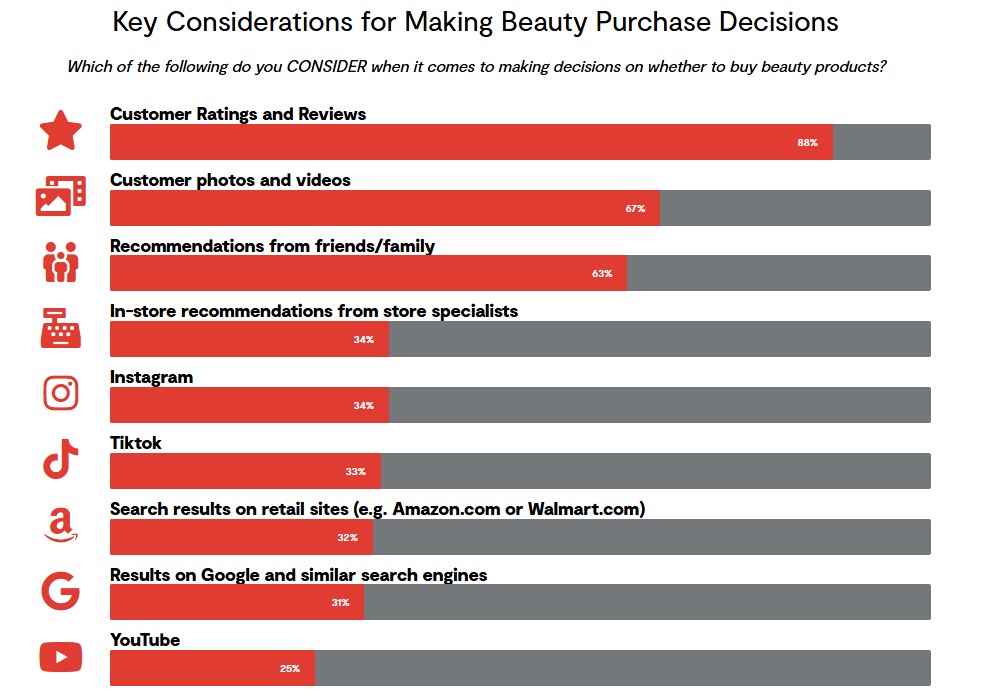
Customer content also matters. In PowerReviews’ May 2023 survey, 67% of surveyed shoppers considered customer photos and videos in beauty purchase decisions. That finding supports useful product demonstrations, but it does not measure the sales effectiveness of paid influencers.
In Prose’s ongoing UGC production program, our team built a repeatable micro-influencer recruitment process to supply user-generated content assets weekly. That recurring supply gave the media team fresh material to work with as campaigns continued.
UGC from the Prose creator program. Source: Vimeo
Your creator brief should therefore specify deliverables, usage rights, approvals, and responsibilities. This gives both sides a practical definition of completed work.
7. Test Paid Acquisition and Define When to Scale
Give Each Test a Specific Decision
Paid social can introduce a product, search can capture existing demand, and retargeting can reconnect with previous visitors. When comparing Meta, Google, and TikTok ads, start with those roles. A new account may have little useful traffic to retarget.
Then define the audience, offer, message hypothesis, main outcome, test period, and decision rule. For an Asian beauty brand, one useful test is whether the product needs category education or can sell on the customer problem alone. A toner pad, for example, could be tested with one ad explaining how it fits into a routine and another leading directly with the skin concern it addresses.
Set a spending limit and observation period before launch. Otherwise, an attractive early result can tempt the team to change its standards halfway through.
Connect the Result to Commercial Performance
Review new-customer acquisition cost, or CAC, alongside contribution, conversion behavior, returns, and creative signals. The acquisition headroom calculated earlier provides a boundary for interpreting those results.
From there, expand a promising test, revise a weak element, or pause when evidence remains inadequate. Low purchase volume can leave a test inconclusive even when engagement looks encouraging.
Platform-attributed sales provide a partial view, so measuring influencer contributions to sales should combine creator links, customer feedback, and business-level results. Record simultaneous changes that complicate interpretation.
Existing US awareness can complicate attribution, too. A customer may have first seen the brand through an Asian beauty retailer, reseller, creator, or overseas listing before buying through your campaign. That is another reason to compare platform data with creator links, customer feedback, branded search, and business-level results.
For Dashing Diva’s full-funnel campaign, our team used ongoing performance creative as the brand expanded from three to seven marketing channels. CAC fell 24% while ad spend rose 100% year over year.
Keep the test record and the resulting investment decision together.
8. Build Repeat Demand Before Adding More Complexity
A strong first order does not tell you whether the product has found a lasting place in the US market. Asian beauty launches can benefit from novelty, creator attention, or existing interest in a format or ingredient, so repeat behavior matters once that initial discovery wears off. Measure repurchase over the product’s actual use cycle: a cleanser and a slowly used makeup palette need very different observation periods.
We also think you should compare distribution strategies against actual demand, reliable supply, and order contribution. During distributor searches, ask local distributors what customer evidence they need. If you already have retail access, prioritize sell-through and replenishment.
Digital information still matters. In PowerReviews’ May 2023 survey, 92% of surveyed shoppers read reviews at least sometimes during in-store beauty shopping. That supports accessible product information, although the survey does not establish a causal sales lift.
If expansion involves foreign direct investment in local operations, SelectUSA works with investment specialists and colleagues at U.S. Embassies and consulates. That support serves a different need from consumer acquisition.
Your retention plan should therefore define both the customer experience and the evidence required before the next expansion commitment.
Turn the Strategy Into a 90-Day Launch Plan
A timeline coordinates dependent decisions once product and operational readiness are established. If your plan involves entity setup or subsidiary formation, obtain legal and tax advice before fixing those dependencies.
Here are the three phases:
Period | Workstream | Tangible Output | Decision Required |
|---|---|---|---|
Days 1-30 | Finalize the hero product, US customer, pricing, claims, channel, creator brief, and inventory plan | Launch-ready offer and test setup | Are the product, economics, and operations ready for a US test? |
Days 31-60 | Run creator and acquisition tests; track product questions, objections, delivery issues, and response to the US positioning | Initial demand and customer feedback | What needs to change before further investment? |
Days 61-90 | Review acquisition cost, contribution, repeat signals, inventory performance, and which messages or products gained traction | Next-stage launch plan | Which products, messages, and channels deserve more investment? |
Repeat-purchase evidence may need longer than 90 days, especially for products customers replace slowly. Production and replenishment can also extend the timeline when inventory is coming from Asia, so the calendar should follow the actual dependencies rather than forcing every decision into the same 90-day window.
Pro tip: Treat the calendar as a coordination tool. If a readiness issue remains unresolved, move the dependent activity. Reaching day 90 alone gives you no reason to increase spend.
How to Test Your US Market Entry Strategy Before Scaling
Treat your strategy framework as a set of assumptions to check with real US shoppers. A small pilot can show whether your product, price, message, and delivery experience work together before a larger investment.
Market-entry guidance recommends testing demand alongside the practical steps needed to serve a new market:
- Choose a narrow test. Start with one hero product, a defined customer group, and one sales route. Record what you expect customers to buy, why they would choose it over the alternatives already available in the US, and what result would make you reconsider the offer.
- Set decision limits. Decide how much you can spend to acquire an order after product, shipping, returns, and platform costs.
- Run a controlled pilot. Test two product explanations with the same offer and purchase page. Track orders, questions, complaints, and delivery issues.
- Review the full picture. Your analysis should include customer acquisition cost, order contribution, returns, and feedback. Check whether the team can handle the work behind each sale.
- Make the next decision. Revise weak messaging or operations, repeat an inconclusive test, or plan expansion when demand and economics support it.
The point is to separate real US product fit from the attention Asian beauty can already attract through trends, creators, and cross-border discovery. If customers understand the product, accept the price, and keep buying after that initial curiosity wears off, you have much stronger evidence for the next stage of the launch.
Build Your US Launch With inBeat
A launch plan becomes useful when the people responsible for research, creative, media, and measurement can act on it together. At inBeat, we connect those digital marketing activities, so audience insights and positioning inform creator briefs, campaign assets, and acquisition tests.
If your US messaging is unclear, your team lacks creative capacity, or campaign results are difficult to interpret, our US go-to-market services can help coordinate the strategy and marketing execution. We support research, positioning, creative production, paid media, and ongoing measurement.
Through an initial audit or strategy call, we can discuss your product, existing US demand, preferred route, and current marketing bottleneck. That gives us a concrete starting point for deciding what support your launch needs.
Ready to launch your beauty brand in the US? Contact us to discuss your product, goals, and next steps.
FAQs
How can teams in Asia manage US creators across time zones?
Teams in Asia can coordinate creators through overlapping response hours, asynchronous briefs, and agreed turnaround times. Whether you use a virtual office or real US marketing office, appoint one approval owner and an urgent escalation contact so local execution can proceed.
Can home-market customer reviews support a US launch?
Yes, genuine home-market reviews can help when they describe the same product accurately. Preserve meaning and market context, identify translations, and check US laws, permissions, and platform rules. Different formulas, shades, or delivery experiences may limit relevance; overseas reviews should retain their origin.
What if US resellers already sell the brand’s products?
Audit existing sellers, assortment, prices, listings, and complaints before setting your official launch offer. Check authenticity and commercial relationships without assuming wrongdoing. Distinguish brand demand from revenue and customer data you control, then adjust pricing, distribution discussions, and authorized-purchase messaging accordingly.
What market entry strategy has the highest level of risk?
A wholly owned US operation generally puts the most capital at risk because the brand funds its local setup and operations. Risk also depends on what the brand stands to lose. A distributor may require less upfront investment while creating concerns about control and customer access.
Can you give me an example of a market entry case?
TIRTIR offers a real example of adapting a product during US expansion. After customer feedback about its limited foundation shades, the Korean beauty brand expanded its cushion range from three shades to 40 by August 2024. That change addressed product fit for a wider audience.
What are the latest trends in asian beauty?
US K-beauty sales reached $2.8 billion in NIQ’s June 2026 report. Ecommerce represented 76% of North American K-beauty sales in NIQ’s July release. TikTok Shop reported 132% year-over-year US K-beauty growth in November 2025.