

A brand that's been around for 40, 80, or 150 years carries something most startups spend a decade trying to buy: instant recognition. It also carries a version of itself that customers decided how to feel about long before TikTok existed, and modernizing means updating that perception without spending down the recognition underneath it.
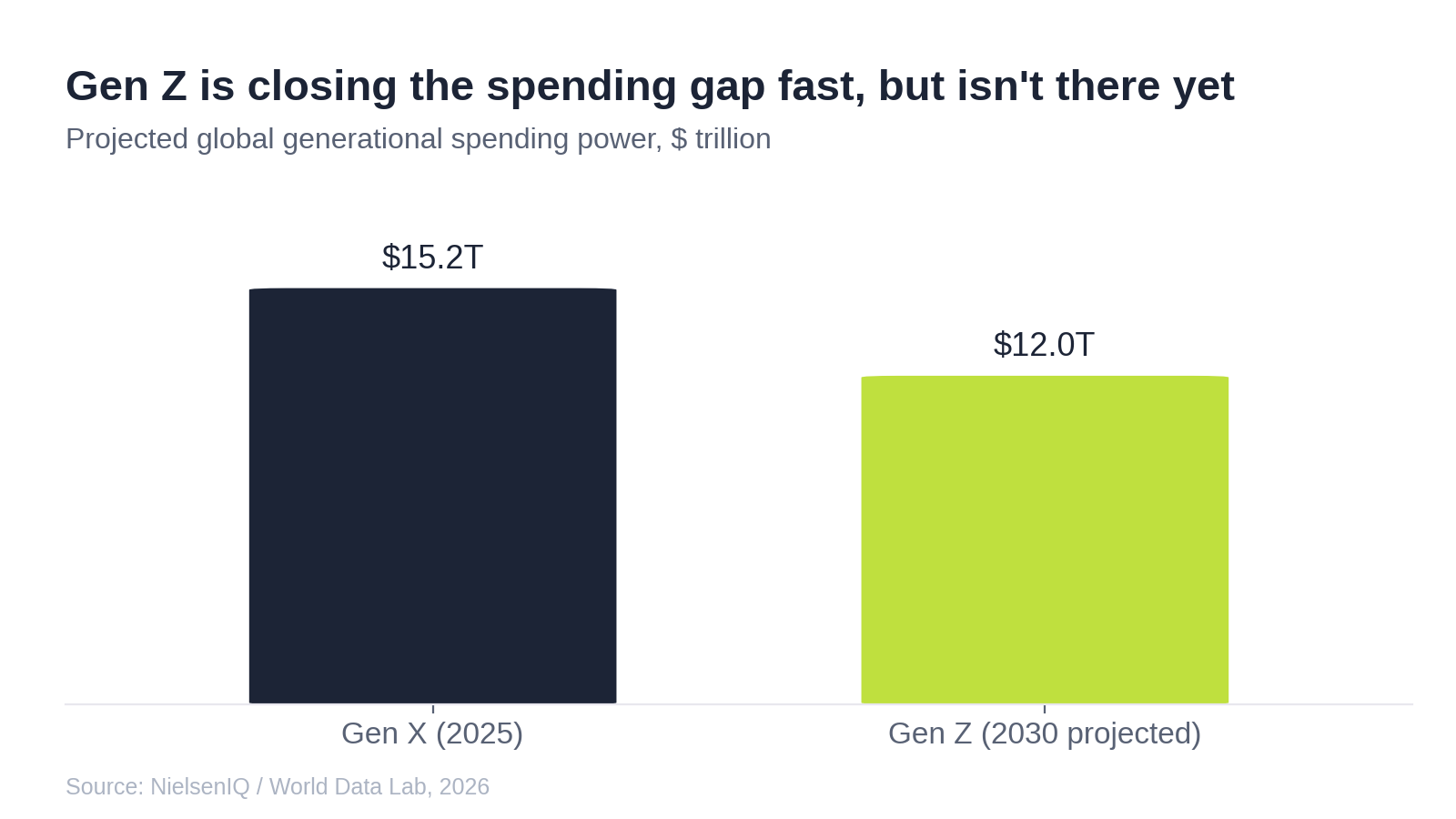
That’s important because younger generations are gaining more financial power. For instance, NielsenIQ projects Gen Z's global spending power will reach $12 trillion by 2030. This generation was raised on a phone rather than appointment television, so your strategy must reflect that.
That’s why this guide covers an audit for brand assets, a step-by-step digital strategy, and how to measure whether it's actually working.
P.S. If you'd rather bring in a partner who's done this before, our influencer marketing agency has run creator campaigns for Disney, Dockers, and New Balance.

What Is Legacy Brand Marketing?
Legacy brand marketing means promoting an established brand in a way that protects its existing equity while updating its reach, tone, and channels for current consumer behavior. It differs from marketing a new brand in one key way: every creative decision gets weighed against a perception the brand didn't choose today, but has to work with.
A legacy brand doesn't start from zero. It starts from whatever position decades of advertising, product experience, and cultural moments already put it in, good, outdated, or both at once.
Why Legacy Brands Need a Different Digital Marketing Strategy
A digital playbook built for a five-year-old challenger brand assumes no prior perception to manage. A legacy brand's playbook has to account for three things a new brand never deals with:
- An existing customer base that can feel alienated by change, even change aimed at growth, if it looks like the brand is abandoning what they valued.
- Brand assets carrying real equity, a logo, a tagline, a mascot, that a rebrand-first instinct can destroy by discarding them too quickly.
- A perception gap between what the brand actually is today and what casual observers still assume it is, often built on a decade-old impression that never got updated.
Skipping straight to "how do we look modern" without addressing these three first is how modernization efforts end up spending real brand equity chasing a demographic that aesthetics alone were never going to win.
Pro tip: We treat a legacy brand's history as raw material for creative. The founding story, the archive, the product nobody else can claim: a supply of native, testable content most new brands would kill for. Heritage is the asset; digital execution makes it visible again.
“Legacy brands don't do this,” a short from 37signals on the habits that keep heritage brands stuck. Source: 37signals on YouTube
The Core Challenge: Protecting Brand Equity While Evolving
The core tension in legacy brand marketing is that the same recognition that makes a brand valuable also makes it resistant to change.
- Move too slowly, and the brand cedes cultural relevance to newer competitors with none of the same baggage.
- Move too fast, and it risks the Tropicana problem. For those that don’t remember, Tropicana changed its iconic straw-pierced-orange in 2009 with a glass of orange juice. This wreaked havoc among loyal customers, confused and disappointed by the new minimalist logo. Basically, changing something customers relied on to recognize the product means losing them at the shelf before a single new customer shows up.
The brands that manage this well treat equity protection and evolution as one project, run by the same team. Disney's work with Marvel Styles is a useful reference point: our brand strategy work with the team produced trend-responsive organic social content inside strict IP and licensing guardrails, on a sub-two-week brief-to-delivery turnaround, fast enough to still catch the cultural moment it was built for.
Here’s an example:
Why Established Brands Lose Relevance Online
Established brands typically lose relevance online for a narrower set of reasons than leadership usually assumes:
- They stopped showing up where the audience actually spends time. A brand that mastered TV and print in 1995 can have zero organic presence on the platforms where its next customer discovers products today.
- Their content reads as an ad in a feed built to reward native formats. Polished, agency-produced creative can perform worse than a rougher, platform-native post, because the format itself signals "skip me" to a scrolling audience.
- The brand kept talking to its existing customer instead of the one it needs next. Messaging built for a 55-year-old loyalist doesn't automatically translate for, and usually actively repels, a 22-year-old discovering the category for the first time.
- Nobody owns cultural relevance as a job. Legacy brand teams are frequently structured around channels (TV, retail, digital as an afterthought), leaving no one accountable for the brand's standing in culture specifically.
Dr. Martens is a clean example of how uneven this can get even for one brand.
According to Basis Global's "Gen Z Brand Radar" report, the label ranks #1 for Gen Z cultural relevance in the UK, appearing across every major conversation type tracked, while sitting around #40 in the US with almost no cultural footprint at all. Same product, same brand, two different outcomes, because relevance was actively built in one market and left to chance in the other.
How Consumer Expectations Have Changed for Legacy Brands
Consumers now expect a level of speed, transparency, and platform fluency from every brand, legacy or otherwise, that didn't exist a decade ago:
- Younger consumers discover products through creators and short-form video first, so a legacy brand's first impression with a new customer is often a creator's opinion rather than the brand's own messaging.
- Consumers expect brands to participate in platform culture (responding to comments, joining trends on a relevant timeline) instead of simply posting into it and moving on.
- Trust now builds through consistency and transparency more than polish; an overly produced, corporate-feeling post can read as less trustworthy than a plainer one.
- Consumers check whether a brand's public behavior actually matches what it claims, and any gap between the two gets called out publicly and fast.
A legacy brand doesn't have to abandon its identity to meet these expectations. The identity just has to show up in formats and behaviors the audience already recognizes as current.
Before You Modernize: Audit What Your Brand Should Keep, Change, and Retire
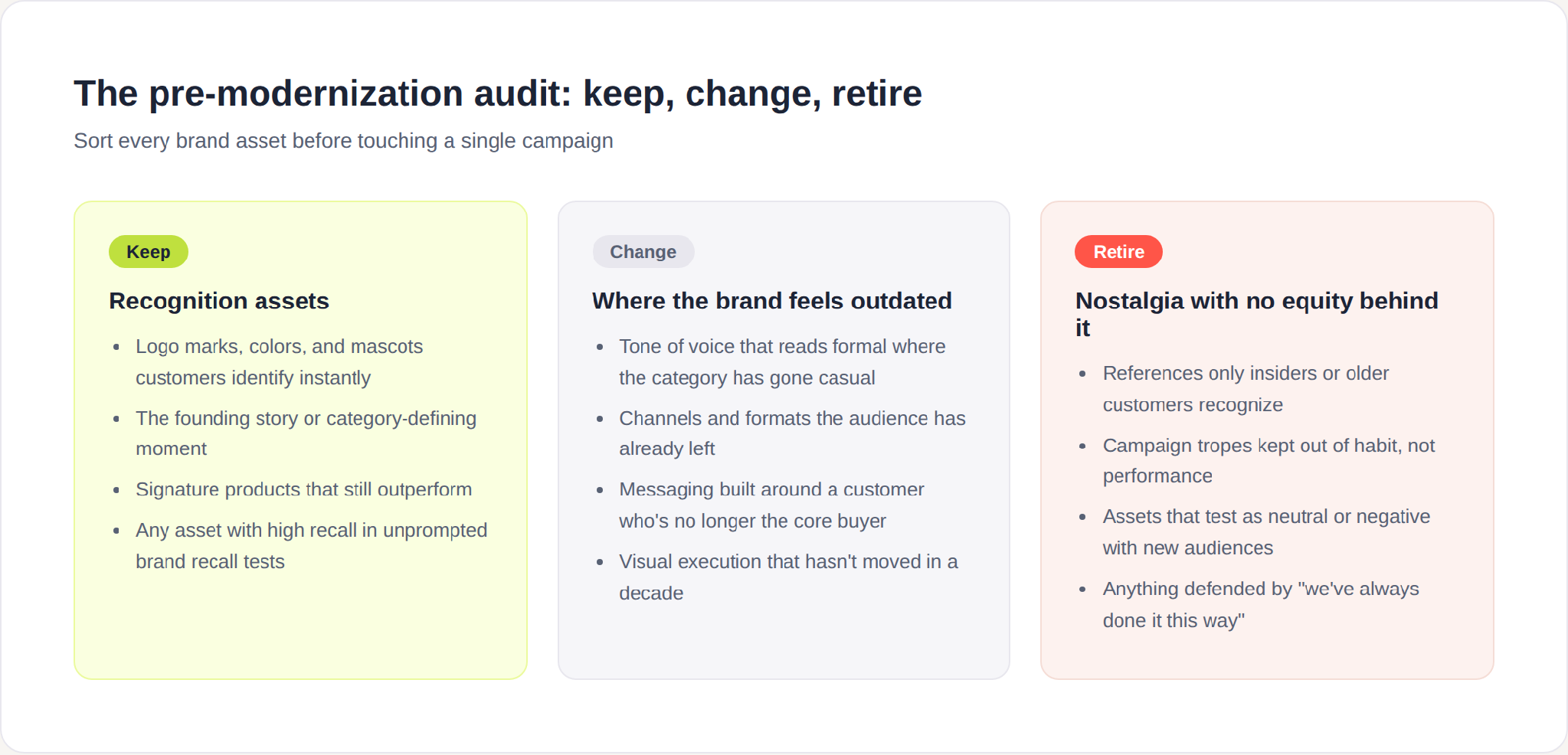
Every modernization effort should start with an honest audit instead of a creative brief. Sort every brand asset into one of three buckets before a single new campaign gets built.
Identify the Brand Assets Customers Still Recognize
Run an unprompted brand recall exercise with real customers and prospects, with no visual cues, and note what they name on their own: the logo, a color, a mascot, a jingle, a specific product. Whatever surfaces unprompted is the equity to protect.
Coca-Cola's red and contour bottle shape, decades into constant marketing evolution, still surface in nearly every unprompted recall test in the category; those elements stayed fixed even as the surrounding campaigns changed completely. That’s probably because Coca Cola mastered neuromarketing strategies so well.
Understand Where Your Brand Feels Outdated
Separately, audit where the brand actively feels behind:
- Tone of voice that reads formal in a category that's gone casual
- A channel mix still weighted toward formats the audience has left
- Or visual execution that hasn't shifted in a decade
This is a different exercise from the recognition audit above. Something can score high on recognition and still feel dated, and that combination is exactly what needs updating carefully.
Separate Real Heritage From Nostalgia Marketing
Real heritage is an asset with ongoing relevance: a founding story, a manufacturing process, a product attribute customers still care about today. Nostalgia marketing leans on old campaigns or references mainly because the internal team finds them familiar, whether or not they carry any weight with the audience being targeted. Test the difference directly: a heritage reference that only resonates with people who already worked at or loved the brand a decade ago belongs in the retire pile.
Research New Audiences Without Alienating Existing Customers
Research a new target audience's actual media habits, platform preferences, and category attitudes before building anything for them, treating it as an addition to the existing customer base. Ask:
- What the new audience needs to see to consider the brand.
- What the existing base needs to see to feel included in the change.
Both answers inform the same brief.
How to Build a Digital Strategy for a Legacy Brand
With the audit complete, building the actual strategy follows five steps, in order.
1. Define What Relevance Looks Like for Your Brand Today
Relevance isn't a feeling; define it as a specific, measurable target before building anything. That might be a target unaided-awareness score with an 18-34 audience, a share-of-voice benchmark in category conversations on a named platform, or an engagement benchmark against category competitors. Write it down before step 2, since every choice that follows should trace back to this definition.
2. Refresh Your Positioning Without Rewriting Your History
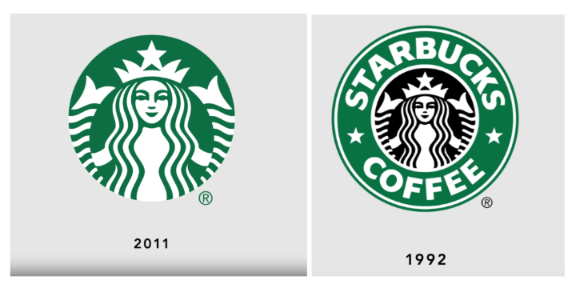
A positioning refresh restates why the brand matters today, in language that fits current culture, without erasing the history that got it there. Starbucks' 2011 logo update, dropping the word "coffee" from the mark while keeping the siren fully intact, is the reference case: the change signaled expansion into new categories while letting customers keep recognizing exactly what the brand already was.
How to do it: Draft the refreshed positioning statement, then check it against one question: does a loyal 20-year customer still recognize the brand in this sentence? If the answer is no, the refresh has gone too far.
3. Translate Brand Heritage Into Modern Content Pillars
Every heritage asset, the founding story, the manufacturing process, the iconic product, the campaign archive, maps to a specific modern content format. Building a content system around heritage as a standing pillar, instead of an occasional throwback post, is what keeps the archive generating new material.
| Heritage Asset | Modern Content Pillar |
|---|---|
| Founding story: why the brand exists, and the problem it first solved | Origin-mythology series: short-form video treating the founding story as a narrative arc |
| Craftsmanship & process: how the product is actually made, and what makes it hold up | Process and "how it's made" content: behind-the-scenes formats that turn manufacturing pride into proof |
| Iconic product: the single item most associated with the brand | Community and UGC platform: inviting customers to reinterpret the icon in their own context |
| Archive & past campaigns: decades of ads, packaging, and cultural moments | Nostalgia-with-a-twist creative: referencing the archive through a current cultural lens |
Translating heritage assets into modern content pillars: founding story, craftsmanship, iconic product, and archive each map to a specific content format
Burberry's "Art of the Trench" is a strong reference here, even if the campaign is almost two decades old. Instead of simply advertising its signature product, the brand turned the trench coat into a user-generated content platform, inviting customers worldwide to submit photos of themselves wearing it. The heritage product became the content engine, and the ads became almost secondary.
Burberry's “Art of the Trench” (2009): customer-submitted trench coat photos turned into a brand-owned content platform. Source: YouTube
4. Choose Digital Channels Based on Audience Behavior
Pick channels based on where the specific audience defined in step 1 actually spends attention, verified against real platform data instead of assumed from where the marketing team feels most comfortable.
A legacy brand chasing a younger audience that isn't yet active on TikTok, or over-rotating into Reels formats built for a much younger user base than its actual core, is optimizing for the wrong signal either way.
Map the target audience's platform habits first, then commit budget.
Here’s how to do it:
| Audience Signal | What It Tells You | Channel to Prioritize |
|---|---|---|
| Discovers products through short-form video before searching by name | Category discovery happens on-platform, not via search | TikTok / Instagram Reels |
| Follows or messages the brand directly for support or updates | Expects two-way, real-time interaction | X (Twitter) / Instagram DMs |
| Still responds to email opens and loyalty program engagement | Retention behavior runs through inbox and account, not social feed | Email / loyalty app |
| Searches category terms before brand terms ("best running shoes" vs. brand name) | Non-branded intent is unmet; brand isn't top-of-mind yet | SEO / organic search content |
| High time-spent on long-form video, low short-form engagement | Prefers depth over speed; may skew toward an older or research-driven segment | YouTube |
| Engages with creator content more than brand-posted content | Trusts intermediaries over direct brand messaging | Influencer/creator partnerships |
| Shops via social checkout or in-app links rather than the brand's own site | Purchase journey is platform-native | Social commerce (TikTok Shop, Instagram Shop) |
| Shows up in-store but rarely engages digitally | Loyalty is physical/habitual, not yet digitally trackable | Retail media / in-store digital touchpoints |
5. Build a Content System That Balances Brand and Performance
A single campaign doesn't modernize a brand; a repeatable production and testing system does. So, set up a structure that:
- Produces creative on a real cadence.
- Tests it against real spend.
- Feeds what works back into the next round.
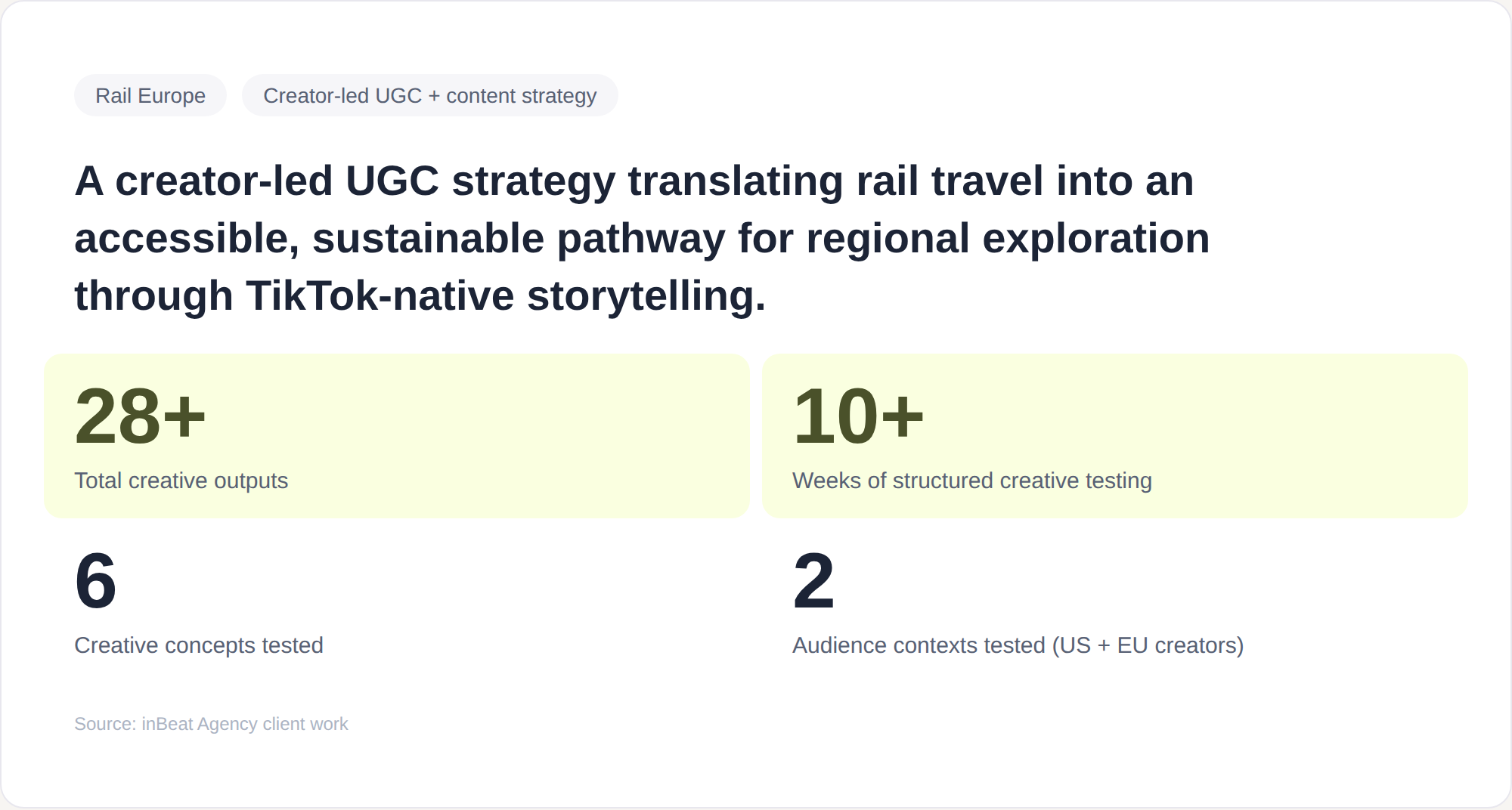
Rail Europe's creator-led UGC program designed by our inBeat Agency team shows what this looks like in practice:
- 10+ weeks of structured creative testing with 6 distinct creative concepts, and 2 separate audience contexts tested (US-based and EU-based creators)
- 28+ total creative outputs from one coordinated system.
The structure, testing concepts and comparing audience contexts before scaling anything, is the actual system, more than any single video inside it.
Brand Refresh vs. Rebrand: Which One Does a Legacy Brand Need?
A refresh updates the brand's expression, tone, visual details, channel mix, while keeping its core identity and equity intact. A rebrand changes the identity itself: the name, the logo system, sometimes the entire visual language. Most legacy brands need a refresh far more often than a rebrand, and confusing the two is an expensive mistake.
| Brand refresh | Rebrand | |
|---|---|---|
| What changes | Tone, visual details, channels, messaging | Name, logo system, core visual identity |
| What stays | Core identity, existing equity, brand recognition | Little of the prior identity survives |
| When it fits | The brand is recognized but feels dated | The brand carries active reputational damage or a fundamental business change |
| Risk profile | Low to moderate when recognition anchors are kept | High; existing recognition and equity reset close to zero |
| Reference example | Starbucks (2011): dropped "coffee" from the logo, kept the siren | Meta (2021): new name and identity to distance from Facebook's reputation |
The Tropicana's 2009 packaging change mentioned above is the clearest cautionary tale in this space.
A 2009 academic study found unit sales fell roughly 20% within two months of the redesign, which replaced the iconic orange-with-a-straw image with a generic glass of juice. Shoppers reportedly couldn't find the product on shelf, and the company reversed the design within six weeks.
The episode remains the textbook case for how far a change can go before it stops being a refresh and starts destroying the recognition that made the product findable in the first place.
How Legacy Brands Can Reach Younger Audiences
Reaching a younger audience without losing the base that built the brand comes down to four practices.
Use Social Media Without Trying to Sound Like Every Other Brand
Adopting platform-native formats doesn't require adopting a generic "brand voice on the internet" tone that sounds identical to every other company chasing the same trend. The brand's actual personality, translated into the platform's native format, tends to outperform a borrowed voice that happens to be trending.
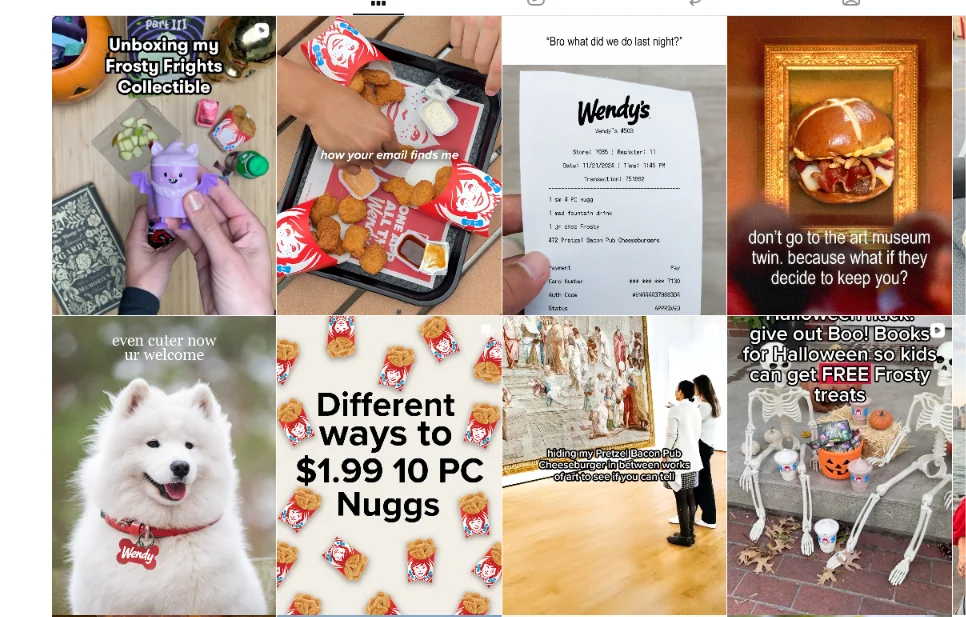
Wendy's built a distinct, years-long social presence around its existing brand personality, direct, a little combative, unmistakably itself, letting the platform change the format without asking the brand to change its character.
Work With Creators Who Can Make the Brand Feel Culturally Relevant
A creator's job for a legacy brand isn't to lend the brand their audience. It's to translate the brand into a format and voice their audience already trusts, which is why creator selection should weigh fit as heavily as reach.
Build Community Instead of Chasing Every Trend
Chasing every platform trend produces content that ages out in days and rarely compounds. Building a community around a specific brand asset, the way Burberry's Art of the Trench turned one product into an ongoing customer photo archive, produces a platform the brand actually owns instead of a string of one-off posts riding someone else's format.
Use Product Education and Storytelling to Create Discovery
Younger audiences frequently discover legacy products with zero context for why they matter; a founding story or a manufacturing detail that's old news internally can land as a genuine discovery externally. Treat basic product education as top-of-funnel content worth producing on purpose, rather than something too obvious to bother covering.
Influencer Marketing for Legacy Brands
Influencer marketing gives a legacy brand borrowed cultural fluency it can't manufacture internally, but only when creator selection and usage strategy actually fit the brand.
Choose Creators Who Fit the Brand, Not Just the Audience
The instinct is to pick creators by audience size or overlap with the target demographic. For a legacy brand, fit matters more: does this creator's existing content and tone make the brand look like it belongs in their feed, or like it paid for a placement. Our guide to finding the right creators covers the vetting process in depth.
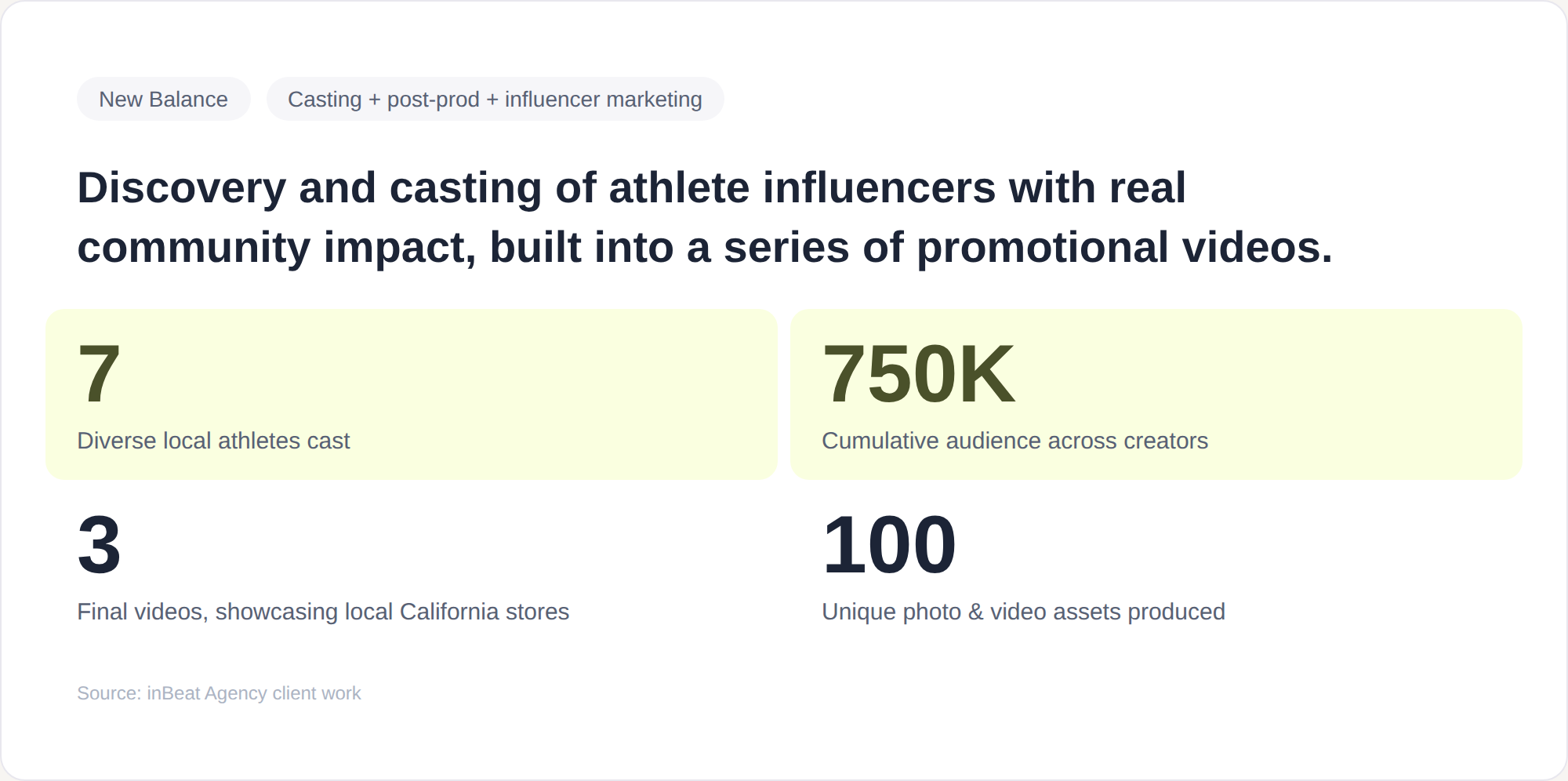
New Balance's athlete-casting approach shows the difference in practice: instead of renting reach from creators with large followings, our team at inBeat helped the brand cast seven diverse local athletes with genuine community standing. We produced three final videos that showcased real local stores and a cumulative audience of 750,000 across the creators involved, documented in the brand's public case study.
Use Creator Content to Modernize Perception
Creator content shifts perception faster than brand-produced advertising because it arrives with someone else's credibility already attached. A legacy brand appearing inside a creator's normal content, instead of interrupting it with an obvious ad, reads as evidence the brand is still relevant enough for that creator to choose it.
Turn Creator Partnerships Into Paid Media Assets
The highest-value use of creator content is rarely the organic post alone. It's what happens when that content gets run as paid media through the creator's own handle, with usage rights cleared for that specific use in advance.
We helped Dockers rebuild its relevance this way, moving from a reach-focused approach to brand-recall-driven creator storytelling and running the winning content through a whitelisted strategy: 80+ influencers activated, more than 16 million views, and 167,000+ content interactions, all captured under the creator's own handle.

Avoid the "Forced Relevance" Problem
Forced relevance happens when a legacy brand adopts a trend, a slang term, or a creator partnership purely because it's current, with no real connection to the brand's actual identity or product. Younger audiences especially recognize the mismatch immediately, and the attempt often does more damage to perceived relevance than staying quiet would have.
Remember: Every creator or trend decision should pass one filter: does this connect to something true about the brand, or is it just current.
How to Combine Heritage Storytelling With Performance Marketing
Heritage builds the emotional case for the brand; performance marketing turns that case into measurable growth. Running both through one connected system, rather than two departments handing work back and forth, is what makes each one actually work.
Paid Social and Creative Testing
Feed heritage-driven creative concepts into the same dark-posting and testing infrastructure used for any performance campaign. For a legacy brand specifically, testing several heritage angles against real spend reveals which piece of the brand's history actually moves a modern audience, which is usually a different answer than the piece the internal team assumes should win.
Search, SEO, and Non-Branded Demand Capture
Legacy brands often win branded search by default while losing non-branded, category-level search to newer competitors who built content specifically to answer category questions. Winning non-branded search means publishing genuinely useful category content alongside the brand-focused pages, so the brand shows up for the customer who doesn't know its name yet.
Email and Loyalty Marketing
A legacy brand's existing customer list is a retention and lifetime-value asset most challenger brands spend years trying to build. Segment communications between long-time customers, who tend to respond to depth and history, and newly acquired ones, who respond better to onboarding and product education, so each group gets the message that actually fits where they stand with the brand.
Retail, Ecommerce, and Omnichannel Customer Journeys
For legacy brands with a physical retail footprint, the digital and in-store experience need to reinforce the same brand rather than feel like two different companies.
Coca-Cola's "Share a Coke" campaign is a useful reference for tying a mass-market physical product to a digital moment: personalizing bottles with common first names drove a measurable lift in young-adult consumption in the campaign's original Australian market, and when the US market later adopted the idea, it brought back roughly 1.25 million teens who hadn't tried the product in the prior year. The packaging itself became the media.
How to Update a Legacy Brand's Visual Identity for Digital
Updating visual identity for digital usually means adapting execution more than the identity itself. Our digital touchpoint work checks specifically for whether the logo still reads clearly at a 40-pixel social avatar size, whether the brand's color palette holds up under platform compression and dark-mode interfaces, and whether existing photography and video assets were shot for print or television in a way that looks dated in a short-form feed. Most of this is production and format work, well short of a full redesign.
How to Use Customer Data to Modernize Marketing Decisions
A legacy brand typically holds more historical customer data than any challenger competitor, purchase history, loyalty program behavior, decades of campaign response, and rarely puts it to use guiding modernization decisions.
Measurement built around that data can answer the audit's open questions with evidence: which products actually retain repeat buyers, which past campaigns produced a measurable lift versus just internal enthusiasm, and which customer segments are growing versus shrinking. Decisions built on that evidence tend to hold up better internally than ones built on a creative team's instinct about what feels current.
How to Measure Whether a Legacy Brand Is Becoming More Relevant
Relevance is measurable when it's tracked across four categories at once.
Brand Health Metrics
Track unaided and aided brand awareness, brand favorability, and consideration by age cohort specifically, alongside the aggregate figure. A flat overall awareness score can hide a real relevance gain with an 18-24 cohort that's being offset by natural decline in an older one.
Audience and Engagement Signals
Track engagement rate, save rate, and share rate by platform and by content pillar (heritage-driven versus pure performance content), so the team can see which type of content actually earns attention beyond raw publishing volume.
Conversion, Retention, and Customer Lifetime Value
Track new-customer conversion rate and lifetime value separately from existing-customer retention and repeat-purchase rate. A modernization effort that grows new-customer acquisition while quietly eroding retention among the existing base is a trade-off the brand needs to see in the dashboard well before it shows up a year later in the revenue numbers. Our marketing metrics guide covers the full measurement stack this should sit inside.
Measuring Brand Lift Alongside Performance Results
Run brand lift studies alongside performance campaigns as a standing part of the reporting cycle instead of a one-off research exercise pulled out once a year. A campaign that hits its CPA target while brand favorability with the target cohort holds flat or improves is a genuinely different result than one that hits the same CPA while favorability quietly declines, and only a paired measurement approach catches the difference.
Common Mistakes Legacy Brands Make in Digital Marketing
- Rebranding when a refresh would have worked, discarding real equity to solve a problem that didn't require it.
- Chasing every platform trend without building an owned content system, leaving content that ages out in days.
- Adopting a borrowed tone of voice to sound current, instead of translating the brand's actual personality into new formats.
- Targeting a younger audience by dropping messaging that still works with the existing base, instead of running both in parallel.
- Treating heritage as an occasional anniversary post instead of an ongoing content pillar system.
- Measuring only performance metrics and missing whether brand favorability is quietly eroding underneath good short-term numbers.
Examples of Legacy Brand Marketing Strategies: Why Do They Work?
A few patterns repeat across the companies that have pulled brand modernization off well:
- Old Spice turned a stagnant, older-skewing brand into a cultural moment by keeping its core comedic confidence and redirecting it entirely toward a new format and audience; body wash sales roughly doubled within months of the campaign's launch.
- Burberry turned its single most recognizable product into a standing user-generated content platform years before "UGC" was a marketing term, proving heritage products can work as community infrastructure, well beyond serving as an advertising subject.
- Starbucks proved a refresh can expand what a brand is allowed to sell while customers still feel like the same brand.
- Dockers, New Balance, and Rail Europe show the same principle at a channel level: creator-led storytelling, cast and structured around real fit, consistently outperforms brand-produced advertising at making a legacy product feel current again.
Make Your Brand's History an Advantage with inBeat Agency
A brand's history is the one asset a competitor can't copy, launch faster, or out-spend. Treated as a constraint, it slows every modernization decision down with fear of getting it wrong.
Run through the same creator sourcing, testing, and paid amplification system as any performance campaign, it becomes the fastest way to earn relevance back.
That's the system we run for legacy and heritage brands: protecting what already works while building the content and creator infrastructure that makes the brand feel current again. Book a free strategy call and we'll walk through where your brand's history is being underused.
Frequently Asked Questions
How can a legacy brand appeal to Gen Z without losing older customers?
Run both audiences in parallel instead of replacing one message with another. Keep the recognition assets and core promise that older customers rely on, and translate the brand's actual personality into the platforms and formats Gen Z already trusts. The failure mode isn't reaching younger customers; it's doing so by discarding what the existing base valued along the way.
Should a legacy brand rebrand or simply refresh its marketing?
Refresh in almost every case. A rebrand is justified only when the brand carries active reputational damage or the business itself has fundamentally changed, since a rebrand resets hard-won recognition close to zero. Most relevance problems get solved by updating tone, channels, and content well short of touching the core brand identity.
How do you modernize a brand without abandoning its heritage?
Run the keep, change, retire audit first, and treat surviving heritage assets as content pillars with a modern format mapped to each one, rather than occasional nostalgia posts. Heritage works best as an ongoing supply of native content, not a constraint the team has to work around.
Is influencer marketing effective for established brands?
Yes, specifically because creator content carries borrowed credibility a legacy brand's own advertising can't replicate. It works best when creators get chosen for genuine fit with the brand over audience size alone, and when the winning content extends into paid media through the creator's own handle instead of staying organic-only.
What digital marketing channels should legacy brands prioritize?
Whichever channels the specific target audience defined in the strategy actually uses, verified against real platform behavior. A brand chasing a younger cohort that isn't yet active on a given platform, or over-rotating into formats built for a much younger user base than its actual core audience, is optimizing for the wrong signal either way.
How long does it take to change consumer perception of a legacy brand?
Meaningful shifts in unaided awareness and favorability with a new cohort typically take multiple quarters of consistent presence, well beyond a single campaign. Old Spice's reinvention looked instant from the outside, but it built on a full repositioning and a sustained response campaign that ran for months. Track brand health metrics quarterly rather than expecting a single flight of content to move them.