

Your archive is doing fine with the people who already buy from you. The founding date, the original factory, the product that hasn't changed in eighty years: all of it lands with the core base because they have a relationship with the logo.
Gen Z doesn't have that relationship.
When the same heritage story runs as a direct brand ad to a 22-year-old, it arrives as a company vouching for itself, and there is no reason for that person to take the company's word for it.
Better copy won't close the gap.
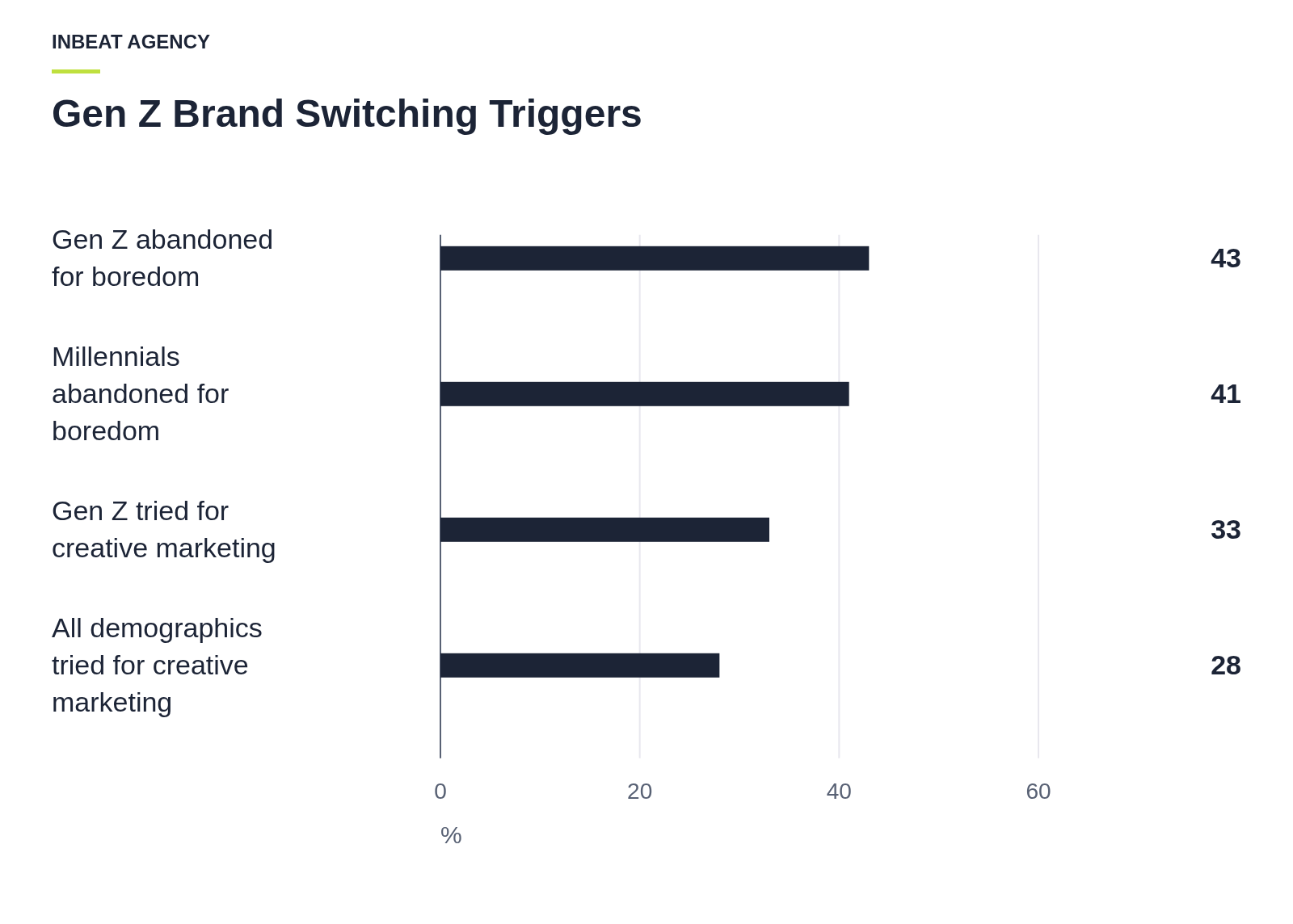
In the 2024 SAP Emarsys survey, 43% of US Gen Z respondents said they'd abandoned a brand they were once loyal to because it bored them, so even the trust you win is rented.
This article argues for a different route: borrow trust from creators who already hold it with this cohort, then run their content as performance creative you can test, whitelist, and scale against CAC and MER.
P.S. If you'd rather see the loop running than build it from scratch, inBeat's paid social team runs creator content as performance creative.
In our experience, heritage brands keep solving the wrong problem. The question in most boardrooms is how to make a century of legitimacy sound young, when the actual blocker is that Gen Z has never given the brand permission to speak to it.
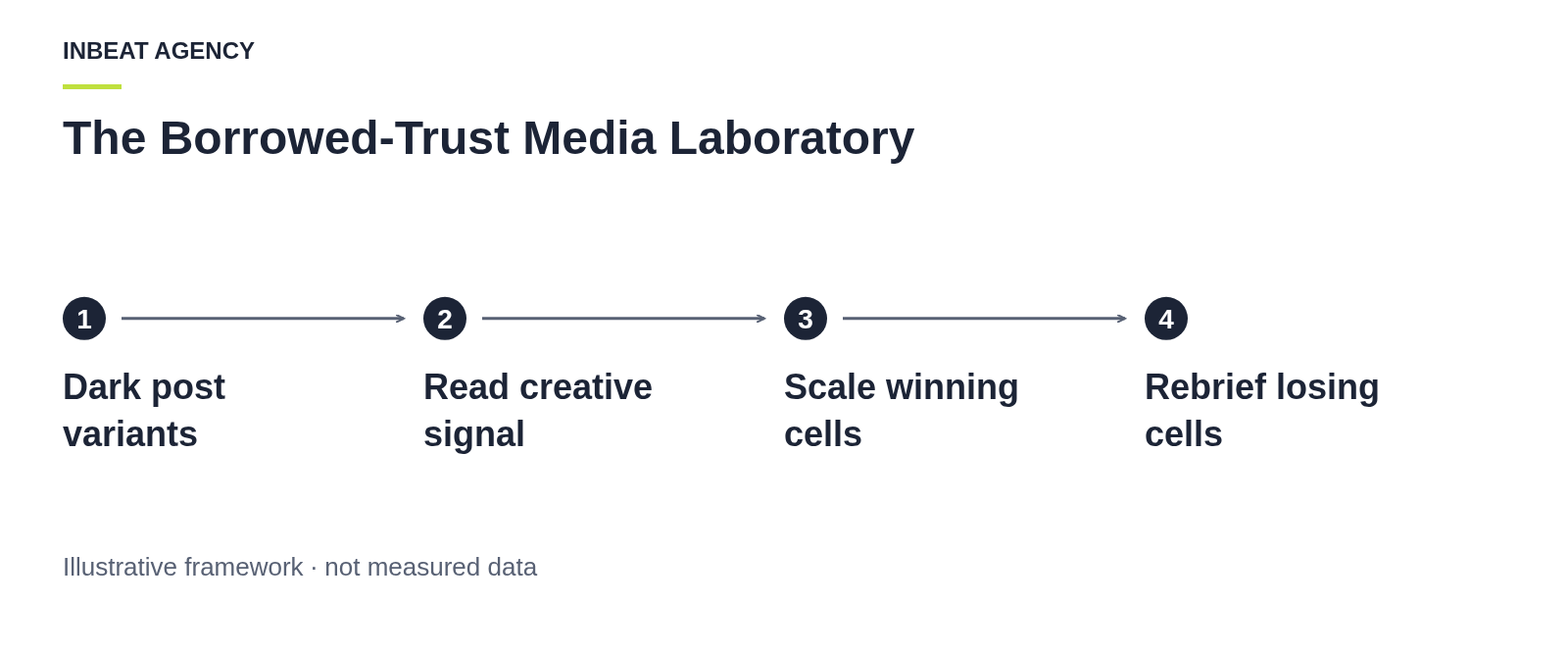
When you collaborate with a creator, you are buying their standing with people who have never heard your founding story, and that standing is the asset you can't manufacture in-house. Their persona also does the audience selection that ad settings no longer can, which is why the creative becomes the targeting. From there, media buying is based on informed experimentation: dark-post the variants, read the signal, whitelist what earned it, and let the cells that lost write the next round of briefs.
TL;DR: borrowed trust is the shortest path from heritage to Gen Z acquisition
- Direct brand ads carry the heritage story but not the credibility Gen Z assigns to people it already follows. The same founding-story message lands as advertising when the brand says it and as a recommendation when a creator does.
- Boredom is the churn risk, and it outranks disagreement. In the 2024 SAP Emarsys survey, 43% of US Gen Z respondents had abandoned a brand they were once loyal to because it bored them. Repeating the archive is a variety problem, so a heritage story told the same way every quarter is exposure to that risk.
- Creators translate brand codes into formats Gen Z already consumes. The brand supplies the archive, the product truths, and the guardrails; the creator supplies the register and the trust.
- Whitelisting creator content as paid social turns borrowed trust from a one-off collaboration into a testable, scalable acquisition channel.
- The scoreboard is CAC and MER by creator persona and angle, read at the creative level. Campaign sentiment explains results; it doesn't justify budget.
A conceptual picture of the problem: a century-old apparel brand whose archive posts earn solid engagement from existing customers and flat new-customer acquisition from anyone under 27. Check which of the five your current plan already satisfies.
Why Heritage Brand Ads Struggle to Build Gen Z Trust
Direct brand ads underperform with Gen Z for a structural reason: a corporate voice narrating its own legitimacy has no third-party validation, and this cohort discovers brands through people it follows. The three findings below describe that gap.
Boredom Drives Gen Z Brand Switching
Heritage brands treat repetition as safety. The survey data says otherwise. In the 2024 SAP Emarsys survey of US consumers, 43% of Gen Z and 41% of Millennials reported abandoning a brand they were once loyal to because they grew bored of it.
The reason they gave was sameness. For a brand whose core asset is a story that by definition doesn't change, that is the specific exposure to manage: the archive has to keep being reinterpreted or it becomes wallpaper.
Creative Marketing Attracts Gen Z Customers
The same survey offers the acquisition-side mirror. 33% of Gen Z respondents said they had tried a new brand because of its creative marketing, against 28% across all demographics. The gap is five points, which is modest, so read it as evidence that creative variety works as an acquisition lever, without proving that creativity alone converts. It still argues against one polished heritage film per year and for many distinct creative expressions of the same codes.
Authenticity Matters in Gen Z Marketing
The third leg of the diagnosis rests on practitioner consensus. Agency commentary from MBLM holds that Gen Z spots inauthenticity fast and disengages from brands that don't match their values; heritage-focused commentary from History Factory makes a similar case for why a verifiable past matters to this cohort.
Note: Neither is a study, so weigh them as what experienced operators believe, and note that they point in the same direction as the survey: a brand asserting its own authenticity in its own ad is the weakest possible way to demonstrate it.
Two limits on all of the above.
- The SAP Emarsys figures are US-focused and self-reported, so they describe stated behavior in 2024. It's not observed churn for today.
- And heritage stays an asset throughout; the brand is simply the wrong narrator for this audience.
The practical move now: pull your last 12 months of Gen Z-targeted brand ad performance and separate reach from new-customer acquisition. If the heritage message is being viewed but not converting, the trust gap is your problem, and better creative alone won't close it.
Panelists on Al Jazeera's The Stream break down how marketing authority shifted from centralized corporate messaging to peer networks and creators.
Brand Ads vs. Creator Ads for Gen Z Acquisition
The choice in front of a heritage CMO is between two operating models, and the difference is who holds the credibility, who controls the register, and what the media dollar buys.
For a brand with recognizable equity and a generational gap, the borrowed-trust model wins on Gen Z acquisition. Centralized brand ads still win for retention messaging to the existing base. Run both, with separate scoreboards.
| Dimension | Centralized heritage brand ads | Creator-borrowed trust with whitelisting | Which wins for Gen Z acquisition and why |
|---|---|---|---|
| Who carries credibility | The logo and the brand's own narration | The creator's existing relationship with their community | Creator. Gen Z has no relationship with the logo, so the brand is asking to be believed on its own say-so. |
| Who controls register | Brand and agency creative teams | Creator, inside brand-defined codes | Creator. The tone, pacing and slang that read as native are exactly what an outside team can't reliably reproduce. |
| Message ownership | Brand owns script, voice and edit | Brand owns facts and codes; creator owns expression | Borrowed trust, as long as the codes document is real. Without it, dilution risk is legitimate. |
| Creative volume per dollar | A few polished assets per quarter | Dozens of variants per brief cycle | Creator. Variety is the acquisition lever the 2024 survey data points to, and brand production pipelines can't match creator output on cost. |
| What media buys | Reach for one message | Reach for the winning message-and-messenger pair | Borrowed trust. Media stops being distribution and becomes the test bed. |
| Audience selection | Platform targeting settings | The persona inside the creative | Borrowed trust. As targeting narrows, the creator's persona selects the audience. |
| Best use | Retention and reassurance for the core base | New-customer acquisition in a cohort the brand can't reach directly | Different jobs. Keep both, score them apart. |
How Creators Bring Credibility to Heritage Brands
In the centralized model, credibility sits entirely with the logo, which is the one asset Gen Z has no history with. In the borrowed-trust model, the brand licenses trust it never built with this cohort.
Commentary in The Drum argues that the heritage fashion brands Gen Z favors are the ones that decline to pander, which fits: a creator interpreting your product on their own terms is the opposite of pandering, because the brand isn't performing youth.
Who Controls the Creator's Tone and Format?
Hand over tone and format and keep the facts. That is the whole trade. Retailers writing for eTail West frame the challenge as holding heritage while marketing younger; the register split is how you do both at once instead of choosing.
How Paid Social Tests the Message and the Messenger
- Centralized media buys distribution for a message already decided.
- Borrowed-trust media buys the answer to which message and messenger acquires, then buys scale for that answer.
A conceptual case: a heritage spirits brand keeps its craft narrative in brand film for its base while briefing cocktail creators to retell the same distillation story in short-form video for people who have never ordered its bottle.
What the decision depends on: how clearly your brand codes are written down, whether leadership will grant creators directed freedom, and whether your paid social team can read data at the creative level. Score your current Gen Z program against each table row and mark which column it sits in today.
How to Brief Creators Without Diluting Brand Heritage
Write the codes document before you brief anyone. What follows is practice guidance drawn from how creator programs are run; the evidence ledger for this article contains nothing on brief structure, so treat the framework as a working method to adapt.
Separate Brand Facts From Creative Freedom
List the three to five things about the brand that cannot move. For most heritage brands, these are product truths:
- The materials
- The founding-story facts
- A manufacturing method
- A ritual of use
Everything not on that list becomes open for creator interpretation.
The discipline is in keeping the list short. A twelve-item code list is a style guide wearing a disguise, and it will produce creator content that looks like brand content with a different face in it.
A useful format is a one-page document with two columns.
- The left column holds facts flagged as must-be-accurate: the year, the place, the material, the process.
- The right column holds expression, marked open: setting, hook, pacing, humor, format, music, who else appears.
Conceptual example: a heritage cookware brand whose non-negotiable is the cast-iron seasoning process and whose negotiable is whether the creator demonstrates it in a dorm kitchen or on a campsite stove.
Use Brand Archives to Brief Creators
Hand creators the archive assets, founder anecdotes, old catalog pages, and product facts, each carrying an accuracy flag where one applies.
Then stop.
Don't write the opening line, don't specify the shot list, don't supply talking points in brand voice. The reason is practical: the hook and the pacing are where the creator's trust with their audience lives, and it is the one thing you are paying to borrow.
Gen Z disengages quickly when it detects inauthenticity, and the fastest way to look inauthentic on a creator's feed is a creator visibly reading brand copy. Directed freedom protects the heritage and the creator's credibility at the same time.
The archive tends to be richer than brands expect. Founder letters, defect logs, factory photos, and discontinued products are more interesting to a creator than a polished brand story, because they are evidence, and the creator can build their own argument from evidence.
Build a Creator Brief Matrix by Persona and Angle
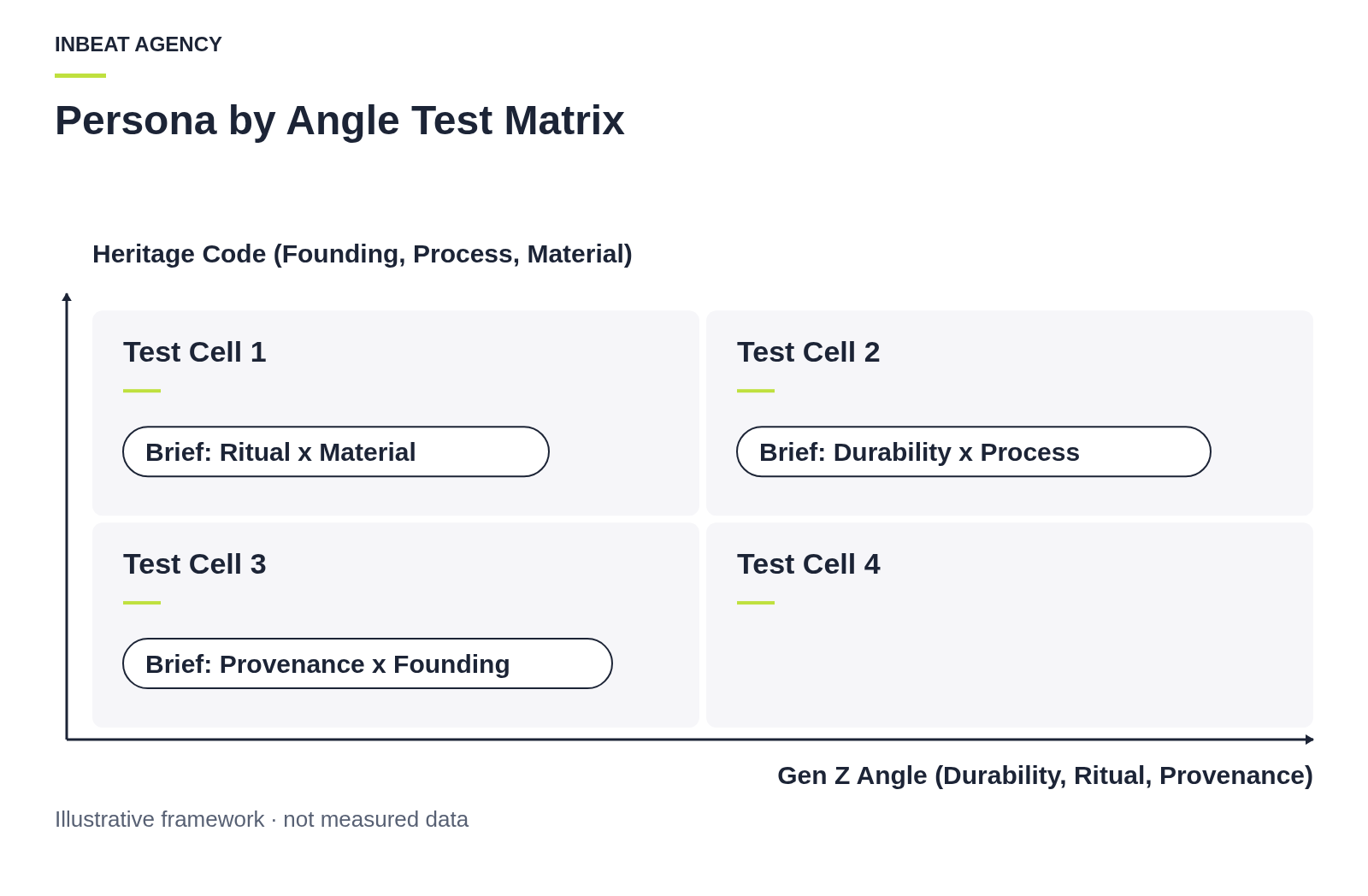
Directed freedom means the brand chooses the angle and the creator chooses everything about how it is expressed. Build a persona and angle matrix to make that concrete.
- Rows are your heritage codes.
- Columns are the two or three Gen Z-relevant angles that code can carry: durability, repair, provenance, ritual.
- Each cell is a brief.
A brand with four codes and three angles has twelve testable briefs instead of one campaign idea, and each brief goes to creators whose existing content already lives near that angle.
The matrix also answers the applicability question. The code-versus-expression split works identically for CPG, food and household heritage brands because the codes are product truths in every category.
A hundred-year-old mustard has a recipe, a region, and a way people use it at the table; those are three rows.
inBeat's broader guide to legacy brand marketing covers the wider digital playbook; this section is only about what a creator is handed.
Action before any outreach: draft the one-page codes document with the hard accurate-facts column and the open expression column, and get legal and brand sign-off on the left column once, so every subsequent brief inherits it.
How to Find and Vet Creators for a Heritage Brand
Source at volume, then vet hard. Trust in this model is held at the community level, and a micro creator with a tight community usually carries more of it per follower than a large account does.
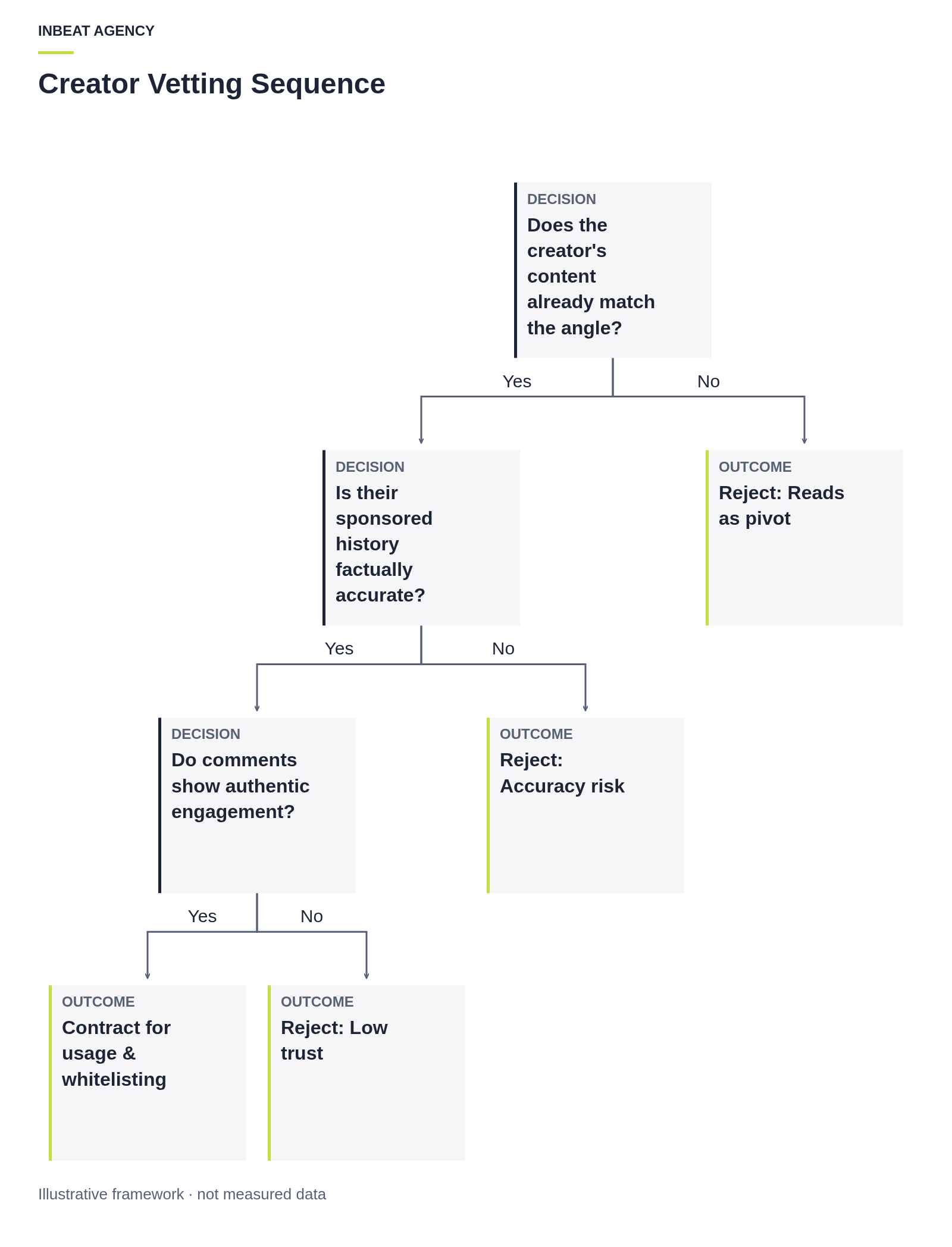
The sequence below assumes the codes document exists and covers only how the creators are found and screened. Volume figures are illustrative practice ranges with no sourced benchmark behind them.
- Define the Gen Z persona clusters you need. Describe each cluster by interest, aesthetic, and primary platform, and tie it to a column in your persona and angle matrix. A heritage boot brand might define a buy-it-for-life cluster on YouTube and TikTok and a workwear-as-fashion cluster on Instagram and TikTok. Then source micro creators at volume inside each cluster, aiming for a first batch in the range of 20 to 30 per cluster so you have enough variety to test and enough rejects to learn from.
- Screen for register fit. Look at the creator's last 30 or so posts and ask whether the angle you plan to brief already appears in their content unprompted. A repair angle briefed to a creator who already fixes their own gear reads as continuation. Briefed to a haul creator, it reads as a pivot, and the audience notices pivots. In practice, register fit is the strongest predictor of whether the borrowed trust transfers.
- Check accuracy risk. Review past sponsored posts for factual sloppiness: wrong product names, invented specs, claims the brand clearly didn't make. Careless product claims in someone's sponsored history are the specific heritage risk, because the same habit applied to your founding date or your material becomes a misstatement you then have to correct in public. In the boot example, reject any creator whose sponsored history shows loose product claims regardless of their audience size.
- Vet audience quality with engagement authenticity checks and comment-thread reads. Run the standard checks on engagement patterns and follower authenticity, then do the part tools can't: read the comments. Comment threads are live market research on how this persona talks about brands like yours, what they distrust, what they'd pay for, and which words they use for durability or provenance. That language belongs in the next brief.
- Contract for usage rights and whitelisting access up front. Secure paid usage rights for a defined term and creator-handle advertiser access before content is produced. Renegotiating after a variant performs is expensive and slow, and it hands the creator pricing power at exactly the moment you want to scale. Build the rate to include the rights from day one so the content can become paid creative without another conversation.
Insider tip: track your rejection reasons by step. If most creators fail at step two, your persona definitions are too broad. If most fail at step three, your category attracts careless sponsorship, and you should budget more review time downstream.
Run the five steps on the first 20 to 30 micro creators per cluster before committing production budget. The vetting cost is small relative to a whitelisted variant that has to be pulled, and the comment-thread reads in step four usually pay for themselves in brief quality alone.
How to Test and Scale Creator Ads With Paid Social
Treat every creator variant as a hypothesis and paid social as the lab that tests it. The loop below is the operational core of borrowed trust and the part most heritage-brand guidance skips. CAC and MER definitions and governance belong in the next section; this is the test-and-scale mechanics only.
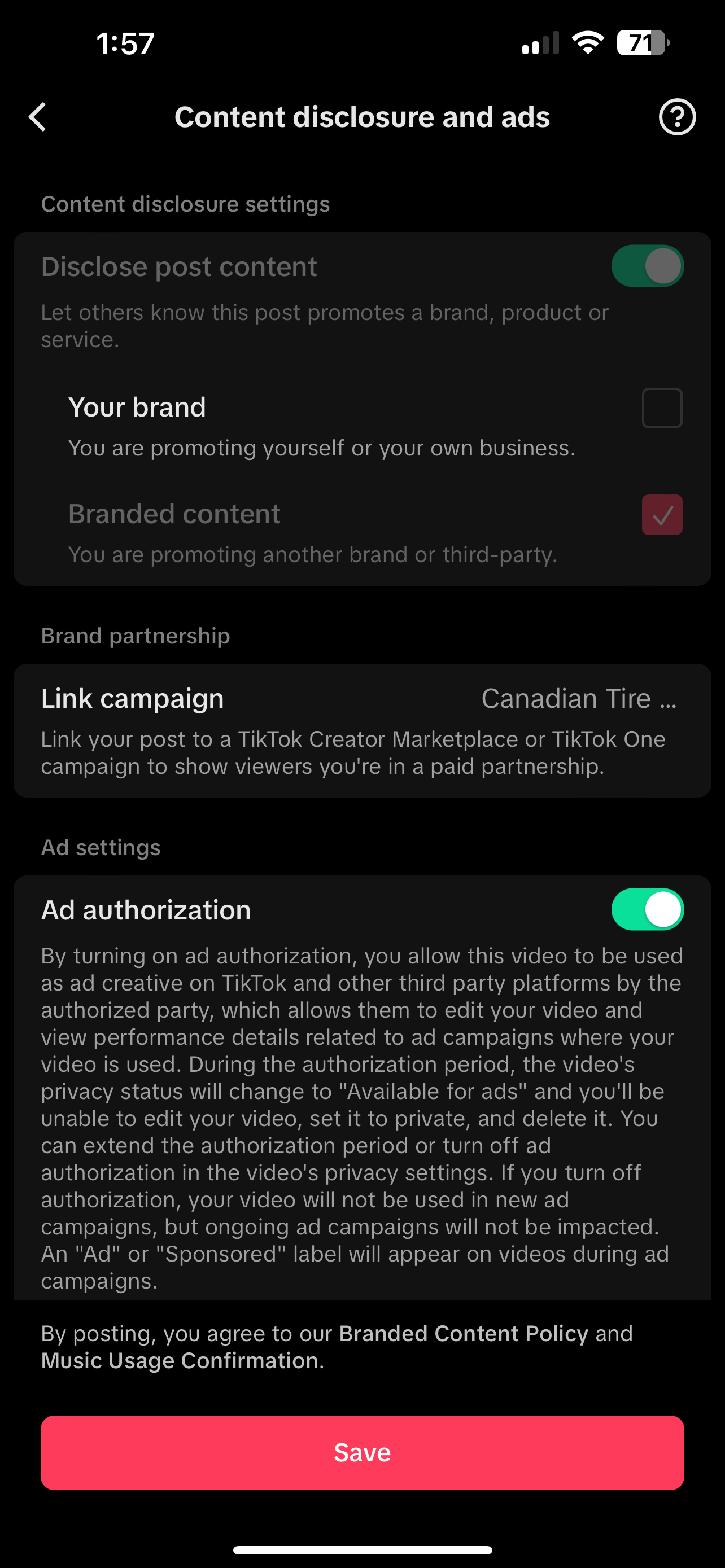
- Dark-post every creator variant to a cold Gen Z audience under the creator's handle. Run each variant as unpublished paid social through the creator's advertiser access so it appears from their account, and target audiences that don't follow the brand or the creator. That isolation matters. If the variant runs from the brand handle, you're testing the brand's organic halo; if it runs to the creator's followers, you're testing loyalty they already have. Cold traffic under the creator's name measures the thing you're paying for: whether this messenger and this message acquire strangers. Keep the persona-by-angle cell label on every ad so results roll up to the matrix.
- Read creative-level signal inside a fixed window. Set the window before launch, typically enough days and spend per cell for the platform to leave learning and for cost per first purchase to be readable, and don't extend it because a favorite variant is close. Read three things per cell: hook rate (how many viewers stay past the opening seconds), hold rate (how many stay through the point where the heritage code appears), and cost per first purchase. The first two diagnose; the third decides. A cell with a strong hook and a weak purchase rate usually has a register problem at the moment the product enters; a weak hook with strong purchase among survivors is a distribution problem that widening the audience may fix.
- Whitelist and scale only the cells that earned it. Set the scaling threshold in advance as a cost per first purchase relative to your target, and scale the cells that beat it. The creative is the targeting here: a winning persona cell tells you which audience to widen into, because the people who converted are describing themselves through the creator they responded to. Broaden the audience around the winning cell, add budget in steps, and watch whether cost holds as the audience widens.
- Feed the losing cells back into the next brief batch as learning. A losing cell is only wasted if you learn nothing from it. Log why it lost: wrong angle for that persona, wrong creator for that angle, a hook that never referenced the product, or a code that this cohort simply doesn't care about. Those notes become the next brief round and the next creator sourcing filter.
The case for many variants over one polished heritage film rests on the 2024 SAP Emarsys finding that 33% of Gen Z tried a new brand because of creative marketing.
One film gives you one reading of that lever. Twelve cells give you a map.
The tradeoff between polished brand production and creator-led performance creative is laid out at more length in inBeat's comparison of paid ads and influencer marketing.
Let's take a conceptual example, with hypothetical numbers: a heritage candy brand dark-posts two angles across four creators each, a nostalgia angle built on the original wrapper and a ritual angle built on how the candy is shared.
Suppose the nostalgia cell hooks better but lands a cost per first order of $38, while the ritual cell hooks slightly worse and lands at $24 against a $30 threshold. The brand whitelists and scales only the ritual cell, widens its audience around the ritual creators, and rewrites the nostalgia brief with a product-first hook for the next round.
What you cannot control in this loop: platform learning-phase behavior, attribution windows that shift under you, and creator availability when a cell wins and you need more variants fast. Contract for a second production round in advance so the winners can be replenished.
Before launch, set up one full cycle with at least six persona-by-angle cells, a fixed reading window, a predefined cost-per-first-purchase threshold, and a named owner for the losing-cell log.
How to Measure Creator Marketing Costs: CPA, CAC and MER
Judge the creative on acquisition efficiency and the program on what it costs to win a customer. Media-only cost per acquisition and fully loaded customer acquisition cost are different numbers. Keep both visible, use blended MER as the business-level guardrail, and keep sentiment in the diagnostic drawer. Assume the creator-ad tests have run; this section is about how results are scored and governed.
| Metric | What it tells you about borrowed trust | Read at which level | Decision it triggers |
|---|---|---|---|
| New-customer CPA by persona and angle | Which messenger and message combination acquires Gen Z customers | Creative cell, then creator within the cell | Scale, rebrief or retire the cell |
| Blended MER | Whether program spend as a whole is producing revenue, including winners that stop winning | Whole program, monthly | Cap or release whitelisting budget |
| 90-day repeat rate of creator-acquired cohorts | Whether borrowed trust converts into a customer who returns, or a trial that churns | Cohort, compared with brand-ad cohorts | Adjust angle mix toward cells that retain |
| Hook and hold rate | Why a cell won or lost | Individual variant | Rewrite hooks or product entry point |
| Sentiment, brand lift, engagement | How the content was received | Campaign | Explains results; does not move budget on its own |
Measure New-Customer CPA and Fully Loaded CAC
Report media-only new-customer CPA by persona-and-angle cell alongside the campaign average.
- Calculate it as ad spend divided by attributed first-time customers, using the same attribution window and customer definition across cells. Keep repeat purchases out of that denominator.
- Then calculate fully loaded CAC at program level: acquisition costs, including creator fees, production, paid usage rights, media and the agreed agency or operating costs, divided by new customers acquired in the same period.
- If you allocate shared costs to cells, state the allocation rule. A cheap ad can become an expensive acquisition once production and licensing are included.
- Inside a winning cell, compare creators to see whether the result is shared across the angle or concentrated in one messenger.
Our Dockers case study shows this creator model in action for an established apparel brand: 80+ influencers generated 16M+ views and 167K+ content interactions, supported by a whitelisted media strategy.
Those results show the scale of attention and engagement the creative earned. To judge acquisition efficiency, carry the measurement through to attributed first-time customers:
- Use media spend to calculate new-customer CPA.
- Then include creator fees, production, and licensing to calculate fully loaded CAC.
Dockers demonstrates the reach of the model; those acquisition metrics tell you whether that attention becomes affordable customer growth.
Use Blended MER as a Scaling Guardrail
Calculate blended MER as total business revenue divided by total marketing spend over the same reporting period.
Keep the spend definition consistent, including creator fees, production, usage rights, media and the agreed agency or operating costs.
- Higher MER means more revenue per marketing dollar; set a minimum acceptable level against your margins and growth plan. Use it to check whether the business can sustain scaling.
- If spend rises and MER falls, inspect the cells, conversion lag, repeat revenue, pricing and other channels before deciding what to pause.
Research firm Kadence frames the broader tension as balancing brand equity investment against performance; MER is where that balance shows up in one number.
Remember: MER shows the overall efficiency problem; it does not tell you which ad caused it.
Compare Repeat Purchases Across Acquisition Cohorts
Track the 90-day repeat rate of Gen Z cohorts acquired through creator content and compare it with cohorts acquired through brand ads. The 2024 survey figure describes stated behavior among US respondents; your cohort data describes observed behavior in your own customers, which is the version that matters.
- If creator-acquired cohorts repeat at the same rate as brand-ad cohorts, borrowed trust is transferring.
- If they churn faster, you've bought trial.
Be transparent about attribution asymmetry.
Whitelisted creator ads sit inside platform attribution and get credit easily; brand ads under-attribute by design. Compare on holdout or geo tests where budget allows, and where it doesn't, state the asymmetry in the dashboard rather than letting the numbers imply a fair fight.
Build the one-page dashboard with CAC by cell, blended MER and 90-day repeat rate before the first scaling decision, so the decision is made against numbers you agreed on in advance.
Creator Marketing Guardrails: Accuracy, Brand Fit and Durability
With the codes document, the vetting sequence, and the loop in place, three objections remain, and each is smaller than it looks from the CMO's chair.
Prevent Creators From Misstating Brand History
Misrepresentation is controlled at brief and review, before anything publishes. Three controls do most of the work:
- The accurate-facts column in the codes document, which tells the creator exactly which claims are load-bearing
- A factual review step of roughly 48 hours before posting, in which someone who knows the archive checks only the flagged facts and leaves the expression alone
- A correction clause in the contract that obliges the creator to amend or repost when a flagged fact is wrong
Conceptual example: a heritage dairy brand whose creator says the company was founded in the wrong decade. The factual review catches it because the founding decade was flagged as non-negotiable, and the fix is a re-edit before anything goes live.
Keep the review scoped to facts. A review that starts editing tone becomes brand copy by another route and reintroduces the inauthenticity problem the whole model exists to avoid.
Apply the Same Creator Marketing Model for Heritage Food, CPG and Household Brands
The model applies to any heritage category with product truths worth translating, and it even works better outside fashion.
CPG, food and household brands tend to have stronger rituals than apparel does: a way the product is prepared, shared, or maintained that a creator can perform on camera without a stylist.
Case commentary from the US Chamber of Commerce on legacy brands modernizing while honoring their history covers a similar range of categories. What changes by category is the accuracy risk profile, since food and health-adjacent claims carry regulatory weight fashion doesn't, so the accurate-facts column gets longer, and the factual review gets stricter.
Keep Creator Marketing Relevant as Gen Z Ages
Borrowed trust outlives the cohort because it is a loop, and the loop has no natural end.
Today's Gen Z buyers acquired through creator content become the core base your brand ads then serve, and the next cohort behind them needs its own messengers.
The 2024 SAP Emarsys finding that 43% of US Gen Z had abandoned a brand from boredom is the argument for never switching the loop off: the story has to keep being retold by new people or the customers you just won drift.
What you cannot control: a creator's personal conduct, platform policy changes on whitelisting and advertiser access, and audience fatigue with a given persona cell. To avoid that as much as possible:
- Contract for conduct.
- Spread spend across creators and platforms.
- Treat cell fatigue as a scheduling problem.
On the risk itself, a creator misstatement is bounded and correctable within days, while a decade of Gen Z reach that never converts is a strategic loss nobody can re-edit. Add the factual review step and the correction clause to your creator contract template this quarter.
How inBeat Turns Borrowed Trust Into a Growth Creative System for Heritage Brands
The decision is simple to state. Keep heritage narration in brand ads for the base that already believes it. Borrow trust from creators for the Gen Z cohort that doesn't, run that content as performance creative through dark posts and whitelisting, and judge both programs on acquisition numbers read at the creative level.
That operating shape is what inBeat is built around:
- Micro creators sourced at volume and matched by persona
- UGC and performance creative produced from what those creators make
- Paid social media buying run as the laboratory that tests and scales it
The three aren't sold as separate services because the argument in this piece doesn't work when they are separate. The people briefing creators need to see the creative-level data, and the people buying media need to know which codes were non-negotiable.
The loop described here is the one we run for brands like Dockers, and it is designed to be judged on CAC and MER.
Decide which persona clusters to test first and brief them within the next planning cycle. If you'd rather not build the machinery yourself, talk to inBeat about sourcing creators at volume and whitelisting what earns it through paid social.
FAQ
How should a heritage brand split budget between brand ads for the core base and whitelisted creator content for Gen Z in the first year?
Start with a test allocation for creator whitelisting large enough to fund at least six persona-by-angle cells through a full reading window, and leave brand ads for the base intact. There is no sourced ratio to lean on, so set the split by the cost of a readable test and then move budget toward whichever program clears its CAC target, as described in the measurement section.
How many creators and persona cells do you need before dark-post results are readable?
Six cells is a practical floor for a first cycle, with two to four creators per cell so a winning angle can be separated from a single strong creator. Fewer than that and one outlier decides the read. These are practice ranges we use; they are not benchmarks.
How long should a whitelisted creator ad run before you judge it on CAC?
Long enough to exit the platform's learning phase and accumulate enough first purchases per cell for cost per acquisition to be stable, with the window fixed before launch. Extending a window because a favorite variant is close is how teams talk themselves into scaling losers.
What do you do when the existing core customer base reacts badly to creator reinterpretations of the brand?
Check first whether the reaction is about a flagged fact or about expression. A factual error gets corrected under the contract clause. A tone complaint from the base is expected, because the content wasn't made for them; keep it dark-posted and whitelisted to Gen Z audiences and keep the base's reassurance in brand ads.
Can whitelisting work if the creator's audience is much larger than your Gen Z target segment?
Yes, because dark-posting targets cold audiences you define, but these are not necessarily the creator's followers. A large creator's persona still does the selection inside the creative; the risk is cost and register, since larger accounts often carry weaker community trust per follower, which is why the sourcing section favors micro creators.
How do you handle a creator who performs on CAC but drifts from the brand codes over time?
Separate the drift into facts and expression. Factual drift triggers the review step and correction clause immediately, however good the CAC. Expression drift is a rebrief conversation: show the creator which codes the winning cell depended on and let them find a new expression, since their register is the asset you're borrowing.
Cover photo: Photo: Serena Koi / Pexels. Art direction: inBeat Agency.