%20(1).png)

sk whether to buy UGC from an agency or a creator marketplace and you'll usually get a price answer: the marketplace looks cheaper per video. At low volume, that can be true. As output climbs, briefing, product shipping, usage rights, revisions and creator follow-up start to matter as much as the quoted creation fee.
This article treats the choice as a volume question. It uses 10, 30 and 100 monthly assets as decision scenarios to compare where the operational burden sits and when managed production starts to make more sense.
P.S. If your creator ops now takes more than half a role, see how inBeat's UGC and content production works.
inBeat POV: We think this argument is usually had about the wrong number. Buyers compare the price of a video when what they're buying is a supply of testable creative. Creators are a creative engine. The only reason to want 30 or 100 assets a month is to feed a media-buying laboratory that reads which message and messenger win, then sends that result back into the next round of briefs. Whichever procurement model keeps that loop turning at your cadence is the right one. A marketplace that saves a few dollars per video but delivers assets one at a time, with rights unsettled, slows the loop. An agency that costs more per asset but ships comparable batches on schedule speeds it up. Make, launch, learn, repeat is the standard both should be judged against.
TL;DR: UGC agency vs creator marketplace at 10, 30 and 100 assets a month
The short version, by volume tier:
- At 10 assets a month, a self-serve marketplace usually wins. The quoted creation fee is most of the real cost, and briefing and shipping fit inside a job someone already has. Stay put.
- At 30 assets a month, the per-asset fee stops being the main cost. Briefing, shipping, rights negotiation and revisions start consuming a part-time role, and the answer depends on whether you have, or want to hire, a dedicated creator ops person.
- At 100 assets a month, managed production or an agency retainer normally wins. Sourcing, briefing and QA become the vendor's job instead of yours, and the retainer should be priced against the internal workload it removes.
- Per-video pricing is clean at small scale and gets messier as volume grows. Whatever the tier, price usage rights separately from creation; rights are the line most buyers underestimate.
- Marketplace managed tiers sit between the two. Judge them by who owns the testing roadmap and reads the performance data. The label on the pricing page settles nothing.
Find your current monthly asset count in those tiers, then read the matching row of the framework below before anything else. A brand producing 12 ads a month on a marketplace, for example, reads the first bullet and confirms it should stay where it is for now, with a review date set for when volume climbs.
What is the difference between a UGC platform, a creator marketplace and a UGC agency?
The three models differ by who holds each operational responsibility, from discovery through testing. The vendor label matters less than the row-by-row split of labour, and the search results for this topic use "platform" loosely for both SaaS creator-discovery tools and transactional marketplaces. This article uses marketplace for any self-serve service where you pick and pay creators directly, managed tier for a marketplace add-on that assigns coordination, and agency for a vendor that runs the whole process.
Self-serve creator marketplaces: you source, brief and manage
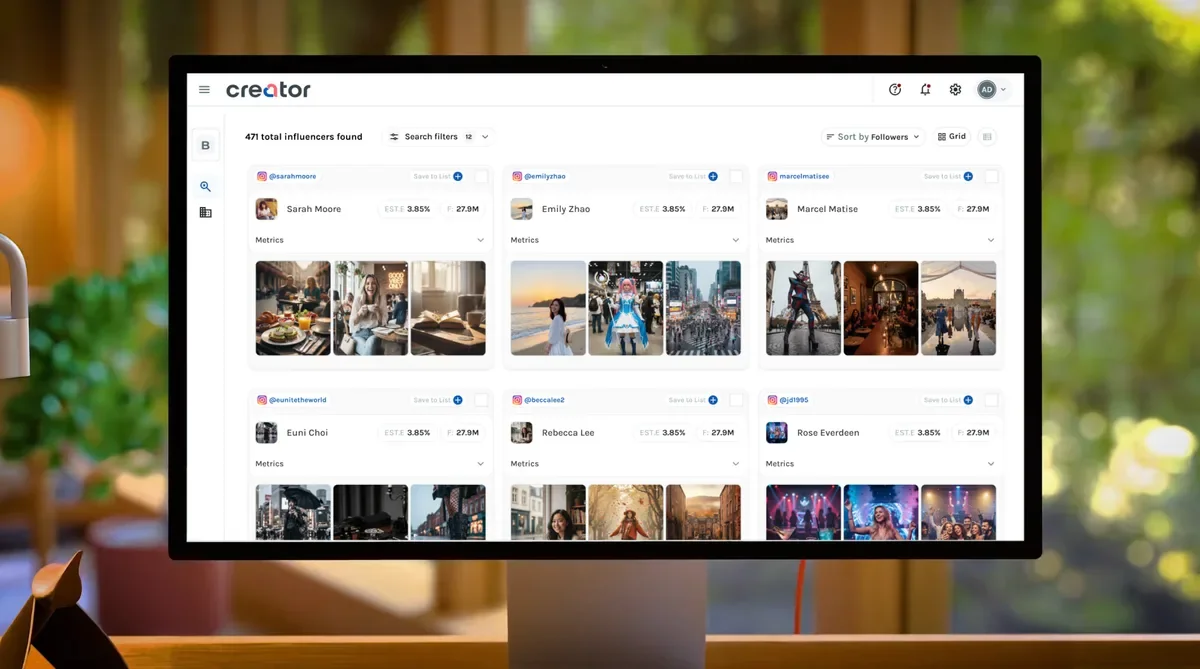
A self-serve marketplace gives you the infrastructure to find and transact with creators: a searchable roster, messaging, payment workflows and, in some cases, brief or rights templates. Your team still owns the work that turns those tools into usable ads, including creator selection, briefing, shipping, approvals, revisions and licensing. The trade-off is straightforward: more direct control also means more creator operations stay in-house.
UGC agencies: an intermediary runs sourcing, briefing and delivery
A UGC agency adds managed execution and accountability on top of creator production. Depending on the scope, the agency may own sourcing, briefing, creator communication, revisions, rights administration and final delivery. The practical distinction is how much of that operational work moves from your internal team to the vendor.
Pricing models: per video, retainer and hybrid
Pricing structures vary across both models. Self-serve platforms may charge a subscription, a platform or creator fee, or a combination of the three. Agencies more often price managed production through projects, packages, retainers or hybrid models. At low volume, per-asset pricing can make spend easier to trace. As volume grows, the larger question is how much sourcing, coordination and rights management still sits with your team.
Map your current vendor against the table before reading on. The rows marked "you" are the ones your team is already paying for in salary.
Agency founder Dawson Gibbs contrasts self-serve creator marketplaces with full-service agency models, explaining how creator curation and operational oversight change the resulting creative output.
What does a UGC video really cost? Creation fee, usage rights and revisions
A UGC video costs the creation fee plus everything the invoice leaves out: usage rights, revision rounds, shipping and the internal hours spent getting it delivered. Only the first of those stays flat as volume grows.
Creation fees: where marketplace rates cluster
Launchpoint's 2026 pricing guide puts a single UGC video at $100 to $250, with most rates clustering between $150 and $200, before usage rights and with wide variation by creator, niche and deliverable. Treat that as the floor. It is a self-published guide from a vendor in the space, so it tells you where quotes land rather than what any specific creator will accept.
The reason the floor is low enough to matter: per Creator.co's platform comparison, UGC runs 60 to 80% cheaper than equivalent studio-produced creative, which is what makes a high-volume creative cadence affordable in the first place. That figure is also a platform's own benchmark, so read it as an order of magnitude.
Usage rights: the cost most brands miss
Per the same Launchpoint guide, usage rights are the single biggest inflator of UGC cost and the area where buyers most often get caught out; its advice is to always separate the creation fee from the usage fee. For paid social that separation is structural. A creator fee buys a video. A paid-usage licence buys the right to put money behind it, on named platforms, for a defined period, sometimes with a whitelisting clause. On a marketplace, each creator sets those terms, so an asset that looked cheap at quote stage can carry a licence that doubles its cost once you want to run it for a quarter.
Internal hours: the line item no invoice shows
The fully loaded cost per usable, licensed asset is:
Creation Fee + Usage Fee + Revision Rounds + Shipping + Internal Hours Per Asset
The first term is flat. The other four grow with volume, and the last one grows fastest because every creator added means another brief, another feedback thread and another contract to track.
The creation-fee and usage-rights rows rest on the Launchpoint guide linked above; the remaining rows describe the labour split set out in the previous section.
A hypothetical worked example built from the published range, with no measured result behind it: a $175 marketplace video with a paid-usage licence negotiated on top, two revision rounds and shipped product lands well above the quoted rate before you count the hours spent arranging it. Multiply the uncounted hours by 30 or 100 assets and the quote stops describing the purchase.
There is no universal published point where per-video pricing stops working. In this framework, 30 assets is a practical decision checkpoint: enough volume for coordination, revisions and rights administration to become visible costs, while still being manageable with a dedicated internal owner. Treat it as a planning scenario rather than an industry threshold.
Operational bottlenecks when scaling UGC from 10 to 100 assets a month: shipping, briefing and rights
Three bottlenecks break self-serve sourcing as volume climbs, and they break independently: shipping, briefing and rights. Each one scales with the number of creators while the people handling it stay the same. The practical test is simple. Time-log one week of creator operations, split by those three buckets, multiply by your target volume and see which one hits a full-time role first.
Shipping and product seeding
At 10 assets a month, product seeding is an afternoon: ten addresses, ten labels, a spreadsheet. At 100 it becomes inventory tracking, international customs forms, breakage claims, re-ships and a running list of creators who received product and never delivered. Non-delivery is the quiet cost. On a self-serve marketplace nobody compensates you for the unit, the shipping or the week lost before you notice, and replacing the creator restarts discovery and vetting from zero. A full-service agency may absorb creator replacement within the agreed deliverables, depending on the contract. That transfer of delivery risk is one reason an agency quote can look higher than a creator-fee comparison suggests.
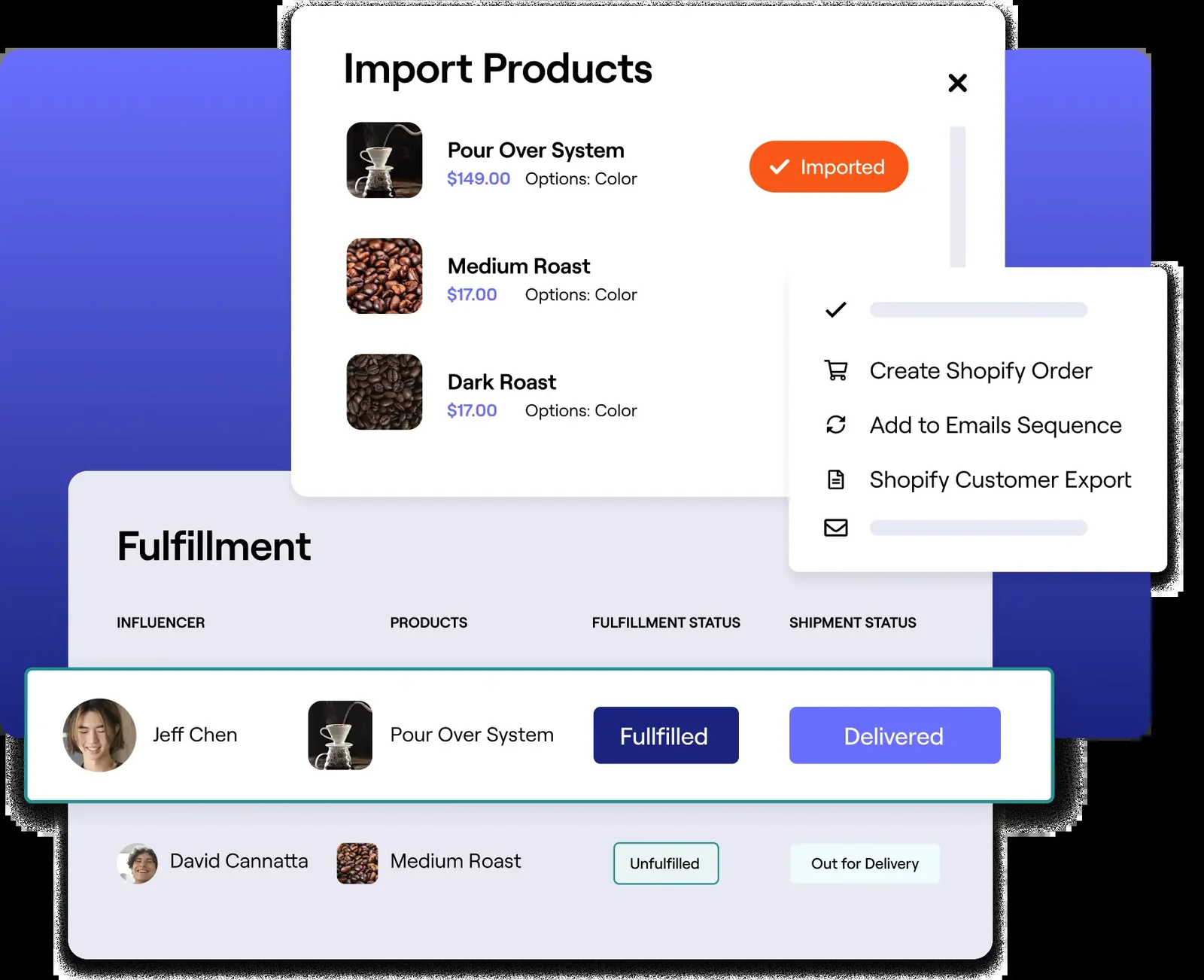
For physical products, shipping also sets the floor on lead time. If a batch of 30 needs product in 30 homes before anyone films, your cadence is constrained by logistics before any creative decision is made.
Briefing and revision management
Brief count, feedback loops and revision rounds scale linearly with assets, and this is exactly the labour marketplaces leave with the brand. An agency model where the vendor owns briefing and creator management moves that coordination work outside your team. At 10 assets, one person writes the briefs, reviews cuts and sends notes between other tasks. At 30, that person spends most of their week relaying feedback across 20 to 30 separate creator threads, each with its own interpretation of the hook and the claims. At 100, the briefing work alone is a role, and the review work is a second one.
A conceptual illustration, hypothetical and unmeasured: a team moving from 10 to 30 assets a month discovers that the number of outstanding follow-ups about rights, re-shoots and delivery dates exceeds the number of videos that actually arrived. That inversion is the signal that per-asset labour has outgrown the people assigned to it.
To estimate your own overhead, take the week's time log, express each bucket as hours per delivered asset, and multiply by the volume you are planning for. The result is the headcount you are quietly spending, and it is the number to set against any agency quote.
Usage rights and licensing paperwork
Each marketplace creator has separate terms, so licensing becomes a per-asset negotiation and a compliance exposure for paid media. The Launchpoint guidance cited earlier, that creation and usage must be priced separately, is also an operational instruction: someone has to hold a register of which asset is licensed for which platform until which date, and renew or retire ads accordingly. At 10 assets that register lives in a spreadsheet. At 100 it is a legal-adjacent function, and a missed expiry on a scaling ad is a takedown risk during your best-performing week. The practitioner threads that rank for this query, including this UGC platform comparison discussion, treat rights as a core comparison axis alongside cost, which matches what breaks in practice.
Pro tip: standardise your own licence template before you need it. A single paid-usage clause you attach to every marketplace order, with platform list, term and whitelisting spelled out, removes most of the per-creator negotiation and makes the register trivial to maintain.
Creator reliability runs through all three bottlenecks. Vetting on a self-serve marketplace is uncompensated work, and drop-off replacement restarts it. An agency carries both inside its roster management, which is a service you are paying for whether or not it appears as a line on the proposal.
Pro tip: When batching and QA are the bottleneck, inBeat's performance creative service is built to deliver assets as testable sets.
Is UGC from an agency better quality than UGC from a marketplace?
Agency UGC is more consistent; marketplace UGC can be more authentic one asset at a time. For paid media, consistency wins once you are testing in batches, because an asset you can't compare is an asset you can't learn from. Quality here means how useful an asset is inside a test.
Authenticity: direct creator access vs curated rosters
A marketplace lets you pick the exact creator whose voice fits the product, brief them directly and keep their unfiltered read of the audience. For a single hero asset that is a real advantage, and curated agency rosters can sand down some of that specificity. The advantage does not survive volume. At 100 assets, authenticity chosen creator by creator becomes 100 different interpretations of the brand, and without a QA layer the batch carries off-brand claims, inconsistent framing and hooks that arrive late.
Consistency: QA, hooks and brand safety at volume
An agency that owns briefing and creator management can enforce hook timing, format specs and claim compliance across a batch so each asset is comparable to the next. That enforcement is what makes a creative test interpretable. Write a one-page QA checklist, with a hook inside the first two seconds, claims limited to the approved list and exact format specs, and require it from whichever vendor you use. On a marketplace you apply it yourself at review; with an agency you make it a contractual acceptance criterion.
Testability: assets as a batch vs assets as one-offs
The cost saving against studio production quoted earlier exists to buy volume for testing, and volume only pays off when assets are structured as variants of a concept. A hypothetical illustration: two marketplace creators deliver the same brief, one in daylight with a problem-first hook and a specific efficacy claim, the other at night with a product-reveal hook and no claim. Both are authentic. Neither tells you whether the hook or the claim moved the result. Batches built as controlled variants fix that; our guide to A/B testing UGC ads covers how comparable creative is read once it is live. Hook variants of one script are quick to produce with an AI Ad Generator and Higgsfield is a great reliable resource for that.
The consistency and safety rows follow from the responsibility split described earlier; the authenticity row is this article's judgement and has no measured backing.
How many UGC assets a month do you need to avoid ad fatigue?
The number of assets you need each month is set by how fast your creative burns out, and burn rate rises with spend and audience count. The 10, 30 and 100 tiers fall out of your media plan; they aren't preferences.
Why creative refresh rate sets your volume target
More spend pushes the same assets at the same people more often, and more audiences or markets multiply the angles you need live. Both push frequency up and response down faster. Calculate the required volume rather than guessing it:
- Count the concepts you need live at once (one per core persona or angle).
- Decide how many variants per concept you need for a readable test, typically different hooks or creators on the same angle.
- Estimate how many times a month a winning set needs refreshing before its results decay.
- Multiply: concepts × variants × refresh cycles = monthly asset requirement.
A hypothetical illustration: five concepts, three variants each, refreshed twice a month gives 30 assets. Double the concepts for a second market and you are at 60; add a third refresh cycle as spend scales and you are near 100.
Working backwards from spend and testing cadence
None of the sources we reviewed gives a universal fatigue threshold, and we won't supply one. Read your own frequency and CTR decay by concept and let that set the refresh cycle in step three. The cost gap against studio production described in the cost section is what makes a 30 or 100 asset cadence feasible at all; a studio could not supply 30 comparable cuts a month at any sane budget.
Carry the number from step four into the next section. It decides which model you are choosing for.
UGC agency vs marketplace decision framework: 10, 30 and 100 assets a month
Choose by monthly volume first, then adjust for headcount and product. The table gives the default call for each tier; the H3s give the reasoning and what reverses it.
The volume tiers and triggers are this article's framework; the pricing and definitional evidence they draw on is linked in the cost and definitions sections and in the H3s below.
10 assets a month: stay self-serve
At 10 assets the creation fee range cited in the cost section is most of the real cost, and shipping, briefing and rights fit inside a job someone already has. An agency retainer buys labour you don't yet need. Stay on the marketplace, standardise your licence clause, keep a QA checklist, and set a quarterly review of your time log so the switch happens as a planned decision and never as a scramble.
30 assets a month: the crossover zone
Thirty is where this framework treats the decision as team-dependent. A well-run marketplace operation can still work at this volume, but internal hours and rights administration now need a clear owner. At the same time, internal hours and rights administration now rival the creator fees, following the Launchpoint guidance on usage rights, and that labour needs an owner. If you have, or will hire, one dedicated creator ops person who can manage a roster, hold the rights register and batch the briefs, a marketplace remains viable. If that work is spread across a performance manager and a brand lead, you are already paying for an agency in salary and getting one-offs for it. A managed tier can bridge the gap, with the caveats in the next section.
100 assets a month: managed production or an agency retainer
At 100 assets, a vendor that owns sourcing, briefing, creator management and QA can absorb a substantial amount of work that would otherwise sit in-house. Price the retainer against that internal workload, including the time spent on creator operations and the testing you lose when assets arrive late or unbatched.
Switching triggers apply at any tier. Move up when creator ops exceeds half a role, when a rights dispute lands on a live ad, or when the testing roadmap slips because assets arrive one at a time instead of as comparable sets.
Three things reverse the default call. Very niche products, where a handful of creators are the only credible voices, can justify direct marketplace relationships past 30. Heavy or regulated product shipping may be something you must handle in-house regardless of vendor, which shrinks the agency's advantage. And a strong in-house creative and ops team that already batches, licenses and QAs can run a marketplace well above 30, in which case the agency is competing with a capability you already own.
Pick your tier, check the triggers against last quarter, and set a review date for the next tier before volume forces the decision for you.
Are marketplace managed services the same as a UGC agency?
A managed tier is coordination layered on a marketplace; an agency owns the outcome. The distinction matters most at the 30-asset crossover, where managed tiers are sold hardest.
What a managed tier usually adds
A managed tier typically adds creator matching, a coordinator who relays messages and chases delivery, and templated contracts. Those are real savings on the discovery and follow-up rows of the responsibility table, and for a team with a clear strategy but no time for roster admin, that can be enough.
What a managed tier usually lacks
The brand usually stays responsible for strategy, testing design, the brief itself, final approvals and media. A full-service agency typically owns a larger share of sourcing, briefing and production management, while a managed marketplace tier may cover only part of that work. The test is whether the vendor owns the creative roadmap and reads the performance data back into the next batch. A conceptual illustration: a managed tier assigns a coordinator, but your team still writes every brief, negotiates rights per creator and approves each cut. That is a marketplace with a project manager attached.
Ask any managed-tier vendor three ownership questions:
- Who writes the briefs, and from what source of strategy?
- Who negotiates and holds usage rights, and on whose template?
- After a losing test, who decides what gets re-shot, and who pays for it?
Two or more answers that amount to "you do that" mean you are buying a marketplace, whatever the tier is called. That is a fine purchase at the right volume, as long as the headcount math in the framework reflects it.
How inBeat runs managed UGC and performance creative at volume
inBeat is the agency side of this framework: influencer sourcing at volume, UGC and performance creative production, and paid social media buying, sold as one system.
Creators as a creative engine, media buying as the lab
The model treats creators, mostly micro and matched by persona, as a continuous supply of native, testable ad creative. Media buying is where that supply gets read: concepts are dark-posted, results are compared across comparable batches, and the winners are whitelisted and scaled while the losers feed the next round of briefs. Sourcing, briefing, rights, QA and batching sit inside the service, which is the labour transfer this article has been describing.
What the published case studies show
Two published case studies show what managed creator production looks like when it is run at volume.
- The Booksy case study reports 60% lower CPA at 6x paid media scale, as stated in its title.
- The Bumble case study documents first-date creator ads produced for the brand.
Both are published on inbeat.agency and we cite them as published, without extrapolating to any other brand or volume.
The right model is the one that keeps assets arriving as testable batches at the cadence your media plan requires. At 10 that is probably a marketplace. At 100 it is almost certainly a managed system. See what managed creator production looked like at scale in the Booksy case study above, then book a strategy call if the 30 or 100 tier describes your pipeline.
FAQ: UGC agency vs creator marketplace
Should you keep a creator marketplace alongside a UGC agency for fast concept tests?
Yes, if your agency's batch cycle is slower than your concept-testing appetite. Use the marketplace for quick, low-stakes one-off probes of a new angle, and hand validated angles to the agency for the batched, licensed variants that scale. It only works if you apply the same licence clause and QA checklist to the marketplace assets, otherwise the quick test becomes a rights problem the moment it wins.
How do you structure usage rights in a marketplace contract so assets can run in paid social without renegotiation?
Attach one paid-usage clause to every order before the creator starts. It should name the platforms, the term, whether whitelisting and spark-style ads are included, the renewal price and whether edits and cutdowns are permitted. Pricing it at order time removes the renegotiation; the condition is that your register tracks expiry dates so renewals happen before ads come down.
What internal role do you need before a marketplace works past 30 assets a month?
A dedicated creator operations owner who manages the roster, holds the rights register, batches briefs and runs first-pass QA. Without that role the work lands on a performance manager, and the test cadence is the first thing to slip. If you cannot justify the hire, that is itself the signal to price an agency or managed tier.
How do you compare an agency retainer quote against marketplace spend plus headcount?
Build the marketplace side as creation fees plus usage fees plus the fully loaded cost of the ops role, including recruiting time and ramp. Compare that total with the retainer for the same monthly asset count and the same licence terms. The comparison depends on getting the asset count and rights scope identical in both columns; a retainer quoted on fewer licensed assets is a different product.
What are the signs a managed marketplace tier is really just coordination, not an agency?
Your team still writes the briefs, rights are still negotiated creator by creator, and nobody at the vendor decides what to re-shoot after a losing test. Any two of those mean you are buying coordination. That can still be worth it at 30 assets, provided your headcount plan reflects the work you kept.
Can you move from an agency back to a marketplace if volume drops?
Yes, and it should be planned at signing. Negotiate asset ownership, licence transferability and creator contact terms into the agency contract so a drop to the 10-asset tier leaves you with usable assets and relationships. The condition is notice periods: a retainer with a long minimum term turns a volume dip into a sunk cost.
Cover photo: Photo: Mikhail Nilov / Pexels. Art direction: inBeat Agency.