
Most brands running Amazon ads get clicks. Far fewer get conversions. The gap rarely comes down to budget: it comes down to picking the wrong format for the job, then pointing mediocre creativity at it.
The fastest way to fix that is to look at what already worked for someone else. In this article, we are going to analyze 12 Amazon advertising examples with published results, pulled from Amazon's own case study library and from campaigns our team has run. Each breaks down the format, the creative or targeting decision behind the number, and the Amazon strategies you can use for your own account.
TL;DR
- Amazon has five ad formats. Sponsored Products captures existing demand, Sponsored Brands and Display build consideration, and DSP plus Streaming TV create demand before the search happens.
- The biggest lifts come from combining formats. Logicool saw a 9,067% higher purchase rate among shoppers exposed to both DSP and Sponsored Products than to Sponsored Products alone.
- Video is the biggest creative lever right now, because Amazon's own research puts Sponsored Brands video CTR at 17.7x static.
- You can start at $1 a day, so creative supply, not budget, is the constraint most brands hit first.
What Are the Main Amazon Ad Formats?
Amazon sells five formats, and they map fairly cleanly onto funnel stages, from brand awareness to conversion.
- Sponsored Products is keyword-triggered, appears in search results and on detail pages, and is usually the first thing a brand turns on.
- Sponsored Brands is the banner at the top of search, carrying your logo and up to three ASINs, static or video.
- Sponsored Display retargets on and off Amazon.
- Amazon DSP buys programmatic display and video across Amazon properties and the open web using Amazon's shopping signals.
- Streaming TV ads (previously Sponsored TV) put you inside Prime Video, Fire TV and Twitch.
Let's review them below:
One note that trips people up: the $50,000 figure everyone quotes for DSP applies to Amazon's managed service. Self-service DSP through an agency seat carries no stated minimum, which is why the format is reachable for brands that assumed it wasn't. Full cost benchmarks by format sit in this breakdown of Amazon advertising costs in 2026.
Why Does Amazon Advertising Work So Well for Brands?
Because you're advertising to people who are already shopping, not people who are scrolling.
- Purchase intent is the default state. Someone typing "packing cubes" into Amazon isn't browsing for entertainment. That single difference explains why Amazon's advertising business pulled $19.8 billion in Q2 2026, up 26% year over year.
- Attribution is closed-loop. Amazon knows when an ad click turns into a sale because it owns the transaction. No modelling, no cookie decay, no arguing with your MTA vendor about credit.
- The audience is the market. Amazon accounts for 40.6% of US retail ecommerce sales, per eMarketer, and Prime Day 2026 alone drove $26.4 billion in US ecommerce sales across four days in June, up 9.3% year over year per Adobe Analytics. For most consumer brands, Amazon is the second-largest revenue line in the business.
- You can start small. Sponsored Products has a $1 daily minimum, and Streaming TV has no minimum at all, so testing costs you attention rather than capital.
Worth noting what Amazon doesn't publish: no official data confirms ad-driven sales velocity lifts organic rank. Amazon advertising agencies see the correlation constantly, and it's hard to ignore, but treat the flywheel as a working theory, not a documented mechanic.
12 Amazon Advertising Examples That Actually Drive Sales
Whether you're launching your first Sponsored Products campaign or weighing up Amazon DSP, there's a concrete takeaway in every one.
1. Made for Locs: 10x ROAS on Sponsored Products in Six Weeks
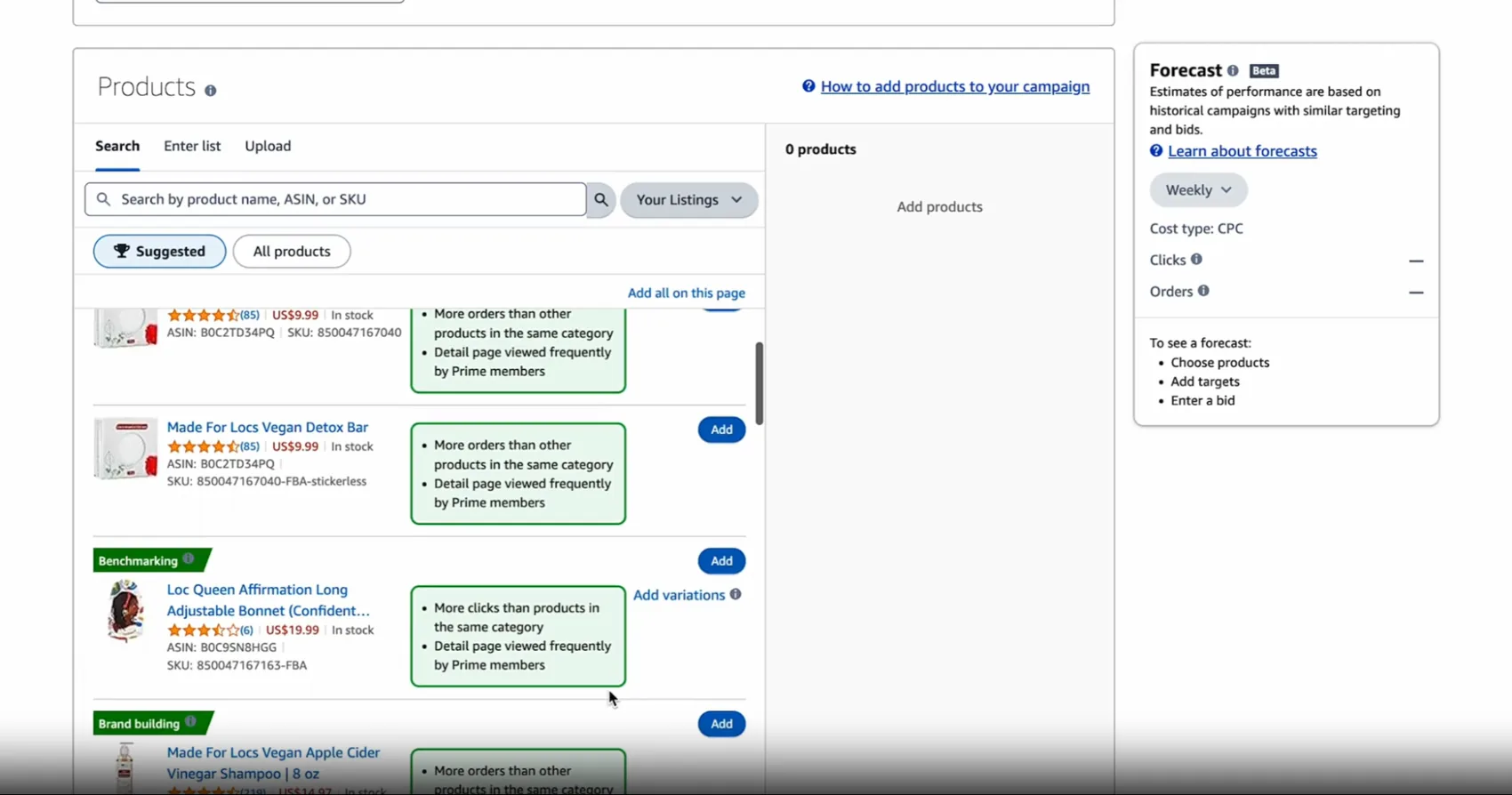
Made for Locs sells plant-based hair care for locs; this is a tight category with high repeat-purchase potential.
Format: Sponsored Products, supported by Sponsored Brands and a Brand Store.
What we like: Weekly reviews of keyword efficiency, CTR, conversion rate and ACOS instead of monthly check-ins. They also read the basket data: shoppers bought the shampoo, aloe spray and loc gel together. So, they built bundles around it, and pushed Subscribe & Save at a 5–10% discount inside Sponsored Products.
Results: In just six weeks, their Sponsored Products campaigns achieved a 10x return on ad spend, plus a 40% increase in AOV and a 60% increase in subscription-based customers.
Steal this: Let purchase patterns dictate your bundles, then advertise the bundle rather than the hero SKU. AOV does more for a struggling ACOS than bid tuning does.
2. Front Line Publishing: Doubling Revenue Without Increasing Ad Spend
Authors James Rosone and Miranda Watson publish military technothrillers through Kindle Direct Publishing, about as far from a venture-funded DTC brand as you can get.
Format: Sponsored Products only.
What we like: Automatic targeting to harvest data, then validated terms graduated into manual campaigns. Negative targeting did the heavy lifting, cutting phrases like "romance thriller books for women" that pulled clicks from readers who'd never convert. They also advertised only book one of each series, treating ad spend as a reader-acquisition cost recovered across the backlist.
Results: Annual revenue grew from $316,547 in 2020 to $634,542 in 2022, without an increase in their ad spend.
Steal this: Negative keywords aren't housekeeping you get to later. They're the mechanism that doubles revenue at flat spend.
3. Frontida Health: Holding ACOS Under 6% on Exact Match
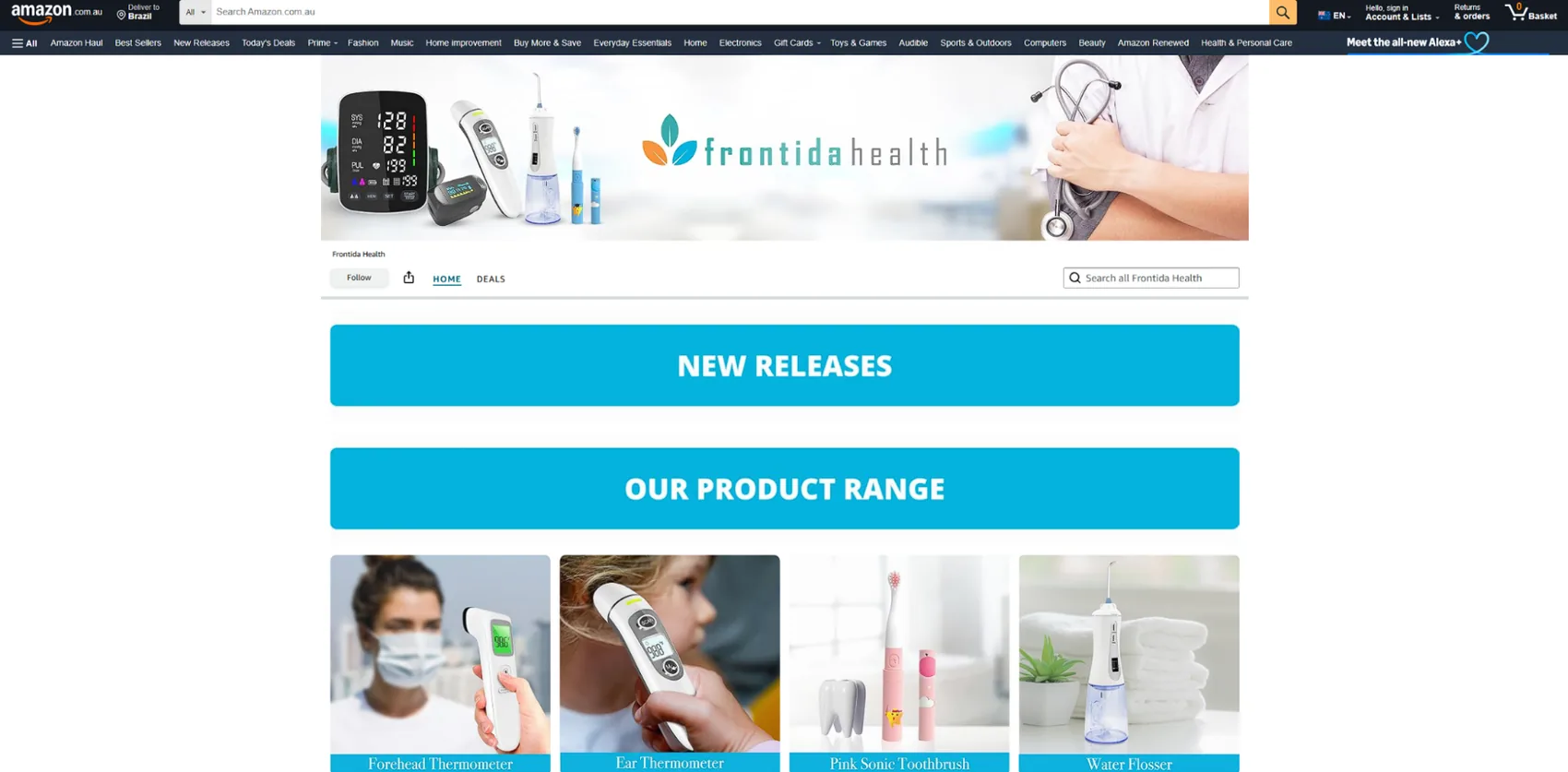
Frontida Health sells medical thermometers and baby health devices, a category where trust is the whole purchase decision.
Format: Sponsored Products at the core, with Sponsored Brands, SB video, and Display around it.
What we like: They separated discovery from harvest: automatic targeting found terms, then broad and exact-match campaigns worked them at different bids. They also paid a freelancer for proper product photography and video instead of shooting on a phone, the decision most small brands skip before blaming the algorithm.
Results: ACOS under 6% for exact-match Sponsored Products campaigns and overall ROAS above 7. One Sponsored Brands video hit 193,264 views at 7.25 ROAS, driving 711 orders and 704 new-to-brand customers.
Steal this: Exact match should carry a materially lower ACOS than the rest of the account. If it doesn't, your match-type structure is doing nothing.
4. Bagail: Doubling Discoverability With Reach-Optimized Display
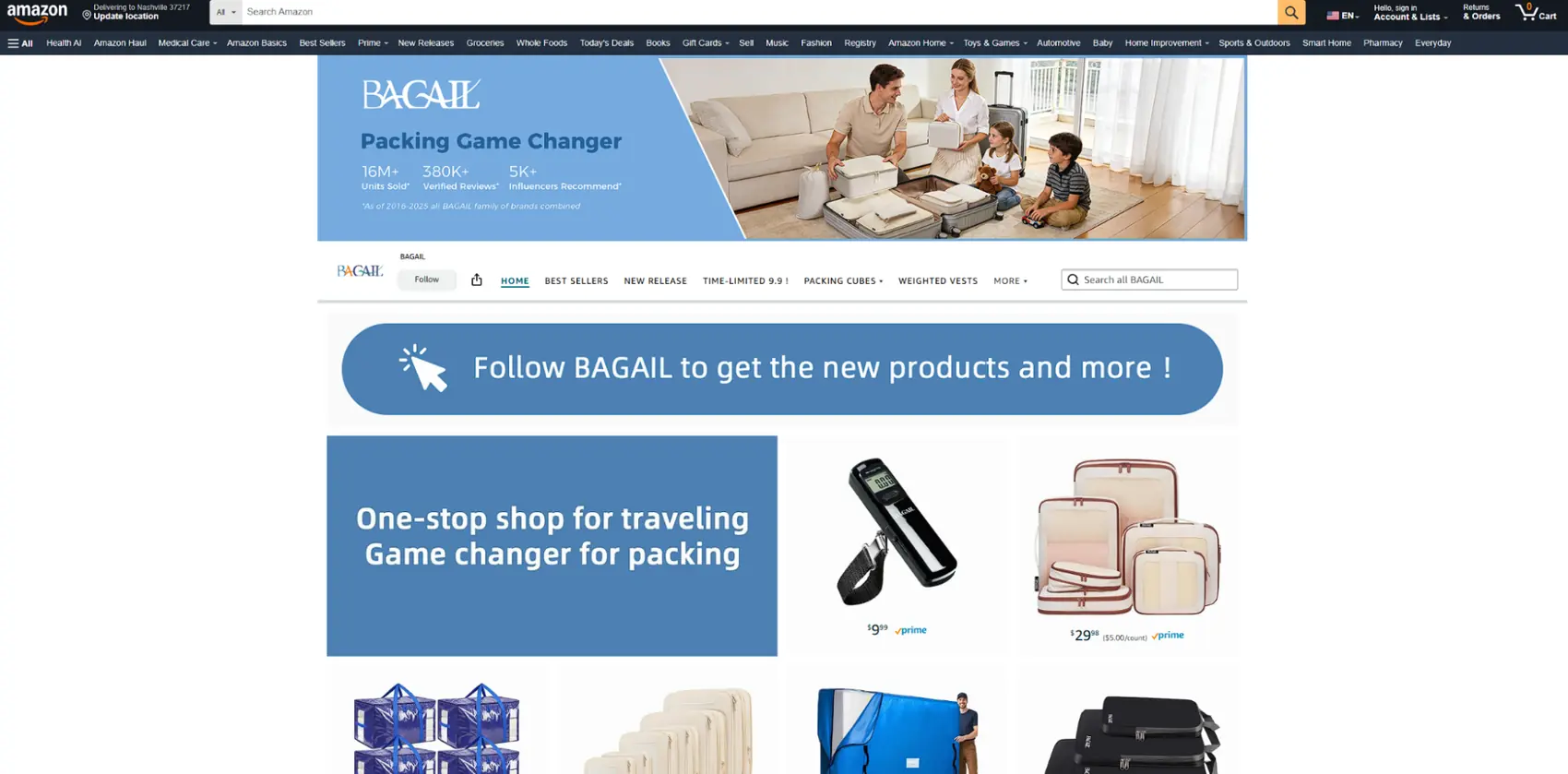
Bagail makes packing cubes, umbrellas, and laundry bags: commodity categories where the fight is visibility, not differentiation.
Format: Sponsored Products plus Sponsored Display, with a Brand Store.
What we like: They ran both CPC and vCPM bidding rather than defaulting to clicks, and during promos shifted budget into display optimized for reach. They also used the coupon feature inside display ads, so the offer travelled with the impression instead of waiting on the detail page.
Results: Brand and product discoverability doubled from 2021 to 2022, with ad-attributed sales from display campaigns growing by 100%.
Steal this: vCPM is underused. When the job is reach during a promo window, paying for viewable impressions beats paying for clicks you'd have won anyway.
5. HP: 80% Revenue Growth From Sponsored Brands Video
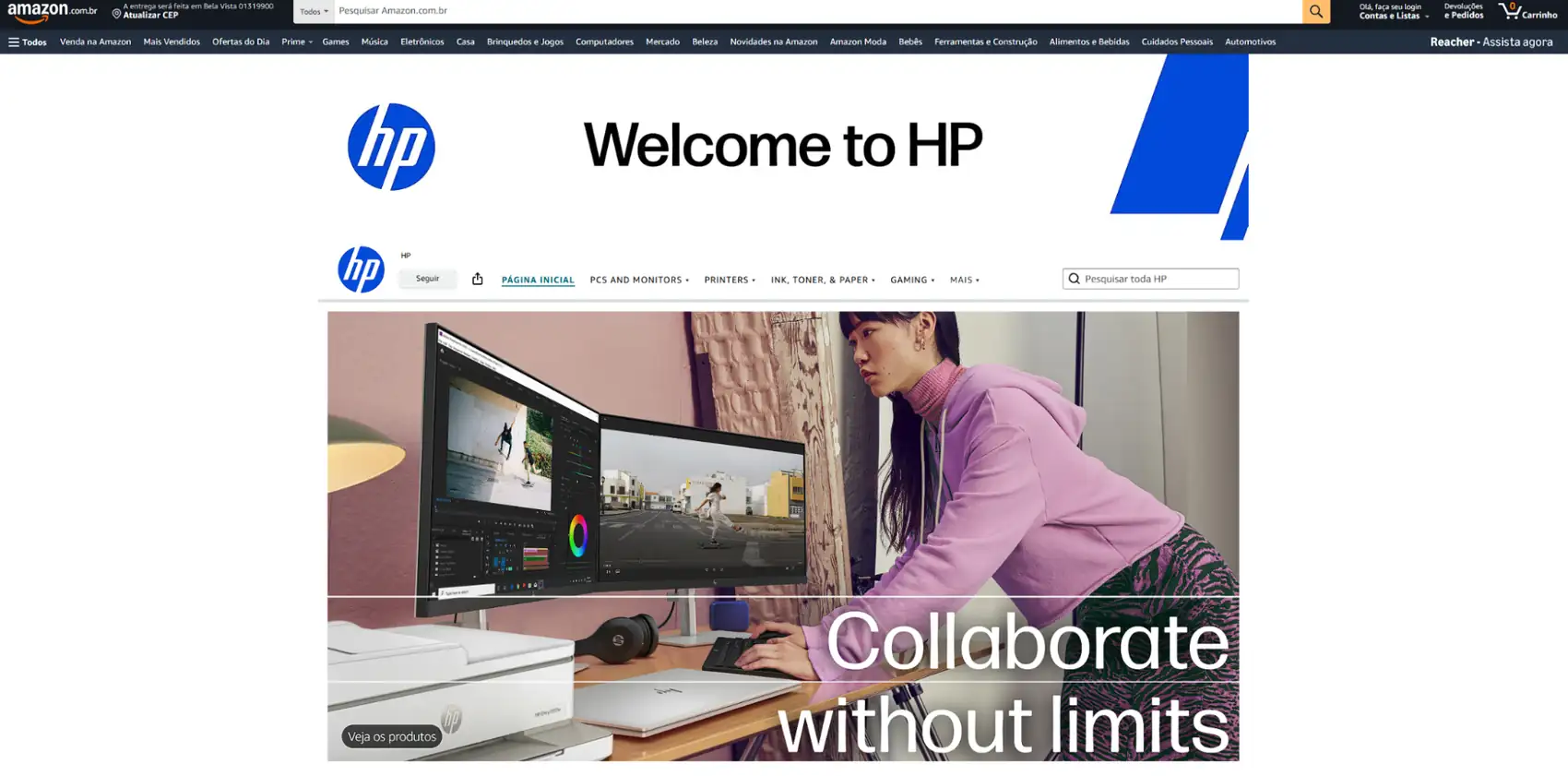
HP advertises printers, supplies, laptops and accessories on Amazon. That's an enormous catalogue with a genuine attention problem.
Format: Sponsored Brands video as the centrepiece, alongside Sponsored Products, Sponsored Brands and Display.
What we like: Video ranging from six to 45 seconds, run across category and branded keywords, so one asset worked for discovery and defence. They also stood up an in-house Retail Media team, which is why messaging stayed consistent across a catalogue that size.
Results: The outcomes are impressive. Impressions grew 224% YoY, clicks rose 142%, CTR beat Amazon's benchmark by 36%, and revenue grew 80% YoY with 60% more units sold. Printers saw a 954% higher purchase rate and 30% higher ROAS; laptops, 709% and 44%.
Steal this: Don't build one video length. Six seconds and 45 seconds do different jobs, and Amazon will serve both.
6. Loftie: A $5.66 ROAS as the Challenger in Its Category
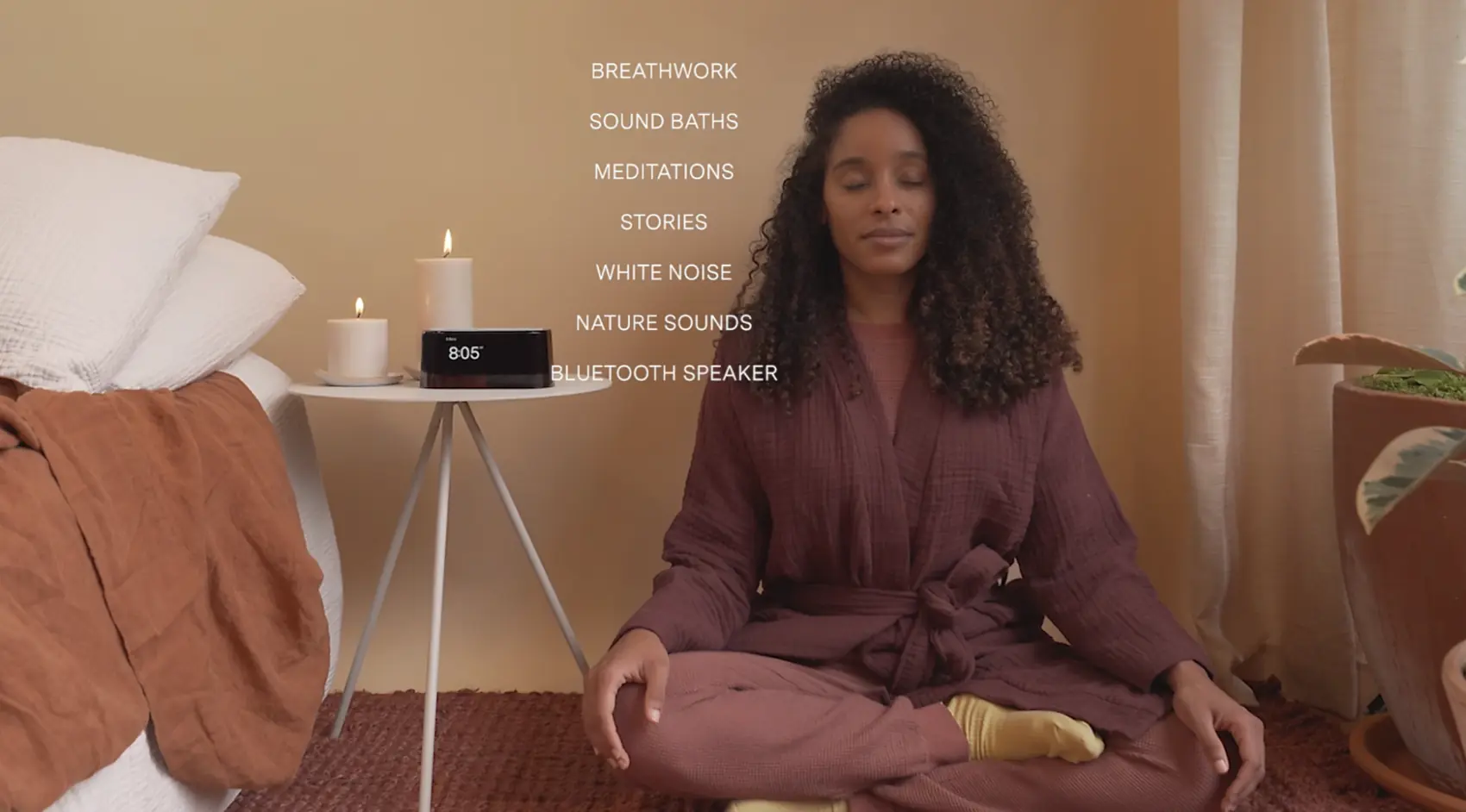
Loftie sells smart alarm clocks and sleep products against much larger consumer electronics brands.
Format: Sponsored Brands video, supported by Sponsored Products and Display.
What we like: Rather than competing on specs, the video led with benefits (what the product does to your evening) and concentrated spending around holidays, when gifting intent spikes.
Results: A $5.66 ROAS, a 17.68% ACOS, and a Sponsored Brands CTR of 1.06%, which placed Loftie in the 75th percentile for its category.
Steal this: Category percentile is a more useful benchmark than a blanket "good CTR" number. Ask your rep or your agency where you actually sit.
7. Kazi: 350% Sales Growth by Advertising the Story
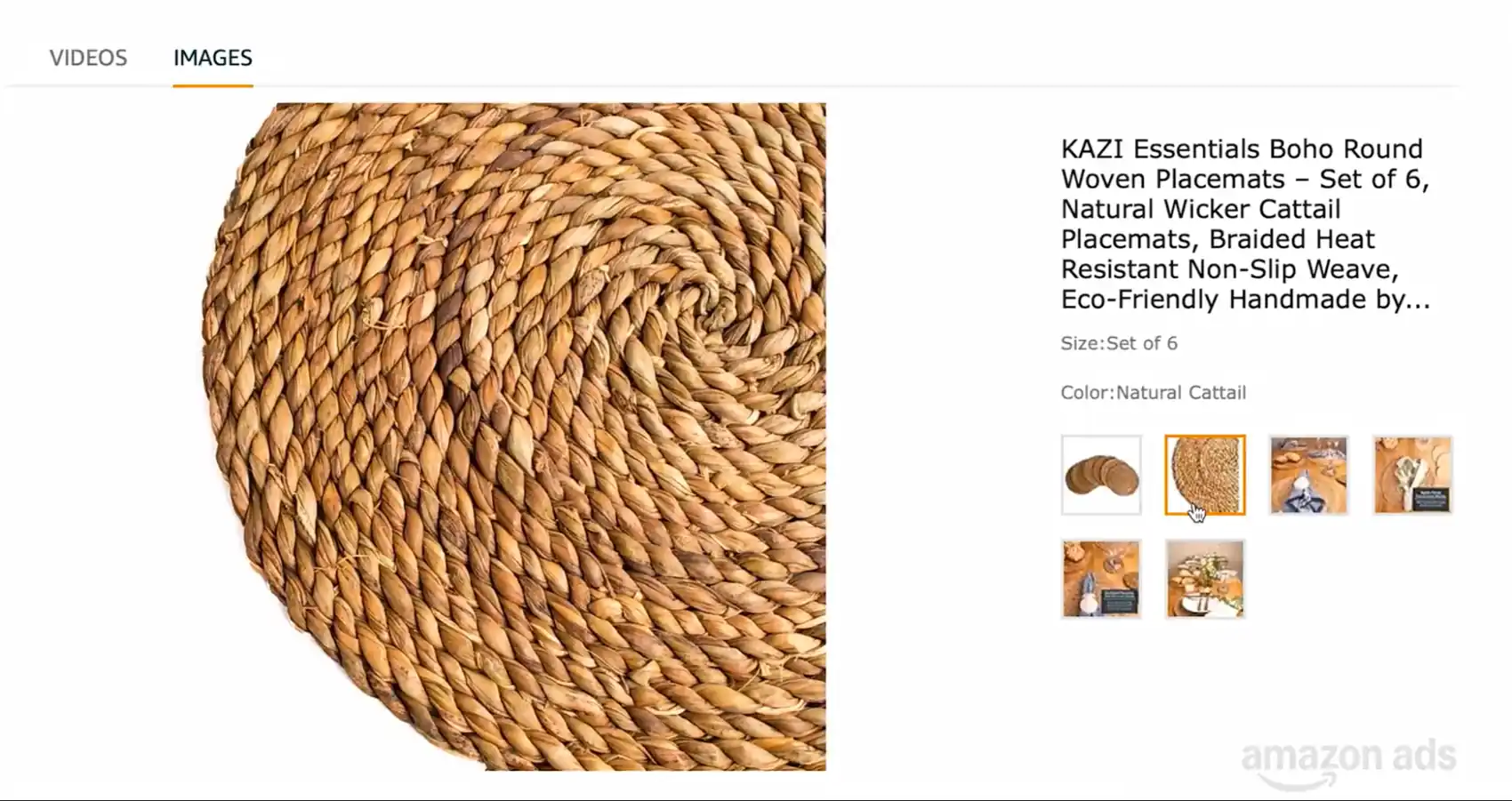
Kazi sells hand-woven baskets, placemats and coasters made by artisans in Africa, with fair employment at the centre of the brand.
Format: Sponsored Brands image and video, plus Sponsored Products, Display and A+ Content.
What we like: The video sold the sourcing story, not the spec. That's unusual on Amazon, but clearly effective. The smarter move came during a stockout: when cattail placemats sold out, they redirected budget to complementary cattail products rather than going quiet and losing velocity.
Results: 350% higher sales than the previous year, with 80% of Amazon sales coming from Amazon Ads and a best month at 4x ROAS.
Steal this: Build a stockout playbook before you need one. Going dark costs you rank you'll pay to win back.
8. Thule: 299% More Glance Views From Sponsored Display Video
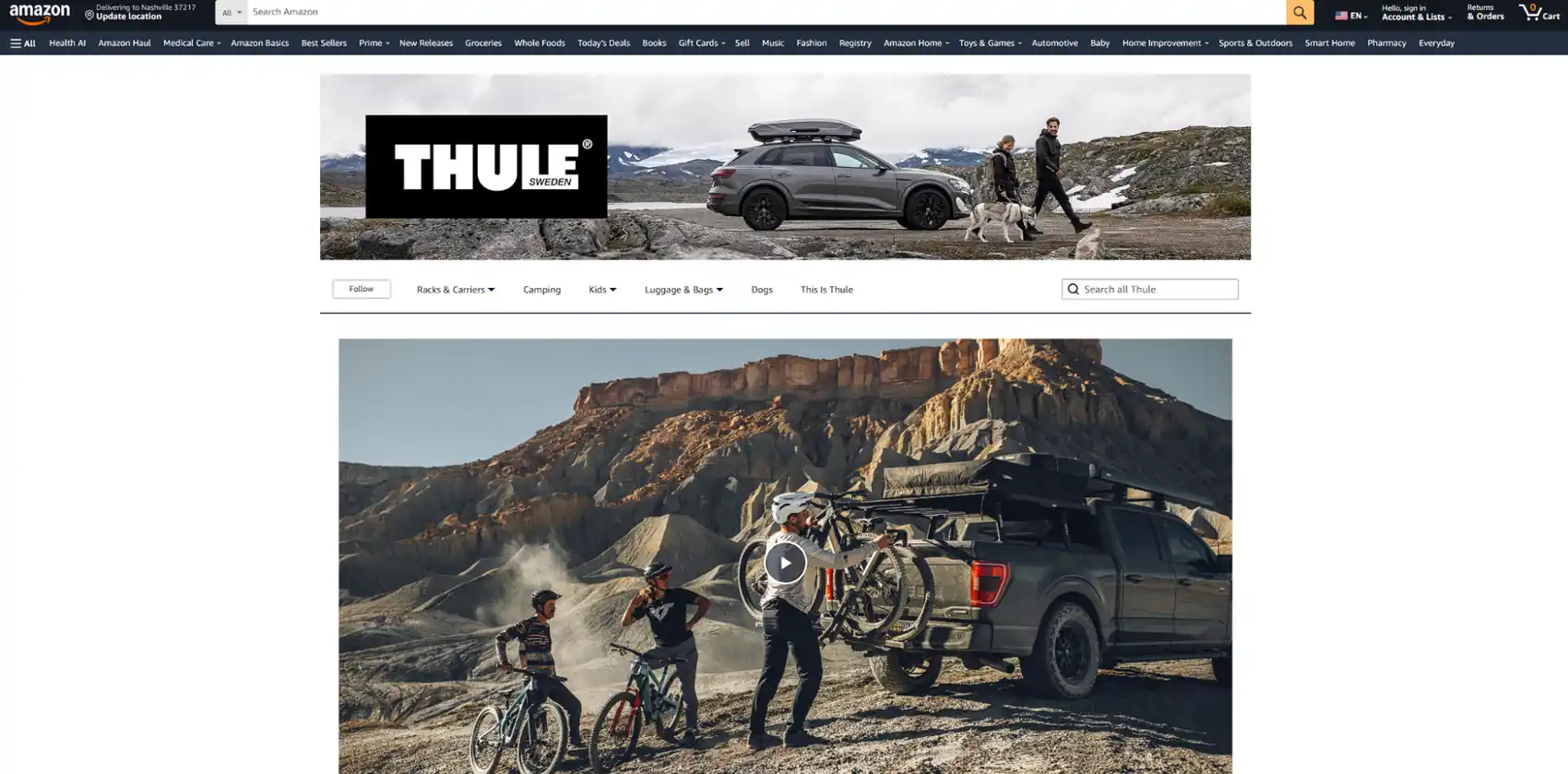
Thule, with agency Global Overview, promoted its Urban Glide 2 stroller, which is a considered, high-ticket purchase.
Format: Sponsored Display video, tested directly against static Sponsored Display.
What we like: They prospected shoppers who had viewed competing strollers at similar price points, which is about as close to intercepting a shortlist as retail media gets. The creative explained the product focusing on clear advantages (lightweight build, easy foldability) that make it worth the cost.
Results: Monthly glance views increased 299%, with display-plus-video delivering 44% lower effective cost per detail page view and 53% lower effective cost per purchase than static display.
Steal this: Run video against static in Sponsored Display as a controlled test. The cost-per-purchase delta here is too large to assume.
9. Hurom: Building the Creative Engine That Feeds Retail Media

Hurom makes slow juicers, a category that lives or dies on whether people believe the product fits their actual mornings.
Format: Sponsored Brands and Sponsored Products campaigns, backed by a full store optimization (title through every other piece of copy), plus a paid social UGC program feeding the creative pipeline.
What we like: inBeat rebuilt the store itself, retitling and rewriting copy across the board (including visual elements, body copy, and call to action messaging on product listings) so the page could actually hold the traffic the ads were sending it. On the paid social side, the team shifted messaging from promotional to health-led and put a dedicated creative strategist on hooks, CTA variations, and social proof across the UGC library, treating creative as a system: hooks tested against each other, winners varied, analysis running continuously.
Results: 300% ROAS growth, a 65% reduction in overall CPA, and 33% growth in month-over-month profit margin. Those figures come from inBeat's paid social creative program combined with their Amazon campaign. Plus, the asset library producing them is exactly what Sponsored Brands video and A+ content run on.
Steal this: Don't advertise into a store that hasn't earned the click. Fix the title and copy before you scale spend, then let the same creative pipeline feed both social media and Amazon so the message stays consistent across channels. inBeat's guide to creative testing covers the structure.
10. Fellow: 75% New-to-Brand Lift From DSP Plus Streaming TV
Fellow launched the Aiden Precision Coffee Maker, a premium appliance in a category flooded with discount competitors.
Format: Amazon DSP with Private Auction deals, plus Streaming TV across Prime Video, Fire TV and Twitch.
What we like: Bespoke video built for the campaign instead of a recycled product-page loop, leaning on craftsmanship rather than price, a deliberate filter for premium buyers over deal hunters.
Results: A 75% lift in new-to-brand versus online video only, 97% incremental reach versus display-only, 40% better eCPM efficiency, and a 500% lift in branded searches. Ninety percent of purchasers influenced by streaming TV were new-to-brand.
Steal this: If you're premium, say so in the creative. Amazon's audiences will sort themselves accordingly.
11. DedCool: Sequencing a 90-Product Amazon Launch

DedCool is a clean fragrance brand that launched 90 products onto Amazon at once; it's a scenario where the obvious play, turning on exact match and hoping, reliably fails.
Format: Sponsored Brands video and DSP prospecting sequenced ahead of conversion spend, run by Darkroom.
What we like: The sequencing. Exact-match Sponsored Products harvests demand that already exists; on a cold launch, there isn't any. So awareness formats ran first to manufacture branded search volume, and conversion campaigns switched on to catch it. Across client accounts, that system has produced 57% more Amazon sales, 2.35x higher ad conversion rates, and 38% lower ACOS.
Steal this: On a launch, buy demand creation before demand capture; otherwise, exact match is bidding on searches nobody is making yet.
12. Beekeeper's Naturals: 370% More NTB From a Connected Full-Funnel Stack
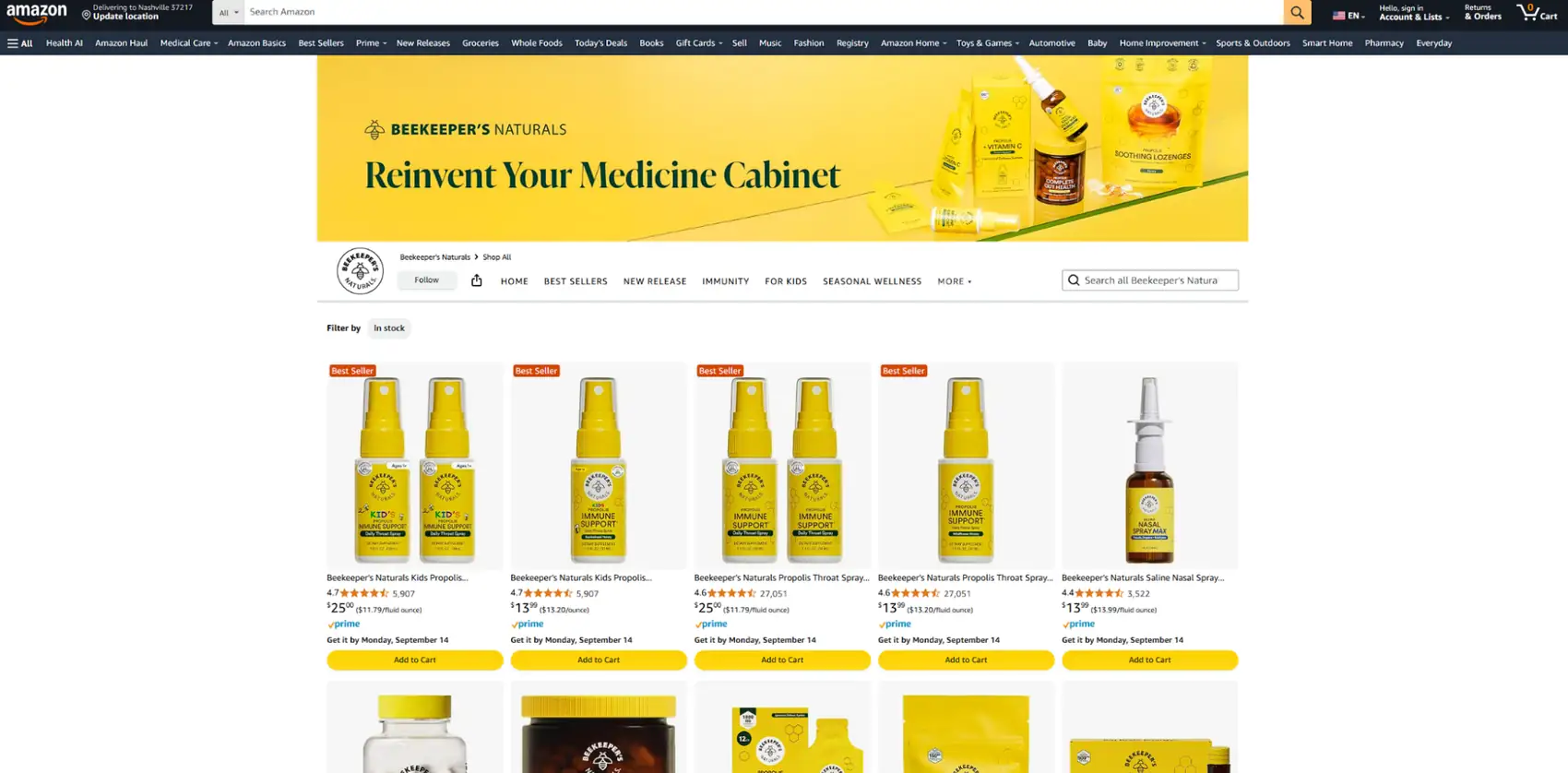
Beekeeper's Naturals sells bee-based wellness products and worked with agency Gigi to connect upper-funnel spend to acquisition.
Format: Streaming TV, Amazon DSP display and Sponsored ads, unified through Amazon Marketing Cloud and stitched to Shopify data via AWS Clean Rooms.
What we like: They raised top-of-funnel streaming spend 30% in February 2025 and mid-funnel 40%. But the interesting part is that AMC lets them see what that bought, joining exposure to real acquisition instead of trusting the last click.
Results: A 370% increase in streaming TV's contribution to new-to-brand purchases (0.82% to 3.86% by April 2025), a 4.3x increase in branded search, and a 233% higher purchase likelihood for shoppers exposed to the combined stack versus sponsored ads alone.
Steal this: Upper-funnel spend is unjustifiable until you can measure it. Get AMC working before you scale DSP, not after.
What Are the Best Practices to Steal From These Amazon Ad Examples?
- Start with Sponsored Products to build data before scaling to DSP. Every DSP example above ran on top of an existing Sponsored Products account. DSP without search data is prospecting blind.
- Apply negative keywords from day one. Front Line Publishing doubled revenue at flat spend largely by subtracting. Keyword research is just as important as ad creation for your brand store.
- Test one variable at a time. Thule's 53% lower cost per purchase came from a clean video-versus-static comparison, not a redesign.
- Match the ad type to the funnel stage. Sponsored Products for bottom, Sponsored Brands and Display for middle, DSP and Streaming TV for top. Treating formats as interchangeable is the most expensive mistake in retail media.
- Let campaigns run at least two weeks before judging them. Amazon's algorithm needs conversion volume to optimize; a campaign killed on day four hasn't generated enough data to separate a bad campaign from an unlucky one.
- Retarget detail-page viewers before the intent decays. Sponsored Display exists for this, and it's the cheapest incremental conversion in most accounts.
- Build video before you think you need it. Amazon Science found Sponsored Brands video ads generate 17.7x the click-through rate of static, with unmuted ad creative outperforming muted by more than 3x.
That said, none of this works if creative supply is the bottleneck. Most accounts we audit can afford more spend than their asset library can support, a production problem wearing a media problem's clothes.
Turn These Amazon Advertising Examples Into Your Own Results
The 12 Amazon ad campaigns above share one thread: intentional creative paired with tight targeting, tested with enough discipline to know which half worked. The brands winning on Amazon aren't the ones with the biggest budgets, but they're the ones iterating faster than their category.
inBeat connects brands with the creators who fuel the content engine those Amazon ads run on. Start with a performance UGC agency team, or pay-per-click services if search is the gap.
Frequently Asked Questions About Amazon Advertising
What Is a Good ACoS for Amazon Ads?
A good Advertising Cost of Sale (ACoS) depends on the campaign's job and the SKU's margin. Exact-match conversion campaigns should land between 15% and 25%. Consideration formats buying share of shelf can justify 25% to 35%. Awareness spend and DSP shouldn't be judged on Advertising Cost of Sale at all; measure those on new-to-brand rate and TACoS trend. Calculate breakeven ACoS per SKU before setting any target.
How Much Does Amazon Advertising Cost?
Sponsored Products starts at a $1 daily minimum, though Amazon recommends around $10 per campaign in practice. CPCs typically run $0.50 to $3.00 for Sponsored Products and $1.00 to $5.00 for Sponsored Brands. Beyond media, budget for management, creative production, and tooling. Most brands spend meaningfully more than their stated ad budget.
Are Amazon Sponsored Products Worth It for Small Brands?
Yes, and the examples above make the case better than any argument. Made for Locs hit 10x ROAS in six weeks, and two self-published authors doubled revenue at flat spend. With a $1 daily minimum and no upfront fees, the real cost of testing is the attention required to review search terms weekly. Use the standard Amazon Ads campaign manager for bid optimization.
What's the Difference Between Amazon PPC and Amazon DSP?
Amazon PPC (Sponsored Products, Brands and Display) is keyword- and product-targeted, runs mostly on Amazon, and captures demand that already exists. Amazon DSP is programmatic display and video reaching shoppers across Amazon properties and the open web using Amazon's shopping signals, and it creates demand before the search happens. Prove PPC first, then layer DSP once Sponsored campaigns saturate.
What Does Amazon Attribution Actually Measure, and How Does It Help With Bid Optimization?
Amazon Attribution can help optimize bids on your non-Amazon campaigns by connecting off-platform metrics like cost per click and cost per impression to what actually happens on Amazon, like detail page views, add-to-cart, and purchases. This gives you a real customer acquisition cost.