.svg)
.svg)
.svg)
.svg)


.svg)




%20(1).png)

A famous dog can attract millions of views. But can it actually sell a product? A study involving 1,166 participants across six experiments found that pet influencers generated stronger engagement and purchase intent than human creators, especially for pet-related products.
With US pet spending projected to reach $165 billion in 2026, there's plenty at stake beyond viral videos. The challenge is turning that attention into credible recommendations and purchases that brands can track. This guide explores how pet creators, veterinary experts, and paid campaigns work together to influence buying decisions and drive retail sales.
inBeat Agency POV: We don't treat a pet creator as a media buy. A senior-dog owner in a premium grocery household carries that audience inside the clip, and no ad-set setting can replicate that selection anymore. Reach is the media buyer's job.
So we source micro pet accounts at volume, pair the hook with a professional voice whenever the product makes a health or nutrition claim, dark-post every cut, and let CPA and MER decide which message and messenger earned the next dollar. Spend that teaches us nothing about the persona is the real waste, however many views the cat collected.
What Is Pet Influencer Marketing for Brands?
Pet influencer marketing, from the buyer's side, is a brand partnership model in which the messenger is an animal, the person who handles that animal, or a credentialed pet professional, and the content they produce is treated as advertising inventory you can test and scale.
The model does two jobs for a performance program. At the top of the funnel the animal buys attention cheaply, because pet content earns watch time that a product demo on its own rarely does. At the consideration stage the handler or the professional lends trust: a dog owner who has fed the food for a year, or a veterinarian who can explain why an ingredient matters.
What Types of Pet Influencers Can Brands Work With?
Three messenger types recur throughout this guide, and you should classify every current or shortlisted creator into one of them before you set a campaign objective. Pet-first entertainment accounts put the animal on camera and keep the human mostly off it; the audience follows the cat and barely registers the owner. Handler-led lifestyle accounts show the owner's life with the animal, so the household, the home and the shopping habits are visible.
Veterinary, trainer and groomer accounts are professional voices whose authority comes from credentials and practice, and whose audiences arrive with a question in mind. Picture a dental-chew brand listing a viral cat account, a dog-mom lifestyle account and a veterinary dentist on the same shortlist. Those are three different messengers with three different jobs, and briefing them identically wastes at least two of them.
Why Do Most Pet Influencer Guides Skip the Brand Side?
Most pages ranking for this keyword teach pet owners how to grow an account and land sponsorships. That's useful to creators and nearly useless to a growth lead deciding where performance budget goes, so this article covers the brand execution half only.
Pet Influencer Engagement and Cost Benchmarks vs. Human Influencers: What to Trust
Trust a pet creator engagement or cost benchmark only when it comes with a stated observation period, a defined sample and an original source, and build your own benchmark before you buy more content. Most circulating figures fail that test.
Why Do Pet Engagement-Rate Claims Rarely Hold Up?
The statistics that travel through pitch decks, that pet accounts outperform human accounts on engagement by some percentage, usually originate as platform or marketplace marketing material. The IAB's 2025 survey shows why: 39% of brands name proving ROI their top creator-measurement challenge, and 55% measure mainly with ad platform reporting against 37% who use internal sales data.
Before any number appears in your planning deck, confirm the measurement window and whether engagement means likes on organic posts or something a media buyer can spend against. We've chosen to leave specific percentages out of this article because no primary source we could verify carries a dated, methodologically clear comparison.
The comparison that matters to a performance buyer is different in kind anyway: cost per incremental purchase from pet creative versus human creative at matched spend. Engagement on an organic post predicts almost nothing about that.
How to Build Your Own Pet Influencer CPA and CPM Benchmark in One Test Cycle
Run a matched-spend test and set the resulting CPA as your internal benchmark.
- Use the same offer, the same landing page and the same audience settings.
- Put one ad set behind a dog creator's cut and one behind a human reviewer's cut, give each identical daily budgets, and read CPA and MER only after both pass the same spend threshold, so the comparison isn't decided by whichever side exited the learning phase first.
- Repeat it with a second pair of creators before you call the number a benchmark.
Cut your benchmark by audience segment, at minimum new owners versus experienced owners, or you'll average a winning segment and a losing one into a mediocre number that justifies nothing.
Pet Creators vs. Veterinary Voices: Which Pet Influencer Should You Partner With?
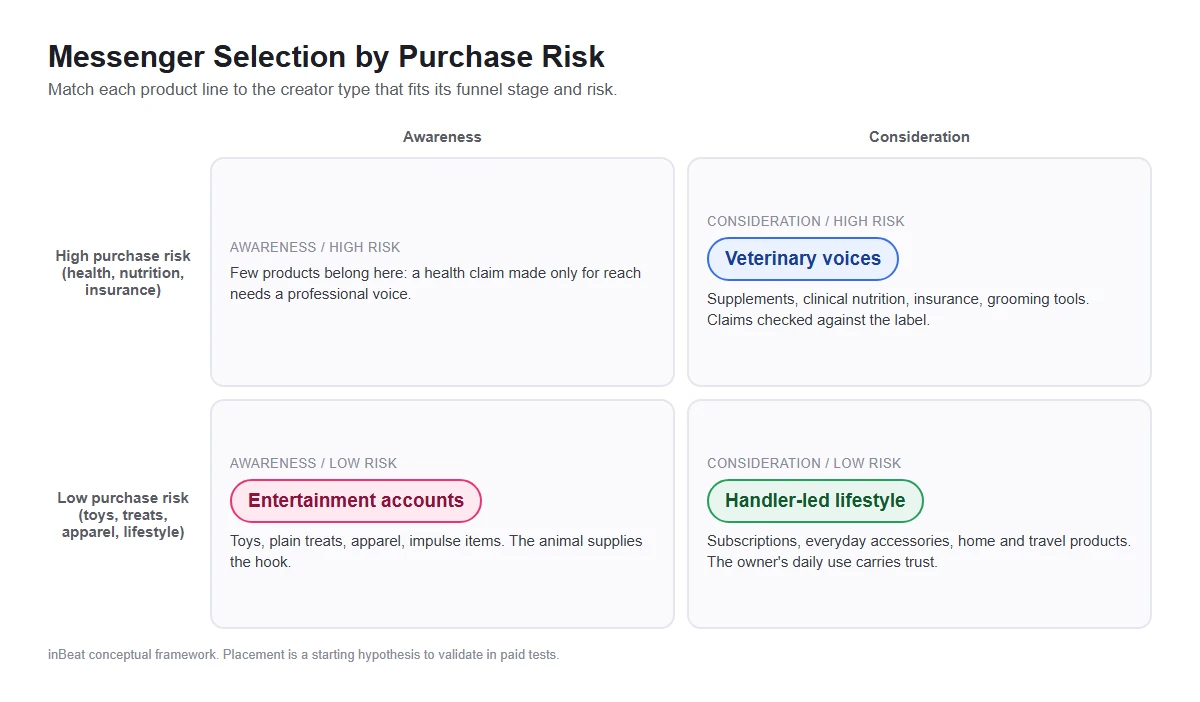
Match the messenger to the purchase risk. Low-consideration items such as toys, treats and apparel belong with entertainment accounts, because the buyer needs a reason to smile and a link. High-consideration items such as prescription-style nutrition, supplements, insurance and grooming tools need professional credibility, because the buyer needs a reason to believe.
Our default is firm: for any supplement, clinical product, or ad that makes a health, nutrition or safety claim about something ingested by or applied to the animal, include a professional voice. Plain treats with no health claim can run with entertainment accounts. Score each product line on purchase risk and assign a messenger type per line before you write a single brief.
When Should You Use Entertaining Pet Accounts?
Pet-first accounts are the most efficient hook supply in the category. The animal does the stopping, the format is native to the feed, and the audience arrives in a receptive mood. Their weakness is the claim.
A golden retriever cannot explain glucosamine, and when the handler tries, the audience hears a sponsored read. Use these accounts for awareness, for impulse-priced products and for the opening seconds of assets that someone else finishes. Their usage rights tend to be simplest, since the account owner controls the footage.
When Should You Use Veterinary and Trainer Voices?
A licensed professional carries a rational claim in a way an entertainer can't. The messaging section below shows why the buyers your supplement or insurance product most needs to convince, first-time owners facing an unfamiliar problem, respond to explanation over emotion, and a vet is the person positioned to supply it.
Professional voices cost more per asset, their audiences are smaller, and their rights are more complex because their license and employer may constrain endorsements. Before signing one, ask these vetting questions: Is the license current and in a jurisdiction your audience recognizes?
Are they comfortable with sponsored-content disclosure in every cut? Will they review claims against the label and refuse ones they can't support? Do they hold prior or current brand relationships that conflict with yours?
Veterinarians say owners need professional voices on social media. Dr. Hunter Finn, who has more than 2.1 million TikTok followers, told AVMA News in April 2025 that vets should step up, because owners who do not find answers from professionals will take them from people without veterinary training.
Verify every veterinary creator before signing. VIN News reported in 2026 on more than 200 Facebook ads for a cat taurine supplement that featured veterinarians it could not verify, including one post that used a real Texas veterinarian's photo without her consent.
The CEO of Taily, a pet supplement brand, told VIN News that creators falsely presenting themselves as veterinarians are a problem the company deals with constantly. Check the license with the relevant state board and the clinic's own website before the brief goes out.
How Do You Pair a Pet Creator With a Veterinary Expert?
The strongest high-consideration asset uses both messengers in one cut. Open with the pet creator's hook, a senior dog struggling up the stairs and then trotting down them. Cut to the professional explaining the mechanism in plain language.
Close with the offer and the code. A conceptual example: a joint supplement brand briefs a senior-dog account for the first ten seconds and a licensed vet for the ingredient explanation, both inside the same 30-second asset. Each messenger does the job the other can't, and the paid test will tell you whether the pairing beats either alone.
The credibility column reflects the controlled study's message-type finding and the purchase-risk rule set at the top of this section.
Which Pet Brands Use Influencers? Chewy, The Farmer's Dog, BarkBox and Pedigree
Chewy, The Farmer's Dog, BarkBox and Pedigree each use creators for a different job: retail scale, performance creative volume, product launches and a cause. Each example below connects to a decision in this guide, and each figure is labelled with who reported it.
How Does Chewy Run Its Creator Program?
Chewy runs creators as a volume channel. More than 600 creators had joined Chewy Storefronts by November 2025, Marketing Dive reported, and the program lets pet owners and influencers curate shoppable product lists by breed, size and pet type. Shoppers buy through affiliate links, creators track performance in a dashboard, and each creator can hand followers a unique sales code.
Cody Taurus, whose Shiba Inu appears in his content to a TikTok audience of more than 1 million, and Kat Braden, whose dog Oliver anchors a TikTok account with 2.6 million followers, are among the participants. The report includes no sales figures. The lesson for a brand with a retail footprint is the sourcing model in the next section: many persona-specific creators, each with a trackable code.
How Does The Farmer's Dog Scale Creator-Led Creative?
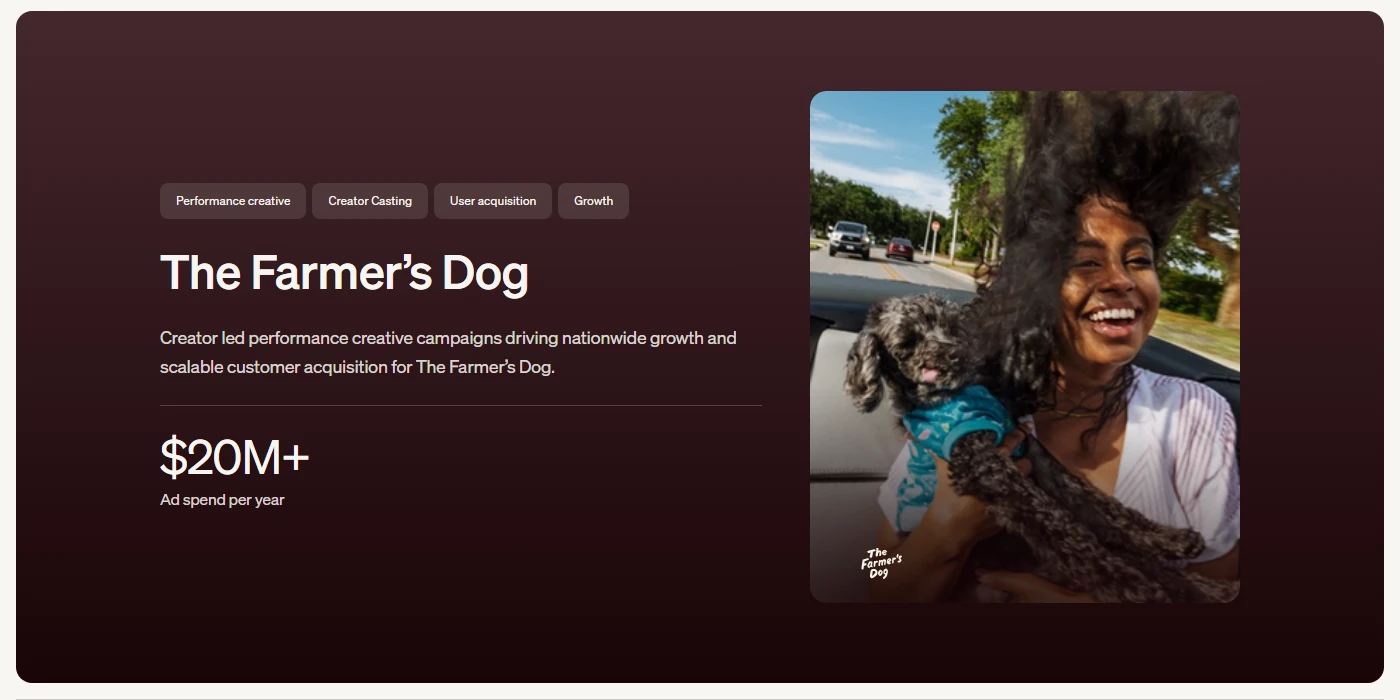
Our creator-led system for The Farmer's Dog supports more than $20 million in annual ad spend across 10+ channels, with 70+ assets created per month, according to our case study. The brand sells fresh dog food on subscription and needed creative that fed a multi-channel paid account without going stale.
We mapped the brand's top creative drivers, concentrated effort on what converted and shipped in rapid cycles, with each batch's data informing the next.
How Does BarkBox Use Pet Creators?
BarkBox works with high-reach pet creators to show new toy launches and themed boxes, according to Cascadia Capital's Winter 2025/2026 Pet Industry Overview as summarized by Pet Food Industry in January 2026. The report says the content serves awareness at the top of the funnel and conversion lower down through time-sensitive offers.
Cascadia also lists BarkBox with Nom Nom, Freshpet and Spot & Tango as pet brands selling on TikTok Shop, and says engagement on these platforms often brings stronger return and lower acquisition costs than traditional advertising, without publishing the underlying data. The report gives no BarkBox results. The pairing to copy is a pet-first hook with an expiring offer.
What Did Pedigree's "Adopt, Don't Shop" Campaign Achieve?
Pedigree's "Adopt, Don't Shop" campaign drew more than 27 million views and more than 32,000 direct clicks to an adoption site, according to TikTok's November 2025 announcement of the UK Ad Awards. Positive sentiment rose from 57% to 80%, and the campaign won the Greatest Impact award.
The campaign was built around a custom EA FC25 mod featuring real Battersea dogs. Creators including Chelcee Grimes, Tobyshome and Cadaea turned Twitch gameplay into vertical stories, and Spark Ads and In-Feed Ads boosted the best-performing content.
TikTok and the agencies behind the work supplied the figures. It shows creator content earning paid reach well beyond a core audience, the loop described in the dark-posting section.
How to Find and Vet Pet Influencers for a Pet Influencer Campaign
Build a shortlist of 30 to 50 micro pet accounts filtered by the owner's persona, pilot around 10, and convert the best into ambassadors. The process runs in six steps.
- Define the persona of the pet owner you want before you think about the pet. A raw-food brand should write down "urban, large-breed, premium grocery shopper" before it writes down "husky." The owner buys; the dog eats. Millennials are 33% of U.S. pet owners and Gen Z is 25% and the fastest-growing segment, as reported by Pet Food Industry.
- Search by owner persona signals and content format. Breed, life stage, city, household type and the kind of content the account posts (routine, training, home, travel) all show up in captions, backgrounds and comments. Marketplace and discovery tools exist for this, but a manual pass through the last 30 posts still beats any filter for persona fit.
- Shortlist at volume and check comment quality and audience geography. Read whether commenters ask about the dog's food and routine or only post emoji. Request audience location data and reject accounts whose followers mostly sit outside your retail footprint.
- Request past brand work and usage-rights terms. Ask what paid amplification, editing and whitelisting rights previous brands received, and at what price, so you know whether the creator understands content being used as ads.
- Run a small paid gifting or flat-fee pilot. Keep the first round cheap enough that a 30% failure rate costs nothing you'll miss.
- Convert the best performers to ongoing ambassadors. Momentum beyond one viral post comes from a standing relationship with monthly deliverables and refreshed briefs, which is the durability most pet campaigns lack.
Micro accounts sourced at volume beat one celebrity pet for testing because they give you more persona variants, lower unit cost and more raw creative to push into media. One famous dog is one persona and one creative read. Forty micro accounts are forty hypotheses about which household responds to your product.
The study's finding that persuasion shifted with perceived pet attractiveness and audience experience is a direct argument for sourcing across those dimensions. If you only sign the cutest animals, you've accidentally restricted the test to one cell of the matrix the messaging section lays out.
Every pet creator brief needs these fields, and the higher-stakes ones deserve detail:
- Product usage instructions, written to the label, with the exact serving or application.
- Safety do-nots for the animal: no feeding above label amounts, no application near eyes or wounds, no stunts.
- Required disclosure language and placement.
- Raw footage delivery, including unedited clips and vertical and horizontal versions, so your editors can make cuts the creator never planned.
- Rights duration, geography and the specific paid uses permitted.
Red flags to act on during sourcing:
- An audience concentrated outside your sales footprint.
- Engagement that spikes only during giveaways.
- Handlers who won't show the animal's ordinary routine, which usually means the account is a stage set with no life behind it.
Emotional vs. Rational Messaging in Pet Influencer Ads: What the Research Says
Brief every pet creator for one emotional variant and one rational variant, then split the paid test by new-owner and experienced-owner audiences. That instruction follows directly from the only controlled evidence available.
In Wei, Zhang, Ying and Zheng's two experiments on dog influencers on Instagram (International Journal of Hospitality Management, 2025; summarised by UCF's Rosen Research Review), which examined hotel booking intent, rational messages were more persuasive for less experienced travelers and when the pet influencer was perceived as less attractive. The authors note that emotional messages, while engaging, were less effective in those contexts.
This is a hospitality study with a travel-experience variable, so treat the finding as a hypothesis for pet food, supplements and retail until your own tests confirm it. It is still the best-controlled evidence on pet influencer message type we could trace to an original source, which puts it ahead of every unsourced "pets drive emotion" claim in the category.
When Emotional Pet Content Works
Emotional content earns its place when the pet is highly attractive to the audience and the viewer already has experience with the category. An experienced owner scrolling past a photogenic dog needs a feeling and a reminder, and a treat or a toy can close on that alone. Emotion also does the hooking work in paired assets, as the messenger section described.
When Rational, Feature-Led Messaging Works Better
Rational messaging wins when the viewer is new to the problem or when the animal on camera is an ordinary pet with no obvious star quality.
The common failure in pet campaigns is running only "aww" creative to new pet owners who are anxious about an unfamiliar food, a first vaccination schedule or a limp, and who actually want reassurance and reasons. For them, a plain explanation of what the product does and why outperforms a cute clip, if the study generalizes.
The matrix translates the UCF study's interaction effect into brief guidance and inherits the study's hospitality limitation; validate each cell in your own media before treating it as settled.
How to Test Both Without Guessing
Have each creator deliver two cuts of identical length with identical offers, one emotional and one rational. Run them against a new-owner audience and an experienced-owner audience, which you can approximate with interest layers, first-purchase status in your own data, or creator audiences that skew toward puppies and kittens versus senior animals.
Read CPA cell by cell; an aggregate number hides the interaction you're testing for. Four cells and two creators is eight reads, which is enough to see whether the hypothesis holds for your product before the next brief goes out.

Dark Posting and Whitelisting Pet Creator Content for Paid Social
Add paid usage, whitelisting and geography clauses to your pet creator contract template this week, because without them the content you paid for cannot become the ads that pay you back. Organic pet virality rarely transfers to sales on its own.
A viral clip lands on pet lovers everywhere, most of them outside your distribution and many of them outside your buyer persona. Paid distribution lets you restrict the same clip to your retail footprint and the household you actually sell to. The creative is the targeting; the media buy is the aperture.
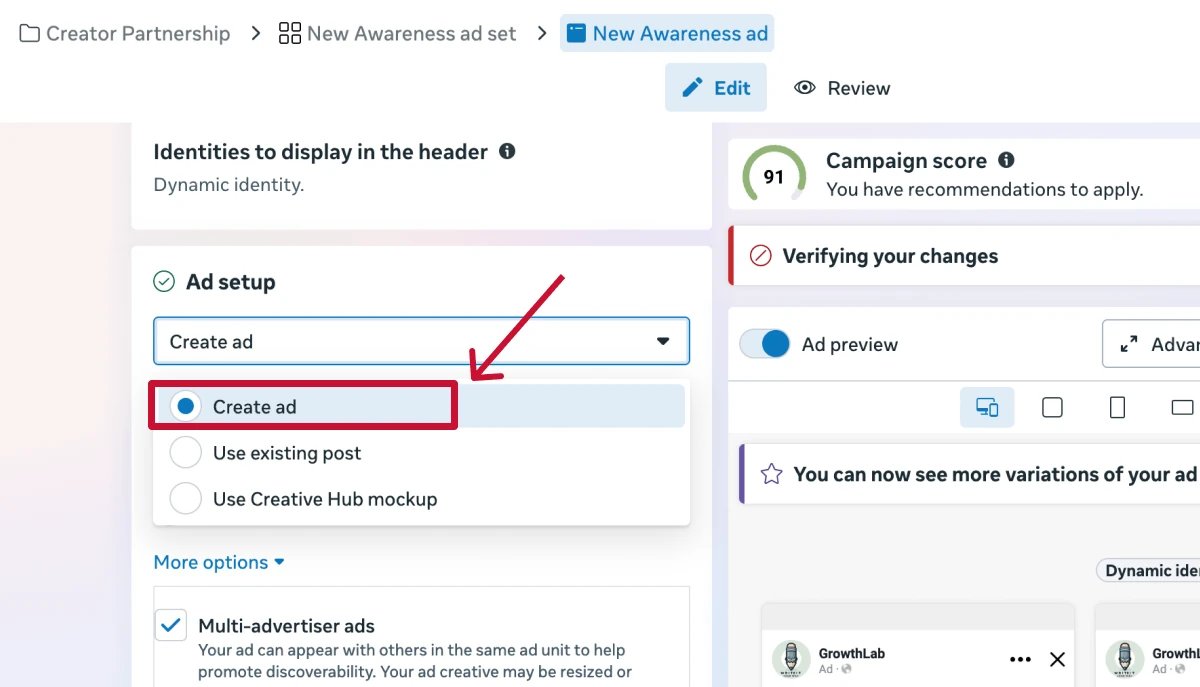
The pipeline runs in six steps:
- Secure paid usage rights and ad-account access in the contract before any shoot. Specify the paid amplification term (90 days, six months, a year), the geography, the right to edit and recut, permission to whitelist from the creator's handle, and an exclusivity window during which the creator won't promote a direct competitor. Pet creators coming from gifting relationships frequently have none of these terms in their standard agreement, so expect to supply the language.
- Collect raw and edited files. The creator's edit is one hypothesis; the raw footage lets your team cut the rational and emotional variants from the messaging section without another shoot.
- Dark-post 3 to 5 cuts per creator at a low spend level, including the emotional and rational variants plus recuts from raw footage. Dark posts never appear on the creator's grid, so you can test hooks and messages the creator might not want as a permanent post.
- Read CPA and hook rate, kill the losers. Set the kill threshold in advance, for example two times target CPA after a fixed spend, so the decision isn't argued cut by cut.
- Whitelist winning creative from the creator's handle. Running the ad from the creator's identity preserves the borrowed likability you paid for and usually reads as a recommendation.
- Scale budget on the few that earned it and feed what you learned into the next brief. Which persona, which message lean, which hook: these go into the brief for the next batch of creators.
Each cut and each audience cell gets a small, honest spend, and the segments that respond to rational reassurance show themselves before the scaled budget goes out.
Paid amplification is now part of the creator brief and no longer an afterthought. Digiday reported in May 2026 that eMarketer expects U.S. spend on paid amplification and creator production fees to reach $14.2 billion each in 2027, with amplification passing production fees in 2028. Pedigree's campaign in the examples section above shows the loop in practice: creator content first, paid boosts behind the winners.
Pro tip: write the whitelisting permission as an obligation to grant partnership-ads access within a set number of days of delivery. We've seen rights that exist on paper go unused for a quarter because nobody chased the handle access.
How Do You Measure Pet Influencer Marketing From Engagement to Retail Sell-Through?
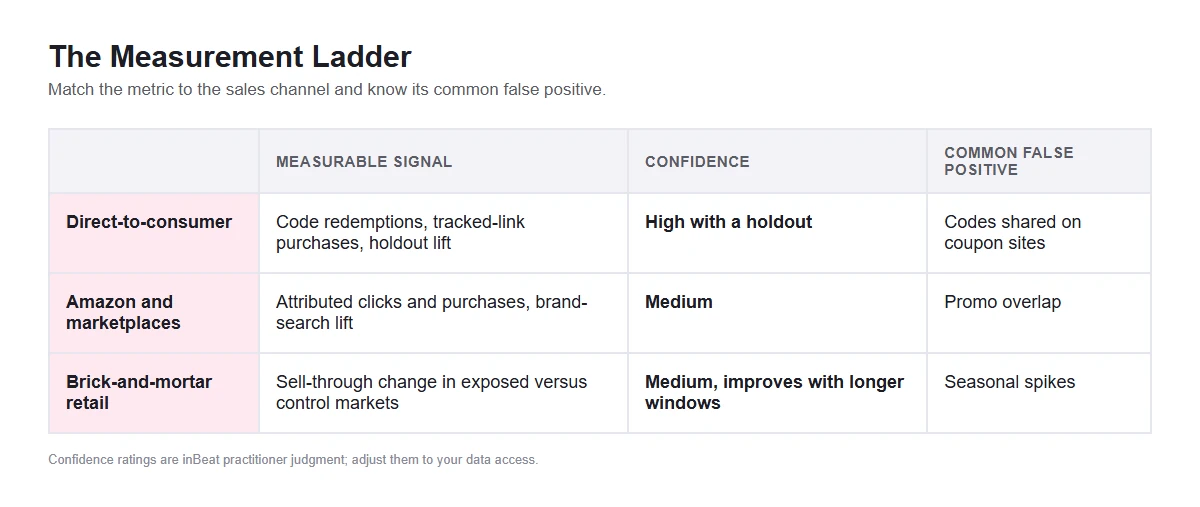
Pick one primary attribution method per sales channel, add a second as a check, and write both into the campaign plan before the first post goes live. Pet campaigns die in reporting when the team reports engagement and finance asks about purchase.
Think of the measurement as a ladder. Engagement is a creative-quality signal: it tells you the clip works as a clip. CPA from dark posts is the media signal: it tells you the clip works as an ad for a trackable audience.
Geo-matched retail lift is the sell-through signal: it tells you the campaign moved product off shelves you don't control. Each rung answers a different question and none replaces the others.
Remember: Confidence ratings are our practitioner judgment; adjust them to your data access.
How to Measure DTC Sales: Codes, Links and Holdout Tests
Give every creator a unique code and a tracked link, then accept that both undercount, since many buyers watch on one device and purchase later on another. The cleaner read is a holdout: suppress the pet creator ads in a randomly selected slice of your audience and compare conversion against the exposed slice. Report by segment.
How to Track Pet Creator Sales on Amazon and Marketplaces
Use the marketplace's own attribution tagging on every creator link and on the whitelisted ads, and watch branded search volume alongside attributed purchases. Attributed sales are a floor; branded search lift is the signal that pet creative worked on people who didn't click. Verify the current attribution windows with the marketplace before you write the plan, since they change.
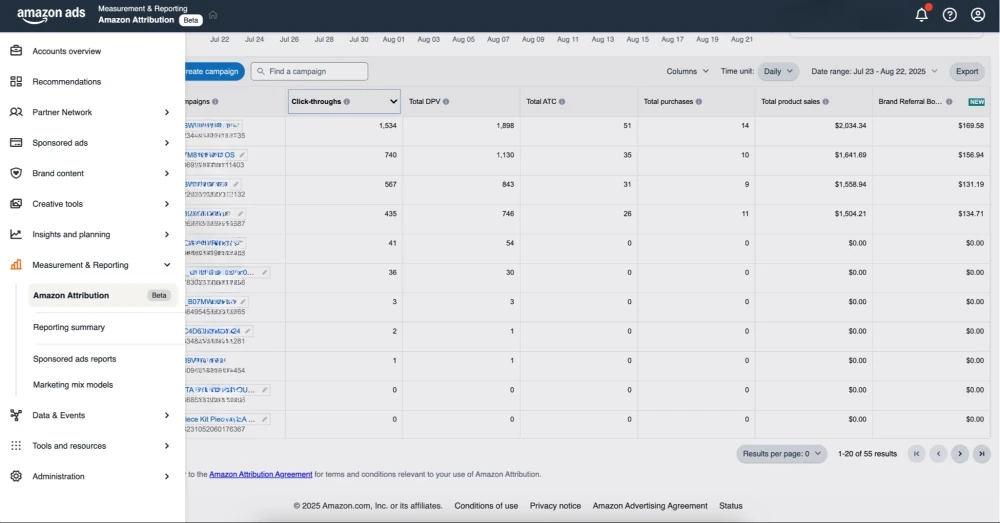
How to Measure Retail Sell-Through With Scan Data and Geo-Matched Tests
Concentrate pet creator paid spend in two or more test markets, pick control markets matched on store count, pet ownership density and prior sell-through, and compare retailer scan data across the same weeks. Picture a treat brand, hypothetically, running pet creator paid media in two regions and comparing retailer scan data to two control regions over six weeks.
Holiday gifting, retailer stockouts, overlapping promotions, and local pet adoption spikes can distort a six-week sales comparison. Track these factors in both test and control markets before attributing any lift to creator activity. If a major disruption affects one region, extend the measurement window rather than reporting a misleading result.
Is Pet Influencer Marketing Effective for Non-Pet Brands?
Yes, pet influencer marketing works for non-pet brands, with a limit: expect the attention benefit, and only expect the trust benefit when the product has a genuine pet-related use. List which of your non-pet SKUs solve a problem a pet owner visibly has at home, and brief pet creators only on those.
Where Pet Audiences Overlap With Household, Travel and Tech Buyers
A pet creator is a persona proxy. The owner's household, income and lifestyle travel with the animal, so a handler-led account showing a large dog in a city apartment is also showing a renter who cleans floors often, drives somewhere on weekends and shops for durable furniture. That is why cleaning, home, automotive and travel brands can use these creators without being pet brands.
The clearest evidence we found is the UCF study itself, which tested pet influencers on hotel booking intent, a hospitality use case with no pet product in sight. A non-pet example is Doug the Pug, who appeared in GEICO's 2025 "VIP | Low-Key Big Deal" commercial.
How to Brief a Pet Creator for a Non-Pet Product
Adjust the brief so the pet is the hook, the owner's problem is the story and the product is the resolution. A vacuum brief starts with the shedding, moves through the owner's frustration and ends with the floor; the dog never has to endorse anything.
Hold the messenger-selection logic from earlier: for a travel or cleaning product, the handler-led account is the right type, because the owner is the one with the problem.
How Do You Keep Pet Creator Campaigns Brand-Safe and Welfare-Compliant?
Add a welfare and claims clause to the creator agreement and a pre-publish review step for every pet asset. Pet audiences police animal welfare aggressively, and a single clip of a stressed animal can cost more in comment-section backlash and retailer concern than the campaign earned. This section is practice guidance; your counsel owns the regulatory reading.
What Welfare Screening Questions Should You Ask Before Signing a Pet Creator?
- Can the handler show evidence of routine veterinary care for the animal?
- Does the back catalog contain stress cues: tight costumes, forced poses, stunts the animal visibly resists, feeding of human foods that aren't safe?
- How does the handler respond to welfare comments from followers? Defensiveness is a warning; calm correction is a good sign.
- Does the animal appear in content at a frequency and in conditions that look like ordinary life?
What Content Guidelines Keep the Animal and the Brand Safe?
Write these into the brief and into the contract.
- The product must be used exactly as directed on the label.
- No feeding above stated amounts and no application the label doesn't permit.
- No implied medical outcomes unless a professional voice makes the statement and can support it.
- No scenes that would read as risky to an experienced owner, even if the animal is comfortable, because the audience judges what's in the frame and never sees the backstory.
Take a hypothetical supplement brand that rejects a cut where the creator implies the product cured a limp and reshoots with a vet explaining the supported benefits.
What Disclosure and Claims Rules Apply to Pet Products?
Sponsored content needs clear disclosure in every cut, including dark posts and whitelisted ads. Health, nutrition and treatment claims carry a stricter bar than enjoyment claims, which is one more reason to route them through the veterinary and trainer voices discussed earlier.
The FTC's Disclosures 101 guidance says a disclosure in a video should appear in the video itself, because a note in the description alone is easy to miss, and that endorsers cannot make claims that would need proof the advertiser lacks, such as scientific proof that a product treats a health condition.
Keep a claims register for each product listing what each messenger is permitted to say, and have someone outside the creative team check every asset against it before it goes live.
Should You Hire a Pet Influencer Marketing Agency or Run It In-House?
Run pet creator marketing in-house when you sell through one channel with a small SKU set and can staff sourcing, briefing and media with the same two or three people. Bring in a pet influencer marketing agency when you need volume sourcing, continuous creative production and paid media run as one loop, because that loop breaks the moment its pieces sit in different teams with different scorecards.
When Does a Pet Influencer Marketing Agency Pay for Itself?
A brand with one treat line sold DTC can source ten micro accounts, cut their footage and run the dark posts itself. A brand with five SKUs across DTC, Amazon and two retailers faces a different problem: it needs forty to fifty creators per quarter to keep the persona matrix populated, two message variants per creator, rights administration for every one of them, and three attribution methods running in parallel.
Map which of those steps you can staff internally and which you'd outsource. If sourcing and media would live in separate teams, the agency usually pays for itself in the creative that never gets wasted.
Our roundup of influencer marketing agencies for retail brands compares how agencies source creators at volume for retail-distributed products.
How Does inBeat Run Pet Creator Campaigns?
At inBeat, we combine micro-creator sourcing at scale with UGC and performance creative and paid social under one roof. Our approach keeps creative and media teams working together, so the insights from campaign performance feed directly into the next round of creator briefs.
For pet brands, we focus on matching creators to the buying decisions their audiences face. We test different messages across audience segments, use dark posts to identify promising creative, and scale what performs. Our paid media team tracks results by channel, while our creative team uses those findings to develop the next batch of content. This way, each campaign builds on what we've already learned rather than relying on a single viral moment.
Want to bring that approach to your pet brand? Let's talk.
Pet Influencer Marketing FAQs
What usage-rights terms should a pet creator contract include before the content can be dark-posted?
At minimum:
- A paid amplification term with a defined length.
- The geographies where ads may run.
- The right to edit and recut raw footage.
- Permission to run ads from the creator's handle with a deadline for granting access.
- An exclusivity window against direct competitors.
Add raw-footage delivery and a clause allowing the brand to pull any asset on welfare or claims grounds.
How long should a pet creator pilot run before deciding to scale or cut?
Let spend set the decision point. Set a fixed spend threshold per cut that lets the ad exit the learning phase and gives you a CPA you can compare against your matched-spend benchmark, then make the kill-or-scale call at that threshold. In practice that usually means two to four weeks per round, but a cut that hits the threshold early can be judged early.
Do veterinary creators need different disclosure language than entertainment pet accounts?
Both need clear sponsorship disclosure in every asset. Veterinary creators additionally need their claims checked against the label and the brand's claims register, and some will need to disclose their professional affiliation or avoid implying their employer endorses the product. Confirm the constraints their license imposes before the shoot.
How do you prove retail sell-through from a pet influencer campaign when the retailer shares no scan data?
Fall back to proxies:
- Distributor shipment data to the test markets versus control markets.
- Retailer reorder frequency.
- Local store-locator usage from the campaign landing page.
- Marketplace brand-search lift in the exposed regions.
None is as clean as scan data, so report the direction and the limitation together and push the retailer for data sharing in the next planning cycle.
Should pet creator ads be targeted by owner persona or left to broad targeting?
Let the creative carry the persona and keep the ad-set targeting broad within your retail footprint. The handler-led clip already selects for the household it shows, and broad delivery gives the platform room to find lookalikes you wouldn't have listed. Restrict geography and, where it matters, new-owner versus experienced-owner audiences so the segment reads stay interpretable.
What welfare red flags should disqualify a pet account even if its engagement is strong?
- Visible stress cues in the back catalog.
- Stunts or costumes the animal resists.
- Feeding of unsafe human foods.
- Defensive responses to welfare comments.
- A refusal to show the animal's ordinary routine.
High engagement on an account like that is a liability, because the audience that engages will be the first to turn on the brand.