
Brands spent decades buying the offline recommender: the dermatologist's nod on the box, the pharmacist's pick at the counter, the vet's suggestion at checkout. That recommendation still sells. It just lives on social media now.
Pew Research Center 2026 study found that half of U.S. adults under 50 get health and wellness information from social media influencers or podcasts. Among the influencers Pew studied, 41% describe themselves as some type of health care professional.
This guide covers how influencer marketing teams source, brief, price and clear claims with dermatologists, pharmacists, dietitians, physical therapists and vets as creators.
P.S. If you'd rather hand this off, our healthcare marketing team sources and briefs HCP creators inside one compliance workflow.
TL;DR
- Healthcare professional influencers bring a verifiable credential into creator content, which gives brands an expert voice consumers can identify and check.
- Each profession has its own license check, ethics code and claim territory, so choose the profession by the claim.
- The FTC treats an HCP creator as an expert endorser: the expertise has to be real and actually used on your product.
- Brief with an evidence pack, three claim zones and a written right to decline.
- For most consumer health brands, a roster of micro HCP creators beats one mega doctor account on cost, conflicts and testing volume.
Our point of view: credentialed creators can add relevance and professional credibility at a time when platforms offer fewer sensitive-interest targeting options. Meta removed certain detailed targeting options tied to sensitive topics, including health causes, in January 2022.
A dermatologist explaining why she uses a cleanser selects the viewer who cares about that problem and lends the product trust she earned elsewhere. We treat HCP creators as a supply of testable ads with that trust built in. Media buying then settles the argument: run the HCP version against a non-HCP version of the same claim, and give the budget to whichever messenger earns it.
What Are Healthcare Professional Influencers?
Healthcare professional influencers are licensed medical professionals, such as dermatologists, pharmacists, dietitians and physical therapists, who publish health information to a public audience and accept brand partnerships.
Marketers also call them HCP influencers or medical influencers. The license is what separates them from the much larger pool of social media influencers and content creators who talk about health.
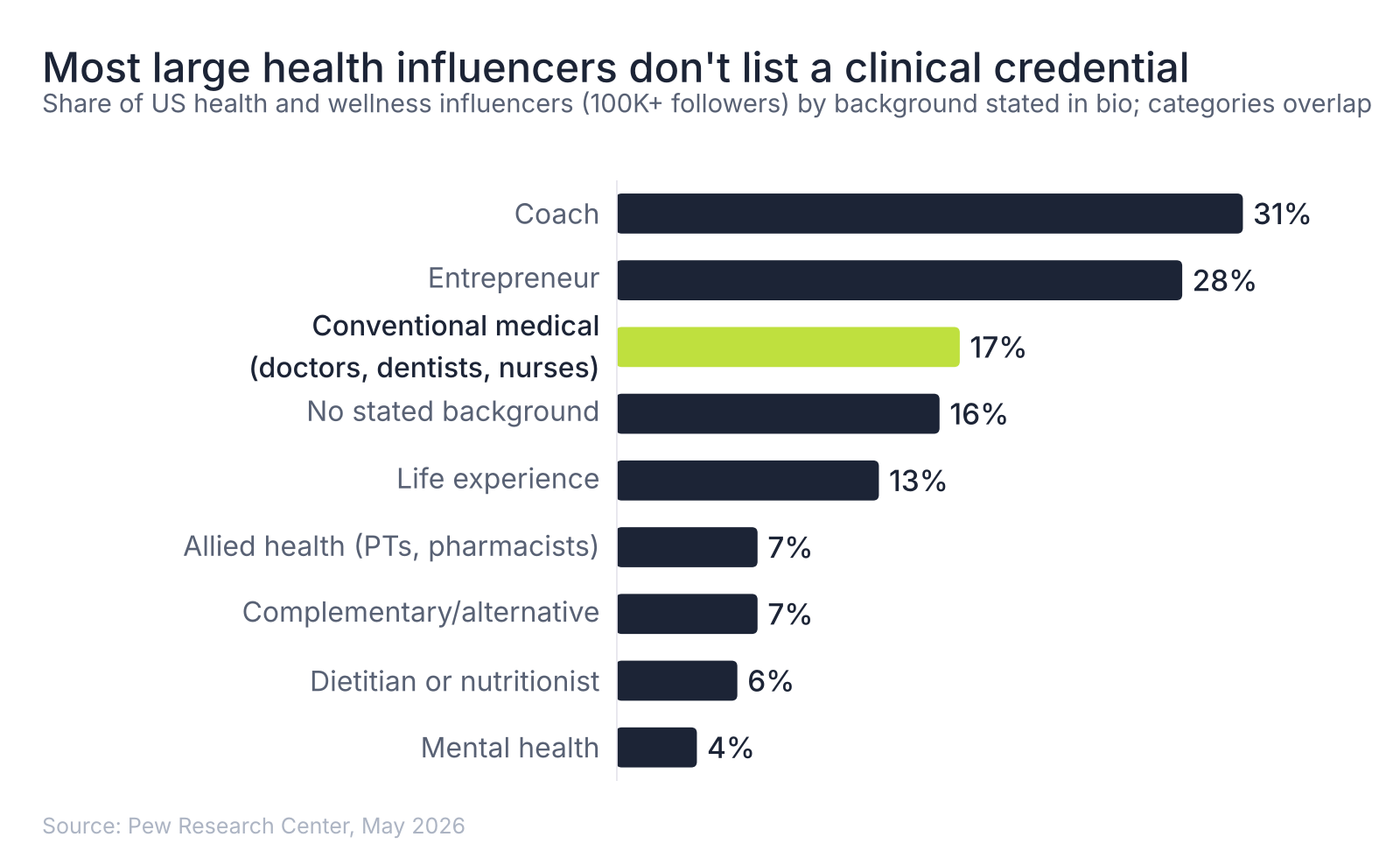
In Pew’s 2026 study cited above, which analyzed 6,828 health and wellness influencers, conventional medical professionals made up 17% of the group. Allied health workers such as PTs and pharmacists made up 7%, dietitians and nutritionists 6%, and mental health professionals 4%. Another 16% listed no background at all.
Pharma teams will recognize a cousin here: Key Opinion Leaders (KOL). A KOL usually speaks to other clinicians at congresses and in journals. An HCP creator speaks to consumers on social media platforms, in their own format and voice, which changes how you brief and clear them.
Creator type | Licensed? | What they can credibly say | Typical brand use
|
|---|---|---|---|
HCP creator | Yes | Clinical reasoning within their scope of practice | Ingredient education, "why I use it", efficacy explainers |
Wellness creator | No | Personal routine and results | Lifestyle integration, habit content |
Patient advocate | No (lived experience) | What living with a condition is like | Awareness, community, empathy |
Medical UGC creator | Sometimes (paid talent) | Scripted lines delivered on camera | Paid ad variants, product demos |
Before you shortlist anyone, use the table above to identify which professional category fits your claim. If you want names, our roundup of top healthcare influencers shares 30 health and wellness information creators by tier
Why the "Dermatologist Recommended" Seal Now Has a Creator Equivalent
Many “recommended” badges are built from clinician surveys. HCP creators bring professional recommendation into a different format: one named expert, visible credentials and direct audience interaction.
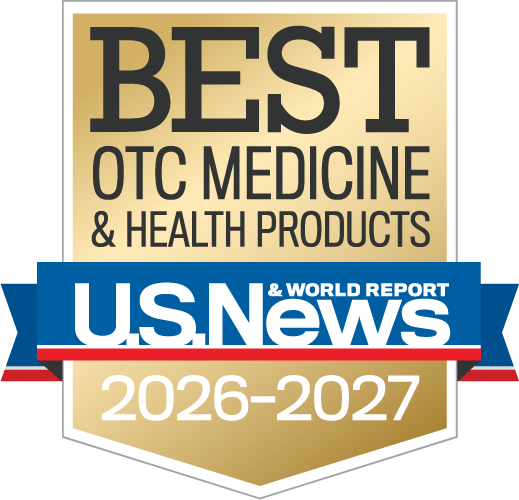
Survey-backed recommendation claims are still common. For its 2026–27 Best OTC Medicine & Health Products rankings, U.S. News worked with The Harris Poll to survey 357 pharmacists and 129 dermatologists about the brands they were most likely to recommend within assigned product categories.
The badge below is the consumer-facing output of that process: a recommendation mark backed by clinician survey data rather than one named expert.
Pharmacy Times uses a similar model. Its 2026 OTC Guide drew on a national survey of 1,700 practicing pharmacists to identify recommended brands across 145 OTC categories.
These claims hold only as long as the survey does:
- The National Advertising Division (NAD) accepted CeraVe's "#1 dermatologist recommended" claim in 2022 only after a revised survey, backed by a separate poll of 300 dermatologists.
- Neutrogena discontinued its own "#1 Dermatologist Recommended" claim after reviewers found overlapping categories that invited double counting.
- In August 2026, NAD found a Hims & Hers survey of 250 dermatologists was "not a good fit" for a dermatologist-recommended claim.
Brands have started putting the recommender on camera. CeraVe's 2024 Super Bowl campaign told viewers the brand was developed with dermatologists like Dr. Muneeb Shah, and its team told Marketing Brew that the derm creators it works with "are authentic users".
The appeal is clear: medical credentials already carry substantial trust in health decisions. Edelman found that “my doctor” was the most trusted voice for telling the truth about health at 82%. Doctors also led influence on personal health decisions at 86%, compared with 69% for peers and 69% for health experts
The trust transfers because the credential carries it. Edelman found "my doctor" is the most trusted voice on health, at 82%, and doctors lead influence on personal health decisions at 86%, ahead of peers and health experts at 69% each.
Pew provides an important counterpoint. Among Americans only 10% trust all or most of what health influencers say.
In a feed full of health misinformation, a visible license upgrades social proof from "lots of people like this" to "someone qualified chose this".
Offline signal | How it's substantiated | Creator equivalent | What changes for the brand
|
|---|---|---|---|
"#1 dermatologist recommended" | Survey of dermatologists, defended at NAD | A board-certified dermatologist explaining why she uses it | One named expert, so the claim must be true of her |
"#1 pharmacist recommended" | Annual pharmacist survey, licensed badge | A pharmacist creator comparing OTC options | Comparisons need product-level support |
Vet-recommended in clinic | Clinic relationships and vendor programs | A vet creator explaining a feeding or dental routine | Compensation must be disclosed publicly |
Dietitian on pack | Paid consultant or advisory board | A registered dietitian building recipes around the product | Every paid post is an ad |
"Doctor-trusted ingredients" | Ingredient-level evidence | An HCP explaining the active ingredient | NAD wants proof for the product itself |
Start by listing the professional recommendation claims your brand already uses, including seals, “developed with” positioning and documented clinician recommendations. Then identify which parts can legitimately carry into creator briefs and which require separate substantiation.
HCP Influencer Marketing by Profession: Dermatologists, Pharmacists, Dietitians, PTs and Vets
Each profession brings a different claim territory and different conflicts of interest rules, so pick the profession by the claim you need, then pick the creator.
Profession | Best-fit brand categories | Claim territory | Scope red flag
|
|---|---|---|---|
Dermatologist | Skincare, sunscreen, haircare, OTC acne | Skin conditions, ingredients, routines | Supplements and general wellness |
Pharmacist | OTC, vitamins, cold and flu, first aid | Dosing, interactions, OTC comparisons | Prescription brand mentions |
Dietitian | Food, beverage, supplements, meal kits | Nutrition, recipes, eating patterns | Disease treatment claims |
Physical therapist | Recovery devices, footwear, ergonomic and fitness gear | Movement, injury prevention, recovery | Diagnosing someone's pain on camera |
Veterinarian | Pet food, dental care, supplements, pet insurance | Animal nutrition and preventive care | Crossing into human health |
Dermatologist Influencers
A dermatologist influencer is the strongest skincare messenger because real ones are rare on the feed. In one study, only 5 of 97 top skincare TikTok videos (5.2%) came from board-certified dermatologists, against 62.9% from bloggers.
Many of the board-certified ones already work with brands. A 2023 JMIR Dermatology analysis found that 38 of 94 TikTok dermatologists (40.4%) had sponsored content.
The American Academy of Dermatology advises "discretion" with paid partnerships. Because dermatologists are physicians, AMA Opinion 2.3.2 also asks them to publicly disclose paid partnerships.
The larger brands are moving past one-off posts. In 2024, Neutrogena signed dermatologists Dr. Dhaval Bhanusali and Dr. Muneeb Shah as multi-year "Global Innovation Partners", with roles covering R&D input, consumer engagement and outreach to other dermatologists.
Brief dermatologists on evidence-based information they can explain in their own clinical language, and keep them inside skin. A dermatologist recommending a gut supplement borrows a credential that doesn't cover the claim.
Pharmacist Influencers
Pharmacist influencer marketing works best for OTC categories, where pharmacists already answer "which one should I buy?" at the counter. Their trust is real but slipping: Gallup's latest ratings put pharmacists' honesty at 53%, a record low, behind nurses (75%) and doctors (57%).
The APhA Code of Ethics asks for honesty and integrity but has no explicit endorsement rule. This makes the employer the binding constraint, since retail chains and hospital systems run their own conflict policies.
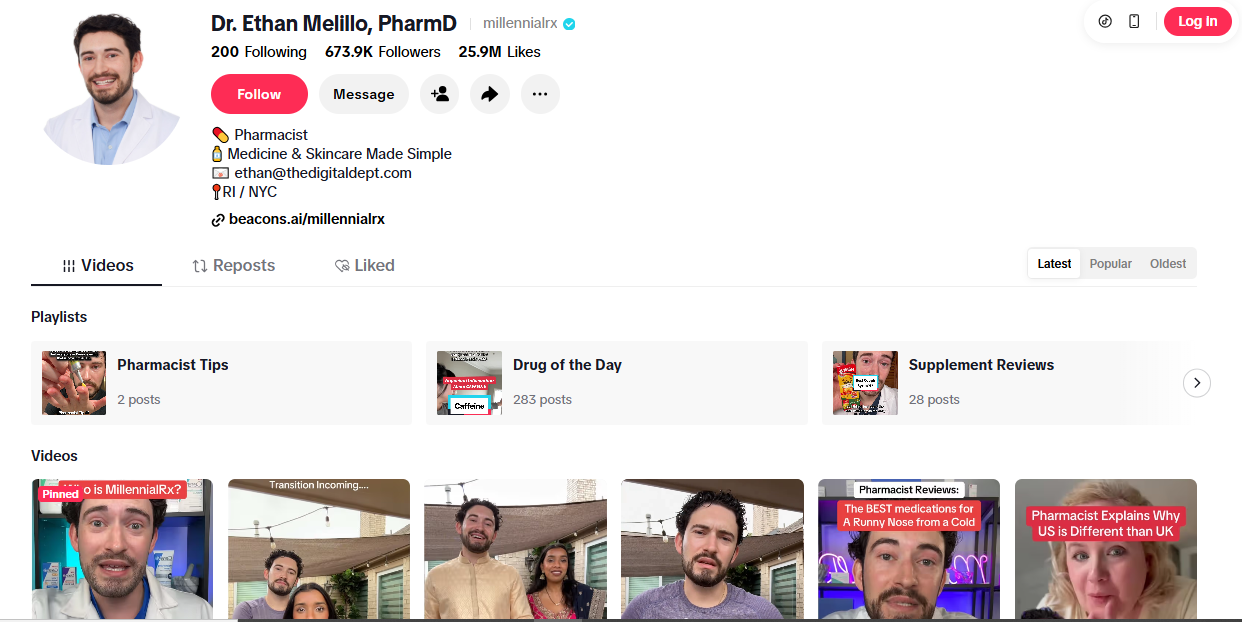
Many pharmacist creators also hold industry jobs. For example, Dr. Ethan Melillo (@millennialrx) has a huge TikTok following and, per his alma mater, has done paid partnerships with Dulcolax and Relistor while working full time at L'Oréal. Relistor is a prescription drug, which brings FDA promotion rules into the deal.
You can use pharmacists for health literacy content: dosing, drug interactions and which active ingredient suits which symptom. Ask about employer policy in your first message, before any rate conversation.
Dietitian Influencers
Dietitian influencers have already drawn an FTC warning and a major newspaper investigation, so they need the tightest disclosure process.
Check the credential first. RD and RDN are credentials issued by the Commission on Dietetic Registration, while "nutritionist" on its own doesn't confirm either credential. The Academy of Nutrition and Dietetics code tells members to disclose any conflicts of interest, including financial interests in recommended products.
Practice hasn't always matched the code. A 2023 investigation by The Washington Post and The Examination found that about half of 68 dietitians with 10,000+ followers had promoted food, drinks or supplements, and 17 of 33 paid posters didn't clearly disclose.
Two months later, the FTC sent warning letters to two trade groups and 12 influencers, including registered dietitians, with penalties of up to $50,120 per violation.
Dietitians are strongest on science-based health messages tied to real meals: recipes, swaps and label reading. You can brief them on the product, then let them build the recipe.
Physical Therapist Influencers
Physical therapist influencers fit recovery, footwear and fitness equipment brands, because their content already shows the product in use: a stretch, a drill, a device on a sore muscle.
Check for a DPT and a state license. APTA's 2025 Code of Ethics requires PTs to disclose financial interests in products they recommend "to patients and clients or to the public", which covers creator content.
The biggest PT channels mostly sell their own gear. For example, Bob & Brad, two physical therapists, sell their own massage guns and use affiliate links. So, always check for a competing product line inside the creator's business before pitching a partnership.
Veterinarian Influencers
Veterinarian influencers are the pet category's version of the in-clinic recommendation. The AVMA's ethics principles say a vet who endorses a commercial product should publicly disclose compensation, and they treat testimonials as advertising.
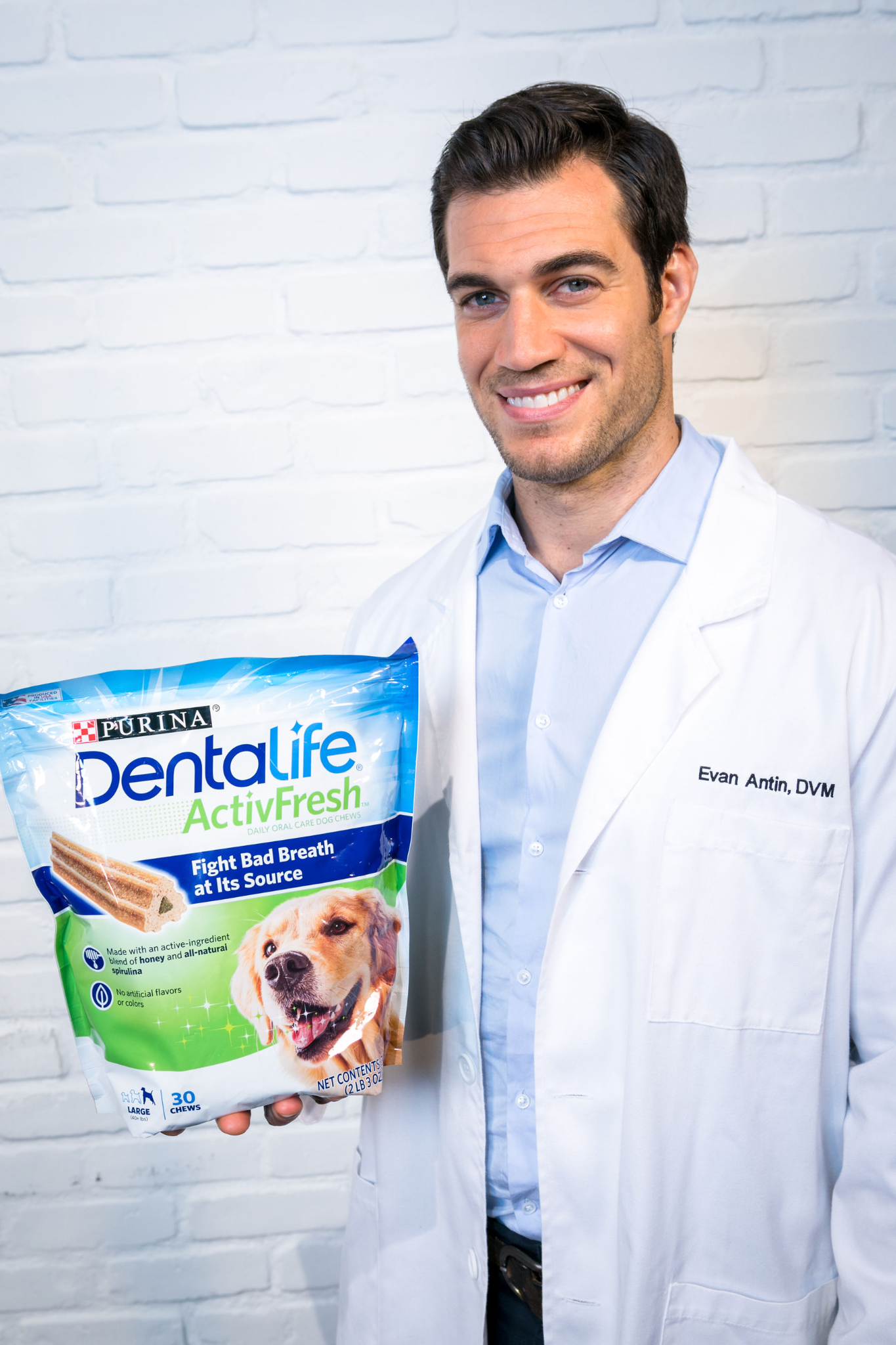
In 2019, Purina's DentaLife brand partnered with veterinarian Dr. Evan Antin on dog dental care education, the same job a clinic vet does at checkout. Keep vet creators on animal health and brief them like any other HCP.
How to Find and Vet HCP Influencers
Finding HCP influencers requires five steps: map the claim to a profession, search by credential, verify the license, audit past sponsored posts and check employer rules.
- Map the claim to a profession. Use the profession table above to decide who is qualified to say it.
- Search by credential signals. Look for MD, FAAD, PharmD, RDN, DPT or DVM in bios, professional hashtags, LinkedIn profiles, conference speaker lists and clinicians already in your customer base.
- Verify the license with professional licensing boards. Every credential in a bio needs a registry check (sources below).
- Audit 12 months of sponsored posts. Note disclosure habits, competitor deals, off-scope claims, any product lines of their own, and whether they cite evidence-based sources.
- Check employer and institutional restrictions. Hospital-employed clinicians and retail pharmacists often need approval before paid work.
Profession | US verification source | UK equivalent
|
|---|---|---|
Dermatologist | State medical board; ABMS / American Board of Dermatology | GMC specialist register |
Pharmacist | State board of pharmacy (via NABP) | GPhC register |
Dietitian | CDR credential verification; state license where required | HCPC register |
Physical therapist | State PT board (via FSBPT) | HCPC register |
Veterinarian | State veterinary board | RCVS register |
Our healthcare UGC creators casting guide walks through the physician license check step by step, including multi-state licenses.
Pro tip: Ask every HCP creator whether they already use or recommend the product. Prior use is the best sourcing filter we've found, and it shortens the review rounds later.
Why Micro HCP Creators Mostly Outperform Mega Doctor Influencers
For most consumer health brands, a roster of 10 to 30 micro HCP creators beats one mega doctor account, provided the budget covers the extra review work.
Mega accounts are rare to begin with. In the Pew study cited above, 8% of health and wellness influencers had at least 1 million followers on their most-followed account.
Follower count also tells you little about specialty fit. A smaller dermatologist account focused heavily on rosacea may be more relevant to a rosacea brief than a much larger general-health account.
Sponsored dermatologist accounts are not necessarily mega accounts. In the JMIR 2023 Dermatology study we shared above, sponsored TikTok dermatologists had a median of 66,100 followers.
If you're building that roster in-house, our guide on how to find micro-influencers can help you out.
Factor | Mega HCP creator (1M+) | Micro HCP creator (10K-100K)
|
|---|---|---|
Cost per asset | High, often with exclusivity fees | Lower, easier to buy in volume |
Conflict history | Many prior sponsors to check | Fewer deals, easier to audit |
Specialty focus | Broad, general health | Narrow, often one condition |
Creative variants for testing | A few polished assets | Many angles, faces and hooks |
Review flexibility | Managed by teams, longer contracts | Faster turnaround, more open to edits |
The main advantage of the micro model is testing volume. Ten clinicians explaining one claim give your media buyer ten messengers to test. Our micro-influencer agency handles that kind of multi-creator casting when brands need enough assets for structured testing.
How Much Do Healthcare Influencers Charge Brands?
Healthcare influencer fees vary widely by profession, audience size, platform and usage rights. Public HCP-specific pricing is limited, but the available evidence gives brands a useful starting point.
The Washington Post investigation we mentioned above found that dietitian creators said companies generally paid a few thousand dollars per sponsored video, while offers for creators with the largest audiences could reach tens of thousands of dollars.
For broader context, 2026 creator benchmarks from Later put typical rates at roughly $500-$2,500 per post for micro creators, $2,500-$10,000+ for macro creators, and $10,000-$50,000+ for mega creators.
Note: These figures cover creators generally, not healthcare professionals, so treat them as a market baseline before adding credential, compliance and usage requirements.
For HCP campaigns, the final quote can rise beyond those baseline rates because the fee may also cover professional credibility, evidence review, category exclusivity and paid use of the creator’s name and credentials.
Cost driver | What it can add to the budget | How to budget for it |
|---|---|---|
Audience size and platform | Micro creators may start in the hundreds or low thousands per deliverable, while large accounts can reach five figures | Set a base creator fee before adding rights or exclusivity |
Licensed credential | HCPs may spend additional time reviewing evidence and protecting their professional reputation | Treat the credential as a possible premium, not a fixed percentage |
Paid usage rights | Extending creator content into ads can materially increase the deal value | Price usage separately by platform and duration |
Category exclusivity | Prevents the creator from working with competing brands for a defined period | Keep the category narrow and the term fixed |
Review and approval rounds | Evidence review and claim edits require additional clinician time | Specify the number of revision rounds in the contract |
Scope of claims | Comparative or efficacy claims usually require more substantiation review | Keep claims narrow where possible |
Paid usage can become one of the largest additions after the base creator fee. Later recommends budgeting roughly 20% to 30% of an influencer campaign budget for usage rights and amplification, although the actual amount depends heavily on term, channel and creator leverage.
A dermatologist with a highly relevant patient-facing audience may quote more than a lifestyle creator of the same size, while a smaller pharmacist or PT creator may charge less but require additional time for evidence review.
Gifting can reduce the upfront cash fee, but it does not remove the disclosure requirement. Free products still create a material connection under the FTC’s endorsement rules when they influence the endorsement. If an HCP posts after receiving a product, the relationship should be disclosed clearly.
Our guide to influencer seeding covers how to structure product-only outreach.
How to Brief a Healthcare Creator: Evidence Pack, Claim Zones and Disclosure
Send the evidence before the script, so the HCP's opinion is their own. The FTC rule behind this sits in the claims section below.
- Send an evidence pack. Include the medical studies, product test results, ingredient specs and any clinical data, so the endorsement rests on evidence-based medicine.
- Ship product early. Give the creator enough time for real use before filming; for skincare, that usually means weeks.
- Split claims into three zones. Approved claims (exact wording signed off by legal), restricted claims (never said), and the HCP's own words, including how they explain medical terms to their patients.
- Write the scope boundary into the brief. Name the red flag for their profession from the table above.
- Specify disclosure placement. Ask for a spoken disclosure in the video plus a caption disclosure that names the brand.
- Give the HCP a written right to decline any claim. A clinician who refuses a line protects your brand as well as their license.
The table shows what an HCP brief adds to our standard influencer brief templates.
Brief element | Generic creator brief | HCP creator addition
|
|---|---|---|
Product information | Benefits and key messages | Evidence pack with studies and ingredient data |
Messaging | Talking points | Approved, restricted and own-words claim zones |
Do's and don'ts | Brand safety guidelines | Scope-of-practice boundary for the profession |
Disclosure | Platform paid-partnership label | Spoken disclosure plus a caption that names the brand |
Approvals | One review round | Legal and clinical review, with a right to decline |
How to Review HCP Influencer Claims for Compliance: FTC, FDA, NAD and UK Rules
Clear an HCP creator's claims to the same standard as a pack claim, because the FTC can hold both the brand and the expert endorser liable for a deceptive endorsement.
The rules that apply most commonly are:
- FTC substantiation. The FTC's Health Products Compliance Guidance generally expects high-quality randomized controlled trials, and clinical trial data on the actual product carries more weight than ingredient studies.
- FTC expert endorsements. Under 16 CFR 255.3, an expert must have the expertise they claim and actually use it to evaluate the product. A doctor endorsing a product based on testimonials alone is deceptive, and the advertiser shares the liability.
- FDA. In September 2025, FDA said undisclosed influencer promotion had blurred the line between editorial content and pharmaceutical advertising, and it stepped up enforcement against misleading drug promotion.
- NAD. "Recommended" claims need survey support that survives challenge, as the cases in the seal section show.
- Platform policy. Meta's health and wellness ad policy bars claims to cure listed conditions, "even those from health professionals."
- UK. CAP Code rule 12.18 states that marketers must not use health professionals to endorse medicines.
Use the rules above to classify each proposed creator claim before production. The table below shows the evidence and approval level commonly needed for different types of HCP messaging.
Claim type | Example HCP line | Substantiation needed | Sign-off
|
|---|---|---|---|
Structure/function | "This cleanser supports the skin barrier" | Product or ingredient data | Brand regulatory |
Efficacy with a timeframe | "My redness calmed down in four weeks" | Product-level clinical data matching the timeframe | Legal and regulatory |
Personal recommendation | "I recommend this to my patients" | Literally true of their clinical practice | HCP and legal |
"Dermatologist recommended" | "Dermatologists recommend this brand" | A survey that survives NAD review | Legal |
Comparative | "Works better than the leading drugstore brand" | Head-to-head data | Legal |
Prescription product mention | "Ask your doctor about {Rx brand}" | FDA fair balance and risk information | Legal plus medical and regulatory review |
Disease claim | "This treats eczema" | Drug approval; usually off-limits for cosmetics | Don't run it |
HCP creators also bring patients into content, which raises patient privacy questions. Use de-identified stories, strip clinical details that could identify someone, and keep posts away from anything that reads as individual medical advice.
Run every HCP creator campaign through the same four steps:
- Draft the claims list before casting.
- Get legal and regulatory review on that list.
- Agree on review rounds and a timeline with the creator, leaving room for clinical edits.
- Review the final cut, including captions and on-screen text, before it posts.
Read next: UGC and Compliance in Healthcare Marketing
How to Run HCP Creator Content as Paid Social Ads
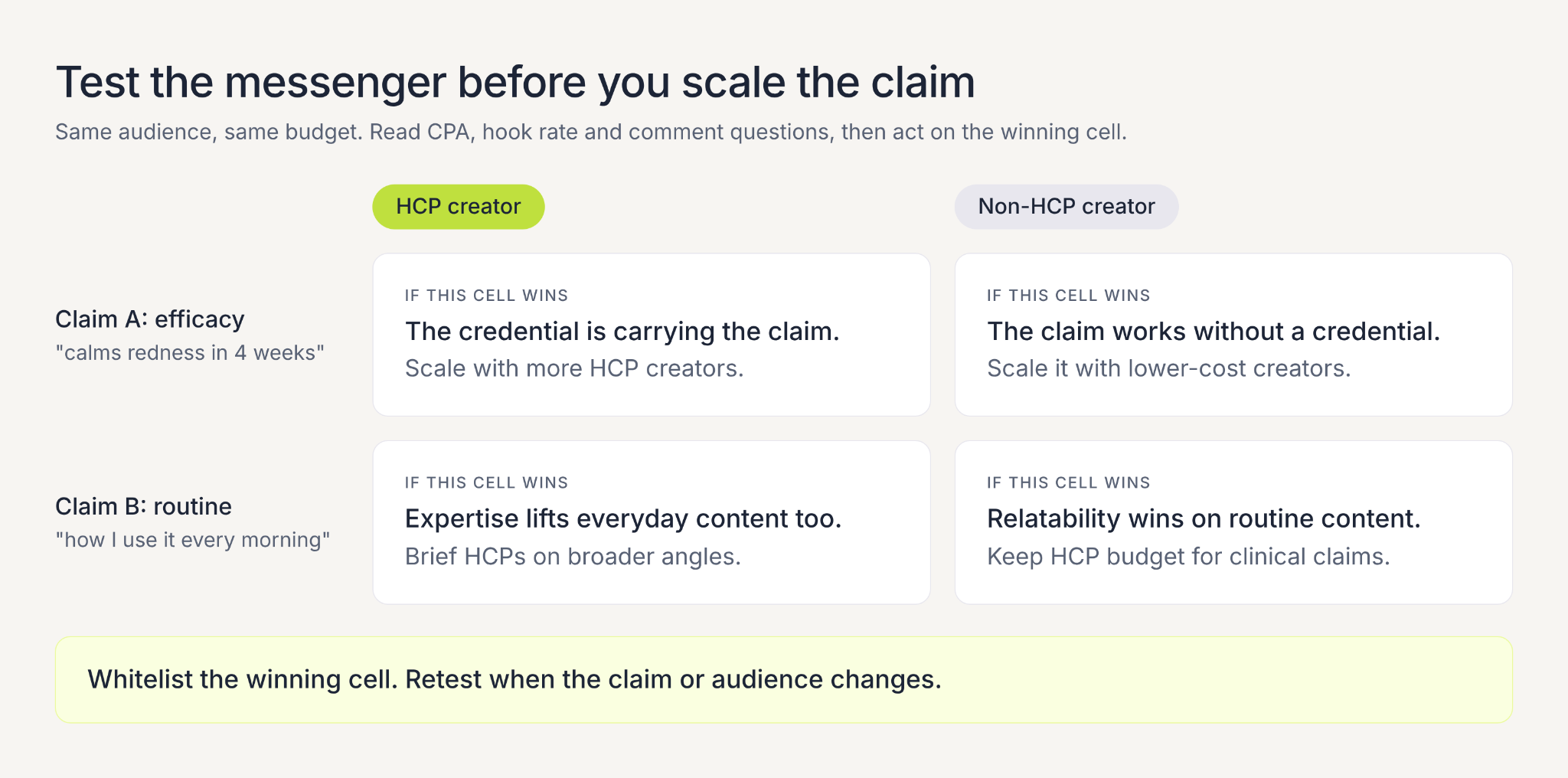
Test the HCP version of a claim against a non-HCP version in dark posts before you scale either one.
- Pick one claim and film it twice: once with an HCP creator, once with a non-HCP creator.
- Run both as dark posts to the same audience with the same budget.
- Compare the data such as cost per acquisition, hook rate and the questions people leave in comments.
- Whitelist the winner from the creator's handle and scale spend behind it.
Same claim, different messenger. The stronger-performing version tells you which creator type deserves the next round of spend.
Our guide to dark posting for creator content testing covers setup and budget.
Before any HCP influencer content runs as an ad, lock the paid usage terms in the contract:
- The channels, duration and territory for their name, credential and likeness
- A rule that medical and product claims cannot be changed without renewed approval
- Renewal terms and a takedown clause if their license status changes
Paid HCP ads also need a comment-management plan. Assign someone to review comments regularly, escalate misinformation or unsafe advice under the brand’s moderation policy, and route potential adverse-event reports to the appropriate safety or regulatory team.
How to Measure HCP Influencer Marketing
Measure HCP creators on outcomes that depend on trust (conversion rate, CAC, saves and the questions people ask in comments), and treat reach as a secondary read.
The right KPI depends on the profession and the role that creator plays in the buying decision. Use the table below to match each HCP type with a primary business outcome and the leading signals that can show whether the content is resonating.
Profession | Primary KPI | Leading signal
|
|---|---|---|
Dermatologist | Conversion rate on the promoted SKU | Saves and "what's your routine?" comments |
Pharmacist | Retail sell-through and store-locator clicks | Questions about dosing or interactions |
Dietitian | Add-to-cart from recipe content | Recipe saves and remakes |
Physical therapist | Device sales via code or link | Comments about form and pain points |
Veterinarian | Subscription starts | Questions about breed or age fit |
Comment questions are the underrated signal. When the health conversations under a post shift from "is this sponsored?" to "would this work for my skin type?", the credential is doing its job.
If you want this tracked across creators and channels, our marketing measurement team builds the reporting.
Build an HCP Program With inBeat Agency
Healthcare professional influencers work when four things line up: the right profession for the claim, a verified license, a brief that respects their expertise and a claims process that clears legal before anything posts. Then paid testing tells you which messenger earns the budget.
That's the workflow inBeat runs for health brands. We source HCP creators by license and specialty, build evidence packs and claim zones, manage review rounds and test the content as dark posts before scaling the winners through whitelisting.
Map your HCP creator plan with us. We’ll match your current claims to the professions that can make them and estimate what a first HCP creator roster could cost.
FAQs
What is the difference between a healthcare influencer and a healthcare professional influencer?
A healthcare influencer can be any creator who talks about health, wellness, treatment or lifestyle topics. An HCP influencer, in contrast, has a professional healthcare credential, such as an MD, PharmD, RDN or DPT.
Can a dermatologist say "I recommend this to my patients" in a paid post?
Only if it's literally true. The line implies the product is part of their clinical practice, so it needs to reflect what they actually tell patients in the exam room. If they don't recommend it clinically yet, use "I use this" or "here's why this ingredient works" instead.
Can an HCP creator post unbranded disease-awareness content for a pharma brand?
Yes, and it's usually the safer route for public health outreach. Unbranded content that explains symptoms or treatment guidelines without naming a product avoids most prescription drug promotion rules, but the sponsorship still needs disclosure. Keep the brand's name, colors and product cues out, or regulators may treat the post as branded.
What happens to whitelisted HCP ads when the creator changes jobs or loses a license?
Pause them immediately and re-verify the credential. A change in employer can bring new conflict rules, and a lapsed or disciplined license makes every claim that relies on the credential misleading. Write a takedown clause and a re-verification step into the contract so the pause happens the same day.
Can inBeat find dermatologists, pharmacists, dietitians and physical therapists for brand campaigns?
Yes. inBeat can build creator shortlists around the profession, specialty, audience and campaign brief, then screen candidates before outreach. For HCP campaigns, the shortlist should also account for licensing, category conflicts and the claims each creator can credibly make.