.svg)
.svg)
.svg)
.svg)


.svg)






Your YouTube campaign might still be reaching new viewers long after the agency has declared it finished. According to Agentio's 2026 analysis, 38% of views on sponsored integrations arrived after the first month. A report focused on early performance can miss a substantial part of the picture. And even impressive view counts leave a bigger question unanswered: how much new demand did the campaign actually create?
That's why choosing a YouTube influencer marketing agency takes more than browsing its creator roster. This guide explains how to assess audience fit, challenge integration pricing, negotiate contract protections, and evaluate incremental lift.
inBeat POV: We think a YouTube integration is two assets. The first is the sponsorship: a creator's audience hearing about your product from someone they already trust. The second is the footage, which becomes raw material for paid creative that can be dark-posted, read and scaled only where it earns the spend. Agencies that sell the integration alone leave the second asset unused, and agencies that split vetting, production and measurement across separate teams never learn which creator traits predict conversion. We'd rather the people choosing creators sit with the people buying media and reading the data, so every integration teaches the next brief something concrete.
TL;DR
- Judge a creator by the view range of their last 10 to 20 uploads, not by subscriber count, and price the fee on expected views.
- Make every line item state the format, the expected-view range and the fee, compare agencies on cost per expected view, and negotiate usage and whitelisting rights up front.
- Treat promo codes as a floor, and choose a lift method (holdout, geo test, branded search or survey lift) that fits your spend.
- Put a view floor and a make-good remedy into the creator agreement; accept view guarantees and refuse conversion guarantees.
- Before you sign, ask any agency for three artifacts: a vetting sheet, a sample integration brief and a lift report.
How to Vet a YouTube Creator's Audience Authenticity and Brand Fit
Vet a YouTube creator on what their last 10 to 20 videos actually did and on who watched them, and treat the subscriber count as a vanity number. A youtube creator marketing agency that cannot show you this analysis for every proposed channel is selling access to a database. The judgment is the part you're paying for.
How Should You Price a Creator Based on Recent Views?
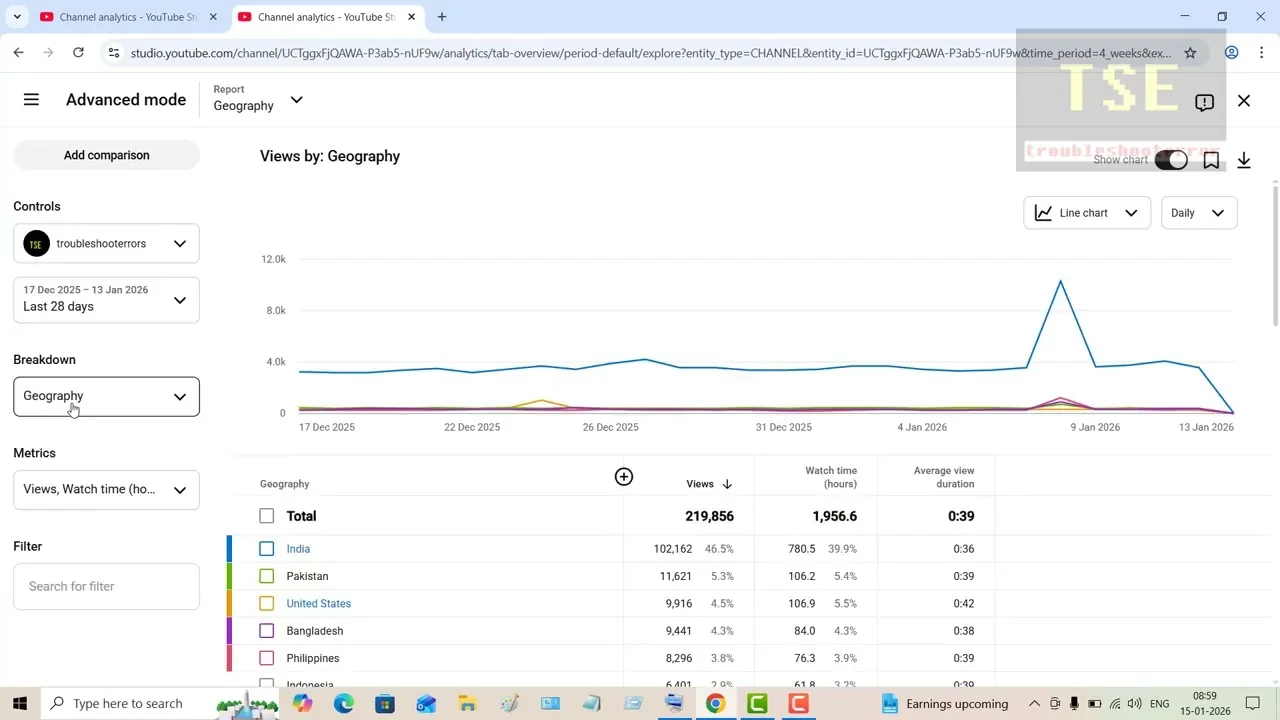
Ask for the view range across a creator's trailing 10 to 20 uploads before anyone quotes a fee. Subscriber totals accumulate over years, include dormant accounts, and say nothing about how many people will sit through a sponsored segment next month. Follower count alone is a weak pricing input; expected views and recent performance are the more useful ones. A channel with 800,000 subscribers whose recent videos land between 30,000 and 60,000 views should be evaluated, and later priced, on that range.
Request the median and the spread, and ignore the average. One viral upload inflates an average for months. If the agency supplies only a screenshot of a channel's top performers, send it back.
How Does Audience Savvy Change the Integration Style?
Match the integration style to how savvy the audience is. Research on influencer marketing suggests that informed followers can read promotions from well-known brands as overly commercial, which lowers engagement, although the evidence is mixed and not specific to YouTube. The implication for briefing is direct. A finance or developer audience that has sat through a thousand VPN reads will punish a scripted pitch; those viewers respond to a creator working the product into a problem they already have. A broad lifestyle audience tolerates a cleaner call to action.
This is where B2B and niche software brands often get the channel wrong. A 40,000-subscriber channel reviewing data tooling will usually beat a two-million-subscriber tech lifestyle channel on qualified intent, because topical overlap selects the viewer for you. The creative, and the creator, do the targeting that platform settings no longer can.
What Red Flags Does an Agency's Discovery Tool Miss?
Press any agency that leads with proprietary AI discovery on two questions: what criteria does the tool score, and what does a human review afterward. Discovery platforms are good at filtering by category, size and geography. They are weak on the signals that predict whether a sponsored segment converts, which still require someone to watch the videos and read the comments.
| Vetting signal | What to request from the creator or agency | Pass threshold or warning sign | Why it matters for pricing or conversion |
|---|---|---|---|
| View consistency | Median and range across the last 10 to 20 uploads | Warning: median far below the top quartile, or a single outlier carrying the average | Sets the expected-view unit the fee should be based on |
| Comment quality | A sample of recent comment threads, including on sponsored videos | Warning: generic praise, repeated emoji strings, or sponsor segments drawing hostility | Signals a real audience and tolerance for integrations |
| Sponsor history | List of brands integrated in the last 12 months with placement type | Warning: a competitor within 60 to 90 days, or more than one sponsor per video | Audience fatigue and exclusivity conflicts lower effective reach |
| Category overlap | Share of recent uploads on topics adjacent to your product | Pass: a majority of recent content sits in your category or a buying-adjacent one | Topical fit predicts intent more reliably than channel size |
| Audience geography | Channel analytics screenshot for top countries and age bands | Warning: under half of views from markets you ship to or serve | Views outside your footprint cost the same and convert at zero |
| Audience sophistication | Creator's own read on how their viewers react to ads | Pass: the creator can describe which past integrations worked and why | Decides whether the brief should be a demo, a story or a direct offer |
These thresholds are working heuristics, so adjust them to your category.
Turn this table into a one-page vetting sheet and require the agency to return it completed for every proposed creator before a budget line is approved.
For a wider view of how we run creator selection across platforms, see our influencer marketing services.
YouTube Integrations vs Dedicated Videos: Formats, Pricing and Briefing Workflow
Require every creator line item in a proposal to state the format, the expected-view range and the fee, then compare agencies on cost per expected view. A youtube sponsorship agency that quotes a lump sum per channel is asking you to trust its markup blind.
Integrations, Dedicated Videos or Shorts: Which Format Fits?
Choose the format by what you need from the footage afterward as much as by what you need from the creator's audience. A mid-roll integration borrows attention from content the viewer chose; a dedicated video asks the creator to make your product the content; a Short trades depth for a different discovery surface and a vertical clip you can test in paid placements almost unchanged.
| Format | Typical placement and length | Creator production effort | Fee basis to request | Best use case |
|---|---|---|---|---|
| Mid-roll integration | 60 to 90 seconds inside a regular upload, after the hook | Low to moderate; scripted around existing content | Cost per expected view of the host video | Awareness and consideration at predictable reach |
| Pre-roll or post-roll mention | 20 to 45 seconds at the open or close | Low | Cost per expected view, discounted for the weaker slot | Low-cost reach tests across many channels |
| Dedicated video | Full upload, often 8 to 20 minutes, built around the product | High; research, shooting and editing from scratch | Flat fee benchmarked against the channel's expected views plus a usage license | Complex products, launches, B2B and software demos |
| Short | Vertical clip under a minute on the Shorts shelf | Low to moderate | Flat fee per clip, often bundled with a long-form placement | Paid creative source material and a second surface for the same message |
These placement conventions come from practice, and YouTube formats have no standard rate card.
How Agencies Price YouTube Sponsorships: Flat Fee, CPM on Expected Views, and Hybrid Models
Normalize every quote to cost per expected view before you compare anything else. Three pricing structures show up in proposals:
- Flat fee per creator. Simple to approve and easy to overpay. Divide the fee by the creator's trailing median views to see what you are really buying.
- CPM on expected views. The fee is set against a forecast view count, usually with a reconciliation after 30 days. This is the cleanest structure for comparison and the one that most naturally supports a make-good clause.
- Hybrid. A reduced flat fee plus a performance kicker tied to clicks, sign-ups or coded sales. Fair when the creator shares upside, risky when the kicker rests on a tracking method that undercounts.
Layered on top is the agency's own compensation. Expect either a retainer, a percentage of creator spend, or a markup folded into creator fees. Published pricing guides describe these models only in broad terms and rarely give YouTube-specific rates, so treat any dollar benchmark an agency cites as a negotiating position. Ask two questions in writing: is the creator fee passed through at cost, and does the quoted fee include usage rights?
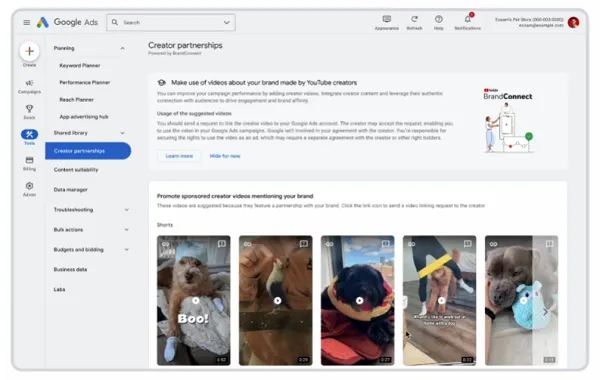
Usage is where the second asset lives. Negotiate up front (as we do in our mid-tier creator programs) for the right to cut the integration into paid social creative, to run it from the creator's handle through whitelisting, and to do both for a defined window. Securing those rights after the video performs costs several times more, if the creator agrees at all.
How Should You Brief, Approve and Publish a YouTube Integration?
Run every integration through the same gated sequence so the creator keeps creative control while you keep the facts and the disclosure straight:
- Brief and talking points. Supply three to five claims the creator may make, the ones they may not, the offer, and the link. Leave the framing to them, as we cover in how to brief for native content.
- Outline or script review. For dedicated videos, approve a written outline; for integrations, a short paragraph describing the angle is enough.
- Rough cut approval window. Agree a turnaround, typically 48 to 72 hours, with a limited round of factual corrections only.
- Disclosure and link placement. Confirm the on-screen and verbal disclosure, the paid-promotion flag, and the link in the first lines of the description.
- Publish date and pinned comment. Lock the date against your other media, and have the creator pin a comment with the link and offer within the first hour.
- Handoff to paid. Pull the approved footage and the usage terms into your creative testing queue the same week.
The handoff in step six is what separates an integration that produces one spike from one that keeps producing. We run that paid testing queue through our paid media services once the footage arrives.
Working with YouTube Influencers Just Got 10x EASIER. Source: Exposure Ninja on YouTube
How to Measure Incremental Lift and ROAS From YouTube Influencer Campaigns
Write one lift method into the agency scope before launch, with a named control group, and treat promo code redemptions as a floor under the results, never the whole result. Most youtube influencer campaign management still stops at the code, which is exactly why a credible agency should be able to offer more.
Why Promo Codes and Affiliate Links Undercount YouTube
A code captures the viewer who hears the offer, remembers it, and types it at checkout. It misses the viewer who searches your brand two days later, the one who clicks a retargeting ad after visiting once, and the one who buys in-store or through a marketplace.
On YouTube the gap is wider than on feed platforms, because the integration often plays while the viewer is doing something else and the buying session happens later on a different device. Codes also create a perverse incentive: the creators who push the discount hardest look best, which rewards exactly the hard sell that informed audiences tune out.
Which Measurement Methods Should a YouTube Agency Offer?
Match the method to the spend. A measurement design that costs more than the campaign is as wasteful as no design at all.
| Measurement method | What it captures | What it misses | Minimum spend or scale to be meaningful |
|---|---|---|---|
| Promo code or affiliate link | Direct, remembered redemptions attributable to a creator | Search, direct, retail and later-session conversions | Any budget; useful as a floor and for creator-level comparison |
| Branded search and direct traffic monitoring | Demand spikes in the days after publish, by market | Cannot separate the integration from other activity in the same window | Small budgets; needs a clean pre-period baseline |
| Audience holdout | Lift among exposed viewers versus a matched unexposed group | Requires audience data the creator platform rarely shares at viewer level | Mid budgets; works best when the integration is also run as paid creative |
| Geo holdout or matched markets | Incremental conversions in exposed regions versus held-out regions | Noise from regional seasonality; weak when a creator's audience is diffuse | Mid to large budgets; needs enough regions to randomize |
| Brand or survey lift | Shifts in awareness, consideration and intent | Behavioral outcomes; sample costs scale with precision | Mid budgets; practical when paired with paid amplification |
| Marketing mix model contribution | Long-run contribution of creator activity alongside other channels | Single-creator effects; needs months of data | Large, sustained programs across several channels |
The tiers above are a practitioner framework that you can adjust to your spend.
A practical ladder follows from the table. At small spend, run codes plus branded-search monitoring and accept directional answers. At mid spend, add a geo or audience holdout, which usually means running the integration footage as paid media so you control exposure.
At scale, feed creator spend into a mix model and stop asking any single video to prove itself.
When you ask an agency for its lift methodology, a credible answer names the test design, defines the control, states the reporting cadence, and tells you plainly what it will not be able to isolate. An answer that promises exact attribution for every sale is a warning sign.
How Does YouTube's Search Long Tail Change the Attribution Window?
Set the window to capture views that arrive after the launch week without claiming sales you cannot connect. A YouTube upload keeps collecting views through search and suggested placements long after a feed post has disappeared, so an integration's audience is still being assembled months later. Two practices keep this honest.
First, report views, clicks and coded conversions at 7, 30 and 90 days so the shape of the tail is visible. Second, confine incrementality claims to the test window you defined with the control group, and treat tail conversions as unattributed upside.
Pro tip: For a worked example of how marketplace sales shift when creator content keeps pulling search demand, see our Amazon influencer marketing guide.
Specialized YouTube Influencer Agency vs Full-Service Digital Agency: Which Should You Hire?
Hire a YouTube specialist when creator volume and paid repurposing are both in scope; stay with your agency of record or an in-house team when you need a handful of integrations a year and no paid extension. A youtube influencer marketing agency earns a separate fee only when its creator relationships and measurement capability exceed what you already pay for.
When a YouTube Specialist Earns Its Fee
A specialist pays off when you need ten or more creators a quarter, want Shorts and long-form from the same roster, operate in a category with disclosure or compliance complexity, and plan to cut every integration into paid creative. At that volume, negotiating from relationships and historical performance data beats negotiating one channel at a time, and the measurement design needs someone who has run holdouts before.
| Criterion | YouTube specialist | Full-service digital agency | In-house team |
|---|---|---|---|
| Creator relationships | Deep, with pricing history by channel | Shallow unless a dedicated creator team exists | Built slowly, limited to past partners |
| Negotiating position | Strong on fees and usage rights | Moderate; often subcontracts discovery | Weak on first contact, strong on long-term partners |
| Measurement capability | Varies; demand a lift report | Often strongest in MMM and cross-channel analytics | Depends on the growth team's test design experience |
| Media integration | Good if the agency also buys media; otherwise a handoff | Native, since the same team runs paid | Native if media is in-house |
| Cost structure | Retainer or percentage plus creator pass-through | Folded into the broader retainer | Headcount plus tooling, lowest marginal cost per campaign |
The comparison reflects how these models typically operate in practice and comes from no published study; weight the measurement and media rows most heavily if the integration will feed paid testing.
When Your Existing Agency of Record or an In-House Team Is the Better Call
Keep the work where it is when you plan three or four sponsorships a year, the creators are already known to your team, and the footage will not be repurposed. A generalist with a YouTube landing page, like many full-service shops, can execute that scope without a second relationship to manage. For B2B and niche software, the calculus flips at smaller volumes: a compact specialist with category creators will usually outperform a large roster, because the hard part is finding the fifteen channels your buyers trust.
Which Questions Separate a True Specialist From a Generalist With a YouTube Landing Page
Request three artifacts before any pitch meeting: a redacted vetting sheet for a past creator, a sample integration brief, and a lift report from a finished campaign. Directory listings publish minimum campaign sizes and hourly rates, and full-service agency pages emphasize breadth and client logos. Both are filters; neither describes method. Score two or three candidates against the table, and drop any agency that cannot produce the three artifacts within a week.
If you want to see how we weigh agencies when we rank them, our ranking methodology is public.
What Happens When a YouTube Sponsorship Underperforms or a Creator Misses Delivery?
Put a view floor derived from expected views into the creator agreement before launch, and agree the remedy at the same time. A refund negotiated after a video flops costs more goodwill than a make-good agreed in advance.
What Make-Good Terms Belong in the Creator Agreement?
Tie remedies to the expected-view range from the vetting sheet. The standard options, roughly in order of how often creators accept them:
- A bonus Short or community post repeating the offer and link.
- A pinned comment or description correction if the link or code was wrong.
- A re-shoot or re-edit when the content was off brief.
- A partial fee credit against the next integration when views land below the floor.
- A partial refund as a last resort, usually only for non-delivery.
A hypothetical illustration: a creator with a trailing median of 50,000 views agrees a floor of 60% of median. The integration delivers 20,000 views, which is 40% of median, so the pre-agreed bonus Short triggers automatically and nobody renegotiates. The percentages here are illustrative; the structure prices on expected views, since follower counts say little about delivery.
Which Performance Guarantees Should a YouTube Agency Offer?
Accept view-floor guarantees and refuse conversion guarantees. An agency controls creator selection and can forecast views from history. It does not control how a sophisticated audience reacts to a sponsored read, how your landing page converts, or what your competitors do that week. An agency offering guaranteed sales is either pricing in a large margin or planning to count conversions generously.
Which Usage Rights, Disclosure and Takedown Clauses Should You Include?
Cover four situations in the contract: delayed publishing, with a date range and a credit if missed; off-brief content, with one correction round before any fee adjustment; undisclosed sponsorship, with the creator responsible for FTC-compliant disclosure and a takedown right if it is missing; and competitor exclusivity, with a defined category and window. Add the usage and whitelisting rights from the pricing section as a separate clause with its own term. Regulated categories need extra care here; disclosure and claim review tighten when the product is clinical.
When results disappoint, diagnose before you remedy: views below range points to a creator or timing problem; views on range with low click-through points to the offer or its placement in the video; clicks without conversions points to your landing page. Each has a different fix, and only the first is the creator's to make good.
How We Run YouTube Creator Campaigns as One Growth Creative System
We build YouTube creator campaigns the way we build every creator program: as one growth creative system where the people choosing creators, producing the content and buying the media share a scoreboard. For us, that means vetting, usage rights and measurement get designed together at the brief stage. Nobody reconciles them after the video is live.
How Do Creators Feed Paid Media Testing?
We treat every integration as a sponsorship and as a source of testable paid creative. The vetting sheet selects for audience fit and expected views; the contract secures the footage; and the media team dark-posts cuts of the integration, reads the signal, and scales only what earns it.
What to Expect When Vetting, Integrations and Lift Sit With One Team
Expect a completed vetting sheet for every creator before a budget line, every fee expressed against expected views with usage rights itemized, and a lift method chosen for your spend tier with a named control. Expect the first batch of integrations to be small, because the point is to learn which creator traits and angles predict conversion before committing the quarter's budget.
Hire the partner that will show its vetting sheet, its price per expected view and its lift plan before you sign, whether that partner is a specialist, your agency of record or us. Bring your vetting sheet and measurement tier to the conversation, then book a strategy call and we'll walk through your format shortlist together.
FAQ
How many trailing videos should an agency analyze before quoting a cost per expected view on a YouTube creator?
Ask for 10 to 20 trailing uploads, excluding Shorts if you are buying long-form, and enough history to cover at least two months of the creator's normal cadence. Fewer than ten leaves the median exposed to one outlier; more than twenty starts pulling in a channel that may have changed format or audience. Request the median and the interquartile range, and have the agency return both on the vetting sheet from the first section.
Should a YouTube integration fee include usage rights for running the clip as paid social creative, and how is that priced?
Yes, negotiate usage in the same agreement, priced as a separate line so you can see what the sponsorship alone costs. Common structures are a percentage uplift on the creator fee for a defined term, or a flat license fee per asset per channel. Whitelisting from the creator's handle usually carries an additional charge. Buying rights after the video performs costs far more, so treat the license as part of the format decision in the pricing section.
What is a reasonable view floor for a make-good clause on a YouTube sponsorship?
A floor set at a percentage of the creator's trailing median, measured over an agreed window such as 30 days, is the workable structure. The percentage is negotiated, and there is no published norm; creators with consistent view ranges will accept a tighter floor than channels with volatile performance. Agree the remedy ladder alongside the floor, with a bonus Short as the default first step, so the clause produces a delivery and skips the dispute.
How long should the measurement window be for a YouTube integration given search-driven long-tail views?
Report at 7, 30 and 90 days, but confine incrementality claims to the window your test design covers. Views keep arriving through search and suggested placements for months, so the 90-day read shows the real audience size, while the controlled lift estimate usually comes from the first few weeks when exposure is concentrated. Treat tail conversions as upside you track but do not attribute, as described in the measurement section's long-tail guidance.
Can a geo holdout test work for a single-creator YouTube campaign, or does it require multiple creators?
A single creator rarely gives you enough regional variation for a clean geo holdout, because you cannot control where their organic views land. The practical route is to run the integration footage as paid media, where you can hold out regions deliberately, and read the organic video as a separate uncontrolled layer. With several creators publishing on a schedule, staggered timing across markets gives you more to work with. Match the method to your spend tier from the measurement table.
What should a YouTube influencer agency's management fee cover, and what markups on creator fees are normal?
The fee should cover discovery and vetting, negotiation, briefing and approvals, disclosure review, reporting and the lift design, with creator fees passed through at cost or with a disclosed markup. Retainer, percentage-of-spend and markup models are all common, and there is no standard YouTube markup, so ask for the markup in writing and compare proposals on total cost per expected view, ignoring headline rates.