%20(1).png)

Many brands already know they need UGC, but choosing the right partner is where the process gets harder. One agency may help with creator sourcing, while another may handle briefs, content production, usage rights, approvals, paid ad testing, and reporting.
This difference matters even more in the US, where the agency market is crowded. If you also need creators in Australia, see our guide to UGC agencies in Australia for international brands. You need a clear way to separate general vendors from UGC partners that can actually support creator-led content.
But don't worry, we're here to help you out.
In this guide, we'll help you compare US-based UGC agencies based on service depth, creator network quality, paid social strength, content rights, use cases, and proof.
What Qualified an Agency for This List: Our Vetting Methodology
UGC agency rankings can feel biased when they rely on vague claims or broad category labels. That is why our methodology focuses on what US brands actually need from a partner.
We compared agencies based on the demands of the US market, where paid social costs are high, and creator quality can have a direct impact on results. Our review also looked at how well their content performs across TikTok, Instagram, Meta ads, YouTube Shorts, and retail media placements.
These are the scoring factors we used:
- UGC service depth for US campaigns: We checked if each agency only sources creators or if it can also support briefs, scripts, product seeding, filming guidance, editing, approvals, paid ad variations, and reporting.
- Creator network quality across US audiences: The evaluation included access to vetted US-based creators, niche creators, micro-influencers, multilingual creators, and category-specific talent.
- Paid social strength in a high-cost US ad market: We assessed how well each agency creates UGC for competitive US paid social campaigns. We looked for content built around US buyer behavior, platform-native hooks, fast pacing, clear product claims, ad-safe messaging, and creative variations that can support CAC, CPA, ROAS, and conversion testing.
- Content rights, usage terms, and FTC awareness: In the US, UGC campaigns need clear disclosure and usage controls because the FTC expects sponsored creator relationships, gifted products, and paid endorsements to be easy for consumers to recognize. We reviewed how each agency handles paid ad usage, organic usage, raw files, creator licensing, whitelisting, exclusivity, renewal windows, and disclosure basics.
- Proof, results, and US client fit: We prioritized agencies with relevant case studies, US client examples, category experience, campaign results, and clear best-fit industries.
- Best-fit use case for US brands: Each agency was ranked by what it is strongest at. This includes high-volume TikTok UGC, paid social testing, influencer whitelisting, Amazon content, DTC launches, or full-service creator campaigns.
This matters because UGC plays a major role in how US buyers evaluate brands online.
In one study, 72% of Gen Z respondents ranked customer reviews as the most credible source when evaluating a brand. That is why creator quality, proof, and clear usage terms were central to our review.
Quick Comparison of the Top UGC Agencies in the US
A quick table to help you compare agency types before looking at each profile in detail. It also makes it easier to spot which partners fit different budgets, services, and campaign goals.
Here are the agencies compared side by side:
15 UGC Agencies in the US That Actually Specialize in Performance Marketing
The best agency depends on what the brand needs to produce, test, and measure. Some teams need content creation services, while others need stronger strategy, rights support, or performance analytics.
Either way, here are the top UGC agencies in the US.
1. inBeat Agency: Best for Paid-Media UGC
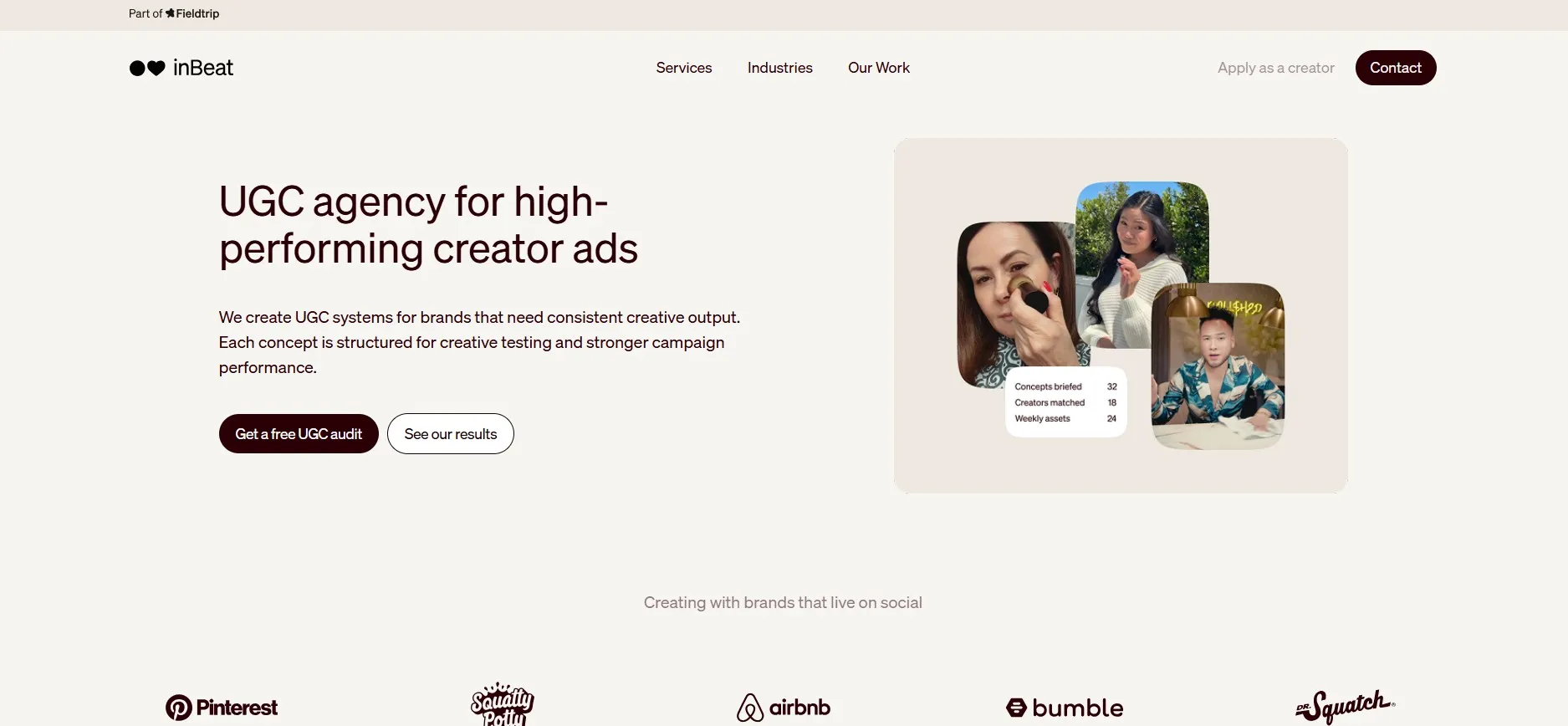
Location: 90 Broad St, 2nd Floor, New York, NY 10004, United States
inBeat Agency is a creator-led growth agency that combines UGC production, influencer sourcing, performance creative, and paid media execution. It focuses on scalable micro-influencer and UGC systems for brands that need steady testing volume.
For Hurom, inBeat used performance-optimized UGC creatives to move the brand away from outdated promotional ads and lower rising CPAs. The campaign drove 300% ROAS growth, a 70% reduction in overall CPA, and 33% growth in month-over-month profit margin.
Why it made the list: inBeat has a strong performance-first UGC model built for brands that need ongoing creative testing.
Possible downside: It may not be the best fit for brands that only need a few simple creator videos.
2. The Social Shepherd: Best for TikTok Growth
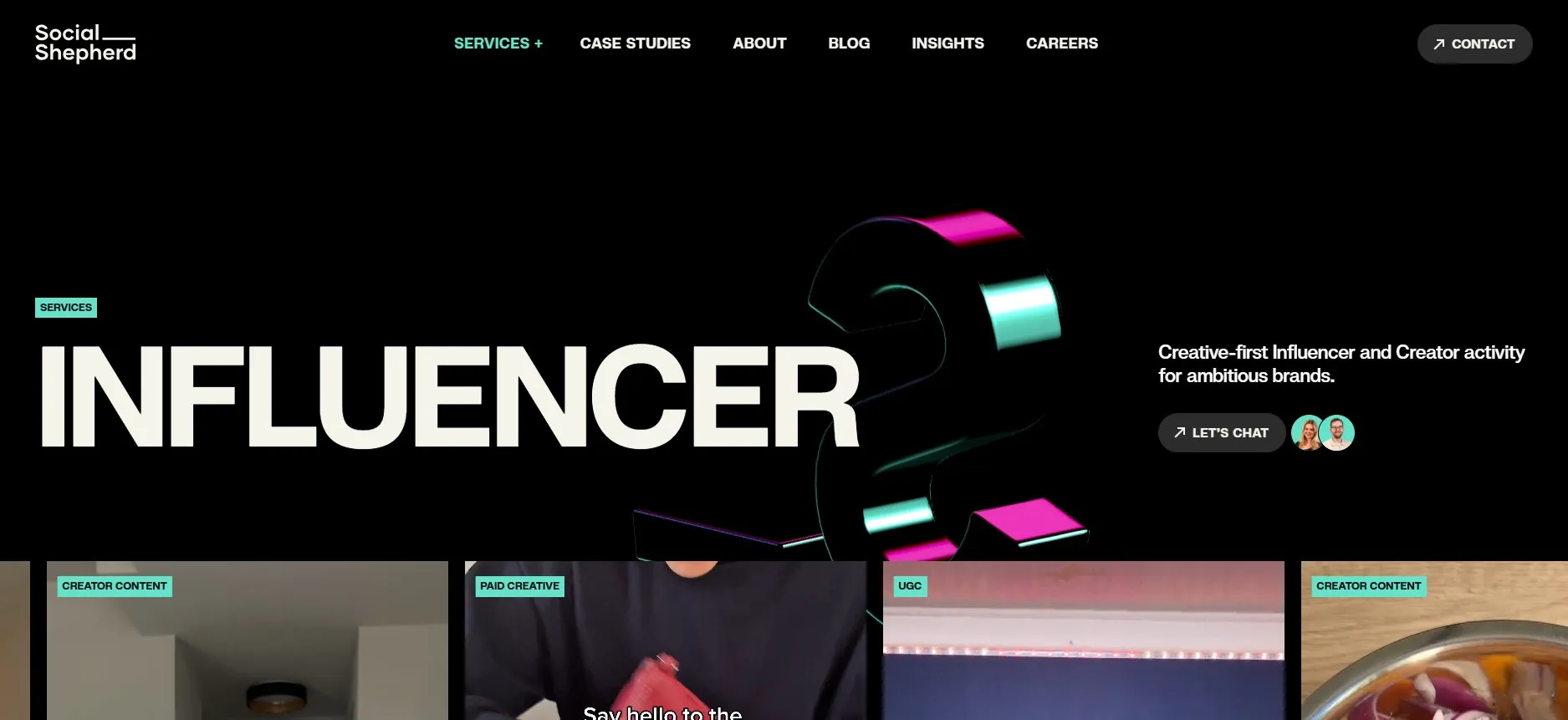
Location: 360 NW 27th St, Miami, FL 33127
The Social Shepherd is a social-first agency that supports organic content, paid campaigns, influencer work, UGC creators, and TikTok Shop. Its work is built around platform-native content streams, which makes it useful for brands that need steady social momentum.
The agency helped Beyblade X by Hasbro build its ownable TikTok presence through creator assets and curated content. In six months, the campaign added 60,000+ TikTok followers, generated 5 million+ organic video views, and reached an 8.21% engagement rate.
Why it made the list: The Social Shepherd combines TikTok, creator content, paid social, and community growth in one service.
Possible downside: Brands needing only basic UGC may find it more involved than necessary.
3. Cohley: Best for Licensed UGC at Scale
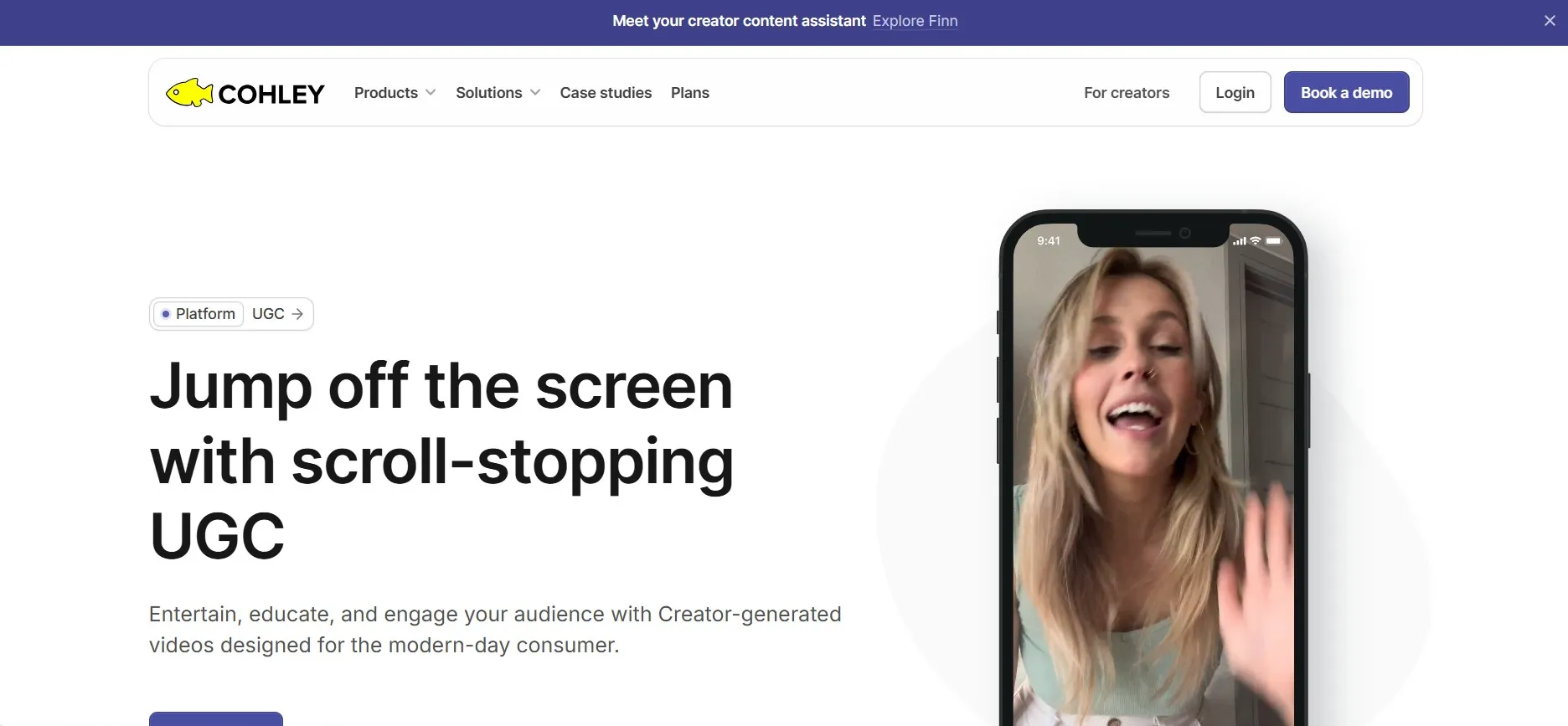
Location: 132 W 31st St, New York, New York 10001, US
Cohley is a creator-content platform built for UGC, influencer work, reviews, photography, and managed services. Its strongest fit is with larger teams that need content assets they can reuse across several channels.
Cohley helped Rack Room Shoes generate creator photos and videos for Instagram, email, paid placements, and in-store displays. The brand received 1,000+ UGC photos and videos, 130+ creator posts, a 59% average reach lift, and a 110% engagement lift on Instagram compared with studio assets.
Why it made the list: Cohley stands out for operational maturity and cross-channel reuse.
Possible downside: It may feel more platform-led than hands-on for teams that want a boutique agency experience.
4. Quimby Digital: Best for Senior-Led Social and UGC
Location: 32221 Woodfield Drive, Avon Lake, Ohio 44012
Quimby Digital is a women-owned social media marketing agency based around organic social, paid social, influencer work, UGC, and Reddit strategy. Its model is senior-led, with a focus on trust-heavy categories such as CPG, femtech, wellness, parenting, and SaaS.
This agency helped Hiya grow its social presence through a TikTok-first strategy, stronger UGC content, and weekly cross-platform tracking. The work produced more than 930% growth in TikTok engagement, more than 8,300% growth in TikTok views, and 3x Facebook growth.
Why it made the list: Quimby’s main strength is category clarity. It understands markets where trust, education, peer validation, and brand safety carry more weight than content volume.
Possible downside: It may feel too strategy-heavy for companies that mainly need quick, high-volume asset production.
5. Stack Influence: Best for Amazon Creator Seeding
Location: 111 NE 1st Ave, Miami, FL 33132
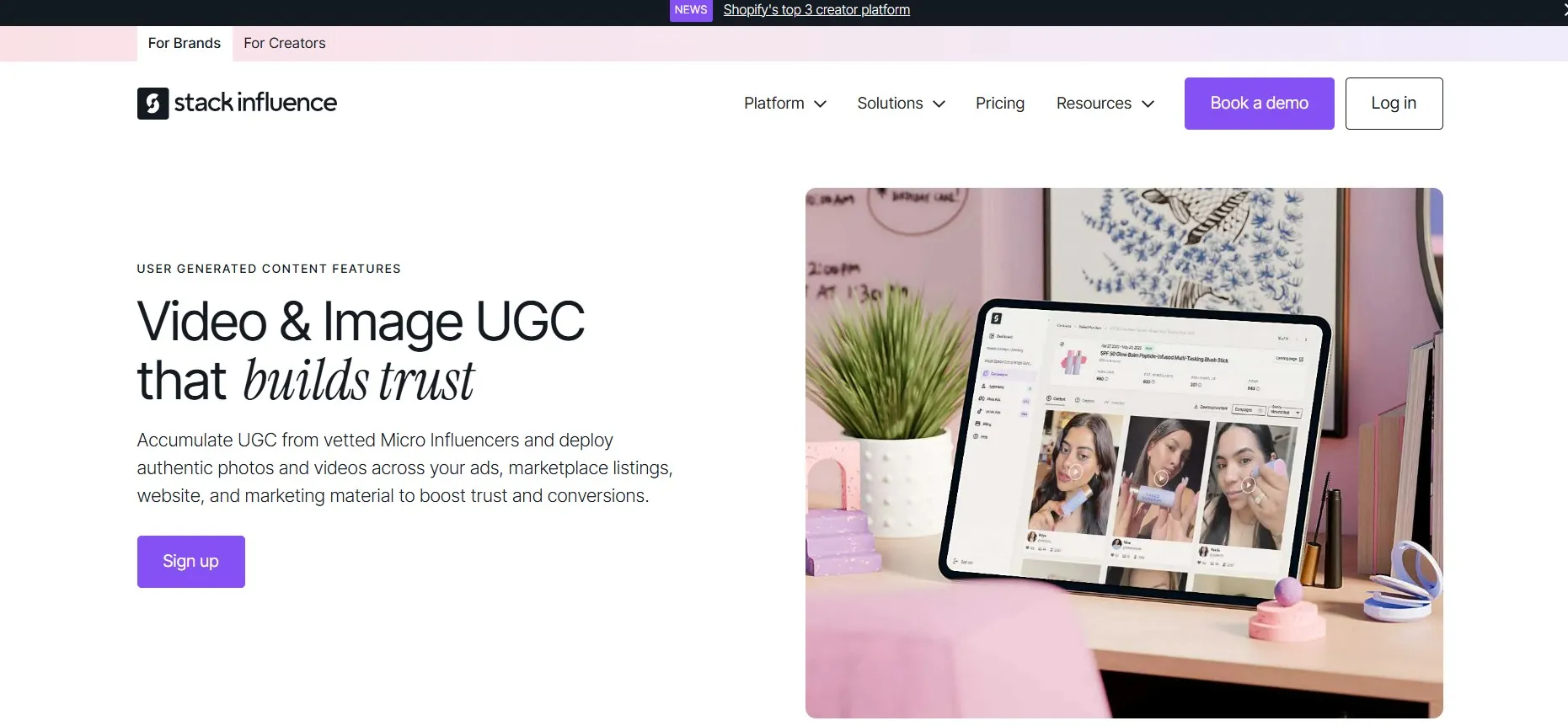
Stack Influence is a micro-influencer platform focused on product seeding, creator-generated content, and eCommerce growth. It is a good fit for Amazon and DTC brands that want creator activity to support discovery and sales velocity.
For example, Stack Influence helped Blueland grow Amazon sales through micro-influencer content, UGC, and product testimonials. The campaign drove 372% sales growth, a 6.3x rank gain, 247,000 impressions, 927 new keywords, and an estimated 54 organic product testimonials.
Why it made the list: Stack Influence shows how UGC can support marketplace visibility and sales momentum together.
Possible downside: It is stronger for scale and seeding mechanics than high-end creative direction.
6. minisocial: Best for Licensed Creator Assets
Location: 1216 Broadway, Fl 2, New York, NY 10001
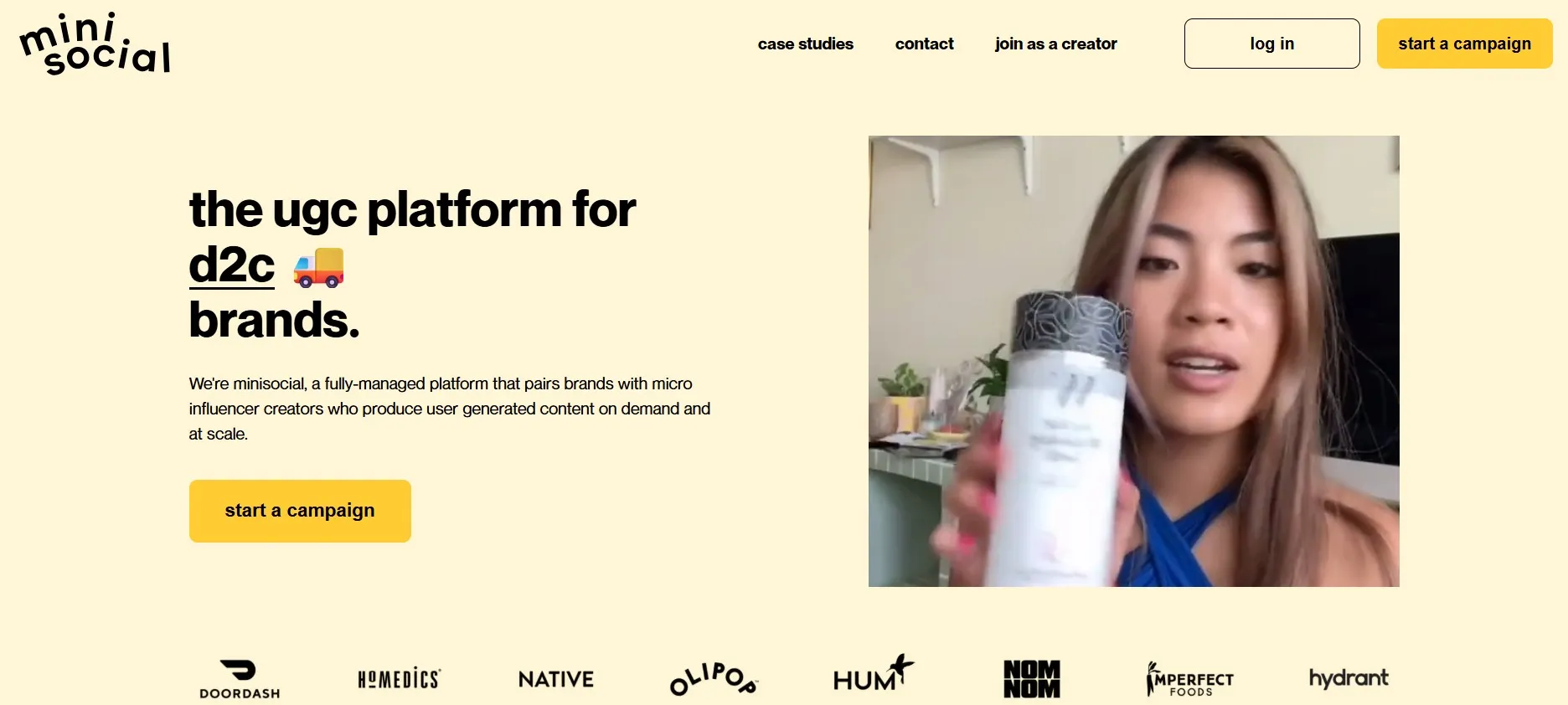
minisocial is a fully managed UGC platform that connects brands with micro-influencer creators. It focuses on licensed assets, simple creator operations, and fast activation for consumer brands that need usable content without a heavy internal process.
The agency helped DoorDash promote its platform while creating UGC for broader marketing use. The campaign involved 50 creators, produced 60+ fully licensed assets, reached a 412,000 cumulative following, and generated $12,201 in earned media value.
Why it made the list: minisocial makes the licensed-UGC workflow feel simple and repeatable for lean teams.
Possible downside: Since the model centers on fast asset generation, brands that need hands-on media buying or deep ad testing may need another partner.
7. Trend: Best for Fast DTC Creator Ad Assets
Location: 360 NW 27th, Miami, FL US
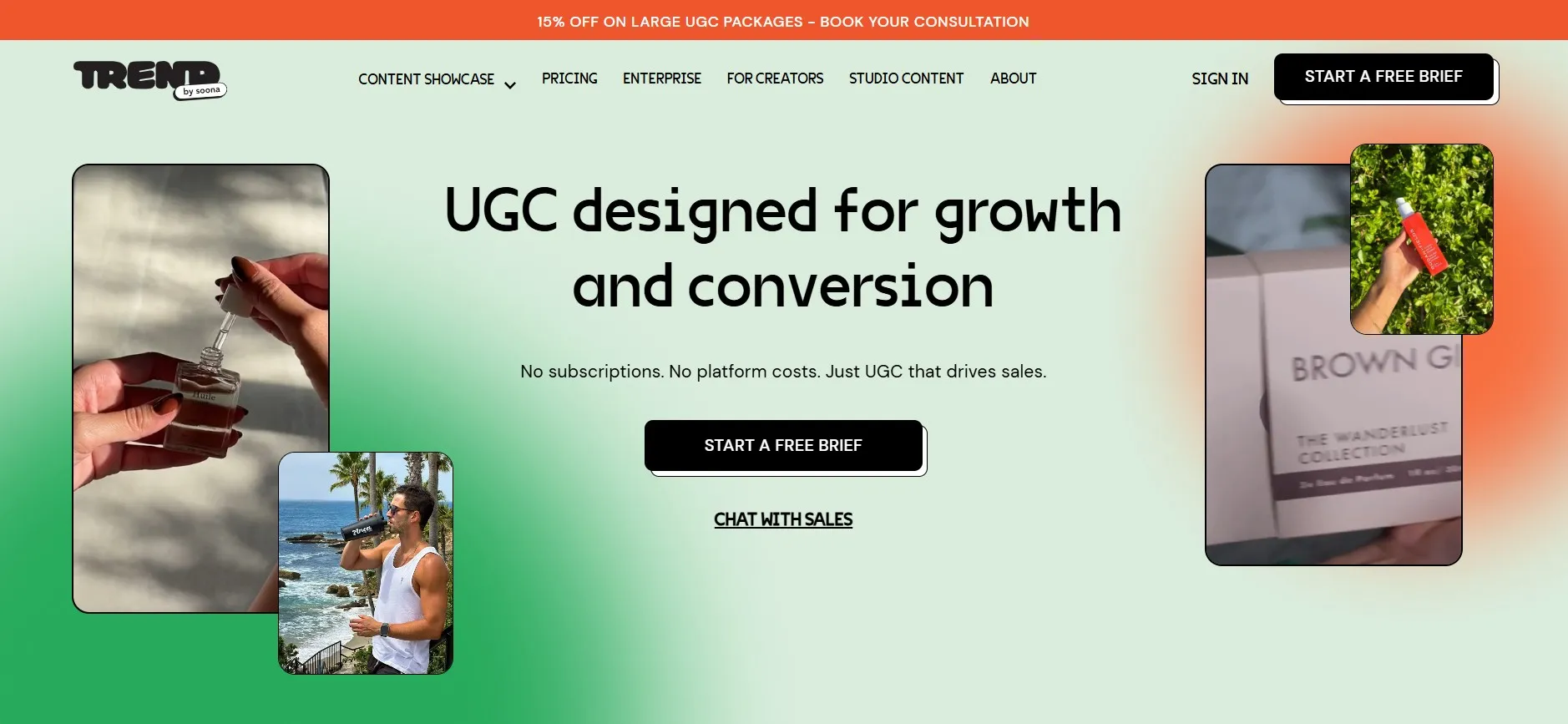
Trend connects you with vetted creators who produce UGC and influencer-style assets for ads, social, and broader digital channels. Its main strength is speed, which helps you refresh creative without building a large production process.
Trend helped Kettle + Fire refresh Facebook ad creative with creator-made assets from its network. The brand reported a 61% ROAS improvement, a 52% reach-to-purchase improvement, and 11 new creative pieces to test.
Why it made the list: Trend shows how fresh creator content can improve existing ad performance quickly.
Possible downside: Because Trend is built around creator-made assets and simple workflows, you may need to bring your own paid testing plan, campaign structure, and deeper creative direction.
8. Moburst: Best for App Growth UGC
Location: 106 W 32nd St, New York, NY 10001
Moburst is a growth agency that includes creator networks, influencer marketing, and UGC within a larger acquisition system. It is a fit for mobile apps and digital products that want creator content connected to app installs, sign-ups, CRO, and wider growth work.
Moburst built a creator-led campaign for PlugSports using authentic creator content and TikTok Spark Ads. The campaign drove 8,500+ installs, 5,400 sign-ups, a 227% CTR increase, an 85% CPI reduction, 2.5 million views, and $130,000+ in earned media value.
Why it made the list: Moburst can connect creator campaigns with a broader app-growth playbook.
Possible downside: Its wider growth model may feel too broad for brands that only want a focused UGC production partner.
9. Billo: Best for Creator Video Testing
Location: 584 Castro St, #2163, San Francisco, California 94114, US
Billo is a creator-marketing platform built around UGC-style video production and ad testing. It leans into speed, creator ads, and creative iteration, which makes it useful for eCommerce teams that want a simpler workflow than a traditional agency.
Pineapple Products used Billo to add more real customer-style videos to its product pages and marketing channels. Pages featuring Billo UGC saw a 5% conversion-rate lift, while Billo videos helped drive a 10.75% ROI increase.
Why it made the list: Billo turns creator videos into a clear test-and-scale workflow.
Possible downside: Platform-style workflows can require more brand input on briefs, approvals, and testing direction than a fully managed agency service.
10. Social Native: Best for Customer-Shot UGC
Location: 9935 S Santa Monica Blvd, Beverly Hills, CA 90212, United States
Social Native works across UGC, creator sourcing, and content activation. Its model is useful for brands that need real customer or creator footage that can move across several marketing uses.
The agency helped Zillow activate more than 250 real families to create short-form UGC around authentic home moments. The work produced 250+ UGC Videos and two TV commercials built from those assets.
Why it made the list: Social Native can turn customer-shot footage into a multi-channel asset system.
Possible downside: Its scale-focused workflow may be more than a smaller brand needs for a few simple creator assets.
11. Brighter Click: Best for Paid-Social UGC with ROAS Accountability
Location: 150 Preston Executive Dr, Suite 201, Cary, North Carolina 27513
Brighter Click is a performance marketing agency with roots in the Raleigh and Triangle market. Its UGC work covers creator sourcing, briefing, production, usage rights, delivery, and performance analysis.
For Ua Body, Brighter Click helped them scale paid media after they struggled to grow profitably. The agency reports a 50% ROAS increase, more than 3x monthly ad spend growth, 108% revenue growth, and one UGC asset that beat the account’s average ROAS by 16%.
Why it made the list: Brighter Click treats UGC as a performance system. Its clearest strength is the link between creators, hooks, testing plans, and paid media results.
Possible downside: Its offer may feel narrow for brands that want organic community building, influencer relations, and broader social strategy under one partner.
12. Influee: Best for Lean eCommerce Creator Sourcing
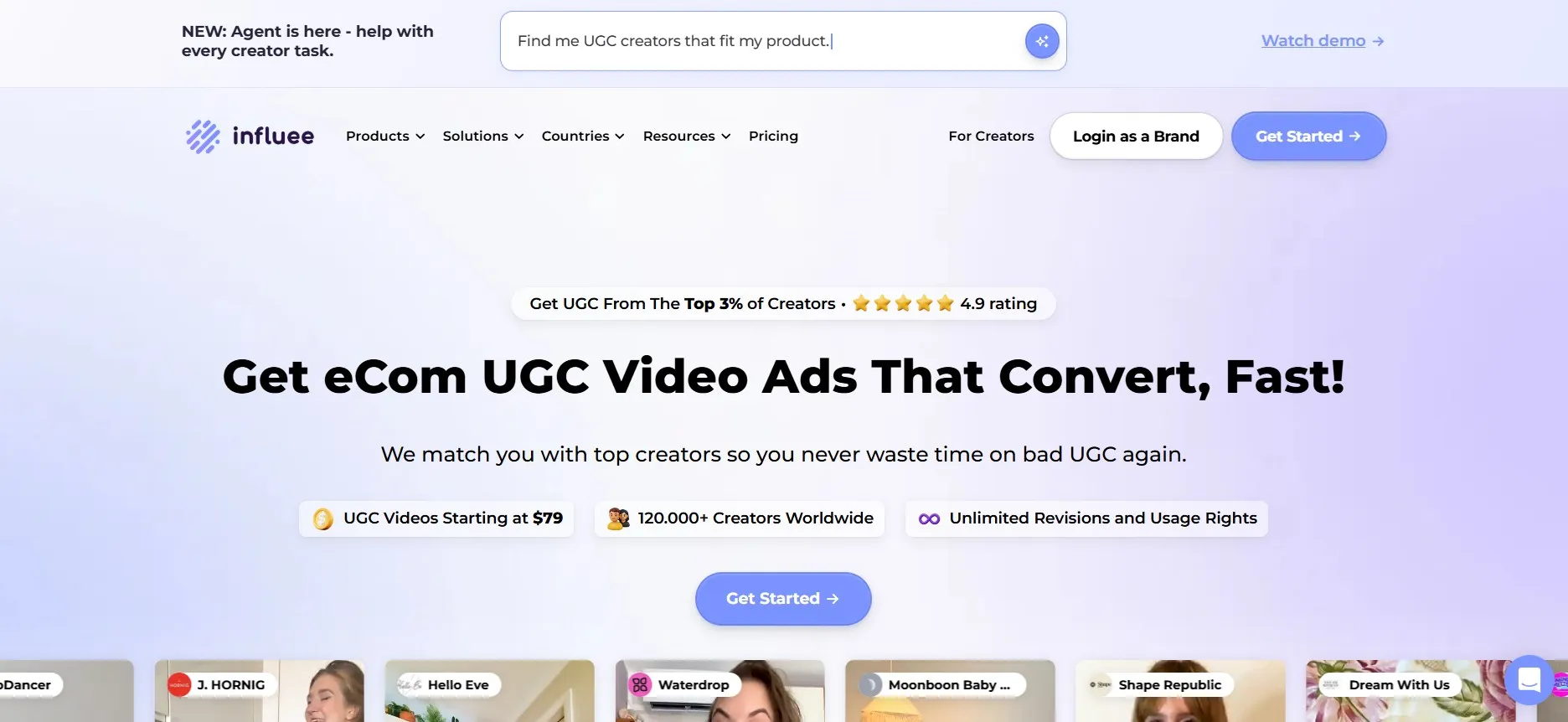
Location: 228 Park Ave S, New York, New York 10003
Influee is a UGC creator platform and software marketplace. It helps brands source creators, manage collaborations, create scripts, handle revisions, and edit UGC videos through built-in tools.
The agency helped Else Nutrition build a scalable UGC program in the US through parenting creators, ad-angle testing, and expanded video production. Else achieved 20% lower CPA, a 25% increase in website traffic and new customer acquisition, and all top-performing ads came from Influee creatives.
Why it made the list: Influee’s main advantage is operational efficiency. It puts creator discovery, scripting support, revisions, and editing inside one system.
Possible downside: Since it is platform-led, brands may need another partner for media strategy, brand positioning, or cross-channel campaign management.
13. Jive PR + Digital: Best for Culture-Led UGC Launches
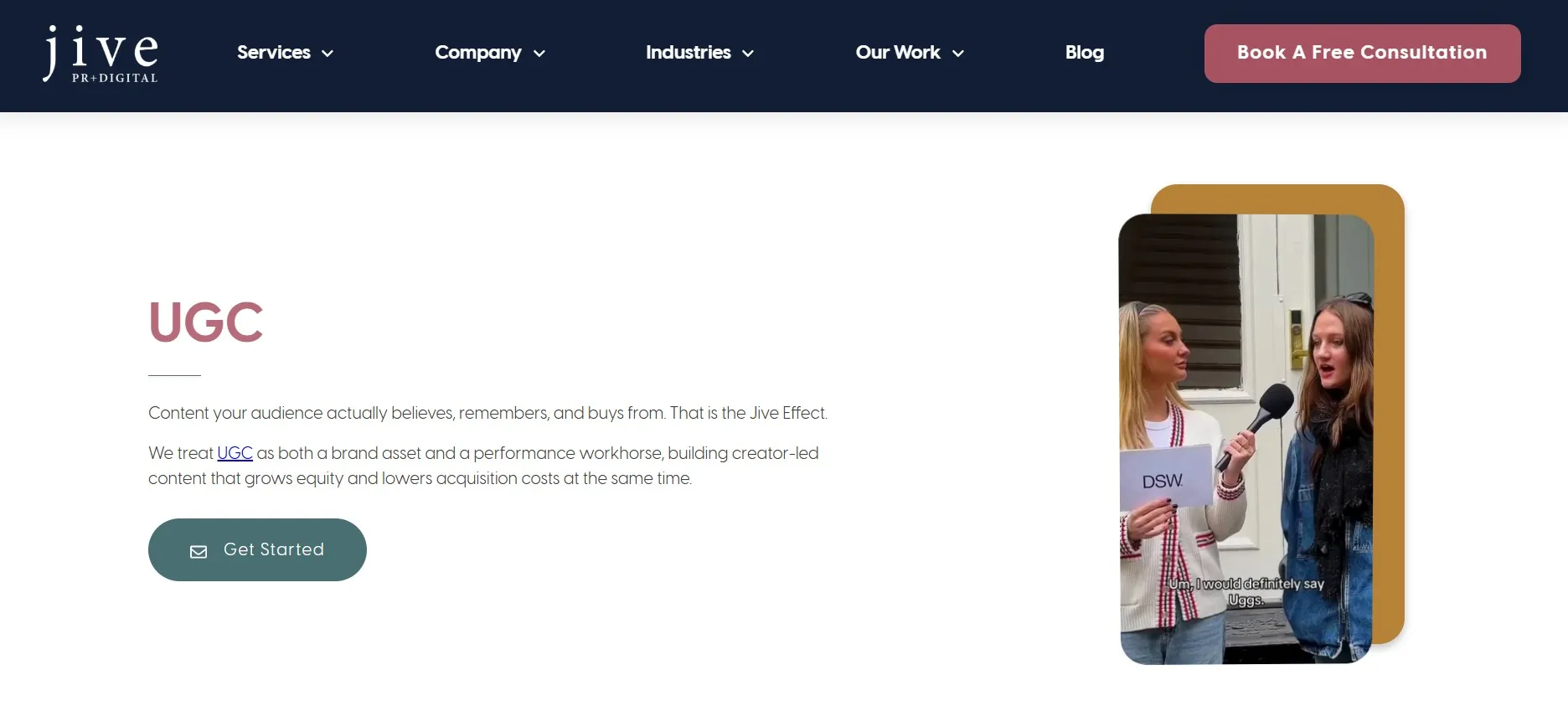
Location: 1590 Rosecrans Ave, Ste D, Unit 1532, Manhattan Beach, California 90266, United States
Jive PR + Digital is a PR and digital agency with services across UGC, social media, TikTok, influencer marketing, public relations, and events. Its UGC work is built to support paid, owned, and earned channels.
Jive helped Zero Latency launch next-generation VR technology in the US through a Las Vegas influencer event. The campaign brought in 7 global influencers and generated more than 30 pieces of UGC. This drove more than $90,000 in sales, 70,000 engagements, 774,000 reach, 655,000 impressions, and 1.1 million video views.
Why it made the list: Jive’s strongest angle is amplification. It connects creator content with cultural moments, influencer coordination, and live activations.
Possible downside: It may be less suited for brands that mainly need a conversion-focused UGC testing engine.
14. Hustler Marketing: Best for High-Velocity UGC Ad Testing
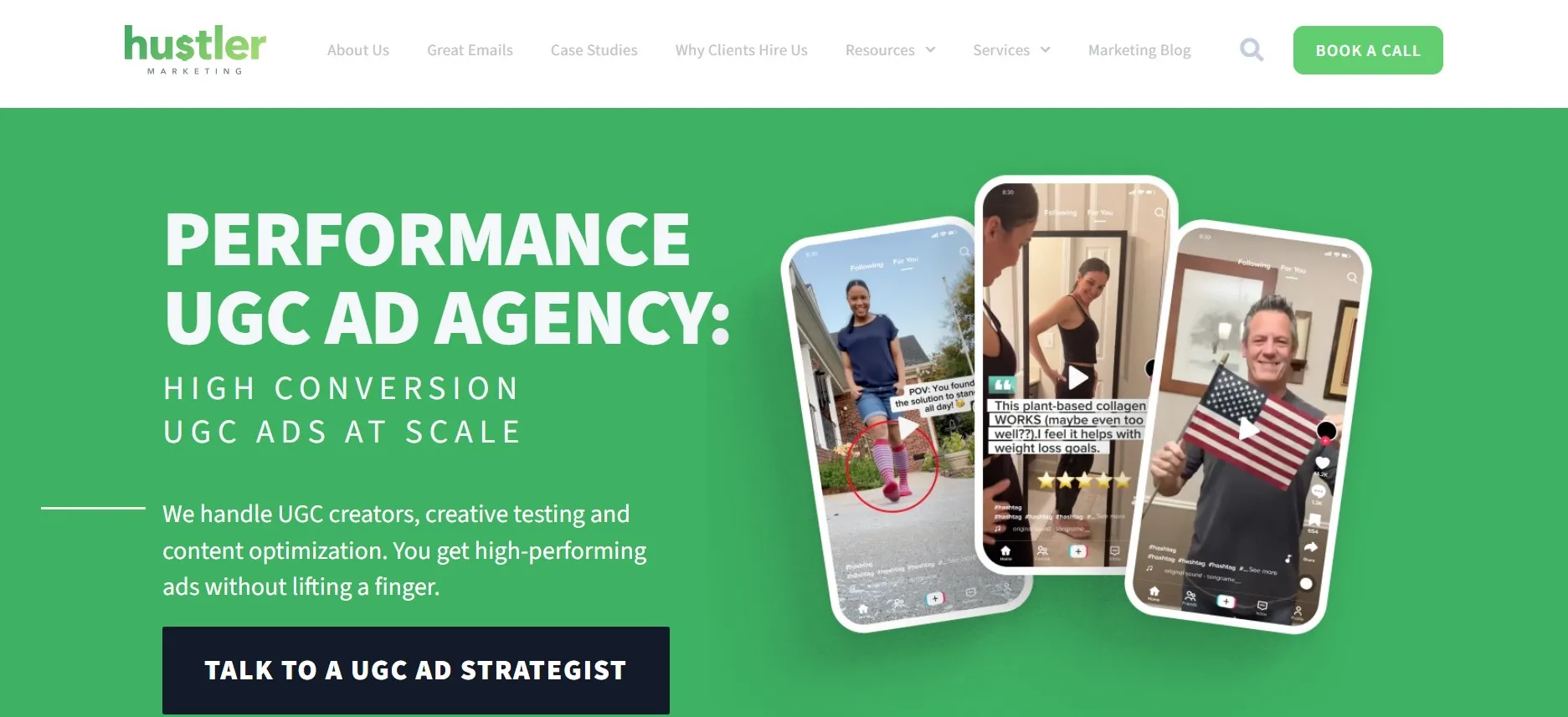
Location: 680 South Cache Street, Jackson, Wyoming 83001
Hustler Marketing is best known for email and retention marketing. Its UGC ad work focuses on creator sourcing, strategist-led production, testing, iteration, and scaling winning concepts.
This agency helped TAO Clean improve paid social results through audience research, vetted creators, and repeated iterations on a “3 reasons why” concept. It reports 3.2 ROAS, a 50% CPA drop, a conversion rate 58% higher than the same period a year earlier, and ads that took over 90% of ad spend.
Why it made the list: Hustler’s clearest strength is creative testing discipline. The offer is built around scripting, production, analysis, iteration, and scaling winners.
Possible downside: Its UGC offer is more ad-creative-centric than community, PR, or influencer-led.
15. Taggbox: Best for Publishing Customer UGC at Scale
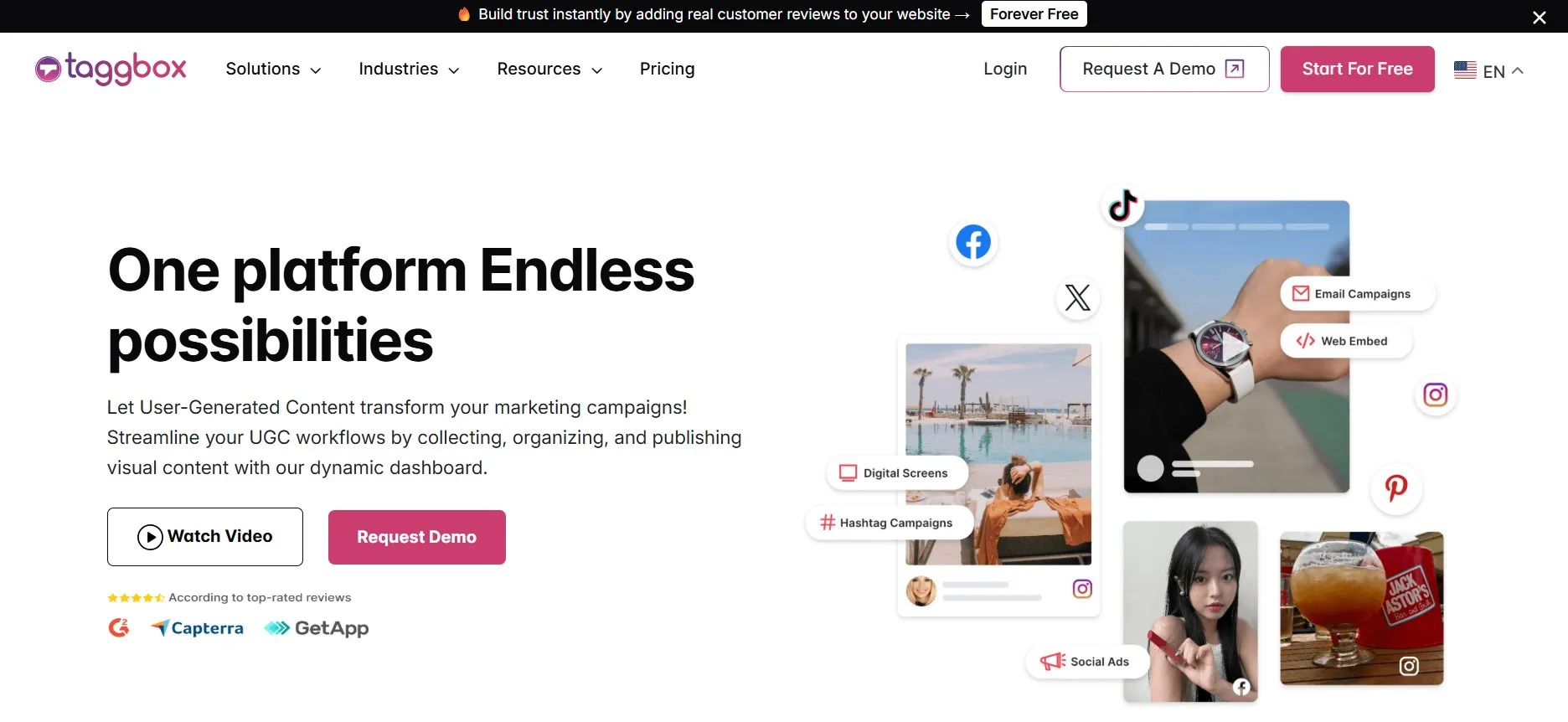
Location: 440 N Barranca Ave #9373, Covina, California 91723, United States
Taggbox is an all-in-one UGC platform for collecting, moderating, rights-managing, customizing, and publishing customer content. It supports websites, digital displays, print media, emails, and social campaigns.
For ISOLATED Talks, the agency runs its #Sunday7Social campaign by aggregating, moderating, and embedding real-time supporter content on the organization’s site. Taggbox says the campaign lifted engagement by 46% while improving reach, support, and positive audience sentiment.
Why it made the list: Taggbox solves the downstream side of UGC. Its strength is turning existing customer content into usable social proof across owned channels and live environments.
Possible downside: It does less for teams that need creator sourcing, ad concept development, or active performance campaign management.
How Much Does UGC Marketing Cost in the US?
UGC marketing pricing in the US varies based on the creator, content type, usage rights, and how much support the agency provides. According to Fueler, for a single short-form video, newer creators may charge around $150 to $300, while mid-tier creators usually charge $400 to $800.
More experienced creators can charge $1,000 to $3,000+ per video. This is the case when they handle strategy, scripting, filming, editing, and stronger production quality.
Pricing also changes when brands need more than one asset. A three-video starter package can range from $1,000 to $2,000. Meanwhile, five-video packages typically sit between $1,500 and $3,500. Monthly content retainers for 4 to 8 videos can reach $4,000 to $8,000.
Usage rights can raise the final cost as well. Paid ad usage commonly adds 30% to 50% of the creation fee, while full buyout or exclusive rights can cost much more.
Pro tip: Check out our guide to UGC rates in 2026 to learn more!
Choose the Right US UGC Agency for Your Campaign Goals
The best UGC agency is the one that aligns with how your brand plans to use the content. A brand testing social media ads may need fast creator casting and multiple ad angles, while a larger team may need stronger approvals, content rights, and reporting.
The right partner should fit your service needs, creator network requirements, paid social goals, use case, and proof expectations. So, before booking calls, define your campaign goal, budget range, platforms, usage needs, and the level of creative strategy you expect from the agency.
FAQs
Do US UGC agencies handle FTC disclosures and sponsored content guidelines?
Yes, many US UGC agencies help brands manage FTC-related disclosure basics when creators post sponsored content. Brands should still review legal requirements internally, but agencies can support disclosure language, approval workflows, and creator guidance before content goes live.
What usage rights should US brands confirm before hiring a UGC agency?
US brands should confirm paid ad usage, organic usage, raw footage access, whitelisting, exclusivity, licensing windows, and renewal costs before hiring a UGC agency. These terms affect where the content can appear, how long it can run, and what happens after the campaign ends.
Do US UGC agencies work with creators across different states, niches, and audience segments?
Yes, many US UGC agencies work with creators across different states, niches, and audience segments. This helps brands match talent to product category, buyer age, region, language needs, price point, and platform, especially when campaigns target several customer groups.
What should US brands check before hiring a UGC agency?
US brands should check whether the agency can produce enough creative volume for a high CAC market, support Meta and TikTok testing, manage usage rights, handle FTC disclosures, ship products across states, and report on CPA, ROAS, and MER.