

Food influencer marketing has one advantage most categories lack: the product can be demonstrated in full on camera, from the box to the pan to the first bite.
Research backs that up. A 2024 study in Psychology & Marketing found that watching food influencers cook on Instagram shapes followers' intention to cook the same recipes at home, and that entertainment value is the main driver of that imitation (Sokolova, 2024).
Reach is cheap to buy and easy to report. A viewer who cooks with your sauce or bites into your bar is the outcome you actually sell against.
This guide covers how to set trial-based goals, choose and price creator tiers, ship perishables without waste, brief for compliant sensory content, pick formats by purchase path, measure sales, and scale winners through paid social.
P.S. If you'd rather have creator sourcing, production, and paid distribution handled as one system, see how inBeat runs influencer marketing.
Note from our paid media team at inBeat: We treat food creators as a supply of demonstrations, and media buying handles distribution. The person cooking with your product on camera is the ad, and the persona they carry does the audience selection that platform targeting increasingly cannot.
That is why we source many matched creators, ship product with the same discipline as a retail order, and read the organic post as an audition. Media buying then dark-posts the clips, reads cost per trial, whitelists what converts, and puts budget behind it. Every result becomes the next brief.
How to Set Food Influencer Marketing Goals Around Trial and Sales
Write one sentence per campaign that names the trial behavior, the destination, and the sales signal you will read. Everything else in the program follows from that sentence.
What Research Says About Food Influencers and Home Cooking
The Sokolova study cited above ran two surveys and an experiment with French social media users. It found that the entertainment value of a creator's cooking content, along with viewers' confidence in their own cooking, drives the intention to recreate it.
That finding does not measure purchase, and one study cannot size the effect for your product. It does tell you where the creative unit sits: a person preparing, tasting, or ordering your product on camera, in a way that is fun to watch.
Industry coverage points the same way.
Food Dive reports that food and beverage brands rebuilt their social strategy around creators after the pandemic, when in-store sampling and events stopped.
How to Define the Conversion Path Before Briefing Food Creators
When a food brand states its goal as awareness, the team usually has not decided where the viewer should go after watching. Force that decision early.
The path needs four pieces:
- A sampling method: product shipped to creators, or a stipend so they buy it.
- A promo mechanic: code, link, in-store offer, or none.
- A destination: your DTC store, a named retailer, or a restaurant location.
- A sales signal you can actually read once the content is live.
If any piece is blank, the campaign is a content shoot, and it will be reported on impressions because nothing else is available.
How DTC, Retail, and Restaurant Food Campaigns Differ
Three outcomes cover most food programs, and each wants a different creator mix and call to action.
- DTC first order: creators anywhere in your shipping footprint, a trackable code or link, and a first-purchase offer that makes the code worth entering.
- Retail shelf velocity in named accounts: creators whose audience clusters around the retailer's footprint, a call to action that names the store, and a stipend model so the creator films the actual shelf.
- Restaurant foot traffic: local creators only, a redemption mechanic or reservation link, and a filming window that matches your slow days.
Suppose a frozen dumpling brand launching in a regional grocer picks the sentence "cook it in ten minutes on camera, buy it at that chain, read weekly unit sales in those stores." That sentence tells sourcing whom to recruit, operations what to ship, and finance what number to wait for. "Generate awareness for the launch" tells nobody anything.
Which Creator Tiers Work Best for Food Brands?
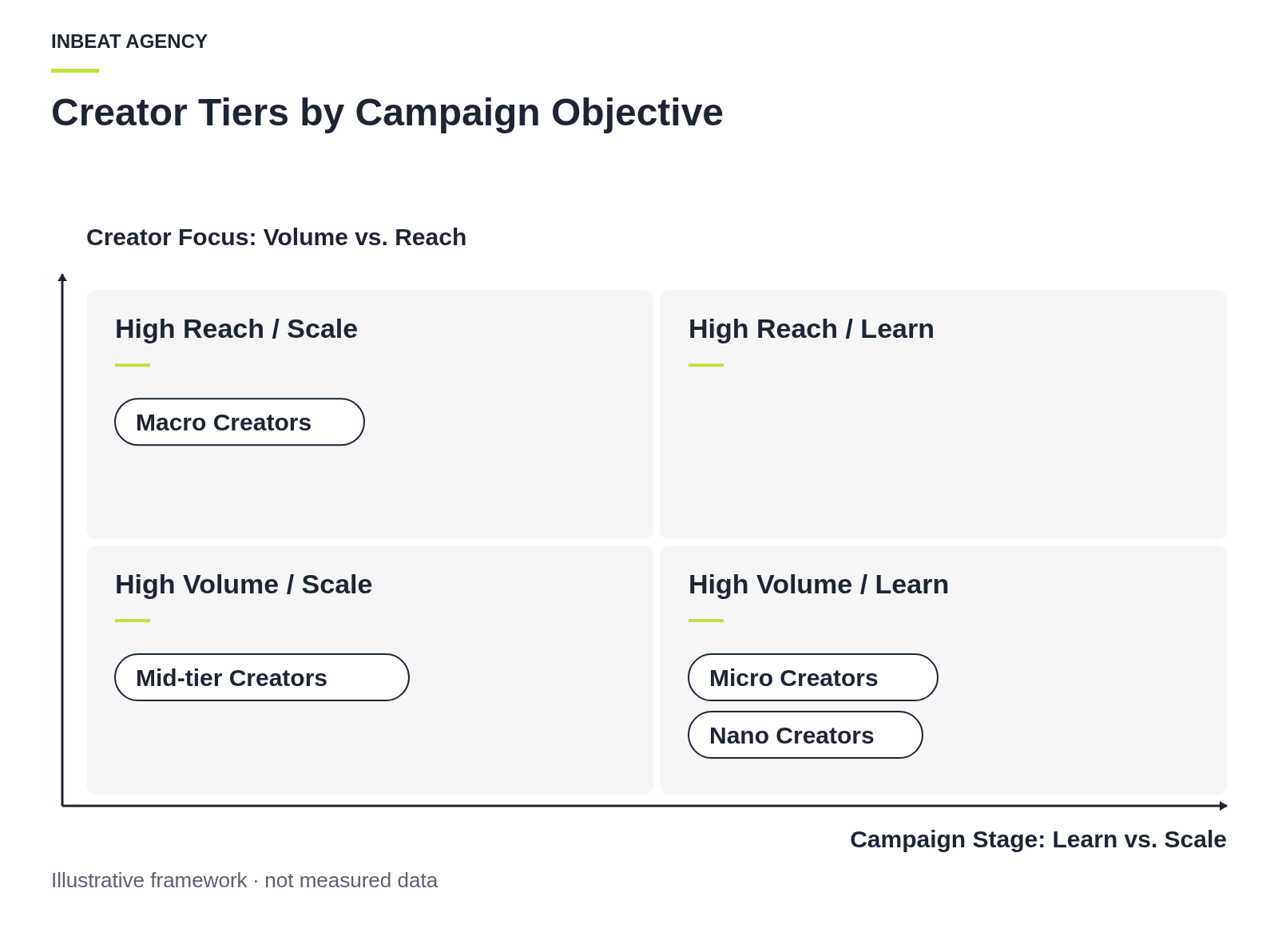
Start a new food or beverage launch with many small creators to find the persona and angle that converts, and hold macro budget until you know the message. That sequencing matters more than the fee on any single post.
Nano and Micro Food Creators for Persona Testing
Small creators give a food launch what it needs most in its first weeks: many honest demonstrations from people who already eat the way your product assumes.
A gluten-free baker, a meal-prep parent, and a college athlete will each cook with the same protein pasta differently, and you cannot know which framing sells until you see all three in front of real audiences. Loose briefs also protect the entertaining, unscripted reaction the research points to.
The tradeoff is management overhead. Forty shipments, forty contracts, and forty content reviews are a real operations load, which is why the perishable logistics section below exists.
Further reading: For a deeper look at running this tier, see our guide to nano influencer marketing.
Mid-Tier and Macro Food Creators for Scaling a Proven Message
Macro creators earn their fee when you already know which angle converts and need it seen fast, for example, in launch week at a national retailer. Paying a macro fee to discover the message is the expensive way to run a test.
Food Dive's reporting shows why fit matters as much as size.
It contrasts celebrity food partnerships with brands that chose athletes whose audiences take food advice from them, and quotes food innovation lab founder Adam Melonas: "There's a difference between driving brand awareness and trying to move volume."
Our breakdown of micro vs. macro influencers covers the tradeoffs in more detail.
| Creator tier | Best use in a food campaign | What you learn from it | Main cost drivers | Biggest risk |
| Nano | Local restaurant and regional retail launches | Whether the product demos well in ordinary kitchens | Product and shipping dominate; fee often small or gifted | Inconsistent content quality and delivery |
| Micro | Persona and angle testing at volume | Which persona and usage occasion converts | Fee plus product and cold-chain shipping per unit | Operations load across many creators |
| Mid-tier | Scaling a proven angle regionally | Whether the message holds beyond the test audience | Fee rises; usage rights become a meaningful line | Paying reach prices for an unproven message |
| Macro | National launch week reach | Ceiling of the message at scale | Fee and rights dominate; product cost negligible | One post carries the whole budget and its risk |
How to Find Food Influencers for Your Brand
Search for creators whose existing content already matches your product's dietary philosophy and usage occasion. A creator who has posted plant-based meals for two years is a credible fit for oat milk; a steakhouse reviewer is not, however positive the reaction.
Check three things before outreach:
- The audience lives where your product is sold
- Their recent sponsored posts perform close to organic ones
- The creator shows food being prepared and eaten on camera.
For city-level starting points, see our lists of food influencers in New York and food influencers in Los Angeles.
How Much Do Food Influencers Charge?
Rates depend on platform, following, content type, usage rights, and exclusivity, and food creators follow the same broad pattern as other niches. Influencer Marketing Hub defines the tiers as:
- Nano (1,000 to 10,000 followers)
- Micro (10,000 to 50,000)
- Mid-tier (50,000 to 500,000)
- Macro (500,000 to 1 million)
- Mega (1 million and up)
The same source reports that mid-tier Instagram creators can earn up to $5,000 per post, some YouTube creators price at $50 to $100 per 1,000 views, and top TikTok creators can command more than $10,000 per post.
It also found that 47.4% of marketers spent less than $10,000 on influencer marketing in 2024.
For food brands, the fee is only one line. Product, spoiled units, and cold-chain shipping can outweigh a nano creator's fee, so price every creator on the full cost of getting a demonstration made.
How to Calculate Cost per Trial for Food Influencer Campaigns
Build a one-page model with four lines per creator: fee, product cost including spoiled or replacement units, shipping (cold-chain where needed), and usage rights. Divide the total by observed orders, code redemptions, or measured incremental units, and you have cost per trial.
CPM tells you what you paid for eyeballs. Cost per trial tells you what a person who actually ate the product cost you.
Cost per trial = (Creator fee + Product cost + Shipping + Usage rights) ÷ Trials
Trials are whichever sales signal your channel can read: observed orders, code redemptions, or measured incremental units.
To compare creator tiers or whole campaigns, add up each line across every creator in the batch and divide by total trials:
Campaign cost per trial = Total (fees + product + shipping + rights) ÷ Total trials
A hypothetical illustration, with invented numbers for structure only: forty micro creators at a blended $400 all-in each ($16,000) against two macro posts at $8,000 each ($16,000). If the micro batch drives 800 retailer-code redemptions and the macro pair drives 300, cost per trial is $20 versus about $53, and the micro batch also leaves you with forty testable clips.
The comparison only works once product and shipping sit inside the influencer budget. Our influencer marketing ROI guide includes a calculator for the broader math.
How to Ship Perishable Products to Food Influencers
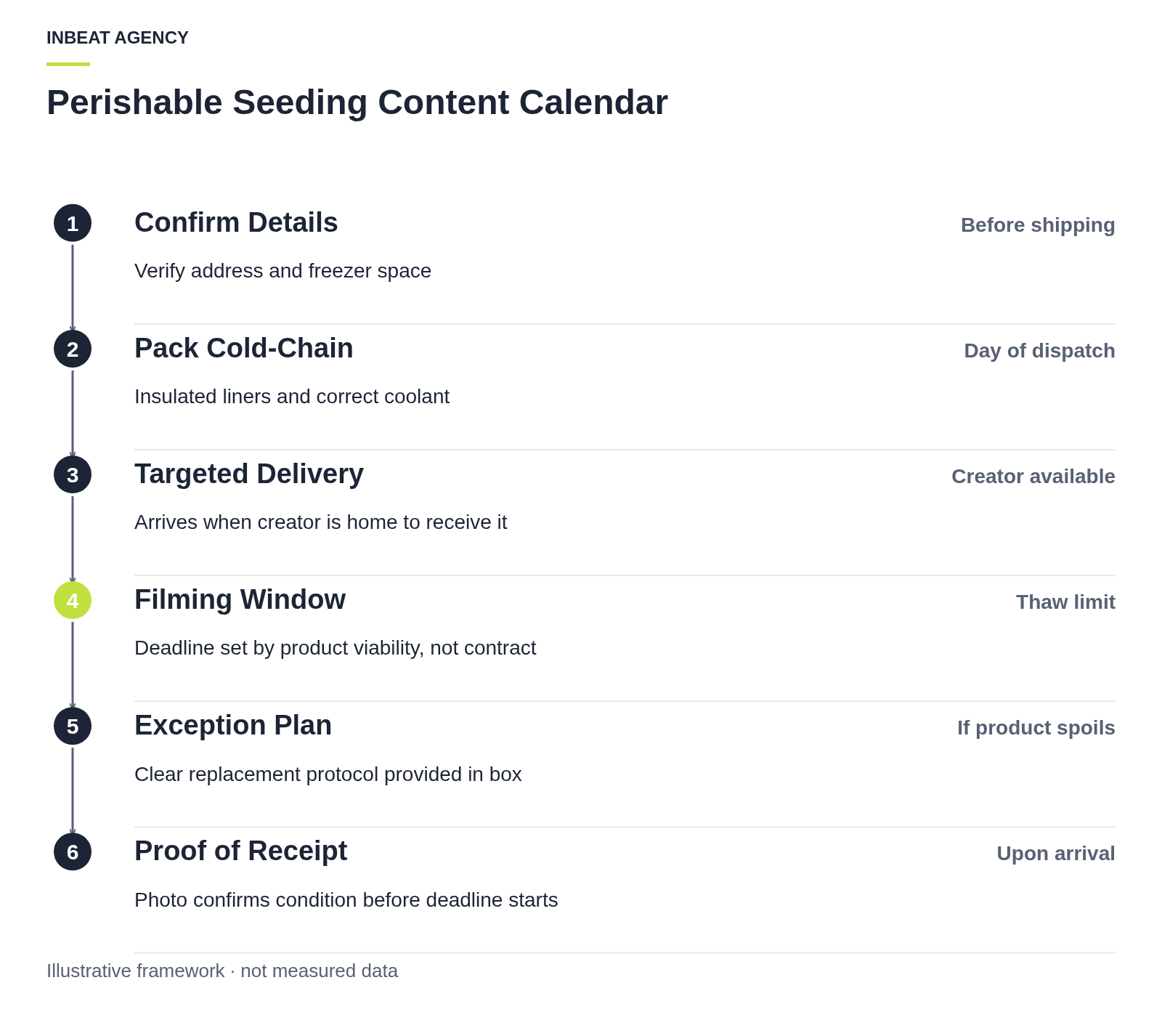
Adopt a six-step perishable seeding checklist, with a confirmed filming window and a replacement plan, before the first box ships. For frozen, chilled, and fresh products, logistics is the campaign calendar.
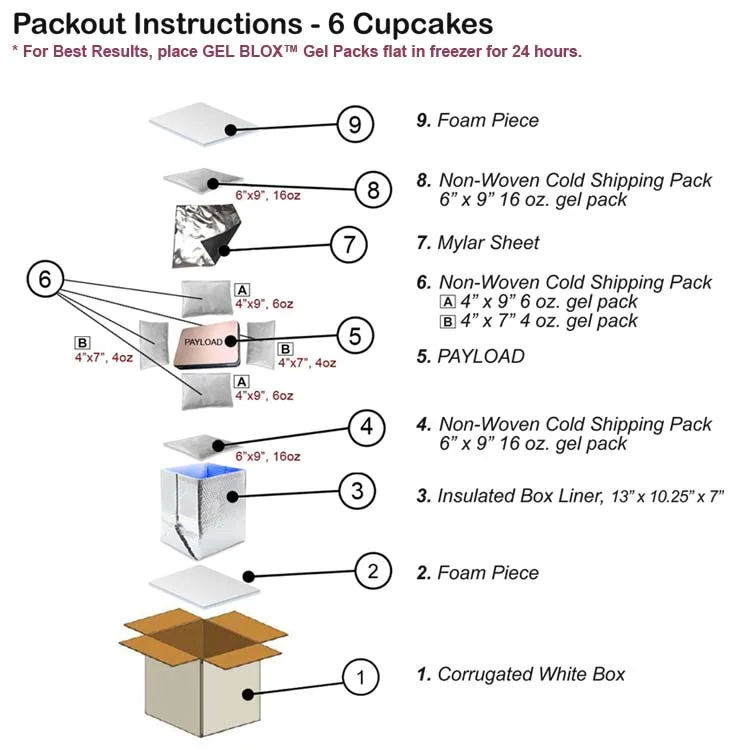
- Confirm the creator's shipping address and an availability window before anything leaves the warehouse. Ask directly whether they will be home to receive a perishable box and whether they have freezer or fridge space.
- Choose packaging by product, and budget cold-chain shipping as its own line: insulated liners and dry ice or gel packs for frozen and chilled items, ambient packaging for shelf-stable goods, and extra protection for glass beverages.
- Schedule delivery for a day the creator has confirmed they can film within the following 48 hours. A box that sits on a porch for a weekend produces a thawed product and a wasted shipment.
- Set the filming deadline from shelf life, working backward from the best-by or thaw window.
- Send a written replacement plan with the shipment: what to do if product arrives damaged or thawed, whom to message, and how quickly a replacement ships.
- Collect proof of receipt (a photo of the opened box and product condition) before the content clock starts.
Expiration dates decide the content calendar. If a chilled beverage has a three-week best-by, you cannot ship to thirty creators over a month and expect all thirty to film with fresh product.
Stagger shipments into waves sized to what your team can pack and track, and match each wave to a filming window. A chilled beverage brand shipping in two waves can have thirty creators film within the same ten-day window, so the paid team receives a full batch of clips at once.
Several creator considerations belong in sourcing, well before shipping:
- Storage: a creator in a small apartment may not have freezer space for a case of product. Ask during outreach.
- Allergens and dietary restrictions: capture these at recruitment so nobody receives a product they cannot eat.
- Wasted filming time: if product arrives spoiled and the creator has set aside a day, compensate that time or reschedule. The FAQ covers contract wording.
- Spoilage budget: assume some shipments will fail and hold replacement inventory. That cost belongs in the cost-per-trial model.
For retail campaigns, a stipend model avoids most of these problems. Send a gift card or reimbursement so the creator buys the product at the named store and films the shelf. You get the demonstration plus a distribution check: if the creator cannot find the product, you learn something about the retailer before the content goes live.
Restaurants work the same way on-site, with the creator visiting and ordering in person, as Deliverect's restaurant guide describes. For more on running product seeding at scale, see our guide to influencer seeding.
Whoever owns fulfillment in your organization should own this checklist. When operations runs it, a thawed box becomes a tracked exception with a replacement already moving.
How to Brief Food Influencers for Taste Tests and Recipes
Rewrite your creator brief so it contains an approved-claims list, mandatory preparation and eating shots, and a disclosure line. The first bite and the on-camera cook are the two formats that map most directly onto the home-cooking research, and over-briefing ruins both. Our influencer brief templates give you a starting structure.
How to Match Food Creators to Your Product for Taste Tests
Taste is subjective, and audiences know it, so a taste test's credibility comes from the creator's history. Enthusiasm in a single video buys very little.
Brief the setup (product, occasion, mandatory shots) and leave the reaction alone. If a creator finds the product too sweet, that critique is worth more to the next viewer than a scripted rave, and it is useful feedback for R&D.
Food Dive quotes influencer agency executive Marie La France on the same point: the videos that go viral feel unique to whoever created them, so brands need to trust creators.
What to Include in a Recipe Content Brief
A recipe gives the viewer a concrete plan that requires your product, and that plan turns watching into a shopping list. Brief structure for both formats:
- Product truth: one or two sentences on what the product is and is not.
- One persona: the person the creator is speaking to, which should match their own audience.
- One usage occasion: weeknight dinner, post-workout, lunchbox, or game night.
- Mandatory shots: packaging clearly visible, preparation or opening, and eating on camera.
- Creator freedom: recipe, setting, music, and tone belong to the creator.
Health and Nutrition Claims in Food Influencer Content
When a creator improvises a health claim, the brand is exposed because the content is paid brand communication. For functional foods, beverages, and anything sold on a nutrition story, the brief needs an approved-claims list and a rule that creators repeat only what is on it.
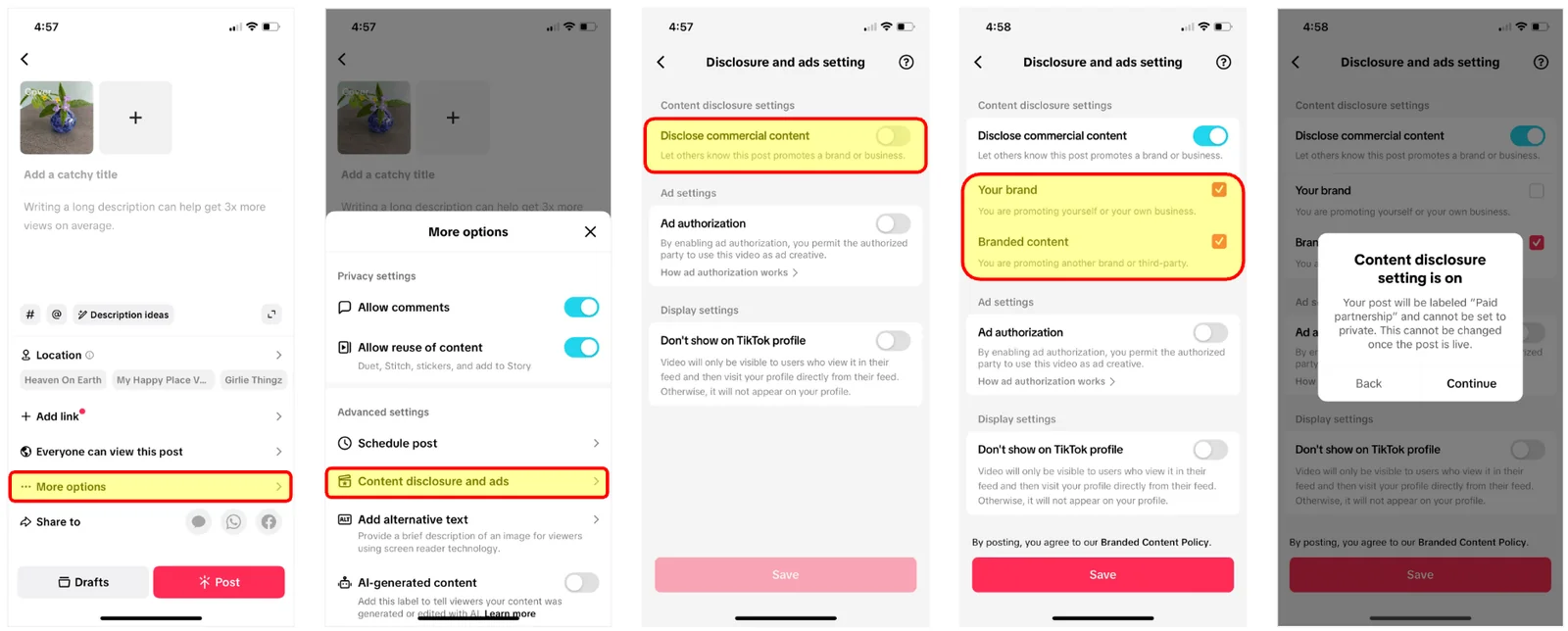
The FTC's guidance for influencers says creators cannot make claims that would require proof the advertiser does not have, such as scientific proof that a product treats a health condition, and that disclosures must sit in the video itself.
On the labeling side, the FDA notes that structure/function claims for conventional foods must focus on effects derived from nutritive value, and only drugs can claim to treat or prevent disease.
The stakes are real.
Food Dive reports that in November 2023 the FTC sent warning letters to two trade groups and 12 nutrition influencers over undisclosed paid posts about aspartame. Have counsel review the approved-claims list before it reaches any creator, and see our summary of FTC guidelines for influencers.
In a hypothetical case, a protein bar brand replaces the phrase "boosts energy" with its approved on-pack protein statement and requires creators to read it exactly if they mention nutrition at all.
For functional products, review scripts or first cuts before publication. For ordinary snacks and pantry items, a post-publication spot check is usually enough, and heavier review costs you the spontaneity the format depends on.
Which Platforms Work Best for Food Influencer Content?
Assign each deliverable to a platform and format based on the purchase path, and put paid usage rights into every short-form contract.
For a new CPG launch aimed at trial, prioritize short-form vertical video with repost rights, and add long-form only when the product needs explanation. Impulse snacks and beverages sell on a first bite that fits in a few seconds; premium ingredients with an unfamiliar use case benefit from a longer recipe.
| Platform and format | Discovery strength for food | Path from view to purchase | Best content job | Rights to negotiate |
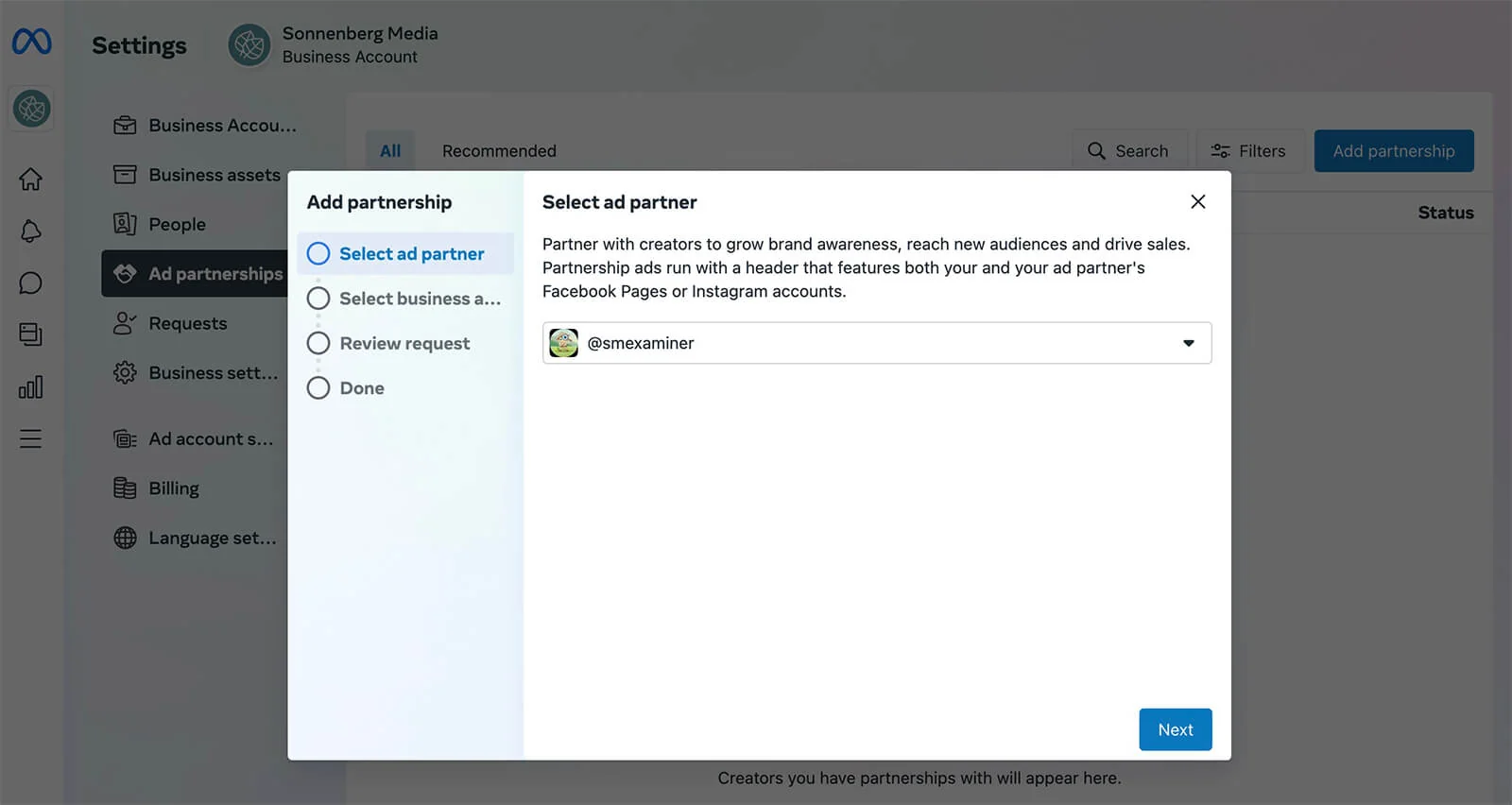
| TikTok short-form | Strong for reaching people who do not follow the creator | Link in bio, on-platform shop where available, spoken retailer name | Taste tests and fast cook-with clips for impulse trial | Repost and paid-ad usage, including Spark Ads from the creator's handle |
| Instagram Reels | Good discovery to non-followers, strongest with existing brand audiences | Product tags and link in bio, retailer name on screen | Short demos, plus polished recipe cuts | Repost, paid usage, and partnership-ad permission |
| Instagram Stories | Weak discovery; reaches existing followers | Direct link sticker, the cleanest tap-to-buy path for DTC | Code drops, retailer callouts, behind-the-scenes cooking | Screen-record reuse rights |
| YouTube long-form | Slower but durable; search traffic continues for months | Description links and verbal calls to action | Full recipes and education for premium or unfamiliar products | Cutdown rights for short-form and paid reuse |
Shoppable features and link options change frequently, so confirm specifics with each platform's current documentation before a contract fixes deliverables.
Usage rights change the value of an identical deliverable. A taste-test clip that lives only on the creator's profile is a moment of borrowed trust; the same clip with paid usage becomes a testable ad asset.
Negotiate rights per platform, name the duration, and include the right to run the ad from the creator's own handle where the platform allows it, because the persona in the byline is part of what makes the creative work.
On durability: algorithms and features will keep shifting, but the move toward short, unpolished demonstration is structural, driven by how people now discover food. Build the program around the demonstration format and the purchase path, then place it on whichever platform currently gives that format the best distribution.
A hot-sauce launch, hypothetically, would run vertical taste-test clips on TikTok and Reels with repost rights, and one long YouTube recipe for the premium variant that needs a use case explained.
How to Measure Food Influencer Marketing ROI
Pair every campaign with one primary sales signal and one control comparison, and report cost per trial alongside blended MER. Engagement rate and impressions still matter as inputs that tell you which clips deserve paid budget, and you should present them to leadership in exactly those terms.
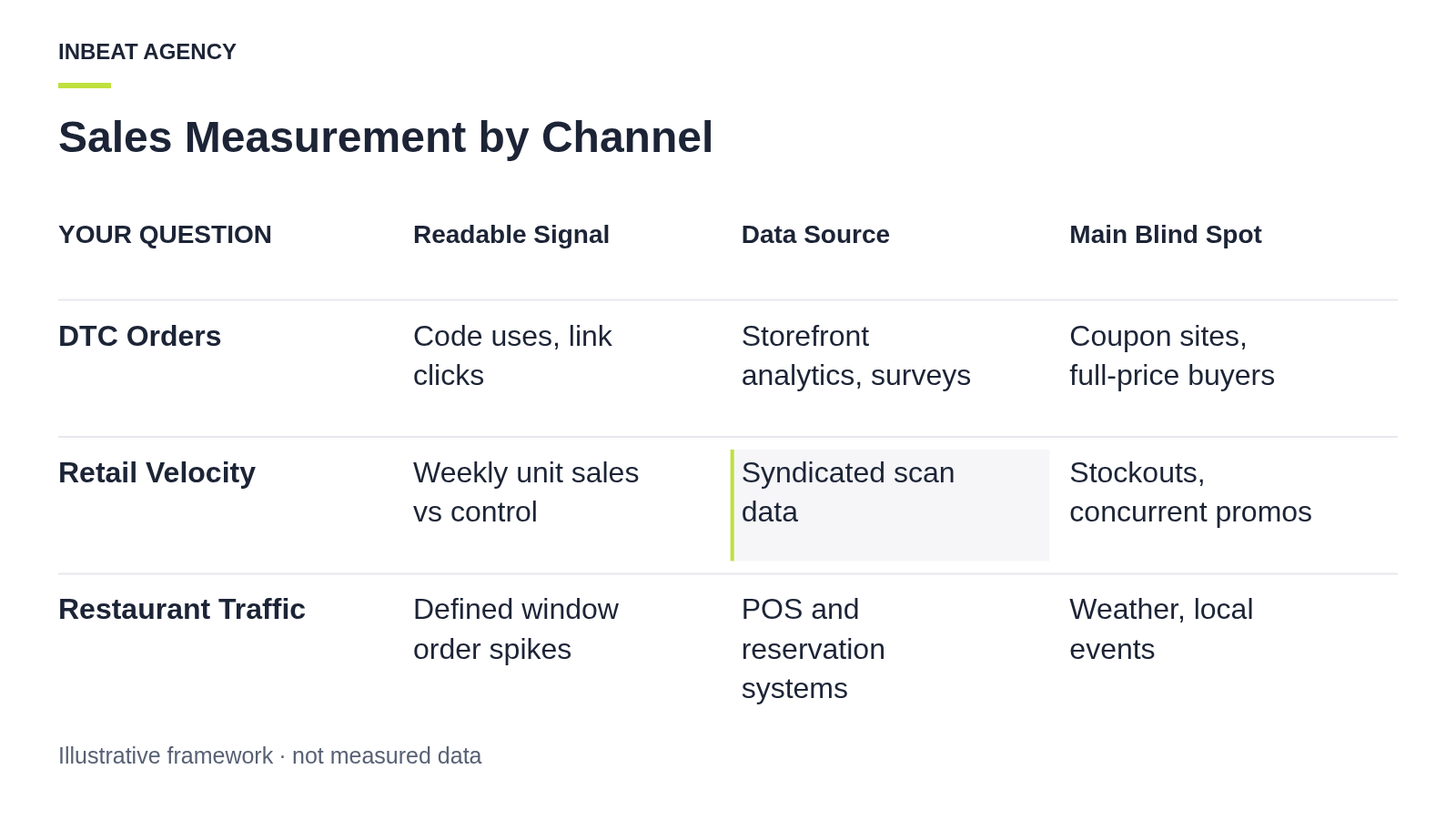
| Sales channel | Signal to read | Data source | Lag | Blind spot |
| DTC | Code redemptions, tracked link orders, survey responses | Storefront analytics, discount reports, post-purchase survey tool | Hours to a few weeks | Codes leak to coupon sites; many buyers who saw the content never enter a code |
| Retail | Weekly unit velocity in named stores versus matched controls | Retailer or distributor sell-through data, syndicated scan data, field checks | Weeks to a month or more | Stockouts, promotions, and distribution gains confound the lift |
| Restaurant | Redemptions, reservations, order spikes in a defined window | POS reports, reservation platform, delivery app dashboards | Days to two weeks | Weather, local events, and organic virality all move covers |
How to Measure DTC Sales from Food Influencers
Codes and tracked links are the cleanest signal you have, and they undercount. A viewer who watches a creator cook with your product, then searches your brand a week later and buys at full price, never appears in the code report.
Add a post-purchase "how did you hear about us" survey with a creator option listed. It is the cheapest cross-channel signal available for food DTC.
Its limits are known: respondents misremember, some pick the first option, and completion skews toward engaged customers. Read codes as a floor and surveys as a directional ceiling.
How to Measure Retail Velocity from Food Influencers
The retail method is a controlled comparison.
- Identify the stores within the creator audience's geography.
- Pick a matched set of control stores with similar baseline velocity and no concurrent promotion.
- Compare weekly unit sales before, during, and after the content.
Say a yogurt brand compares velocity in twenty stores near a creator cluster with twenty matched stores across the four weeks around posting. The lift is only trustworthy if the control stores were genuinely similar and nothing else changed, so pull promotion calendars and distribution reports first.
The FAQ describes weaker substitutes when you lack sell-through data.
How to Measure Restaurant Traffic from Food Influencers
Restaurants have the shortest lag and the noisiest baseline. Define the window in advance (the seven days after posting, for example), pull the same weekday range from prior weeks as a baseline, and read covers, redemptions, and delivery orders against it.
Checkmate's restaurant guide frames this as an ROI question, which works once the baseline accounts for local events and weather.
Whatever the channel, compute cost per trial per creator tier and platform, place it next to blended MER for the period, and hand both to whoever writes the next batch of briefs.
How to Turn Food Influencer Content into Paid Social Ads
Reserve part of the influencer budget for dark-posting creator videos, and scale only the ones with the lowest cost per trial. The organic post is the audition; paid distribution is the job.
How to Dark-Post Food Creator Videos
Secure rights first, on the terms covered in the platform section. Then run the process:
- Select a batch of creator clips that survived the organic stage with reasonable engagement and, more importantly, an honest demonstration.
- Dark-post them as unpublished paid ads against the same audience, with the same offer and landing destination, so the creative is the only variable.
- Read cost per purchase, code redemption, or add-to-cart over a short fixed window.
- Cut the losers once the sample is large enough to trust, and move their budget to the leaders.
Cap the test budget in advance. Decide before launch how much you will spend to find the clips that convert, and stop at that number.
How to Whitelist and Scale Winning Food Creators
Whitelisting means running the winning clip from the creator's own handle with your budget, so the ad carries their face and name into feeds that never followed them.
This is where the persona does the targeting. A meal-prep parent stops for another meal-prep parent in a way no interest category can replicate, which is why the winners in a dark-post test are usually a persona and angle pair.
In a hypothetical run, eight creator taste-test clips go out as dark posts for a week, and the two with the lowest cost per first order receive whitelisted spend while the other six stop. Our paid media team runs this loop for food and CPG brands.
How to Use Paid Results in the Next Creator Brief
The loop closes when the winning angle becomes a brief. If the clip that converted showed the product in a ten-minute weeknight dinner, the next seeding wave recruits more creators who cook weeknight dinners and asks them to show the same occasion in their own kitchens.
If an unplanned usage occasion emerges, such as a beverage used as a mixer, it earns its own persona and its own test. Over several waves, cost per trial should fall because each batch starts from what the last one proved.
Food Influencer Marketing Examples
These campaigns show the principles above in practice, from persona-matched creators and retail activation to whitelisting and dark posting at scale.
Poppi: Creator Gifting That Built a National Soda Brand
Poppi needed to make a prebiotic soda feel culturally relevant to Gen Z and millennial shoppers in a category dominated by legacy brands.
The brand invested early in TikTok and gifted creators unexpected items, such as matching sweat sets and bathrobes. That tied Poppi to people and moments that had nothing to do with soda (according to the Food Dive research cited above).
The results: Food Dive cites reported figures of 204 million impressions and 2.3 million engagements from Poppi's organic social and influencer work in 2023, and reports that the brand reached 5 million new households a month in 2024. When PepsiCo completed its $1.95 billion acquisition in May 2025, it pointed to Poppi's viral TikTok campaigns and influencer partnerships as drivers of its community (as per PepsiCo).
The takeaway: Creator programs can build a brand at national scale, and claims still need guardrails. Poppi dropped its "gut healthy" slogan after a 2024 false-advertising class action, which is exactly the risk the claims section above addresses.
Olipop: Hiring Superfans as Creators
Olipop wanted content that felt more authentic than product seeding and could produce a genuine viral moment.
Olipop hired existing fans as "senior soda consultants" to travel the country with the team and create content, putting its most loyal customers on the payroll.
The results: The role drew more than 2,000 applicants and generated over 650 million social impressions, plus around 200 press stories in outlets including Travel + Leisure and USA Today.
The takeaway: Your best creators may already be your customers. Recruiting people who genuinely use the product produces the persona match this playbook recommends, with credibility built in from day one.
Mogu Mogu: Key Opinion Leaders for In-Store Hype (inBeat)
Mogu Mogu needed to drive engagement and in-store demand for its drinks in US grocery stores.
inBeat ran influencer-led, high-reach campaigns with Key Opinion Leaders (KOLs), built around the #MoguMogu hashtag on TikTok.
The results:
- 445M+ views on the #MoguMogu TikTok hashtag
- The #3 best-selling drink on TikTok, behind Prime and Lucozade, up from #28
- 40M+ impressions in a single year
- 30M+ social engagements from KOL and influencer content
The takeaway: For retail brands, creator reach matters most when it points shoppers to a shelf. Pair high-reach creators with a clear retail call to action. Read the case study.
Bluehouse Salmon: Influencer-Led Localization with Whitelisting (inBeat)
Bluehouse Salmon, a land-raised salmon brand, needed to differentiate its product as sushi-grade and sustainable, and to drive sales at specific retailers.
inBeat ran an Instagram campaign that matched hundreds of influencers from family and food backgrounds to different audiences. Each post mentioned a specific retailer, and whitelisting amplified the best-performing content.
The results:
- 200+ new influencers activated each month
- 650K+ unique monthly impressions from the niche target audience
- 12%+ engagement rate
- 8% sales lift over three months
The takeaway: This is the retail playbook in action. Retailer-specific calls to action point viewers to a shelf, whitelisting scales the winning personas, and sales lift is the metric that matters. Read the case study.
Icelandic Provisions: Building Grocery-Store Awareness with Creators (inBeat)
Icelandic Provisions wanted to build excitement for its dairy products and give shoppers a reason to recognize them in local grocery stores.
inBeat worked with influencers from diverse backgrounds to create branded Instagram content for audiences likely to shop the category.
The results:
- 50+ influencers activated
- 3M+ unique impressions among the niche target audience
- 9%+ top click-through rate
The takeaway: For a grocery product, creator content can build recognition before shoppers reach the shelf. Targeted reach and strong response to the content show whether that message is connecting, though they do not establish in-store sales lift.
Soylent: Interest-Matched Niche Seeding (inBeat)
Soylent wanted to launch new product lines to audiences defined by specific interests while keeping its content calendar full.
inBeat matched product lines to creators by niche, including outdoors, hiking, and gaming, so each creator showed the product in a usage occasion their audience already cared about.
The results:
- 10 content creators
- 5M+ impressions
- 50+ reusable content assets
The takeaway: A small, well-matched creator batch can produce a large library of reusable assets. That's the raw material for the dark-post testing loop. Read the case study.
How inBeat Runs Food Influencer Programs as One Growth Creative System
The playbook in sequence:
- Set a trial-based goal with a written conversion path.
- Choose and price creator tiers based on what you need to learn.
- Run perishable seeding with an operations checklist.
- Brief creators to give honest sensory demonstrations using an approved-claims list.
- Choose formats based on the purchase path.
- Measure the sales signal your channel can produce against a control.
- Put paid budget behind the clips that earned it.
This is how inBeat is built to work. We source creators at volume and match them by persona to the usage occasion a food product needs to show, produce the resulting demonstrations as performance creative, and buy the media that scales them.
The three teams sit side by side, so cost-per-trial data from the media desk reaches the next creator brief without a handoff.
If you run a food brand and want to start, scope a pilot: a batch of matched micro creators, one measurable sales signal with a control comparison, and a small dark-post budget to find the two or three clips worth scaling. Keep the first wave small enough that operations can ship every box on time, and let the results size the second wave.
Ready to build a food influencer program measured on trial and sales? Talk to inBeat about your next food or beverage launch.
FAQ
How should a creator contract handle product that arrives spoiled or thawed before the filming deadline?
Write a replacement clause that pauses the content deadline from the moment the creator reports damage with a photo, and restarts it when the replacement is confirmed received. Add a modest kill fee or reschedule payment for filming time already set aside, and state who bears the replacement shipping cost (normally the brand).
Can you measure retail shelf velocity from an influencer campaign without retailer sell-through data?
Only roughly. Substitutes include distributor reorder frequency for the stores in question, in-store field checks of facings and stock before and after the content window, retailer-specific promo codes where the retailer's e-commerce supports them, and the post-purchase survey if you also sell DTC. Report the direction with caveats and push for scan data access as a condition of the next retail program.
How much do food influencers get paid?
It depends on tier, platform, and usage rights. Influencer Marketing Hub reports that mid-tier Instagram creators can earn up to $5,000 per post and top TikTok creators more than $10,000, while many nano creators work for product plus a small fee. For food brands, add product, spoilage, and shipping to the fee before comparing creators.
Who reviews creator scripts for health claims on a functional food product, and at what stage?
Counsel or a regulatory-trained reviewer approves the claims list before briefing, and a brand-side reviewer checks scripts or first cuts against that list before publication. Creators should never be the last line of review on a nutrition statement.
Should a food brand start with micro creators or one macro creator for a regional grocery launch?
Micro creators, clustered around the retailer's footprint. A regional launch needs to learn which persona and occasion sells in that market, and the content needs to reach people who can walk into those stores. A single macro creator spends the whole budget on one message before you know it is the right one, often to an audience mostly outside the retailer's geography.
How long after a creator posts should you expect to see a sales signal for a grocery product versus a DTC order?
DTC signals arrive within hours to a few weeks, with codes clustering early and survey responses spreading out. Grocery velocity typically shows over several weeks, because the shopper has to make a store trip and retailer data arrives on its own reporting cycle. Set the measurement window before launch so finance does not read a retail campaign as a failure at day seven.
What usage rights should be in every food creator contract if you plan to run the video as a paid ad?
At minimum: the right to repost on brand channels, the right to run the video as a paid ad on named platforms for a stated duration, permission to run it from the creator's handle where the platform allows, cutdown and caption editing rights, and clarity on whether rights extend to retailer co-marketing. Price these lines separately from the organic post so both sides can see what the paid use is worth.
Cover photo: Photo: Mikhail Nilov / Pexels. Art direction: inBeat Agency.