

A creator holds up a product your category sells, looks at the camera and says don't buy it. For most brand teams that clip triggers a crisis call, a takedown request or a quiet decision to never work with that person.
The better read is that you've just been handed research you didn't pay for: which claim failed, which price felt wrong, which promise the product didn't keep.
Deinfluencing changes how shoppers weigh creator recommendations. This guide explains the trend, identifies ad-performance signals worth investigating, and gives you five practical changes to test in creator briefs.
P.S. For brands building creator programs, see inBeat's influencer marketing agency.
What Is Deinfluencing and Where the Trend Started
The format borrows the familiar product-review video but reverses the recommendation. The key is understanding what the creator is actually criticizing.
A Working Definition of Deinfluencing
Deinfluencing is a creator discouraging a purchase of an overhyped, overpriced or unnecessary product, typically in a teardown built on demonstration and argument.
Trade coverage such as PRNEWS's explainer frames it as the inverse of the standard sponsored recommendation: same feed, same creator energy, opposite call to action.
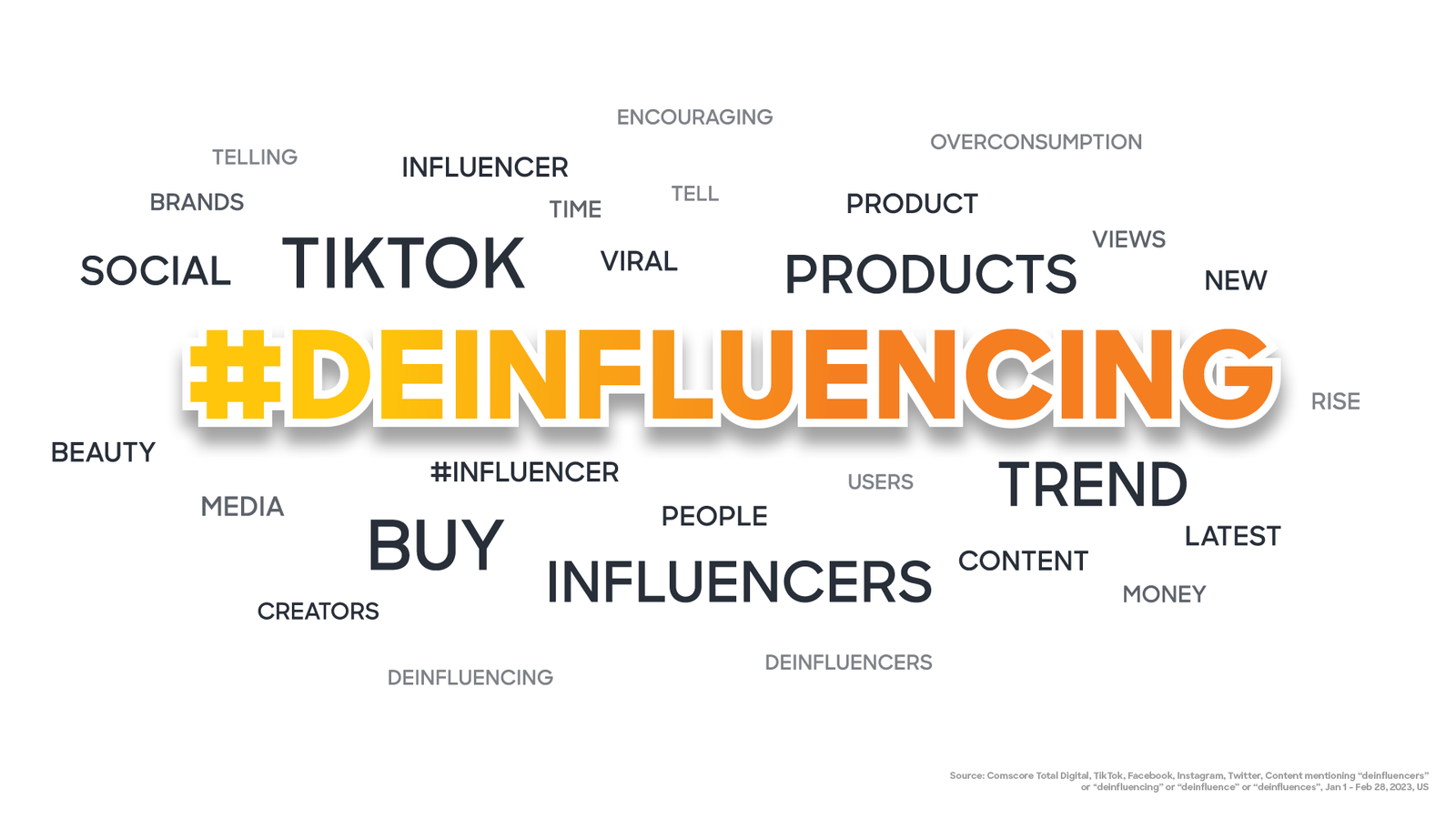
In practice the "don't buy this" is often followed by "buy this instead." Comscore's write-up of the hashtag describes deinfluencers suggesting cheaper or alternative products, which is why the trend never actually stopped selling.
One limitation belongs in the definition itself. The evidence-led style is a style, and plenty of deinfluencing videos are a single person's taste presented with the confidence of a lab result, so verify each clip as a claim before anyone on your team treats it as a verdict.
Mascaragate and the Early 2023 TikTok Origin
Deinfluencing took off on TikTok in early 2023, around the same time as a backlash over a sponsored L'Oréal mascara review in which viewers accused the creator of wearing false lashes, a dispute nicknamed MascaraGate. The format spread from there to any product the algorithm had overexposed.
Glossy's early coverage captured the retail-floor view that seeded it: a creator with store experience described watching shoppers buy products in a frenzy because one video called them good, then watching those products come back as returns.
That early-2023 observation is dated, and the mascara episode itself is now a historical marker rather than a live controversy.
Worldwide Google search interest in the term peaked between mid-February and early March 2023 and had fallen back by April. The search trend alone cannot show whether audiences became more skeptical of sponsored recommendations.
Product Critique Versus Cancel Culture
Deinfluencing targets product efficacy, price and consumption habits. Cancel culture targets a brand's or a person's moral failings, and the two call for different responses even when they arrive in the same format.
A video saying a serum did nothing in eight weeks is a product critique you can answer with evidence, reformulation or a price change.
A video saying the founder behaves badly is a reputational matter for PR and leadership, and no amount of product proof addresses it.
A Frontiers in Communication study based on focus groups with 59 participants in Pakistan found that de-influencers are seen as advocating mindful consumption and ethical practices, a counter-narrative to the haul culture many sponsored posts promote, which sits closer to consumer advocacy than to outrage. That distinction is useful internally.
Write a one-line definition your team can apply when a critical video surfaces: "Product critique questions what the product does, costs or is needed for; reputational attack questions who we are."
Triage every creator video against that line before anyone drafts a response, so product feedback goes to product and only genuine reputational issues go to comms.
The Consumer Psychology Behind Anti-Consumption Content
Deinfluencing content appeals to audiences who question paid endorsements, impulse purchases, or the value of heavily promoted products. Three mechanisms help explain that response.
Audiences Assume PR and Punish Silence
Some viewers assume a recommendation involves gifting or sponsorship, and a lack of disclosure can undermine credibility.
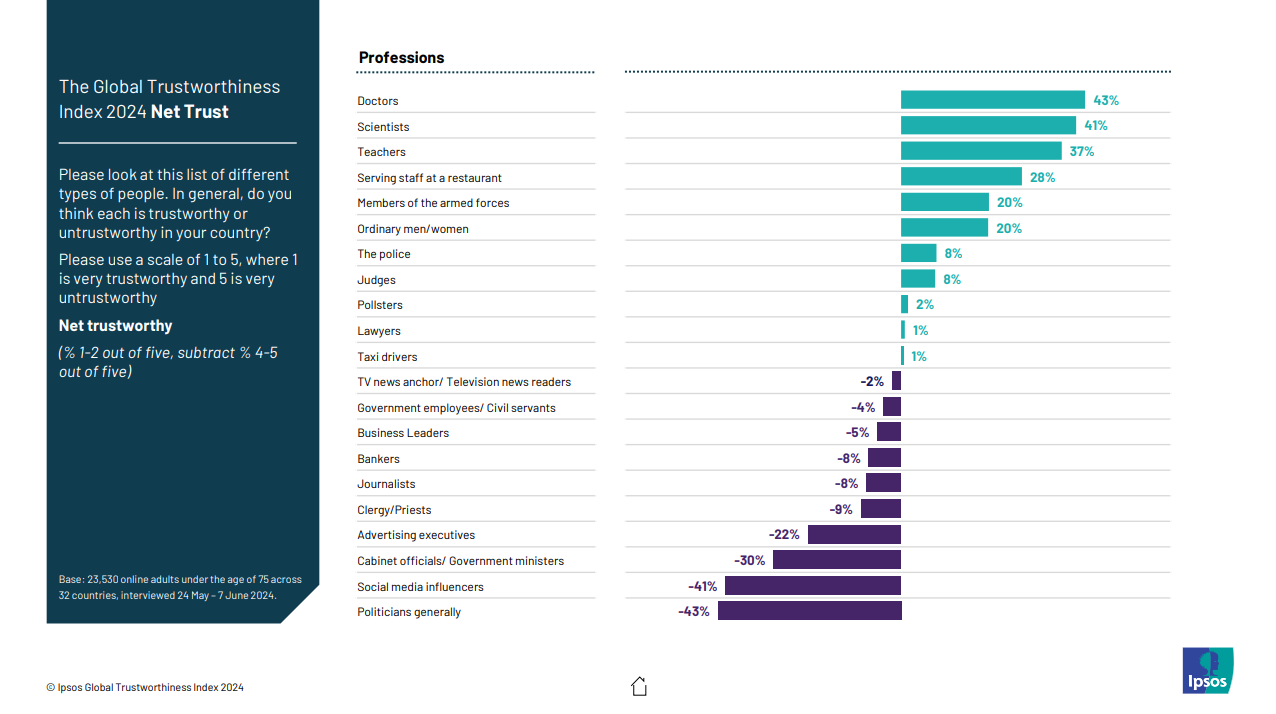
In the Journal of Marketing & Social Research's interview study on skepticism and de-influencing, one creator put it plainly: her audience isn't naive anymore, they assume PR, and failing to acknowledge it means she loses credibility instantly.
That finding comes from qualitative interviews with a specific creator cohort, so it describes how working creators experience their audiences rather than measuring the population.
It still matches what you see in comments on undisclosed placements, where the first question is usually whether the creator was paid.
For brands, disclosure is both a compliance requirement and part of how audiences assess a recommendation. Naming a gifted or paid relationship clearly gives viewers the context they need to judge the message.
The Purchase Pause
Deinfluencing inserts a reflective beat into a loop that paid social creative is built to skip.
The Harvard Crimson's editorial read of the trend describes it as a pause that makes users ask whether they actually want the item or are simply being persuaded by marketing, which is an interpretation of young consumers' behavior rather than measured data, but it names the mechanism well.
For a performance marketer the pause is the whole problem and the whole opportunity. Impulse creative wins when consideration is short; once an audience has learned to pause, the creative that survives scrutiny outlasts the creative that only won the first three seconds.
That also complicates the idea that deinfluencing is purely consumer advocacy. Creators often recommend an alternative, so the commercial motive remains. Whether a pause leads to more deliberate purchases or better conversion outcomes needs testing.
Overconsumption Fatigue and Cost Pressure
Mindful-consumption framing gives audiences a story that justifies buying less, and that story competes directly with the haul. It is the frame the Frontiers in Communication focus groups describe, with de-influencers positioned as a counter-narrative to conventional influencer content.
The academic framing emphasizes ethics, and it underplays the fact that many deinfluencers redirect spend rather than suppress it. Both things are true: the audience gets permission to buy less, and the creator still gets paid when they point to a cheaper option.
For creative, price and necessity have become arguments you have to win. A product that can't explain why it's worth more than the alternative will get that explanation supplied by someone else.
Audit your current creator deliverables this quarter for gifting that isn't disclosed in the first line or on screen, and add explicit disclosure language to every brief, paid or gifted. Treat it as part of the hook, because for this audience it is.
the deinfluencing trend is missing the point. Source: Swell Entertainment on YouTube
How Deinfluencing Affects Brand Trust and Sales Metrics
Deinfluencing may change how audiences respond to creator ads, but shifts in CPA, CAC or ROAS need investigation rather than automatic attribution to the trend.
Published evidence on sales effects is thin, so the sections below separate quoted commentary from patterns you can test in your own account.
Why One-Off Activations Lose Effectiveness
One-time creator activations read as transactions, and audiences discount them. A platform executive quoted in Marketing Brew's February 2023 definition piece argued the old one-off activation model was no longer as successful because consumers see through it and don't treat it as a real endorsement.
That's an early read from one executive, dated to the month the trend peaked, and it should be treated as a snapshot.
It matters because later commentary echoes it and because the mechanism is visible in your own account: a creator who appears once for your brand carries no history with the audience, so their yes has nothing behind it.
The Credibility Paradox That Lifts the Next Recommendation
A creator who has publicly rejected products may carry more weight when they later make a recommendation. A June 2026 Forbes Agency Council piece frames it as a paradox: discouraging one purchase strengthens the impact of the creator's next recommendation.
This is agency commentary rather than a study, and it assumes the next recommendation fits the audience.
You can examine this hypothesis by comparing ads from creators with an established record of candid reviews against otherwise similar creators, using comparable audiences and spend. Treat any difference as a sourcing signal rather than proof of causation.
How to Read the Shift in CAC and ROAS
Review the last two quarters of creator ads by brief type, creator, audience, placement and date. Compare CPA and hold rate to find patterns worth testing, while checking for other explanations such as seasonality or creative fatigue. The table below lists possible diagnostic signals.
| Signal in your account | What it looks like | Metric to watch | First response |
|---|---|---|---|
| Polished endorsement creative decaying faster | Winning ads from last year now need refreshing in weeks, with CPA climbing on each refresh | CPA by creative type, trended | Test two candid cuts before deciding whether to reduce scripted production |
| Scripted openers losing the hook | Three-second view rate falls on creator ads that open with a product claim | Hook rate by opener type | Test openers that start with a doubt, a comparison or a disclosure |
| Comments questioning claims | Replies ask whether the creator was paid or whether the claim is real | Comment sentiment and claim mentions on top-spend ads | Answer in the comments with proof and move the proof into the ad |
| Conversion gap between repeat and one-off creators | Creators you've worked with before convert better than first appearances at similar reach | Conversion rate by creator tenure | Compare repeat and first-time creators under similar conditions before shifting budget |
| ROAS holding on retargeting but softening on prospecting | Warm audiences still buy, cold audiences stall at the pause | Prospecting ROAS versus retargeting ROAS | Test critique-led or comparison creative in a matched prospecting experiment |
These account patterns are hypotheses, not published benchmarks or proven effects of deinfluencing. Seasonality, offer changes, audience mix, placement shifts and creative fatigue can produce similar results; controlled testing is needed to assess what changed.
How to Adapt Influencer Marketing and UGC Briefs for Deinfluencing
Rewrite one live brief around questions a creator answers in their own words. Back objective claims with suitable evidence, and show the product in use when a demonstration is relevant. Then compare a candid cut with the existing scripted approach in a controlled creative test.
The decision is whether to change creator selection, claims and briefs. Judge each creative variant with CPA, conversion rate and hold rate; use MER only to assess the broader marketing program, not an individual ad.
Brands without in-house capacity can source candid, test-ready variations through a UGC agency and run the critique-led variant against the scripted one before committing spend.
The table below lays out the shift element by element. Use it as a template; most briefs only need two or three of these changes to produce a measurable difference.
| Brief element | Scripted endorsement approach | Deinfluencing-era approach | How to judge it |
|---|---|---|---|
| Core message | Mandatory talking points read in order | Question list the creator answers in their own words | Hold rate past the first claim |
| Negatives | Prohibited | Asked for directly: who shouldn't buy this and why | Comment ratio of claim questions to purchase intent |
| Claims | Marketing copy repeated verbatim | Objective claims supported by evidence; demo where practical | Share of claims shown versus stated |
| Disclosure | Hashtag at the end of the caption | Spoken in the first line and on screen | Credibility comments and complaint rate |
| Creator selection | Reach and category fit | Record of declining products, then fit, then reach | Conversion rate by creator at matched spend |
| Approval | Brand edits for tone and positivity | Brand checks accuracy and legal only | Revision rounds and time to live |
| Testing | One hero cut, boosted | Same creator films candid and scripted cuts for matched tests | CPA, conversion rate and hold rate by variant |
| Feedback loop | Ends at posting | Creator objections routed to product within a week | Count of product changes traced to creator feedback |
The disclosure and selection rows follow the creator testimony in the Journal of Marketing & Social Research study cited earlier and the credibility paradox discussed above; the judging metrics are suggested starting points, not published industry figures.
1. Open the Brief to Honest Critique
Replace mandatory talking points with a question list and ask the creator to answer every question in their own words. Good questions cover:
- What they expected before trying it
- What surprised them
- What they'd change
- Who they would tell not to buy it
That last question is the one most brands cut, and it's the one that does the work.
A recommendation that includes its own exclusions reads as a judgment, and that is the mechanism behind the credibility paradox: the audience watches the creator say no to someone, so the yes to them lands.
Keep a short list of things the creator must not say, limited to legal and safety issues. Everything else is theirs.
2. Hold Every Claim to a Verifiable Standard
Cut any claim from the brief that the creator cannot demonstrate on camera or point to evidence for.
A claim such as "hydrates for 24 hours" needs appropriate substantiation; a timer and before-and-after photos cannot prove skin hydration over that period. A line like "feels lighter than my usual one" is a personal observation and should be presented as such.
Run the brief past the person who would make the teardown video. If a plausible critic could dismantle the claim in sixty seconds with the product in hand, it doesn't belong in the ad, and it probably needs attention from the product team too.
Pro tip: ask creators to show the product in use where a visual demonstration genuinely helps. Keep objective performance claims supported by appropriate evidence rather than treating footage as proof on its own.
3. Select Creators by Their Record of Saying No
Prioritize creators who have visibly declined or criticized products in their niche, then check audience fit, then reach.
Review their recent posts for a mix of praise, criticism and qualified recommendations. An absence of negative reviews is a prompt to ask about their editorial independence, not evidence that they are scripted.
Disclose gifting every time, and make it part of the selection conversation. Creators who already disclose unprompted are telling you how they treat their audience, and that habit is what you're buying alongside the content.
At scale, build a pool of category-fit micro creators that includes people with a visible record of balanced or critical reviews. That gives you different creative approaches to test without assuming one type will win.
4. Test Candid and Scripted Variants in Dark Posts Before Scaling
Have the same creator produce both a candid and a scripted version, then run them under comparable dark-post conditions. Keep these identical across both variants:
- Audience
- Placements
- Optimization goal
- Timing
- Spend
Compare CPA, conversion rate and hold rate before scaling.
The following hypothetical uses invented numbers to illustrate the test. One micro creator films two ads for the same product: a talking-point endorsement and a candid review guided by questions, including who the product may not suit.
Allocate $2,000 to each variant. Use an A/B split or platform experiment where available.
If the scripted cut returns a $48 CPA and the candid cut a $31 CPA with a higher hold rate, the candid cut becomes a candidate for further validation and scaling, provided the test produced enough conversions to interpret. If the result reverses, keep the scripted approach for now and test again with other products or creators.
Paid TikTok advertising suits this kind of test, because the creative is the targeting: the persona and the candor inside the ad decide who stops, long before the audience settings do.
5. Route Negative Feedback Back Into Product Development
Send every creator objection about packaging, price or formulation to the product team within a week, with the footage attached.
The retail workers who seeded the deinfluencing format in early 2023 were describing returns the brand never heard about in time; a creator telling you the pump clogs is the same signal arriving earlier.
Log objections by theme and count how often they recur across independent creators. Repeated reports of the same issue warrant product-team investigation before another brief rewrite.
What Brands Risk With Deinfluencing: Control, Industries and Durability
Opening a brief means a creator can say something you don't like in public, and you should plan for that rather than pretend it won't happen.
The counterweight is that rigid scripts carry their own credibility costs, while creator-led criticism can emerge in categories well beyond beauty.
What You Risk When Creators Can Say No
The real risk of an open brief is a public critique of your product by someone you briefed. A creator may test it, decide it isn't for them, and say so, and you may have paid for the privilege.
Weigh that against the alternative.
A tightly controlled script protects a brand's preferred wording in a single video, but repeated scripted positivity can make later endorsements feel transactional if viewers notice the pattern.
Add a creator-critique escalation path to your program so a negative review reaches product and PR within 24 hours instead of being quietly suppressed. Define the process before the first negative video arrives:
- Who gets the footage
- Who decides whether to respond publicly
- What gets routed to product
That way the first negative video follows a process instead of triggering a crisis call.
Which Industries the Backlash Reaches
Deinfluencing began in beauty, and the mindful-consumption frame applies to anything sold through a creator's recommendation. Tech accessories, supplements, kitchen gadgets, apps with subscriptions, and CPG launches all live in feeds where someone can hold the product up and ask whether anyone needs it.
The category test is simple. If your acquisition depends on a creator saying this is worth it, your category is exposed, and the exposure scales with how often your product has been overexposed by the algorithm.
Products that went viral are the first to be deinfluenced, because the teardown needs a familiar target.
Is Deinfluencing a Fad or a Permanent Shift?
The term may fade, but search-interest data alone cannot establish whether the underlying behavior will last.
Commentary from 2023 through 2026 keeps returning to the topic, though it does not provide longitudinal evidence of changing purchase behavior.
The practical response is to make disclosure clear, substantiate product claims and keep track of recurring objections, regardless of the hashtag's popularity.
Planning a candid-versus-scripted test? Book a strategy call.
Frequently Asked Questions About Deinfluencing
Should you pay a creator who declines to recommend your product after testing?
Yes, pay for the time if the brief asked for an honest evaluation, and say so in the contract up front.
You bought the test, not the verdict, and a creator who knows they'll be paid either way gives you feedback you can use and a relationship you can return to when the product is right for their audience.
Can a brand publish honest critique of the category it sells without reading as manipulation?
It can, if the critique includes who shouldn't buy from you.
Category critique that only ever lands on competitors reads as a pitch; critique that names the cases where your own product is the wrong choice reads as judgment, and the audience's reaction in comments will tell you quickly which one you've made.
How much message control do legal teams keep in an open brief?
Legal should control the accuracy and compliance of objective claims, required disclosures and regulated statements, while creators should retain room for their own opinions and voice.
Agree on a short list of prohibited or evidence-dependent claims before filming, then check the final cut for accuracy and required disclosures. Editorial feedback can improve clarity without scripting the creator's personal judgment.