.svg)
.svg)
.svg)
.svg)


.svg)







If you’re planning campaigns across multiple countries, you already know how quickly things break when strategy doesn’t match local behavior. And once you start comparing agencies, most of them look similar on the surface, even when their strengths are very different.
So, we built this guide for teams that need an agency that can actually operate across regions instead of simply scaling spend from one market to another. We reviewed each one based on its international client work, how it adapts campaigns across platforms and cultures, and the types of brands it supports.
As you go through the list, you’ll see where each agency fits and what kind of work it tends to handle best. This makes it easier to narrow your options and move forward with a partner that matches your situation.
How We Actually Evaluated These Global Ad Agencies for 2026
When you’re choosing between global ad agencies, you’re comparing execution across markets. You’re looking at who can maintain performance, control, and consistency across regions.
And that’s exactly how we approached this guide.
So, instead of focusing only on creative strength, we built a clear evaluation framework that reflects how international ad campaigns actually perform in practice. Each agency in this guide was reviewed against the same set of criteria:
- Cross-border execution: Can it run campaigns across multiple regions without breaking delivery or consistency?
- Localization and market fit: Does it adapt messaging to local consumer behavior and platform norms?
- Commercial performance: Does it deliver measurable outcomes across performance marketing and media buying?
- Compliance and operational maturity: Are privacy, tracking, and regional regulations built into its workflows?
- Global client proof: Has it managed real international ad spend for brands operating at scale?
- Creative depth: Can it produce ideas that translate across markets rather than just look strong in one region?
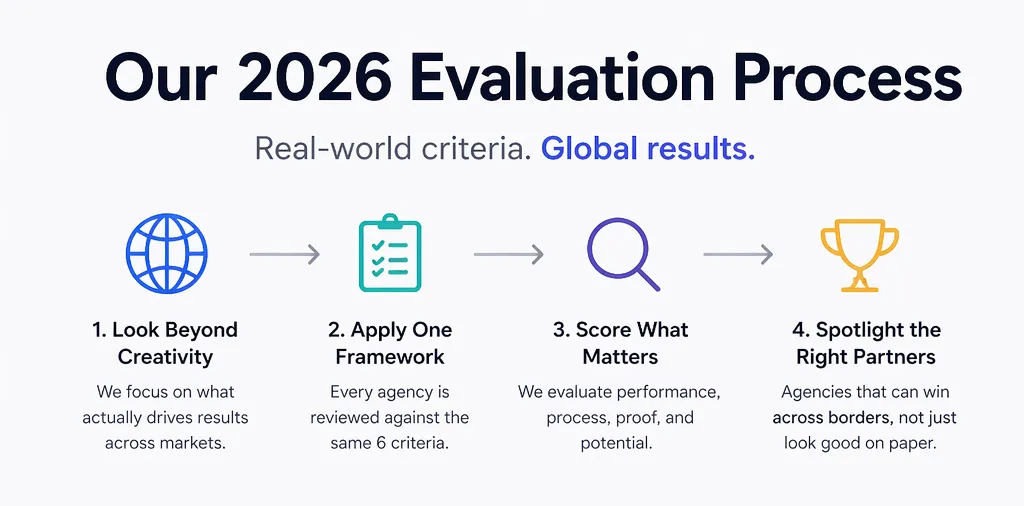
As a result, this list reflects how agencies truly perform in global environments. And it gives you a clearer way to evaluate which partner fits your growth plans.
A Quick Way to Compare These Agencies
Choosing between global ad agencies gets difficult when everything starts to sound the same. And without a clear way to compare them, you end up jumping between pages and trying to piece things together yourself.
So, we put together a side-by-side view to make this easier:
| Agency | Best for | HQ / footprint | Parent or independent | Signature strength | Watchout |
|---|---|---|---|---|---|
| TRAFFIK | Complex cross-market messaging | Irvine, California, United States | Independent | Research-led campaigns for mixed audiences | Less public performance data |
| Iris Worldwide | Culture-led brand campaigns | London, United Kingdom | Majority-owned / network partner of Cheil Worldwide | Campaigns built around fandom, culture, and real moments | Less ideal for pure performance work |
| inBeat Agency | Localized paid social across markets | Montreal, Canada | Independent | Creator-led UGC at scale | Less suited to classic big-brand platform work |
| McCann Worldgroup | Long-term global brand platforms | New York City, United States | Part of Interpublic Group (IPG) | Enduring brand ideas with global reach | Less built for fast creator-style output |
| Gravity Global | Technical and high-consideration sectors | London, United Kingdom | Independent | Brand-to-demand for complex B2B categories | Less social-first in feel |
| Assembly | Commerce and store-visit performance | New York City, United States | Wholly owned subsidiary of Stagwell Inc. | Omnichannel media tied to retail outcomes | Not the most brand-story-first option |
| BBDO Chicago | Big brand platforms with emotional pull | New York City, United States | Part of Interpublic Group of Companies (IPG) | Flexible campaign ideas that can stretch | Less focused on short-term efficiency |
| Allied Global Marketing | Entertainment, events, and activations | Los Angeles, California, United States | Independent | Live experiences and fandom momentum | Less suited to technical B2B sales cycles |
| Leo Burnett | Perception-shift campaigns | Chicago, Illinois, United States | Part of Publicis Groupe | Human, emotion-led storytelling | Needs support if direct response is the goal |
| MMGY Global | Travel, tourism, and hospitality | Kansas City, Missouri, United States | Independent | Deep travel-sector specialization | Narrower fit outside travel |
| 180 Global | Sports, fandom, and high-energy launches | Amsterdam, Netherlands | Omnicom-owned international creative agency | Identity-driven campaigns with fan energy | Less ideal for conservative brand voices |
| MediaGroup Worldwide | International lead generation | Baar, Zug, Switzerland | Independent | Paid media and SEO across markets | Not the strongest fit for big fame-building work |
| R/GA | Digital-first brand systems | New York City, United States | Independent | Brand, product, and experience working together | Less of a traditional media-heavy shop |
| TEAM LEWIS | PR-led visibility and thought leadership | London, United Kingdom | Independent | Earned media and steady brand momentum | Less focused on visually led campaign production |
| FINN Partners | Long-term communications support | New York City, United States | Independent | Reputation, narrative, and sustained brand support | Less performance-marketing focused |
| Just Global | B2B demand generation and ABM | Emeryville / San Francisco Bay Area, California, United States | Independent | Account-focused campaigns for complex buying cycles | Less relevant for broad consumer reach |
| MOI Global | B2B tech brands that need more personality | London, United Kingdom | Independent | Human-centered B2B creative and experiences | Less suited to mass-market consumer work |
| Mindshare | Media planning and buying at scale | London, United Kingdom | WPP Media network | Part of GroupM | May need a separate creative lead |
| Wavemaker Global | Interactive consumer media campaigns | London, United Kingdom | Part of GroupM and ultimately WPP | Participation-driven media and content | Less natural for slower, formal buying journeys |
| RAPP.com | CRM, lifecycle, and direct response | New York City, United States | Part of Omnicom Group | Precision marketing and one-to-one journeys | Less built for broad fame campaigns |
Should You Consider the Big Six Advertising Agencies?
If you’re looking at global campaigns, this list wouldn’t feel complete without the Big Six advertising agencies. These firms run some of the largest global ad campaigns, but they also come with higher costs and longer decision cycles.
So, if your budget and structure can support that level of scale, they’re worth considering. But if you need more flexibility or a closer working model, the rest of this guide covers agencies that can still deliver strong global results.
Here are the Big Six advertising agencies you’ll usually see in this space:
1. WPP
WPP is the giant in this group. If you need one of the biggest global ad agencies with reach across creative, media, commerce, PR, and production, this is the name most people expect to see.
What makes it stand out is scale. WPP can connect a lot of moving parts across many countries through networks like Ogilvy, VML, Mindshare, and EssenceMediacom. That makes it a serious option for brands running large, complex campaigns in many markets at once.
Best for: Companies that need massive global coordination across many countries, teams, and channels.
Clients: Ford, Google, Unilever, Coca-Cola, Volkswagen.
2. Omnicom Group
Omnicom Group feels different because it’s built around famous agency brands with their own creative identity, like BBDO, DDB, and TBWA. So, if you care a lot about big campaign ideas and strong brand building, that is where it tends to stand out.
It also brings serious media muscle through OMD, PHD, and Hearts & Science. But the real draw here is that you get access to creatively-driven people and global support without everything feeling like it came from one central machine.
Best for: Brands that want bold creative agency thinking backed by global media and planning support.
Clients: PepsiCo, Nissan, Volkswagen, McDonald’s, Apple.
3. Publicis Groupe
Publicis is the one to look at if you hate silos. Its whole “Power of One” model is built around pulling creative, media, data, and tech into one client setup instead of spreading the work across disconnected teams.
That makes it easier to manage personalization, commerce, and performance in one place. If you want fewer handoffs and more joined-up tools and solutions, Publicis has a very clear point of view.
Best for: Organizations that want one connected team instead of juggling separate agencies for media, creative, and data.
Clients: Apple, AT&T, McDonald’s, Pfizer, Unilever.
4. Interpublic Group (IPG)
IPG was acquired by Omnicom Group in November 2025. Its Open Architecture setup lets it pull together talent from McCann, FCB, MullenLowe, and IPG Mediabrands based on the problem you’re trying to solve.
That gives it a more custom feel than some of the other holding groups. So, if your business has different needs across markets, products, or customer segments, IPG is built to mix and match (they never force the same playbook every time).
Best for: Companies that want a tailored setup that can shift around their actual business needs.
Clients: American Express, Johnson & Johnson, Netflix, CVS, Accenture.
5. Dentsu Group
Dentsu earns its spot here because of its strength in Japan and the wider Asia-Pacific region. That matters a lot if those markets are a real part of your growth plan, because they usually need a different level of local depth and media understanding.
This agency mixes media, customer experience, sponsorships, and digital execution. It does this in a way that makes it feel less like a classic holding company and more like a digital powerhouse with impressive regional capabilities.
Best for: This one is for you if Japan or APAC is a major market and you need strong regional media and digital support.
Clients: Jaguar Land Rover, LVMH, Netflix, American Express, Burger King.
6. Havas Group
Havas stands out because it feels leaner and more closely connected than the biggest networks. Its “Havas Village” model puts creative, media, and specialist teams close together, which can make the work faster, tighter, and less layered.
It is also a name worth watching if you work in health, finance, or other regulated sectors where clear messaging and careful execution matter a lot. In other words, it’s one of the more approachable global ad agencies on this list.
Best for: Brands that want integrated support with a more streamlined feel, especially in regulated industries.
Clients: Fidelity Investments, Goodyear, Invesco, Dow Jones, Dr Pepper.
Our Pick of Global Advertising Agencies for 2026
Now that you’ve seen the Big Six, you can look at agencies that offer a different balance of cost, flexibility, and execution. These are the teams we selected based on how they perform across markets rather than just how they present their work.
1. TRAFFIK
- Best for: Brands that need clear messaging across several markets and buyer groups.
- Potential drawback: If you're looking for hard public performance numbers, you may find the proof points lighter than expected.
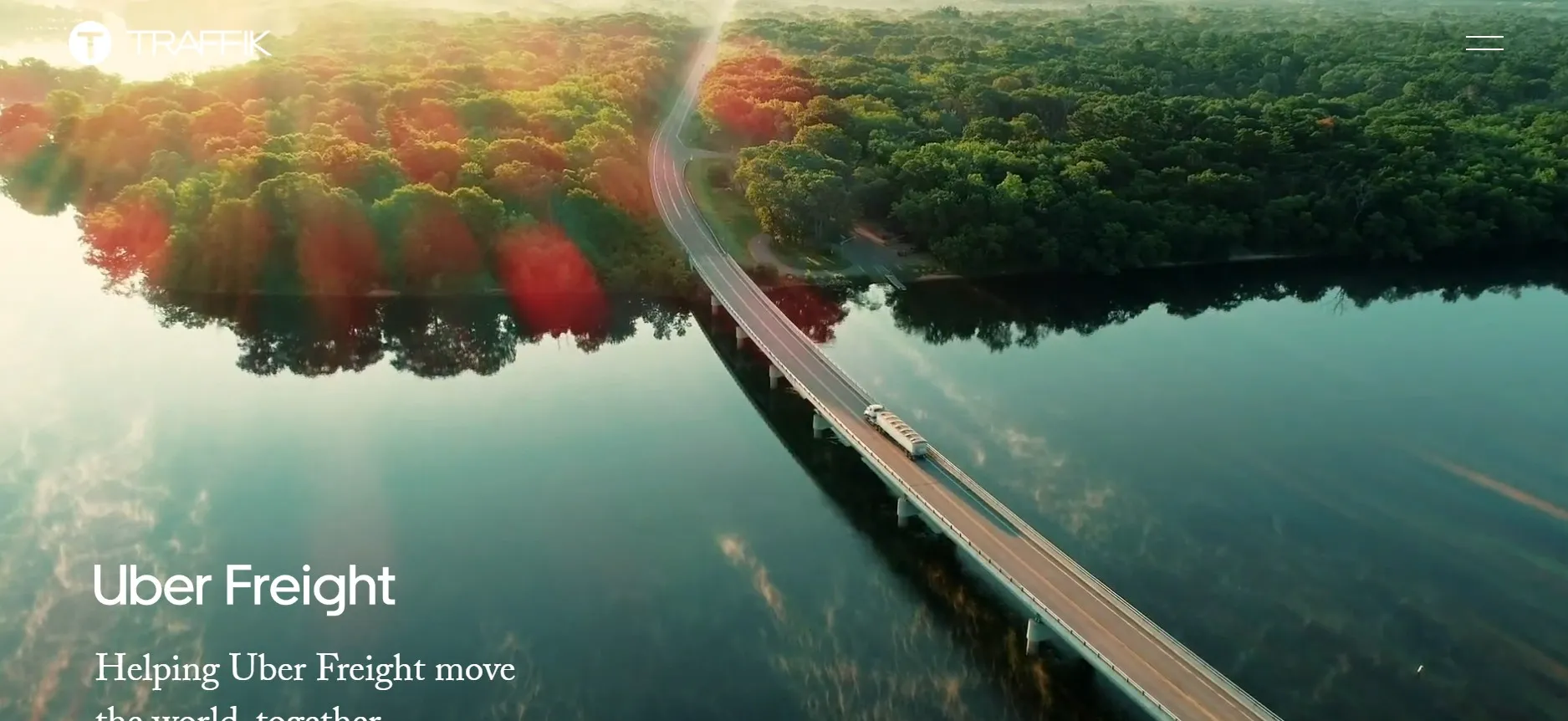
TRAFFIK builds clear campaigns for brands that need to speak to different audiences, industries, and regions. We’d frame it as a practical choice for companies that want strategy, research, creative, and communications working together. This is especially true when the audience mix is broad, and the message has to travel well.
Its HID Global work is a solid example. TRAFFIK helped launch a campaign for touchless access solutions across four continents during COVID-19. This was aimed at decision-makers in enterprise, finance, education, and IT. The campaign used audience research and simple, trust-focused messaging to make the product relevant across very different markets.
Core strengths:
- Cross-industry campaign planning
- Research-led message development
- Fit for B2B and complex offers
- Multi-channel support under one team
2. Iris Worldwide
- Best for: Organizations that want campaigns tied to culture, fandom, and audience behavior.
- Potential drawback: If you have very dry or operational goals, you may want a more direct performance-first setup.
Iris has a more culture-driven feel than some of the other names here. In many cases, it builds campaigns around moments people already care about, then ties the brand into that tension, humor, or emotion.
The Samsung “Hidden Allegiances” campaign shows that pretty well. Iris took a phone privacy feature and dropped it into a Six Nations setting. The agency did this by using a playful fan rivalry scene to make the product point easy to get right away.
It also ran in ITV’s live in-game format, which shows a nice mix of cultural timing, media thinking, and product storytelling rather than just making a clever ad and hoping it lands.
Core strengths:
- Culture-linked campaign ideas
- Brand storytelling
- Creative built around live moments
- Mix of strategy and performance thinking
3. inBeat Agency
- Best for: Brands that need localized paid social and creator content across many markets.
- Potential drawback: If your focus leans more toward large, traditional brand platforms, you may want to complement this approach with broader campaign development.
inBeat Agency’s real strength is creator-led advertising at scale, especially good when a brand needs content that feels local fast. The agency leverages creators, UGC, paid social, and platform-native formats. That makes it a much more natural fit for brands that care about speed, testing, and relevance in-feed.
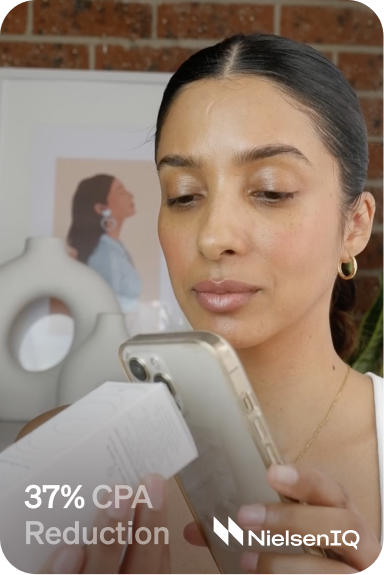
Their NielsenIQ campaign is the clearest proof here. inBeat supported user acquisition across 19 countries in Europe, North America, LATAM, and Southeast Asia. The agency did this using 250+ creators, and ads adapted into 15+ languages, with versions adjusted for 20+ languages and accents.
That kind of content scaling shows the agency can manage localization, volume, and paid distribution simultaneously.
Core strengths:
- Creator-led ad production
- Fast multilingual content scaling
- Strong paid social execution
- Platform-native UGC workflows
4. McCann Worldgroup
- Best for: Companies that want lasting brand platforms with broad international reach.
- Potential drawback: If you need quick-turn creator content, you may prefer a more specialized shop.
McCann brings a more classic global network feel. Its angle is long-term brand building through big ideas that can stretch across countries, products, and business lines without falling apart.
If some agencies feel built for content velocity or cultural moments, McCann feels built for brand platforms that need to last, grow, and keep making sense market after market.
Mastercard’s “Priceless” work is a strong example because McCann extended a long-running brand platform into a broader financial inclusion story tied to real products like the True Name card and Touch Card. Plus, Mastercard reported an 89% increase in brand value since 2018.
Core strengths:
- Long-running brand platform development
- Global network heritage
- Fit for purpose-led campaigns
- Brand work tied to commercial impact
5. Gravity Global
- Best for: Companies in technical or high-consideration sectors that need one partner to connect brand building with demand generation.
- Potential drawback: Consumer brands looking for a more playful social-first style may want a team with a heavier entertainment or creator focus.
Gravity Global comes across as a fit for brands with complicated stories to tell, especially in sectors like aerospace, finance, and industrial technology. Its angle is “brand-to-demand,” which means it tries to connect reputation work with pipeline and commercial traction.
So, if a company needs strategy, media, digital experience, content, and PR to pull in the same direction, this is the lane Gravity Global seems built for.
Their work for Airbus proves it, with a sustainability-focused brand campaign through events, digital, print, and large OOH placements. This includes a major launch on the Burj Khalifa during the Dubai Air Show, plus activations in Dubai, Singapore, and Berlin.
Core strengths:
- Brand-to-demand planning
- Fit for complex B2B categories
- Digital experience and UX work
- PR, media, and content under one roof
6. Assembly
- Best for: Brands that want media tied closely to sales activity, store traffic, or commerce outcomes.
- Potential drawback: Organizations looking for a heavily brand-led storytelling shop may prefer a team with a more classic creative reputation.
Assembly can turn media into measurable business movement, especially when online behavior needs to drive something offline, like store visits, retail action, or cross-channel conversion.
The big draw here is connected commerce. If a brand cares about what happens between impression, click, visit, and sale, Assembly reads like a team built to keep that whole chain tight.
For their Ralph Lauren campaign, Assembly supported an omnichannel setup across key European markets that led to 15% lift in incremental store visits. The agency did this by using bidding and PMAX to connect online demand with in-store traffic in luxury retail, where most purchases still happen offline.
Core strengths:
- Omnichannel commerce planning
- Retail and footfall performance
- Data-led media decision-making
- Consulting tied to execution
7. BBDO Chicago
- Best for: Companies that want a brand platform with enough stretch to keep working across products, audiences, and formats.
- Potential drawback: If you're focused on short-term efficiency alone, you may want a more narrowly performance-focused partner.
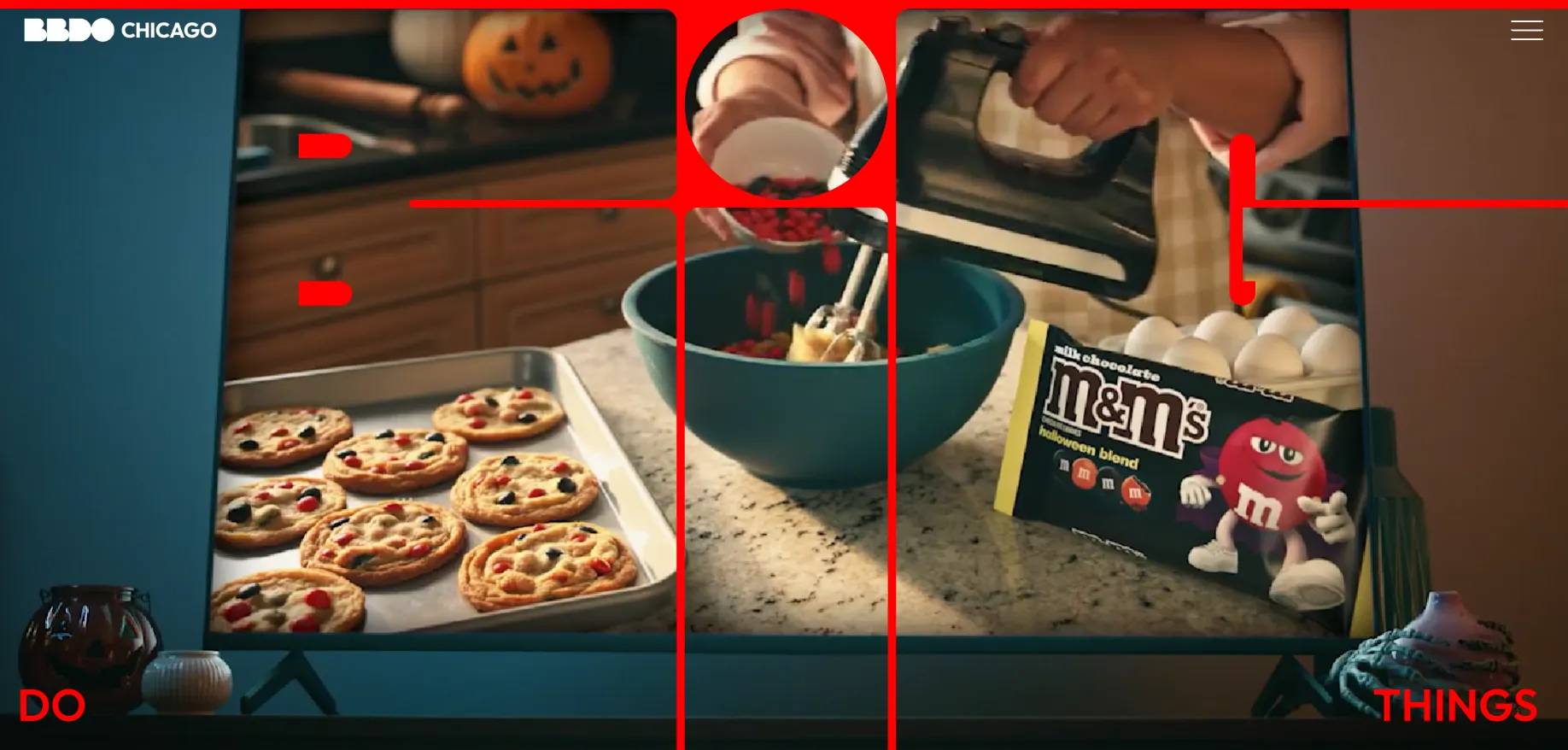
BBDO Chicago brings a brand-idea mindset, but with a more current, flexible edge. Its “Never Finished” philosophy fits agencies that like to keep a campaign idea moving.
So, if a company wants work that can start with a strong emotional hook and keep evolving with audience response, culture shifts, and new formats, BBDO has a pretty clear personality.
The OEFY campaign shows that style well. Working across brands like Orbit, Extra, Freedent, and Yida, BBDO helped build “Total Overthink of the Head” around a familiar song, humor, and a very online kind of anxiety that younger audiences instantly get. That proves the agency can take a human feeling and turn it into a flexible creative platform.
Core strengths:
- Big campaign platform thinking
- Emotion-led creative concepts
- Multi-brand portfolio work
- Ideas built to keep evolving
8. Allied Global Marketing
- Best for: Brands in entertainment, hospitality, gaming, or lifestyle categories that want audience-facing experiences with buzz built in.
- Potential drawback: If you have very technical offers or long B2B sales cycles, you may need a more specialized strategic setup.
Allied Global Marketing leans hard into entertainment, live experiences, fandom, and culture-heavy launch work. If a brand needs people to show up, talk, post, attend, stream, visit, or care in public, Allied feels like it knows how to build that kind of momentum.
The Heineken “Greener Bar” at Electric Picnic is a good example. Allied helped create a festival hub that mixed bar space, VIP zones, and branded experience areas. It did this while tying the whole thing to sustainability in a way people could actually see and interact with.
The activation delivered energy savings equal to the yearly use of 4,600 Irish homes.
Core strengths:
- Experiential and event marketing
- Entertainment and fandom campaigns
- Social and content amplification
- Fit for launches and activations
9. Leo Burnett
- Best for: Brands and public organizations that need to shift attitudes at scale through story-led campaigns.
- Potential drawback: Companies focused on direct-response efficiency may want a more performance-heavy setup alongside this kind of work.
Leo Burnett focuses on emotion, memory, and mass appeal. Its work tends to center on human stories that feel easy to relate to. This makes it a fit for brands that want to shift perception rather than push a quick offer. In this list, Leo Burnett stands out for people-first campaign thinking.
Its “Beautifully Imperfect” campaign in Singapore is a good example of that style. Working with the Ministry of Community Development, Youth and Sport, Leo Burnett used film, social media, cinema, outdoor, and Facebook to change how young people viewed marriage and relationships.
The campaign reached more than 3.2 million views and improved perceptions of marriage among 83% of viewers.
Core strengths:
- Emotion-led campaign ideas
- Public-facing storytelling
- Fit for perception-change work
- Multi-channel brand campaigns
10. MMGY Global
- Best for: Travel, tourism, and hospitality brands that need category knowledge, media reach, and launch support across markets.
- Potential drawback: If you work outside travel-related sectors, you may prefer an agency with a broader cross-industry track record.
MMGY Global is much more specialized than most agencies in this category. It activates in travel, tourism, and hospitality, and that focus shapes everything from strategy to media to content.
So, it stays close to the way destinations, cruise brands, and travel companies actually sell attention, trust, and bookings across markets.
For the Oceania Allura launch, MMGY Global supported the debut with eight press releases, a preview event, and a maiden voyage that brought 53 international media on board. That push secured more than 600 pieces of earned coverage in the U.S. and Canada alone and created an estimated $641 million in media value.
Core strengths:
- Travel and tourism specialization
- Earned media and PR launches
- Fit for destination and hospitality brands
- Research and planning tied to sector trends
11. 180 Global
- Best for: Brands that want energetic campaigns built around fandom, identity, and social conversation.
- Potential drawback: Organizations with more conservative messaging needs may prefer a more restrained campaign style.
180 Global’s work has a strong campaign pulse, with a focus on identity, momentum, and culture-heavy moments that get people talking.
In this lineup, 180 stands apart for turning brand campaigns into something people rally around. That makes it a smart fit for brands that want attention, conversation, and a bit more edge in the work.
Its adidas Euro/Copa kit launch is a strong proof point. 180 Global helped reconnect fans with 12 national federations through a campaign built around shared moments between players and supporters. They produced 400 creative assets across the program, leading to 117 million video views.
Core strengths:
- Fan-centered campaign ideas
- Sports and cultural instincts
- High-volume asset production
- Fit for brand relaunch moments
12. MediaGroup Worldwide
- Best for: B2B and lead-driven companies that want measurable digital growth across several countries.
- Potential drawback: If you're looking for large brand-building campaigns, you may want a more creatively led agency.
MediaGroup Worldwide leans more into international performance execution: help brands run paid media, search, and market-specific digital campaigns across countries with solid planning and close attention to lead quality.
Basically, the agency is more like a practical growth partner for companies that care about pipeline, targeting, and cost control across regions.
Their Cobham Satcom campaign is a clean example of that. MediaGroup Worldwide ran paid campaigns across 10 markets using Meta, LinkedIn, and Google Ads, with a focus on awareness and qualified lead generation. In two months, the campaign delivered a 150% increase in qualified leads.
Core strengths:
- International paid media management
- SEO and lead generation focus
- Multi-market targeting
- Clear performance tracking
13. R/GA
- Best for: Brands that need brand design, product experience, and communications to feel connected.
- Potential drawback: Companies looking for a very traditional media-heavy campaign partner may want a more classic network setup.
R/GA sits closer to the product-and-experience side of the market because it blends brand design, digital product thinking, and communication work.
So it makes more sense for companies that want their brand to feel smarter, more useful, and more current across every touchpoint.
Their Android redesign is a strong example of that. R/GA helped refresh the brand for a global audience that included 3.5 billion users. The work led to a 13% lift in Gen Z consideration and pushed Android to a record high in global brand trust.
Core strengths:
- Brand redesign for digital-first brands
- Product and experience thinking
- Design systems
- Data-backed creative decisions
14. TEAM LEWIS
- Best for: Organizations that need stronger media presence, category authority, and ongoing press momentum.
- Potential drawback: If you're chasing big visual campaign work, you may want a partner with a heavier creative-production focus.
TEAM LEWIS focuses on earned attention, reputation shaping, and smart campaign support that keeps a brand in the conversation.
So, if a company wants PR, digital marketing, and strategic communications working together to build visibility in a steady, news-friendly way, TEAM LEWIS makes a lot of sense.
Its BlackBerry work shows that clearly. TEAM LEWIS helped shift the brand from old device memories to a cybersecurity story through survey-led PR and timely media angles across several years. In FY23 alone, the campaign secured 4,200 global articles, including 440 top-tier placements, plus more than 200 articles built from original research.
Core strengths:
- Global PR and media relations
- Thought leadership programs
- Research-led story development
- B2B tech communications
15. FINN Partners
- Best for: Brands that want a steady global communications partner with room to handle reputation and growth at the same time.
- Potential drawback: Companies after fast-turn demand generation may prefer a more specialized performance agency.
FINN Partners stands out as a relationship-heavy communications group with a long-game mindset. It helps brands stay relevant, credible, and well-managed over many years, markets, and channels.
That makes it a solid pick for organizations that care about reputation, narrative control, and steady brand building across a large footprint.
Their Jack Daniel’s partnership is the clearest proof. FINN Partners has supported the brand for more than 30 years as the portfolio grew from three brands to over a dozen. Meanwhile, Old No. 7 climbed from 5 million to more than 20 million cases sold each year across 170+ countries.
Core strengths:
- Long-term brand stewardship
- Corporate and brand communications
- Global PR and social support
- Crisis and reputation work
16. Just Global
- Best for: B2B companies that need targeted demand generation across key accounts and regions.
- Potential drawback: Consumer brands may get more value from an agency built around broader cultural reach.
Just Global is the B2B operator in this group. It leans into account-based marketing, funnel planning, and message-to-conversion work for companies with complex buying cycles.
So, Just Global is built for targeted business audiences, tighter sales alignment, and campaigns that move the right accounts instead of chasing mass reach.
The Adobe Workfront campaign gives a clean picture of that model. Just Global ran a multi-channel ABM program aimed at Flutter Entertainment, using landing pages, social ads, video, and email to build stronger engagement with key decision-makers. In fact, it delivered engagement rates 70% above industry benchmarks.
Core strengths:
- B2B and ABM strategy
- Full-funnel campaign planning
- Sales and marketing alignment
- Fit for SaaS and enterprise
17. MOI Global
- Best for: B2B companies that want global campaigns built around buyer engagement, account focus, and lead quality.
- Potential drawback: You may get more value from an agency with a broader public-facing campaign style.
MOI Global feels built for B2B brands that are tired of flat, corporate marketing. Its angle is making complex tech and enterprise stories feel more human, more engaging, and a lot less stiff.
In this lineup, MOI stands out for account-focused campaigns, buyer journeys, and creative work that tries to make serious business topics feel alive instead of robotic.
Its Alibaba Cloud activation around the Paris 2024 Olympics is a strong example. MOI Global helped create an experience at the International Broadcast Center that pulled in more than 10,000 visitors, drove 27 million social impressions, and generated 500+ qualified leads.
Core strengths:
- B2B creative with more personality
- Account-based campaign planning
- Experiential work for enterprise brands
- Fit for tech and SaaS stories
18. Mindshare
- Best for: Companies that need media performance, smart planning, and better audience reach across many markets.
- Potential drawback: If you're looking for a more brand-led creative identity, you may want to pair this kind of media strength with another creative partner.
Mindshare is the kind of partner you bring in when paid channels, audience behavior, and real-time optimization matter more than PR.
It basically helps brands use media smarter, with a close eye on planning, buying, and in-market signals that can shift performance fast.
The Snapdragon “Hear the Difference” campaign shows that clearly. Mindshare helped turn an audio feature into something people could actually experience through a partnership with QQ Music. Their work grew daily paid subscriptions by 17% and picked up 107 million earned views.
Core strengths:
- Global media planning and buying
- Real-time optimization mindset
- Audience insight work
- Programmatic and digital channel depth
19. Wavemaker Global
- Best for: Consumer brands that want media campaigns built around participation, play, and attention.
- Potential drawback: Organizations with more formal or low-volume buying cycles may need a less activation-heavy approach.
Wavemaker is a growth-minded advertising agency that focuses less on polished brand storytelling and more on generating actions: click, create, play, respond, or buy.
Its Chupa Chups campaign in MENA is a solid example of that style. Wavemaker helped launch “AI World of Lollipops,” where users could create their own visuals tied to the brand. The agency turned the campaign into something participatory instead of one-way.
The platform brought in 265,000 visitors, generated 86,000 unique images in one month, and supported 16% year-over-year sales growth.
Core strengths:
- Interactive campaign formats
- Media plus content activation
- Fit for consumer engagement
- Tech-enabled campaign ideas
20. RAPP.com
- Best for: Brands that want customer-level targeting, lifecycle marketing, and campaigns built to drive response.
- Potential drawback: Companies searching for a broader fame-building agency may want something less centered on direct and CRM-led work.
RAPP is much more focused on individual customer response, CRM, and direct communication than broad brand visibility alone.
So, while some agencies in this list are built to create buzz in public, RAPP is built to move people through targeted journeys, using data, messaging, and tailored experiences to push action at the consumer level.
The Toyota “Wilderness Therapy” campaign gives a good picture of that approach. RAPP used direct mail, email, and a 360° web experience to sell the emotional side of an off-road vehicle in a more personal way. And people who engaged with the experience were 260% more likely to purchase the new 4Runner.
Core strengths:
- CRM and direct marketing depth
- One-to-one customer targeting
- Data-led journey design
- Response-focused creative
What Actually Changes When You Work With a Global Ad Agency
Once you start running campaigns across countries, the problems shift fast. You’re no longer just thinking about ad creative or budget, but about how everything performs across different markets at the same time.
From what we’ve seen, the gap between local execution and global coordination is where most results break down. So, with global ad agencies, you will:
Reach New Markets with Messaging That Actually Converts
If you’ve ever tried to reuse the same creative across regions, you’ve likely seen performance drop. That’s because customer experience and engagement depend on how well your message fits local behavior.
Research shows 76% of shoppers prefer buying in their own language, which directly affects conversion when campaigns stay English-first.
A strong creative partner handles this through localized content creation, adapting ad creative, tone, and platform-specific formats so campaigns feel native in each market.
Run Campaigns Without Running Into Compliance Issues
Expanding globally means dealing with GDPR, LGPD, and other regional rules that affect tracking, targeting, and digital media execution. But compliance goes beyond legal work. It directly impacts performance campaigns and data accuracy.
The teams we’ve worked with that perform best treat compliance as part of their data-driven strategy. That means building consent, tracking, and audience targeting into the campaign setup from the start.
Scale Without Losing Brand Consistency
As you expand, every new market adds complexity to your brand strategies. More teams, more channels, and more variations of the same message. And while that creates growth opportunities, it also increases the risk of fragmentation.
Data shows brands with consistent presentation can see up to a 23% revenue lift, which shows how closely consistency ties to business outcomes.
The agencies that handle global scale well bring structure through shared frameworks, coordinated teams, and aligned creative development across markets.
How to Choose the Right Global Advertising Agency for Your Situation
Once you’re operating across markets, your digital strategy, execution speed, and coordination across teams matter more than surface-level credentials. From what we’ve seen, the biggest mistakes happen when companies pick based on reputation instead of how the agency actually works across regions.
So, you should:
1. Look for proof they can operate across multiple markets.
Running one strong campaign is not the same as managing global scale. You want to see consistent performance across regions and not isolated wins.
So, ask for examples of multi-market campaigns, how budgets were split, and how results differed by region. This shows whether their approach supports real growth or just one-off success.
2. Check if they have real local-market talent.
Global campaigns break when everything is controlled from one location. Strong agencies place creative teams, strategists, and media leads inside key markets.
That’s what allows them to adapt creative ad campaigns and messaging based on local behavior. If they can’t clearly explain who works where, that’s a gap.
3. Make sure the creative and media actually work together.
At a global scale, weak coordination between creative services and media planning and buying creates wasted spend. The agencies that perform best treat these as one system.
This means faster testing, better insights, and more efficient media investment across regions. That's why you should ask how their creative and media teams collaborate on performance campaigns.
4. Understand how they measure performance across regions.
If reporting changes from one country to another, decision-making slows down. You need a unified view supported by data analytics that still accounts for platform differences.
So, ask how they track results across markets, how they define success, and how they adjust campaigns based on those insights.
5. Don’t overlook compliance and operational depth.
Global expansion brings privacy rules, tracking limits, and platform restrictions. Strong agencies build compliance into their workflows rather than after launch. This affects targeting, measurement, and long-term scalability, especially across programmatic advertising and social marketing channels.
6. Get clear on pricing and engagement model.
Global work can scale costs quickly. Ask how pricing is structured across regions, what’s included in creative, media, and marketing agency reporting, and how budgets are managed. This helps you understand if the agency fits your stage and growth plans.
7. Review team structure and communication.
You’ll be working across time zones and markets, so communication matters. Ask who your main point of contact is, how frequently you’ll get updates, and how decisions are handled across teams. Clear structure reduces delays and confusion.
8. Watch for red flags early.
Pay attention to vague answers, generic case studies, or unclear processes. If an agency can’t explain how it handles global complexity, that usually shows up later in execution.
Why Global Expansion Requires a Different Kind of Partner
Expanding into new markets no longer follows a simple playbook. Buyers now move across search, social media, communities, and multiple digital touchpoints before they ever convert, which changes how your strategy and customer engagement need to work across regions.
From what we’ve seen, managing ad spend alone isn’t enough to support that shift. The agencies that perform well treat global growth as a connected system, where creative, media, and analytics work together across markets.
That’s the difference you should look for as you go through this checklist.
Final Thoughts Before You Choose
Choosing between global ad agencies comes down to fit. You need a partner that aligns with your goals, your markets, and how your team actually operates across regions. We think the right choice usually comes down to how well an agency connects creative, media, and execution into one clear system.
As you review your options, focus on what supports your long-term digital marketing efforts. The agencies in this guide each bring different strengths, so the best decision depends on your priorities, budget, and how you plan to grow.
FAQs
How long does it take to launch campaigns with a global advertising agency?
It usually takes 4 to 12 weeks to launch campaigns with a global advertising agency. This depends on how many markets you’re entering, how complex your brand strategies are, and how much localization is needed. Timelines stretch when coordination across regions isn’t clear from the start.
What budget range should you expect when working with a global agency?
You should expect monthly budgets starting around $15,000 and scaling into six or seven figures with global ad agencies. Costs vary based on media spend, creative services, and the number of markets involved. So, you need to match your budget with the level of execution and support required for your growth plans.
How do global agencies handle localization across multiple markets?
Global agencies handle localization by building in-market teams and adapting creative, messaging, and channels per region. This includes adjusting content marketing, UGC ads, and creative assets to match local behavior. The strongest agencies treat localization as part of performance.
What are common mistakes brands make when choosing a global advertising agency?
The most common mistakes are choosing based on reputation, ignoring local execution, and overlooking how teams actually work together. Many brands also underestimate the role of data-driven advertising and coordination across markets. We recommend focusing on how the agency supports real execution and not just strategy decks.
Should you choose a global network or a specialized agency?
You should choose a global network if you need scale and structured processes, and a specialized agency if you need flexibility and focused execution. Both can support your digital transformation, but they operate differently. The right choice depends on your internal team and how fast you need to move.
How do you compare agencies that offer similar services?
Compare agencies by looking at how they execute rather than just what they offer on paper. Focus on their workflows, team structure, and how they connect creative excellence with programmatic strategies and performance. This helps you see which agency fits your situation instead of which one sounds better.
When does it make sense to switch from a local agency to a global one?
It makes sense to switch when you’re expanding into multiple markets and need consistent execution across regions. Local agencies usually struggle to support intelligent growth at that scale. The shift usually happens when coordination and performance start breaking across markets.