.svg)
.svg)
.svg)
.svg)


.svg)


%20(1).png)

Picking an influencer marketing agency sounds easy until every firm says it has the right creator networks, clean reporting, and the perfect brand fit. Then you're stuck sorting through big promises, vague case studies, and agencies that all start to sound the same.
That's why we put this guide together.
Instead of giving you another padded list, we're helping you look at the stuff that actually matters. This includes who can handle influencer partnerships with care, protect your brand safety, and run a solid campaign management without wasting your budget.
We're also calling out what makes each agency different, so you can find a partner that fits your goals, your audience, and the way you want to show up online in 2026.
Quick Answer: Best Influencer Marketing Agencies by Category
If you only read one section, read this one. Here's the shortlist by what each agency does best:
- Best overall / performance-driven creator campaigns: inBeat Agency
- Best for SEO/GEO-driven YouTube strategy: Brighter Click
- Best for Amazon and marketplace growth: Stack Influence
- Best for white-glove, high-touch campaigns: HireInfluence
- Best for affiliate-driven creator revenue: Vivian Agency
- Best for enterprise scale: Open Influence
- Best for retail activations: AdParlor
- Best for large-scale reach: The Outloud Group
- Best for luxury brand campaigns: YKONE
- Best for creator-led revenue: Get Hyped
- Best for global TikTok launches: Socially Powerful
- Best for story-led launches: Billion Dollar Boy
- Best for creator commerce: The Goat Agency
What Do Influencer Marketing Agencies Do?
An influencer marketing agency plans, sources, and manages paid partnerships between brands and content creators, then tracks how that content performs. When you hire one, here's what it actually owns for you:
- Creator sourcing: matching creators to your audience, product, and tone.
- Campaign management: outreach, follow-ups, timelines, and approvals, so activations keep moving without chaos.
- UGC production: handling content creation so you're not chasing creators for usable footage, edits, hooks, or platform-ready assets.
- Paid amplification: turning creator content into paid media that stretches reach and supports stronger performance.
- Reporting and compliance: performance tracking, usage rights, disclosure rules, and brand-risk checks.
Some agencies specialize in one or two of these; others, like most on this list, bundle all five under one roof.
Comparison: Top 13 Influencer Marketing Agencies at a Glance
Here’s a quick comparison of the top influencer marketing agencies and where each one fits best.
| Agency | Best for | US presence | Best platforms |
|---|---|---|---|
| inBeat Agency | Performance-driven creator campaigns | New York City | Instagram, TikTok & TikTok Shop, YouTube, Facebook, Snapchat, Amazon |
| Brighter Click | SEO/GEO-driven YouTube strategy | Raleigh, NC | YouTube, Instagram, TikTok, LinkedIn |
| Stack Influence | Amazon and marketplace growth | Miami, FL | Amazon, Instagram, TikTok, TikTok Shop, Walmart |
| HireInfluence | White-glove creator campaigns | Houston, TX | TikTok, Instagram, YouTube |
| Vivian Agency | Affiliate-driven creator revenue | Remote/international (not US-based) | TikTok, Instagram, YouTube, Amazon |
| Open Influence | Enterprise scale | Los Angeles, CA | Instagram, TikTok, YouTube, Pinterest, LinkedIn |
| AdParlor | Retail activations | NYC & Overland Park, KS | TikTok, Instagram, Facebook, YouTube |
| The Outloud Group | Large-scale reach | Detroit, MI | YouTube, TikTok, Instagram, Meta |
| YKONE | Luxury brand campaigns | Las Vegas, NV | Instagram, TikTok, Facebook, YouTube |
| Get Hyped | Creator-led revenue | Hartford, CT | Meta, TikTok, YouTube, Google Ads, Amazon |
| Socially Powerful | Global TikTok launches | NYC (HQ in London) | TikTok, Instagram, YouTube |
| Billion Dollar Boy | Story-led launches | NYC & New Orleans (HQ in London) | TikTok, Instagram, YouTube |
| The Goat Agency | Creator commerce | NYC (joint HQ with London) | TikTok, Instagram, YouTube |
The Full List: 13 Influencer Marketing Agencies
The top influencer marketing agencies for 2026 include inBeat, Brighter Click, Stack Influence, HireInfluence, and Open Influence, each built around a different creator specialty, from performance-driven UGC to Amazon growth to enterprise-scale campaigns.
Disclaimer: inBeat is included on this list and evaluated against the same criteria as every other entry. Its placement at #1 reflects that criteria applied consistently.
1. inBeat Agency: Best for Performance-Driven Creator Campaigns
- US presence: New York City, United States
- Best platforms: Instagram, TikTok, TikTok Shop, Meta, Snapchat
- Main industries: Mobile apps, ecommerce, healthcare, SaaS, CPG
inBeat Agency is headquartered in Canada, but has a strong presence and offices in the US. It has also worked with hundreds of brands in the US and it's a fit for companies that want creator content built to perform as ads. Its angle is pretty clear: all kinds of creators, faster creative testing, and UGC that can move into paid social without feeling stiff or overproduced. That makes it different from agencies that lean harder into celebrity reach or brand storytelling alone.
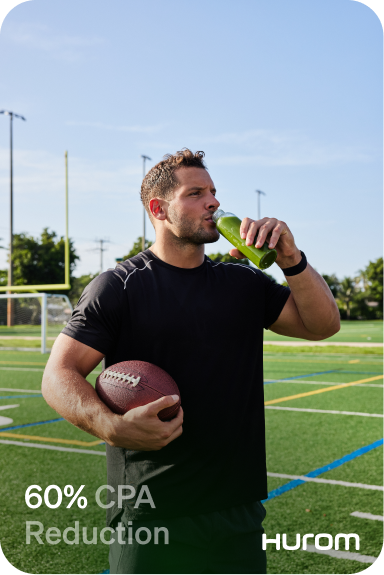
A good example is its work for Hurom. The agency shifted the message away from discounts and into health-focused UGC angles. That helped cut CPA by 60%, lower CAC by 36%, and lift ROAS by 2.5x.
Key services:
- Micro and nano creator sourcing
- UGC production for paid social
- Paid media amplification
- Creator research and testing panels
Potential limitation: It makes the most sense when paid social is part of the plan.
Why it made the list: inBeat doesn't separate creator sourcing from performance. The same team that finds the creator is the one accountable for what the content does in paid social. Every piece of creator content is built to be tested and run as a paid ad.
2. Brighter Click: Best for SEO/GEO Driven YouTube Influencer Strategy
- US presence/HQ: Raleigh, North Carolina, United States
- Best platforms: YouTube, Instagram, TikTok, LinkedIn, Streaming Platforms
- Main industries: eCommerce, SaaS, healthcare, fintech, higher education
Brighter Click is an influencer marketing agency that specializes in influencer campaigns designed to surface in AI Overviews and LLM recommendations for eCommerce, SaaS, healthcare, and fintech brands. The agency builds influencer strategies around dedicated long-form YouTube videos, with content topics informed by SEO research. For brands in search-driven verticals, that turns influencer content into a long-term organic discovery asset. No other agency on this list is building influencer programs around AI search visibility.
Brighter Click also excels at whitelisting content for paid media efforts. They don’t treat influencers as a standalone awareness channel, for one. Instead, they strategize which platforms, creator niches, and content types will drive the most conversions at each stage of the buyer journey, then connect creator partnerships to paid media through whitelisting and Meta partnership ads.
Key services:
- Influencer sourcing, vetting, and campaign management
- YouTube influencer-to-GEO strategy
- Whitelisting and Meta partnership ads
- Paid media amplification of creator content
- Performance analytics across nine dimensions
Potential limitation: Best suited for brands that want influencer integrated with paid media and organic search. Less of a fit for brands looking for awareness-only creator buzz.
Why it made the list: Brighter Click connects influencer marketing to both paid media performance and AI search visibility, a combination no other agency on this list offers. If you want creator partnerships that compound across paid and organic channels, this is the team built for that.
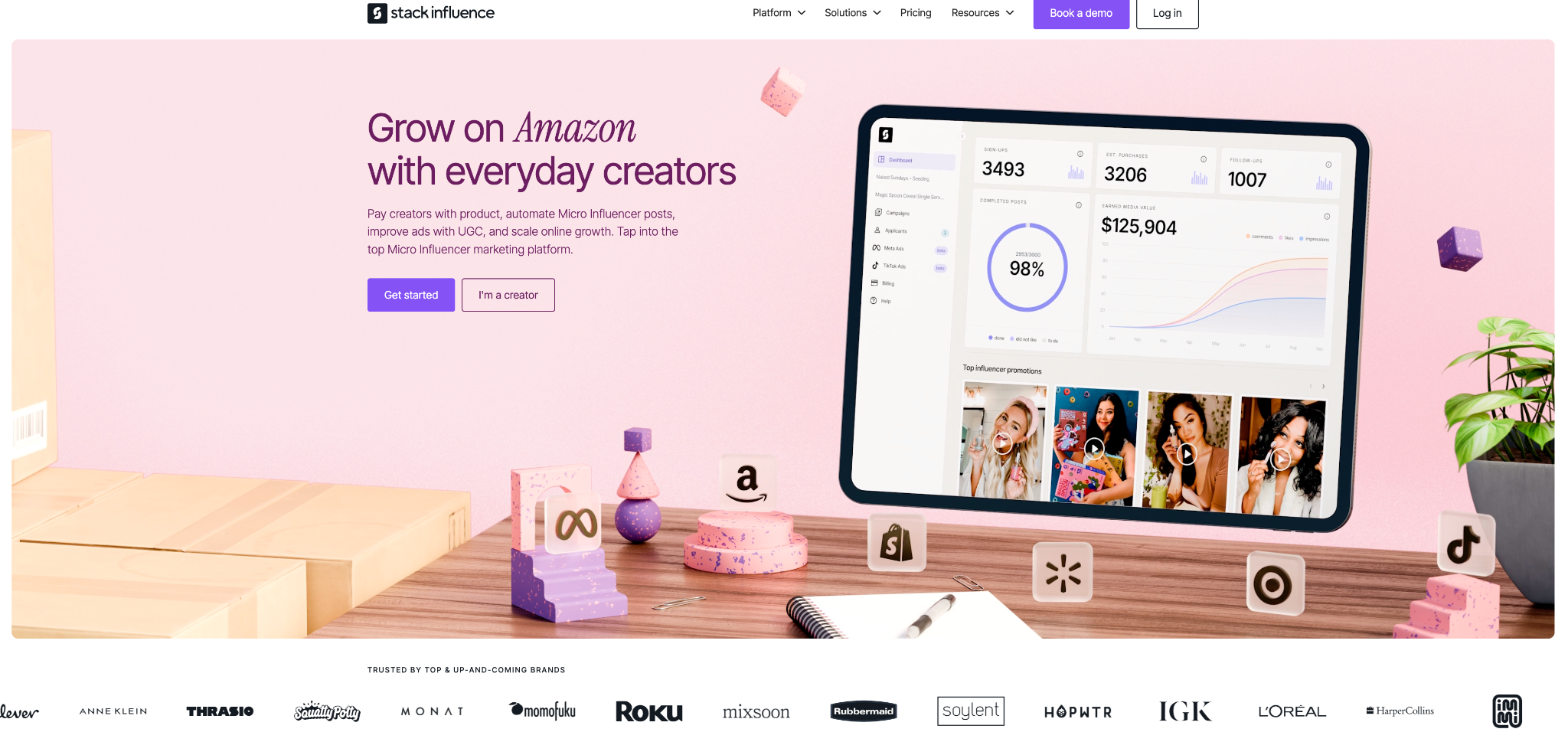
3. Stack Influence: Best for Amazon and Marketplace Growth
- US presence/HQ: Miami, Florida, United States
- Best platforms: Amazon, Instagram, TikTok, TikTok Shop, Walmart
- Main industries: CPG, home goods, beauty, health and wellness, food and beverage, ecommerce
Stack Influence is built for ecommerce brands that want micro-influencer marketing to move product. Instead of paying creators cash fees, brands seed their products directly to a vetted network of over 340,000 micro-influencers, who post authentic content in exchange. That keeps costs lean and content genuine, and the platform handles matching, shipping, briefing, and tracking automatically, so brands aren't managing creators one by one.
What separates it from most agencies here is the marketplace focus. Stack Influence is specifically wired to push external traffic to Amazon listings, improve bestseller rank, and generate organic testimonials that change how a listing converts. Its Aunt Fannie's campaign shows that clearly. After a 90-day run, average monthly unit sales jumped from 98 to 789+ units (8x), Amazon bestseller rank improved 3.5x, and the campaign generated 528,000 social impressions across 189 creator promotions.
Key services:
- Automated micro-influencer product seeding
- UGC production with full usage rights
- Amazon, Walmart, Shopify, and TikTok Shop growth programs
- Content syndication for paid and organic channels
- Ambassador and affiliate program buildout
Potential limitation: It's purpose-built for ecommerce and marketplace growth, so it's a weaker fit for brands chasing awareness or brand storytelling without a direct sales goal.
Why it made the list: Stack Influence gives product brands a rare combination of automated scale, low creator costs, and results tied directly to marketplace rankings and sales velocity.
4. HireInfluence: Best for White-Glove Creator Campaigns
- US presence/HQ: Houston, United States
- Best platforms: TikTok, Instagram, YouTube
- Main industries: Travel, retail, CPG, fashion, entertainment
HireInfluence is for brands that want a hands-on partner with tighter control over creator selection. Its main difference is the manual vetting angle. That gives you a more curated feel than agencies that lean harder on large databases or fast-turn matching.
You can see that in its Ricola work. The #CoatYourThroat campaign ran through 18 creators and delivered 26M impressions, 20.5M reach, a 13.17% engagement rate, and 62,500 tracked retail purchase clicks.
Key services:
- Manual creator vetting
- Creative concept development
- Full campaign rollout support
- Reporting across reach, sentiment, and conversions
Potential limitation: It is usually a better match for brands with a larger campaign scope.
Why it made the list: HireInfluence brings a more curated, high-touch approach than most agencies in this space.
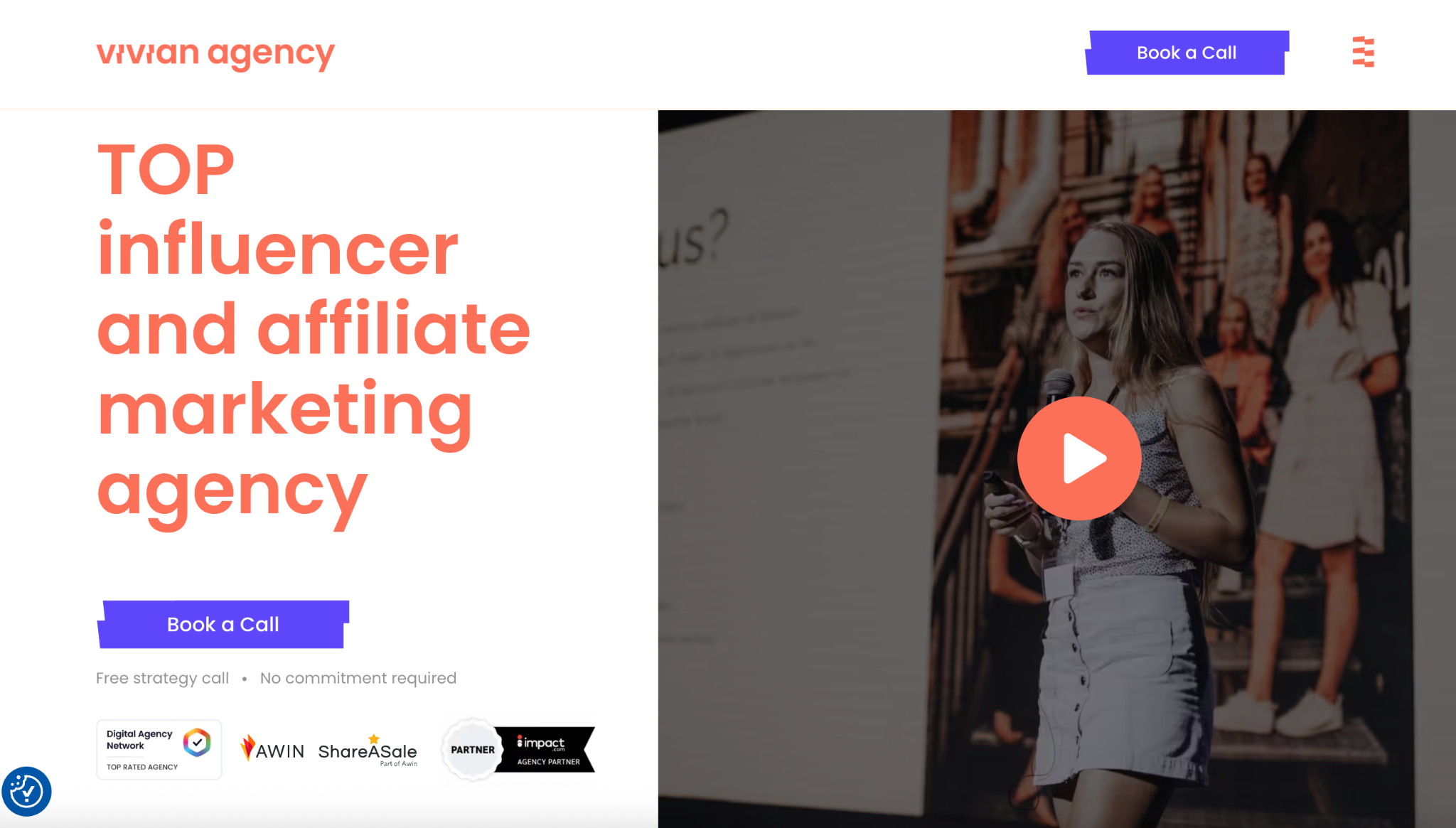
5. Vivian Agency: Best for Ecommerce and Lifestyle Brands
- Team: Fully remote, international team (not US-headquartered; registered in Tartu, Estonia)
- Best platforms: TikTok, Instagram, YouTube, Amazon
- Main industries: Beauty, fashion, wellness, ecommerce, travel, SaaS
Vivian Agency is a specialist affiliate and influencer marketing agency founded in 2018, helping brands turn creators into long-term revenue partners.
The agency combines influencer marketing, affiliate program management, and performance partnerships under one roof, with a strong focus on measurable growth, creator-driven commerce, and scalable acquisition strategies. Vivian Agency has launched more than 100 programs, built a network of over 10,000 influencers and affiliates, and generated more than $15 million in tracked client revenue.
Certified by AWIN and recognised as a Silver Partner with Impact, Vivian Agency has worked with brands across SaaS, travel, consumer products, wellness, eCommerce, and tech. Its team is fully remote and international, but the bulk of its named client work, including its flagship case study, is with US companies.
Case study example: Vivian Agency helped SafetyWing scale its partner program to $380k/month in sales through affiliate and influencer partnerships.
Key services:
- Affiliate program management
- Influencer marketing campaigns
- Creator partnerships
- Performance influencer marketing
- UGC and creator sourcing
- Partnership strategy and scaling
- Reporting and attribution
Potential limitation: Best suited for brands focused on affiliate and creator-led growth, but not best for companies seeking broader full-service marketing support; it also suits brands comfortable working with a fully remote, non-US-based team.
Why it made the list: Vivian Agency bridges the gap between influencer marketing and performance marketing. The agency helps brands build long-term creator ecosystems to increase revenue and drive sustainable growth.
6. Open Influence: Best for Enterprise Scale
- US presence/HQ: Los Angeles, United States
- Best platforms: Instagram, TikTok, YouTube, Pinterest, LinkedIn
- Main industries: Automotive, beauty, CPG, entertainment, travel
Open Influence brings a more enterprise-style setup to the list. The big draw is its mix of AI-supported creator matching, managed services, and in-house production through Studio OI. That gives you more control when the campaign is large, cross-functional, or spread across several markets and content types.
Its Mercedes-Benz "Dream Days" campaign shows how that works in practice. The agency used creator storytelling across Instagram and TikTok to make the campaign feel more personal. It delivered 48.7M+ impressions and 18K+ engagements.
Key services:
- AI-assisted creator identification
- End-to-end managed creator programs
- Studio production for branded and creator assets
- Paid social support layered onto influencer work
Potential limitation: It may feel heavier than needed for smaller brands with simple campaign goals.
Why it made the list: Open Influence offers a stronger fit for brands that need scale, structure, and production in one place.
7. AdParlor: Best for Retail Activations
- US presence/HQ: NYC and Overland Park, United States
- Best platforms: TikTok, Instagram, Facebook, YouTube
- Main industries: Retail, beauty, home décor, electronics, sporting goods
AdParlor focuses on creator work tied to store traffic, retail moments, or sales pushes. Its edge is the way it connects creator programs with paid support and retail-minded measurement, which makes it feel more grounded in activation than in image-building alone.
Its Rocky Mountain Chocolate Factory example shows that clearly. Local micro-influencers helped drive a 14% paid engagement rate, a 26% year-over-year increase in caramel apple sales, and an 8% rise in overall sales.
Key services:
- Local creator activations
- Paid amplification of creator assets
- Retail event and store-opening support
- Measurement tied to sales or coupon use
Potential limitation: It may not be the first pick for brands chasing high-end editorial creator work.
Why it made the list: AdParlor gives retail and consumer brands a more activation-focused option.
8. The Outloud Group: Best for Large-Scale Reach
- US presence/HQ: Detroit, United States
- Best platforms: YouTube, TikTok, Instagram, Meta
- Main industries: Consumer brands, gaming, food delivery, finance, home services
The Outloud Group leans into scale. If you want a campaign built around broad reach, creator volume, and strong channel mix, this is the kind of shop you look at. It also brings extra range through gaming, esports, podcast work, and ambassador programs, so it feels wider than a standard influencer-only agency.
Its Grubhub winter campaign with Olympic athletes gives you a good snapshot of that style. The agency says it delivered 5x more impressions than the summer campaign and pushed engagements 329% above benchmark.
Key services:
- Creator campaigns across YouTube, TikTok, and Instagram
- Gaming and esports activations
- Podcast ad placements with creator voices
- Brand-lift studies and ambassador program support
Potential limitation: It may be more than you need if you only want a small test with a tight creator group.
Why it made the list: The Outloud Group stands out for brands that care most about reach, channel spread, and campaign scale.
9. YKONE: Best for Luxury Brand Campaigns
- US presence/HQ: Las Vegas, United States
- Best platforms: Instagram, TikTok, Meta, YouTube
- Main industries: Luxury, fashion, beauty, lifestyle, travel
YKONE makes more sense if your brand cares a lot about image, polish, and global consistency. Globally founded, it has a strong US presence through its local office and US clients. The agency stands apart through its luxury focus and international footprint (Dior and Chanel were two of the first clients in 2008; works with Garance Doré, Chiara Ferragni-tier talent). This gives you a different kind of support than agencies built mainly for speed or direct-response creator work.
Its BOSS New York activation is a good example of that approach landing well. The campaign delivered 500% more impressions than expected, and creators published 2x the amount of content negotiated.
Key services:
- Luxury-focused creator casting
- Global campaign coordination
- Creative influencer briefing and art direction
- Forecasting and campaign reporting
Potential limitation: It may be less suited to brands that just want lean, test-and-learn creator work.
Why it made the list: YKONE gives luxury and lifestyle brands a more polished global option.
10. Get Hyped: Best for Creator-Led Revenue
- US presence/HQ: Hartford, United States
- Best platforms: Meta, TikTok, YouTube, Google Ads, Amazon
- Main industries: DTC, retail, skincare, fitness, tech
Get Hyped takes a more direct-response angle than most agencies in this space. The team treats creator content like a growth lever. That means more attention on ROAS, MER, CAC, and how creator assets perform once they move into paid campaigns.
You can see that in its M.A.D Skincare work. After rebuilding the brand's creator-led paid system, blended ROAS moved from 2.3x to 3.5x, CAC dropped from $18 to $16, AOV rose from $95 to $100, MER improved from 5.4x to 6.0x, and monthly orders climbed from 243 to 309.
Key services:
- UGC ad production for paid social
- Affiliate-led creator programs
- Paid media rebuilds across Meta and Google
- Creative testing cycles for performance ads
Potential limitation: It is less suited to brands that only want top-of-funnel creator buzz.
Why it made the list: Get Hyped gives you a clearer revenue-first option than most influencer shops.
11. Socially Powerful: Best for Global TikTok Launches
- US presence/HQ: HQ at 154-160 Fleet St, London EC4A 2DQ; major US office at 30 Wall Street, 8th Floor, NYC
- Best platforms: TikTok, Instagram, YouTube
- Main industries: Technology, fashion, beauty, gaming, finance
Socially Powerful brings a more international angle to the table. It has a real NYC office, real US client work, but is UK-headquartered. Its work is built for brands that need one campaign to travel across markets without losing cultural fit on social. It also has stronger TikTok energy than many agencies here, so it feels more tuned to fast-moving platform culture and cross-border launches.
The Azzaro launch for "The Most Wanted" shows how that plays out. The campaign worked with 20+ creators, added reach through 500+ nano creators, and generated 59M reach plus 1.5M engagements on TikTok.
Key services:
- Global creator sourcing across major markets
- TikTok-first launch campaigns
- Paid social adaptation of creator assets
- Centralized reporting for multi-market programs
Potential limitation: It can be a broader setup than a US-only brand with simple campaign needs may want.
Why it made the list: Socially Powerful offers a stronger option for brands running social campaigns across more than one market.
12. Billion Dollar Boy: Best for Story-Led Launches
- US presence/HQ: London HQ; verified offices in New York City and New Orleans, United States
- Best platforms: TikTok, Instagram, YouTube
- Main industries: Beauty, fashion, food and drink, retail, entertainment
With a strong US footprint (global CEO based in NYC, two US offices, doubled US revenue), Billion Dollar Boy puts more weight on story and creative direction than a lot of agencies in this space. That makes it useful when you want creator work to feel culturally sharp. Its Companion platform also gives you a cleaner view of creator selection, campaign flow, and performance from one place.
Its Once Upon a Farm campaign shows that mix pretty well. The agency worked with 17 family creators who produced 224 pieces of content, then supported the campaign with paid media. It ended up delivering 2.3M impressions and 76.9K engagements.
Key services:
- Narrative-led campaign planning
- Creative production for social-first launches
- Creator discovery through Companion
- Campaign tracking and analytics
Potential limitation: It may be more useful for brands that care about creative direction than for teams that only want quick creator sourcing.
Why it made the list: Billion Dollar Boy gives you a stronger storytelling angle without losing operational structure.
13. The Goat Agency: Best for Creator Commerce
- US presence/HQ: London and New York City HQs
- Best platforms: TikTok, Instagram, YouTube
- Main industries: Food and beverage, technology, fashion, consumer brands, entertainment
Goat now describes London AND NYC as joint HQs, has 51 dedicated US influencer staff and a named US influencer lead. The Goat Agency feels built for brands that want creator work, paid media, and commerce tied together in one system. You get influencer programs, amplification, and commerce support under the same roof, plus planning support through its IBEX platform. Or work with a dedicated influencer marketing agency in New York.
The Qualcomm Snapdragon campaign is a solid example. Instead of pushing standard tech ads, the agency used three macro creators around Coachella and mixed organic content with paid support. The campaign generated 265M impressions, 14M engagements, and $422K+ in revenue, with 98% positive sentiment.
Key services:
- Influencer commerce programs
- Ambassador and organic creator campaigns
- Paid media built around creator assets
- Campaign planning through IBEX
Potential limitation: It can be a larger system than a brand needs for a one-off creator test.
Why it made the list: The Goat Agency stands out for brands that want creator marketing tied more closely to commerce.
How We Evaluated These Agencies
Every agency on this list was reviewed against the same core checklist: real, verifiable client work, a clear platform and industry specialty, transparency about who actually handles account work, and honest limitations.
That's why every entry above includes a named potential limitation alongside its case study. An agency that's a great fit for enterprise-scale retail activations isn't necessarily the right call for a solo DTC brand running its first creator test, and we'd rather tell you that upfront than let you find out after signing a contract.
We also verify headquarters and US-presence claims directly against each agency's own site and independent business listings; where a claim didn't hold up (as with one agency's location below), we corrected it.
What Influencer Marketing Pricing Looks Like in 2026
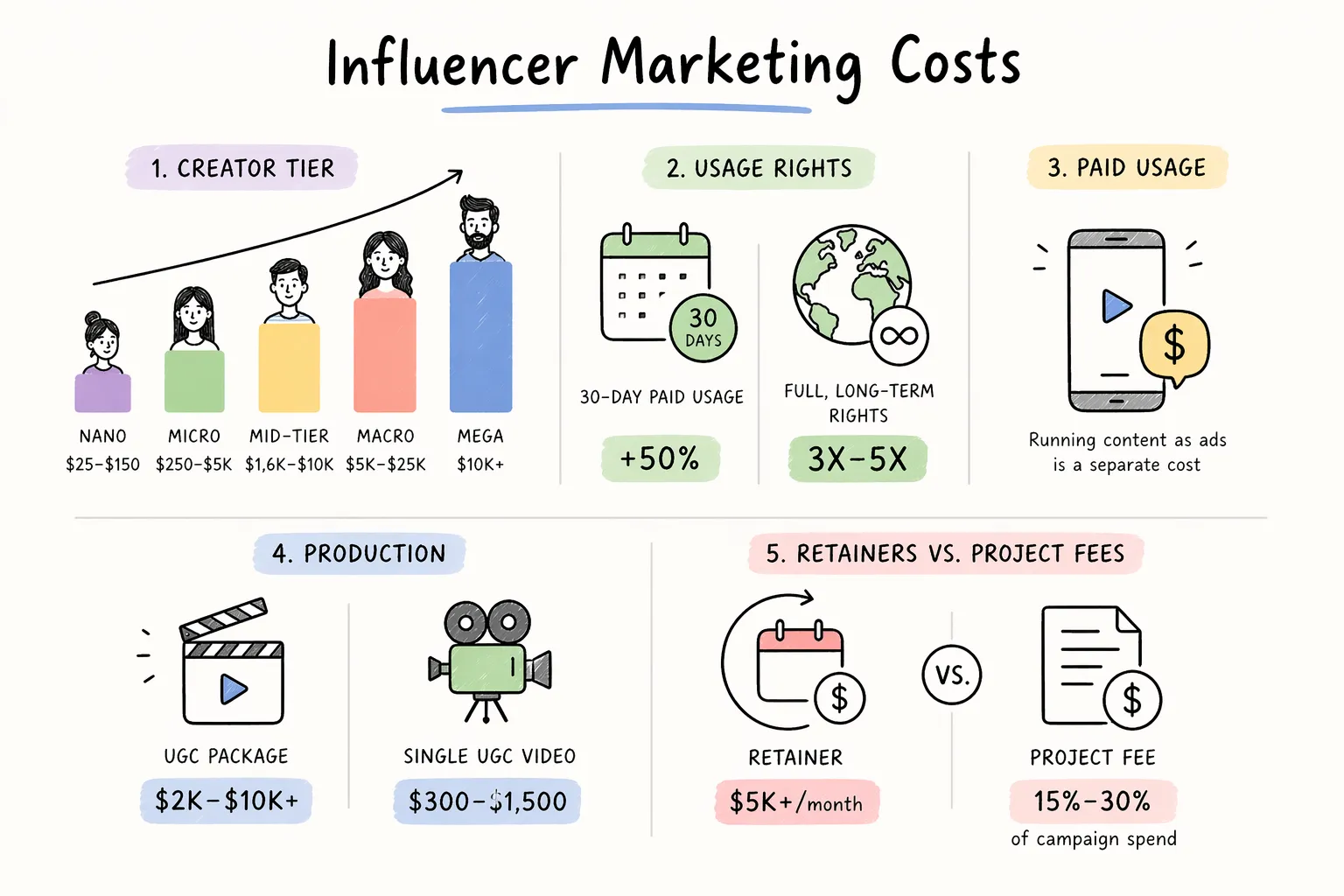
This is where budgets can get messy fast. A creator quote might look fine at first, but the total for influencer marketing campaigns climbs once you add rights, production, and agency fees.
Here are quick estimates that you can consider:
- Creator tier: According to Shopify data, nano creators typically charge $25-$150 per post, micro creators $250-$5,000, mid-tier creators $1,600-$10,000, macro creators $5,000-$25,000, and mega creators $10,000+.
- Usage rights: If you want to reuse the content on your site, email, or organic social, that usually adds a licensing fee on top of the base rate. In most deals, 30-day paid usage can add around 50%, while full, long-term rights can push the total to 3x-5x the original fee.
- Paid usage: Running creator content as ads is a separate cost bucket, so this needs to be priced before the campaign goes live.
- Production: More edits, raw footage, hooks, and extra deliverables push pricing up. UGC packages typically land around $2,000-$10,000+, while a single UGC video can run about $300-$1,500.
- Retainers vs. project fees: One-off projects are usually cheaper upfront. Ongoing retainers usually start around $5,000 per month and can go much higher. Meanwhile, some agencies charge 15%-30% of campaign spend instead of a flat fee.
How to Pick an Influencer Marketing Agency That Fits You
Picking an agency gets expensive when you guess your way through it. And that matters even more now, because US influencer marketing spend is still growing fast.
EMARKETER expects it to rise 15.7% in 2026 and reach $13.7 billion by 2027, so a bad fit can burn real budget.
Here's what you need to do:
Start With the Goal
First, get clear on what you actually want. Do you want brand awareness, more content, stronger paid campaigns, or direct sales? If you skip that step, every agency pitch starts sounding good.
We believe that influencer work needs a clear strategy across organic and paid channels. And that is exactly why your goal should lead the whole decision.
Match the Agency to Your Platform Mix
Some agencies are sharp on TikTok. Others are better on Instagram, YouTube, or multi-channel programs.
So, before you sign anything, ask where the team does its best work and what kinds of creators it manages there. Your campaign strategy should match the places your audience already pays attention to; that’s very different than the platforms an agency wants to sell you.
Choose the Creator Tier That Fits the Job
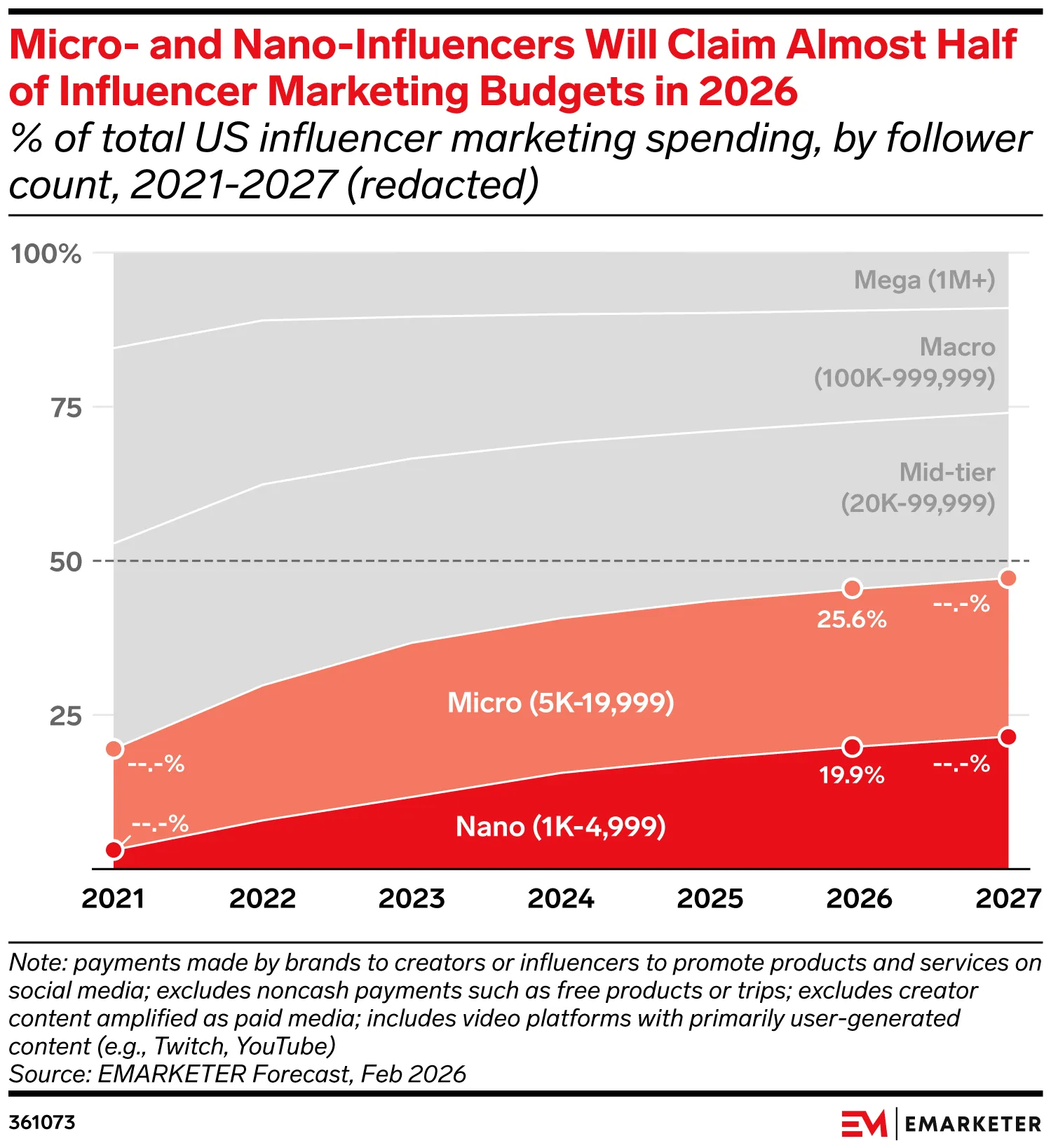
This part matters more than people think. If you need reach at scale, your mix may look very different from a brand that wants tighter community trust or a better brand match.
EMARKETER says micro and nano influencers will take 45.5% of influencer marketing spending in 2026. So, brands are putting real money behind smaller creators.
Source: EMARKETER
And that's why you need to consider this step a lot more. What if you spend 45% of your marketing strategy on micro influencers, but you need to work with mid-level influencers?
Be Real About Budget and Scope
A lot of agency deals fall apart here. You might not need a full-service partner handling every part of the campaign lifecycle. But you may just need help with creator sourcing, negotiation, or reporting.
That choice changes cost fast. One team can act like an outside growth arm and another can step in for a single launch and keep things lean.
Ask What Reporting Actually Looks Like
Let's face it, you do not need fancy dashboards that say a lot and answer nothing. You need performance analytics that help you make campaign decisions.
So, ask what gets tracked, how often you get updates, and whether the agency can tie results back to the goal you set at the start.
Check Compliance Before It Becomes a Problem
This one is boring right up until it is not.
The FTC says influencer disclosures need to be clear and easy to notice, and brands cannot treat that like an afterthought.
If an agency is loose with sponsorship tags, usage rights, or approval rules, your brand can end up cleaning up the mess later.
Pro tip: Check out our guide on FTC guidelines to learn more.
So, Which Agency Actually Fits Your Brand?
The right agency is not the one with the loudest pitch. It is the one that fits your goals, budget, platform mix, reporting needs, and the kind of creator relationships you want to build.
Some teams are better for reach. Others make more sense for performance, luxury, retail, or large global rollouts. That is why we should treat this list like a filter; it’s not a ranking to follow blindly.
So, start with your must-haves, cut the agencies that do not match, and shortlist the few that feel right. Then reach out, ask sharper questions, and see who actually gets your brand.
If what you actually need is creator content built to run as paid social from day one, that's the gap inBeat is built to close. Book a free strategy call to walk through your current creator mix and see where a performance-first approach would change the numbers.
FAQs
How much does it cost to hire an influencer agency in the US?
Hiring one influencer agency in the US usually costs around $5,000 to $25,000+ per month for ongoing work, or $5,000 to $50,000+ for one-off projects. The final price depends on what you need help with, how hands-on the agency is, and whether it is handling one campaign or your full rollout.
Should you hire an agency or work with influencers directly?
You should hire an agency if you want help with sourcing, deal flow, approvals, and the moving parts that come with bigger influencer campaigns. But you can work with influencers directly if your campaign is smaller, your goals are simple, and you have the time to manage everything yourself.
How do agencies measure results?
Agencies measure results by looking at the goals set at the start and tracking the numbers tied to them. That can include reach, clicks, conversions, content output, and whether the campaign was performance tracked in a way that helps you make better decisions next time.
Are micro-influencers better than macro-influencers?
Micro-influencers are not always better than macro-influencers, but they can be a smarter pick when you want a tighter audience fit and stronger brand trust. Macro creators make more sense when you need a wider reach fast and want your campaign to feel bigger from day one. Pro tip: You can read more about this in our guide on micro influencers vs. macro influencers.
What should you look for before signing with an agency?
Before signing with an agency, you should look for a clear scope, real campaign examples, clean communication, and a process that fits your goals. You should also check how it handles approvals, reporting, and brand safety, because that is the stuff that gets messy when no one talks about it early.