%20(1).png)

Both TikTok and UGC are becoming increasingly prevalent in social media marketing. We've written about it before. Our competitors have too. So this time, we want to show you something different: our TikTok UGC agency's actual process for user-generated content creation, the strategies, the opportunities, and the mistakes we've made along the way.
One note before we start: this guide is written for brands and marketers running TikTok UGC campaigns. If you're looking to become a UGC creator yourself, that's a different guide. If that's what brought you here, our 7-step UGC portfolio guide is the better starting point.
TL;DR
- TikTok UGC is a valuable strategy targeting young audiences, with persuasive power for products and services.
- Successful TikTok UGC campaigns adapt strategies, set measurable goals, and work with influencers.
- Spark Ads, TikTok's native format for boosting organic and creator posts, are now the standard way winning UGC becomes paid media.
- TikTok Shop has turned shoppable UGC into a distinct execution path, beyond just driving traffic to an external store.
- Key metrics include CPI, ad spend, CPM, and average watch time.
- Effective content relies on engaging hooks and testing different approaches.
- A/B and hook testing optimize content, leading to scaling on a three-month timeline.
- Small businesses can start with authentic videos, while expert help and cross-channel promotion push results further.
What is TikTok UGC?
User-generated content (UGC) on TikTok is original content created by real users, showcasing their creativity and authenticity. It spans viral videos, dance trends, how-to videos, and product reviews. TikTok UGC fosters genuine connections and community, but it also helps real creators showcase your products better:
This makes the platform a natural fit for brands engaging audiences through authentic content that can influence purchasing decisions.
But let's see some real numbers behind those claims.
Why use TikTok UGC?
TikTok UGC works for companies of all sizes. Research shows that:
- 44.1% of TikTok users are 20 to 39 years old, and 37% of them are in the top third of spenders.
- TikTok is increasingly used as a search engine, with 40% of young people turning to the platform when they search for specific products or services.
- TikTok users are twice as likely to recommend products discovered on TikTok compared to other social channel users, and 1.5x more likely to successfully persuade friends to try that product.
- UGC is more persuasive than branded content: 90% of people trust UGC, but only 4% trust branded messages, according to word-of-mouth research.
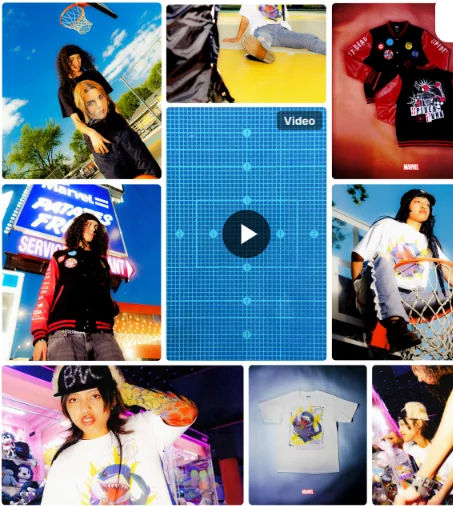
inBeat's own results on this channel back that up. We helped Disney’s Marvel to produce trend-led social content that avoids ad fatigue and drives down CPAs with an ongoing pipeline of high-performing creatives. This led to a 9%+ engagement rate and 40% increase in saves within 2 months.
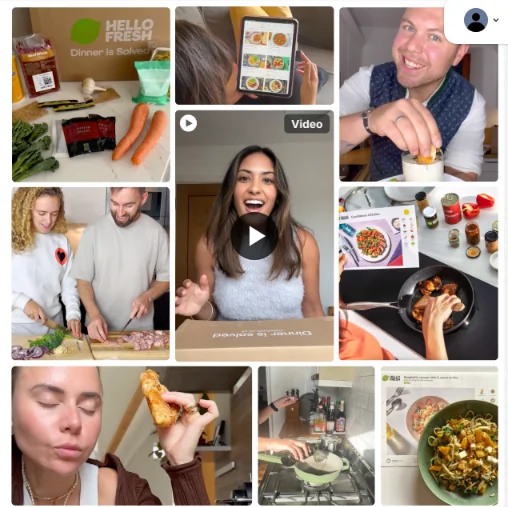
We also cut CPAs by 20% and increased referral sign-ups by 40% for Hello Fresh with content like below:
And these are just two of the companies we've worked with. Every year, more companies put larger portions of their marketing budgets toward TikTok UGC, which means they're seeing results, or at least convincing evidence they can reach their goals. The advantages include:
- Increased organic reach
- Tighter engagement
- More sales
- The best chance to reach Gen Z
- Cheaper ads compared to Meta
Get the most out of your TikTok campaigns with our full-service UGC agency!
Our creative growth agency's TikTok UGC plan
The TikTok train is on the move, so you can hop onboard or get left behind.
TikTok is not like most channels, and its audience is not like most audiences:
- TikTok users are extremely creative. Their videos follow a whole narrative arc from exposition to resolution.
- TikTok users grew up manipulating algorithms in their favor to receive tailored content, rather than fearing being controlled by them.
- TikTok's algorithm is volatile. You can't bend it to your usual marketing weapons, like precise targeting, and very similar content can produce wildly different results.
The fix: adapt your strategy to fit this channel and this audience. If you produce high-quality content, TikTok users will help your brand gain more recognition and conversions than you thought possible. Here's how we do it.
1. Initial research
The first stage of any good campaign is research, and that's where we start too. We listen to the customer first, analyzing their current problems and context, before setting goals. We focus on the company's:
- Audience: Who they are, what they need.
- Competitors: Products, communication, customer support, top-performing ads.
- Company: History, products and services, their top-performing content.
We integrate this into a SWOT analysis covering the company's strengths, weaknesses, opportunities, and threats.
Pro tip: Run this analysis on your own agency too, beyond just the brand you're working with.
At this stage we're also reviewing past campaigns for the same client, our own experience with the category, and how we'll measure everything. For a mobile app like Hopper, that measurement layer includes:
- The MMP (mobile measurement partner): Making sure the third-party data provider can collect and organize all app-related data so we get the full picture.
- The tracking system: Critical for tracking cost per download, cost per activation, and similar metrics.
2. Goals
Each TikTok UGC campaign has a different goal. Some want awareness, others engagement, others sales. TikTok has traditionally driven traffic to online stores, but it's also become a strong tool for driving customers to offline stores, so that's always a valid goal too.
Some companies come to inBeat unable to create enough high-quality content that performs. Most have worked with agencies or platforms that can't provide enough relevant content regularly. For example, we built a TikTok UGC campaign to drive installs for the Mogo.ca budgeting app, choosing TikTok because research shows:
- Finance-related TikTok video views grew 2.7 times.
- 54% of people are more likely to turn to TikTok for finance-related content than other platforms.
- 50% have bought a financial product they saw on TikTok.
3. KPIs
inBeat chooses KPIs according to the client's marketing goals. Possible KPIs for TikTok UGC include:
- Cost per install (CPI): The main KPI for a mobile app in a conversion-focused campaign. A successful campaign has a low cost per install.
- Ad spend: Lower is technically better, but TikTok posts cost more than Instagram or Facebook posts. TikTok UGC can help lower that ad spend.
- Cost per mille (CPM): The average CPM for TikTok ads runs around $10 per 1,000 views, though your budget also depends on the ad type, in-feed, branded takeover, or TopView.
- Average watch time: The longer people watch your ad, the more successful you are at keeping their attention.
If you're running TikTok Shop alongside paid UGC, add gross merchandise value and in-app conversion rate to this list; the section below covers why those matter differently than a standard CPI or CPA goal.
4. Strategy
inBeat builds the strategy for each campaign based on personalized data over instinct, trends, or opinions. We measure everything as described above, then choose the right tactic and instruments. Say we've decided the tactic is TikTok UGC; our go-to instrument is creator UGC.
Organizing UGC campaigns from real customer content is a lengthy process that eats resources: you collect the content, pick the best pieces, edit, and repurpose across channels. It's doable, but not the smoothest road.
That's where we have the advantage. inBeat has a large database of content creators, chosen from the top-performing 2% of influencers, and we've worked with many of them before, so we know what they deliver on content, deadlines, and collaboration.
The average TikTok engagement rate is 6.72%, but our creators regularly reach 20% or more, meaning they already have a captive audience more likely to act on their recommendations. And UGC is already a persuasive content type on its own.
Our influencers produce TikTok UGC like unboxings and tutorials, then inBeat curates the content into finished UGC ads.
Pro tip: If you want fast, high-quality UGC without building the sourcing pipeline yourself, our UGC marketplace can get you there.
5. Content and ad format
After selecting the tactic and instruments, we decide on the content. TikTok UGC has real format options depending on your goal:
- In-feed ads: Cheapest and easiest to adapt to demographic factors.
- Spark Ads: TikTok's native format for boosting an existing organic post, yours or a creator's authorized post, as paid media. This is how most of the UGC we produce actually earns real reach: a video that's already performing organically gets promoted with its original likes, comments, and shares intact, so the ad still reads as a real post instead of a rented placement. We cover the full mechanics, authorization codes, code duration, and setup, in our complete Spark Ads guide; the short version is that a strong organic performer is the single best candidate for paid scale, more reliable than betting on a brand-new upload cold into Ads Manager.
- Brand takeover ads: The most actionable; best for landing pages.
- Challenge ads: Best for organic traffic.
- Shoppable ads: Best for increased conversions, and increasingly tied to TikTok Shop specifically (more on that below).
Insider tip: The biggest challenge in creating effective content is truly understanding your audience. What works varies widely by who you're addressing.
- Sometimes we do very raw, native-looking UGC. The objective is for the content to resemble a regular TikTok clip rather than an ad. Best for the middle and bottom of the funnel, where the job is driving conversions without being pushy.
- Other times we create more polished UGC, closer to YouTube style. The homemade feeling is still there, but with proper lighting and more editing. Best for the top of the funnel, building awareness and explaining more advanced features. Here are some examples from our New Balance campaign:
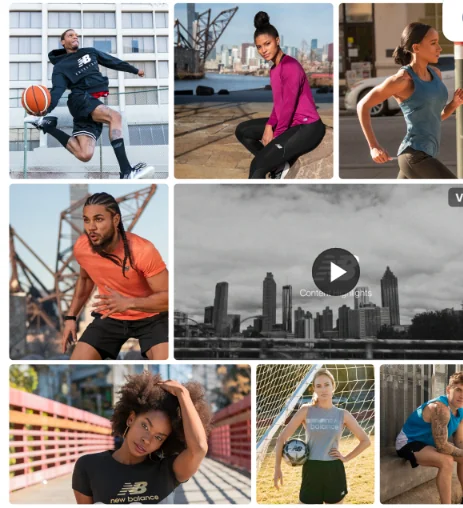
Pro tip: Regardless of format, focus on the hook. Hooks matter enough to earn their own section.
6. Hooks
When we run UGC, we test multiple hooks per video. The first hook is the most important, placed in the first five seconds, because attention spans are short and TikTok users can scroll away after just one second. If people lose interest before the hook lands, they won't click the embedded link, and they won't purchase or download whatever we're promoting.
Pro tip: We've found that the percentage of people who watch the entire hook closely tracks other metrics, like cost per sale or cost per install.
Here's an example hook one of our influencers created for Miro: “I worked at LinkedIn, Meta and Pinterest. I did this one thing to land my dream offer + 31k raise.”
7. Influencers
At inBeat, we start with strategy, then find influencers who match it. Brands can approve or decline the content creators we suggest.
You can read our guide to finding micro-influencers for more on picking the right creators.
Once clients approve, we share the creative brief with our content creators and meet with them to align on the campaign goal, KPIs, and content expectations.
Insider tip: TikTok UGC works best for wide-appeal brands when creators bring genuinely different personalities and message styles. TikTok's targeting algorithm lacks the precision options marketers know from Meta, but when you target broad without audience restrictions, TikTok's algorithm is remarkably good at finding who actually resonates with a given ad.
We saw this first-hand with Unroll.me, an inbox-decluttering app with a genuinely broad audience: almost everyone can relate to an inbox swamped with subscriptions. Our top-performing creators had very different messages despite overlapping age groups on paper, and TikTok's algorithm sorted the targeting itself:
- Slower-paced ads got automatically targeted to the 55+ age group, an audience we never set out to reach.
- Faster-paced ads, filmed with a higher-quality camera and fast animated text instead of captions, got targeted to the 18-24 age group.
There are fewer TikTok users in the 55+ bracket, and influencers carry less sway there, which is why most companies skip that segment entirely on TikTok. We didn't target it either. But the algorithm showed us that the right content with the right influencers can genuinely perform in that segment too. The lesson: build for the audience your content actually earns, beyond just the one you set out to reach.
8. Running the ads and A/B testing
After creating content, we build a content library for our clients, then run the paid ads. inBeat relies on data over instinct, so we test every post or ad we create.
Insider tip: One thing we do that most companies don't is hook testing. We ask creators for one video UGC ad with three different hooks, then test all three in-campaign, since one usually performs meaningfully better than the others. That's the hook we scale.
TikTok is unpredictable enough that even very similar ads can produce very different results, so don't be discouraged when an early test misses. Learn from it, test a different approach, and you'll eventually start seeing real patterns.
Pro tip: Our free TikTok mockup ad generator lets you test different ad versions before you spend a dollar.
9. Scaling your campaign
Our typical campaign timeline runs three months. Month one finds the winning strategy and content. Month two runs paid ads to see what works. Month three is massive scaling, using what's proven to drive results.
Pro tip: During scaling, extend the winning TikTok UGC into other channels too. Post it in marketing emails, on your website, or on other social platforms to increase brand visibility and drive more conversions from the same asset.
Spark Ads and TikTok Shop: how UGC turns into revenue now
Two things changed how TikTok UGC actually gets used since this guide first went up, and both deserve a direct answer here.
Spark Ads are now the default way winning UGC becomes paid media, well beyond a nice-to-have alongside standard in-feed ads. Instead of uploading a fresh creative into Ads Manager, a Spark Ad boosts a post that already exists in the feed, complete with its real likes, comments, and shares.
That matters for two practical reasons:
- The ad reads as content because it genuinely is content.
- Any engagement it earns while running stays on the original post afterward instead of disappearing when you pause spend.
If you're already running the hook-testing process from step 6 above, the natural next move is Sparking whichever hook variant wins organically before committing real paid budget to it.
Further Reading: We go deep on authorization codes, setup, and the Spark-versus-boosting distinction in our dedicated Spark Ads guide.
TikTok Shop has turned shoppable UGC into a distinct execution path, well beyond a traffic driver to an external store. When a video links directly into an in-app checkout, the content itself becomes the storefront, and what you're optimizing for changes: gross merchandise value and in-app conversion rate matter alongside (sometimes instead of) the CPI and CPA goals covered in step 3.
TikTok Shop's own reporting has it on track to cross $20 billion in US sales by 2026, and creator-led content is a large part of why: shoppers discover products inside videos they weren't searching for, which rewards the same native, unpolished UGC style that already outperforms branded content elsewhere on the platform.
Further Reading: If TikTok Shop is central to your revenue, more than just one channel among several, it's worth evaluating agencies that specialize specifically in Shop operations and affiliate creator management; our roundup of TikTok Shop agencies covers that specific fit.
Where TikTok Shop doesn't apply, this doesn't replace the funnel-stage thinking from step 5, a shoppable link doesn't help if the video's hook isn't earning attention in the first place.
Where AI-generated UGC fits, and where it doesn't
AI-generated UGC is real, and it's not going away, but it solves a different problem than the creator-sourced UGC this guide is built around. AI tools can now produce a UGC-style video from a product URL in minutes, which is genuinely useful for rapid testing at low cost.
What it doesn't reliably do yet is replace the trust transfer a real creator's existing audience brings, or the kind of algorithm-surprising performance we saw with Unroll.me's 55+ segment, which came from a real creator's real audience responding to a real person.
Our position: use AI-generated UGC to test concepts and volume fast, then put real budget behind whichever direction, AI or creator-sourced, actually earns engagement. We cover the fuller case for and against it in AI UGC ads: the future of content creation in advertising.
5 strategies to get UGC on TikTok
These strategies work across a wide range of audiences, from fashion and fitness to tech and travel, each tapping into TikTok's specific culture of participation.
- Hashtag campaigns. Launch branded hashtag challenges to encourage users to create and share related content. Works especially well for beauty, fashion, and lifestyle brands whose audiences already enjoy participating in trends.
- Collaborate with micro-influencers. Partner with creators who have a loyal community; their genuine content drives more engagement than a broader, less-trusted reach play. Particularly effective for skincare, fitness, and other niche categories. Sephora's long-running Sephora Squad is a good example of this done at scale over years.
- Run dance challenges. Branded dance moves can go viral fast, which suits fashion, entertainment, and music-adjacent products targeting younger audiences.
- Encourage how-to videos. Ask users to demonstrate your product in action. Beauty, home improvement, and tech brands benefit most, since seeing a product used answers the exact question a buyer still has.
- Host competitions. Reward the best user-generated content to boost both quality and participation. Works well for sportswear, gaming, and travel brands where competitive spirit already drives engagement.
7 best types of UGC on TikTok
- Product reviews. Real experiences with a product build trust and influence purchasing decisions, especially for beauty and personal care.
- How-to videos. Tutorials and DIY content showing a product in action help tech, home improvement, and fashion buyers decide.
- Reactions. Genuine reaction content works well for entertainment, tech, and food brands, where immediate, visible response drives interest.
- Before-and-after. Transformation content suits fitness, skincare, and home décor, and can lead to larger creator partnerships when it performs.
- A day in the life. Showing how a product fits into a real routine works for lifestyle, fashion, and wellness brands specifically.
- GRWM (get ready with me). Beauty, fashion, and fitness brands benefit from this authentic, routine-based format.
- Storytelling videos. A real story about a product experience builds emotional connection, and works for nearly any brand willing to let a creator tell it their way.
CeraVe's mix of how-to, storytelling, and before-and-after content in one series is a solid example of blending several of these types into a single, coherent creator relationship rather than one-off posts.
Our growth marketing agency's tips for TikTok UGC campaigns
- Embrace creative freedom. Let creators produce original videos in their own style. You're not commissioning brand-created videos, you're commissioning UGC.
- Focus on community engagement. Interact with users participating in your UGC campaigns; genuine connection is what drives long-term participation.
- Work with the right influencer strategy. Partner with creators who genuinely resonate with your brand, and build ambassador programs with your highest performers instead of one-off bookings.
- Incorporate product feedback. Use UGC to surface real product feedback, which doubles as design input for future campaigns.
- Set clear conversion goals. Define what success means for this campaign, awareness or sales, before you start measuring it.
Best advice for companies looking into TikTok UGC
If you want to run a TikTok UGC campaign yourself, the best advice is to start doing it. It's much easier than traditional advertising. Start with a simple, native-feeling video shot on a smartphone; that's what TikTok users are filming with too, and it shows.
We've seen many small companies get real results from the owner doing UGC themselves. This type of content is human and relatable enough that people listen directly to the person behind the company, which builds a stronger bond than a produced ad ever could, and it works well inside a larger word-of-mouth strategy.
After the first few videos, measure your results and see what's working. Or schedule a free strategy call with us, and we'll talk through your goals and the strategy that fits them best.
Want more examples of successful UGC campaigns? Check out case studies of our influencer agency in France!
FAQs
What is TikTok UGC?
TikTok UGC is original, authentic content created by real users or creators rather than a brand's in-house team, spanning reviews, tutorials, and storytelling videos. Brands turn it into paid media through formats like Spark Ads and in-feed ads. You can also use UGC videos to generate brand awareness, build social proof, and increase your engagement rates.
Is TikTok UGC only for brands with a mobile app?
No. This guide uses mobile app examples because that's where CPI and MMP tracking make the measurement especially concrete, but the same process applies to e-commerce, TikTok Shop, and offline-driven businesses, with the KPIs in step 3 swapped for whatever conversion actually matters to that business.
How are Spark Ads different from normal TikTok ads?
A Spark Ad boosts an existing organic post, yours or an authorized creator's, keeping its real likes, comments, and shares intact. A standard in-feed ad is built fresh inside Ads Manager and its engagement stays inside that campaign. See our Spark Ads guide for the full setup process.
Does TikTok Shop change what counts as a good UGC campaign?
Partly. The content style that works, native, unpolished, creator-led, stays the same. What changes is the goal: a TikTok Shop campaign is often optimizing for in-app purchase and gross merchandise value rather than an external site conversion, so the KPIs and the landing experience both need to reflect that.
Is TikTok UGC cheaper than influencer marketing?
Usually, yes. UGC typically involves paying for content production, while influencer campaigns may also include audience access, posting fees, usage rights, and exclusivity. The total cost depends on the creator, deliverables, audience size, and campaign scope.