.svg)
.svg)
.svg)
.svg)


.svg)








Franchise growth looks simple on paper. You can add locations, repeat what works, and scale the result. In reality, marketing becomes even more complicated with every new unit because control and speed start working against each other.
Central teams push for brand consistency, while local operators need flexibility that reflects their market. That friction shows up in approvals, creative quality, and uneven performance. And the larger the system gets, the more that tension affects results. Findings from IFA research show that U.S. franchise locations are projected to reach about 851,000 in 2025 after adding more than 20,000 new units.
This means small marketing gaps now repeat hundreds of times. So, decisions around local marketing stop being tactical and become systemic. In this article, you’ll see what actually holds up at scale and what breaks. You’ll compare real trade-offs, rather than theory.
TL;DR
- Franchise marketing breaks when scale exposes weak systems, unclear roles, and slow execution.
- One brand must be consistent while also working in different markets.
- Central teams set direction, rules, and structure, and local teams drive demand on the ground.
- Success depends on speed, clarity, and repeatable workflows, rather than one-off tactics.
- Brand marketing and franchise marketing must work together.
- Local trust, reviews, and creator-led content now shape customer decisions.
- Weak coordination hurts every location, rather than just one.
- Strong programs rely on flexible templates, local execution, and central tracking.
- The goal is predictable growth, aligned teams, and measurable local results.
What Is Franchise Marketing?
Franchise marketing is how you run one marketing strategy across many locations while letting each location work in its own local market. From the start, responsibility is shared. The brand sets direction, rules, and priorities, while local teams execute within those limits to drive real demand.
Unlike single-location marketing, every decision here must repeat cleanly. A fast-food brand rolling out a national offer or a fitness chain launching a seasonal push cannot rely on ad-hoc judgment at each site.
At the same time, rigid control can break local results. That means that the system must allow flexibility without losing brand consistency, which is where many programs fail.
Here's an illustrated guide on how franchising works:
Next, let’s move on to what you actually need to get right.
What Businesses Need to Get Right When Implementing Franchise Marketing
Franchise marketing works well when a brand feels local everywhere. That balance is hard once scale kicks in, because tight control slows local action, while too much freedom weakens brand consistency.
When central teams lock everything down, local teams stop acting. And when rules are loose, results drift, and trust erodes.
Constant Contact reports that 61% of franchisees with full local control feel satisfied reaching customers, compared to just 20% with limited control. This is why flexibility matters when paired with brand guidelines.
With that explained, let’s see how this actually plays out across locations.
How Franchise Marketing Works in Practice
At scale, franchise marketing only works when responsibilities are clearly split and tightly connected. So, before tactics or tools come into play, it helps to look at how the work actually flows between the center and the field.
Franchisor-Level Marketing (Brand Side)
At the brand level, your role is to set direction and reduce risk. That starts with national positioning, clear messaging, and a shared point of view that drives brand awareness across markets, along with the structural safeguards, such as legal, financial, and operational protections like business insurance, that help franchise systems stay resilient as they scale.
From there, central teams define the structure of each marketing campaign, create reusable assets, and run national campaigns that increase demand for every location at once.
Just as important, rules and templates exist to speed decisions, rather than slow them down. When guidance is clear, local teams spend less time asking for approval and more time executing with confidence.
Franchisee-Level Marketing (Local Side)
On the local side, execution turns strategy into results. Local promotions, community ties, and location-specific offers help translate brand intent into action.
That includes managing reviews, running social media that reflects local voice, and adjusting campaigns to real neighborhoods through targeted local campaigns. When done well, this layer captures attention that the brand alone cannot reach.
However, the handoff usually breaks. You can see that gap in the 2025 AFMR data. In 2025, 85% of franchise brands say local marketing is essential, yet 48% provide no oversight and leave execution untracked. This explains why results drift even when intent is strong. For this reason, neither side should work alone.
To show that structure in a real system, here's a video that explains how franchising works in simple terms. It shows McDonald’s as a real example:
Franchise Marketing vs. Brand Marketing
Confusion typically happens when brand marketing and franchise marketing are treated the same. To keep roles clear and decisions aligned, it helps to see how they differ in practice. Here’s a simple comparison that shows how work actually gets done once multiple locations are involved.
When taken together, both matter. Brand marketing protects direction and brand management, while franchise marketing connects that direction to real demand through distributed marketing across locations. But when you miss either side, the results slip.
Now, let's step back to see why this balance matters.
Why Franchise Marketing Matters More Than Ever
Franchise marketing matters more now because growth no longer hides weak systems. As networks expand, pressure builds across every location, and small gaps start to show.
Here are the forces driving that shift:
- Franchise models expand across industries, which raises the cost of inconsistency.
- Ad costs and competition continue to rise. This forces tighter control over marketing channels.
- Customers expect the same experience everywhere, which directly impacts brand recognition.
- At the same time, local trust now outweighs global slogans in day-to-day demand.
- When systems break, weak franchise marketing hurts every location.
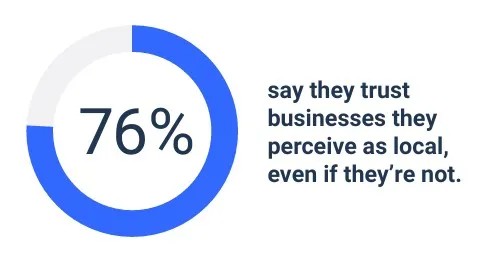
This change is also visible in customer response. Based on the 2025 Franchise Trends Report, 76% of consumers trust businesses they perceive as local, even when the brand operates nationally.
And 50% find those businesses through social media strategy. That’s why many franchises now lean on social-first, creator-led approaches to stay relevant at the local level.
From here, it helps to break down the two types of franchise marketing.
The Two Types of Franchise Marketing You Need to Know
Once you operate across many locations, franchise marketing splits into two distinct motions. Each serves a different goal, uses different signals, and fails in different ways if not handled correctly. Here’s how the work breaks down in practice.
Operational Franchise Marketing
This side exists to drive day-to-day demand. It focuses on customers, local relevance, and measurable local sales. From there, execution happens close to the ground through location pages, reviews, promotions, and media.
When operational franchise marketing works well, local teams know exactly what to launch, when to launch it, and how to adapt it to their area without drifting off-brand. But when it breaks, results stall because locations guess, delay, or stop acting altogether.
The cost then shows up in missed demand and uneven performance across the network.
Franchise Development Marketing
This side supports long-term growth. It’s targeted to potential franchise owners rather than end customers and helps with franchise recruitment. The focus, therefore, shifts to how the system performs as a whole, including proven results, brand strength, and the ability to grow without chaos.
Franchise development marketing receives less attention because it does not drive immediate revenue. Still, weak execution here raises customer acquisition costs and attracts the wrong operators. Strong systems use this work as a signal of how the business actually runs.
Both types must move together. One fuels current revenue, the other protects future scale.
With that distinction clear, it’s time to look at where franchise marketing most frequently breaks down and why.
The Biggest Franchise Marketing Challenges
Once your network grows, the cracks are no longer hidden. These are the issues that show up most frequently and compound quickly across locations:
- Brand standardization breaks when locations interpret rules differently.
- Slow approvals stall launches and drain momentum.
- Local teams lack time or skills, causing execution to slip or stop.
- One-size-fits-all campaigns miss local demand and weaken the brand message.
- Scaling content marketing campaigns across locations creates a marketing bottleneck.
And this risk is not theoretical. In its early years, Burger King relied on a regional franchise model that gave operators broad control within defined territories.
Over time, limited central oversight led to inconsistent food quality, procedures, and store image across regions. That experience is one reason modern franchise systems place a tighter structure around marketing and operations as they scale.
Against that backdrop, creator-led, localized content helps bridge structure and execution. At inBeat, we run systems that provide locations with ready-to-use creative built for their area, without adding approval load on central teams. As a result, execution moves faster, stays aligned, and scales without chaos.
From here, it helps to focus on which channels actually hold up under these constraints and why.
Channels That Actually Work for Franchise Marketing Today
Once the structure is in place, channel choice becomes a performance decision. These channels hold up when you manage many locations with real constraints:
- Local SEO strategies and Google Business Profile work because intent is already local. And this focus shows in budgets. Today, 72% of franchises put over 40% of their spend into local search engine optimization. This reflects how search visibility drives visits more than brand slogans.
- Paid social and geo-targeted ads help translate national direction into neighborhood-level demand, especially when creative can flex by location without new approvals.
- Email marketing and SMS marketing perform when messages reflect local timing, offers, and context.
- Reviews and reputation shape first impressions at the local level. In fact, findings from the Local Consumer Review Survey 2025 show that 81% of customers check local business reviews on Google before making a decision. And when reviews slip, locations feel the impact immediately in traffic and conversions.
- Influencer and creator content now plays a central role. When creators speak in local language and context, trust builds faster than with polished brand ads.
That last point is clear in practice. At inBeat, we ran a NYC Votes campaign using 10 local TikTok creators and city-specific messaging. As a result, the campaign reached over 2.5 million views with a 70% view-through rate, driven by local voice and relevance.
Here's an example of our work:
Why Local Influencers Fit Franchise Marketing So Well
Local influencers work because they operate where franchise marketing matters most. And that is real neighborhoods, real language, and real trust.
At the micro and nano level, creators already speak to small communities, so messages land as familiar. As a result, posts feel native to the feed and align naturally with customer behavior in each city.
More importantly, these creators outperform polished brand ads at the local level. They reflect regional tone, cultural cues, and everyday context that national creatives typically miss.
Because of that, franchises gain relevance without rewriting the business model for every market. And when systems are in place, this approach scales cleanly across cities without losing control.
This is where structure matters. At inBeat, we help franchises run creator programs that scale across markets while keeping output consistent.
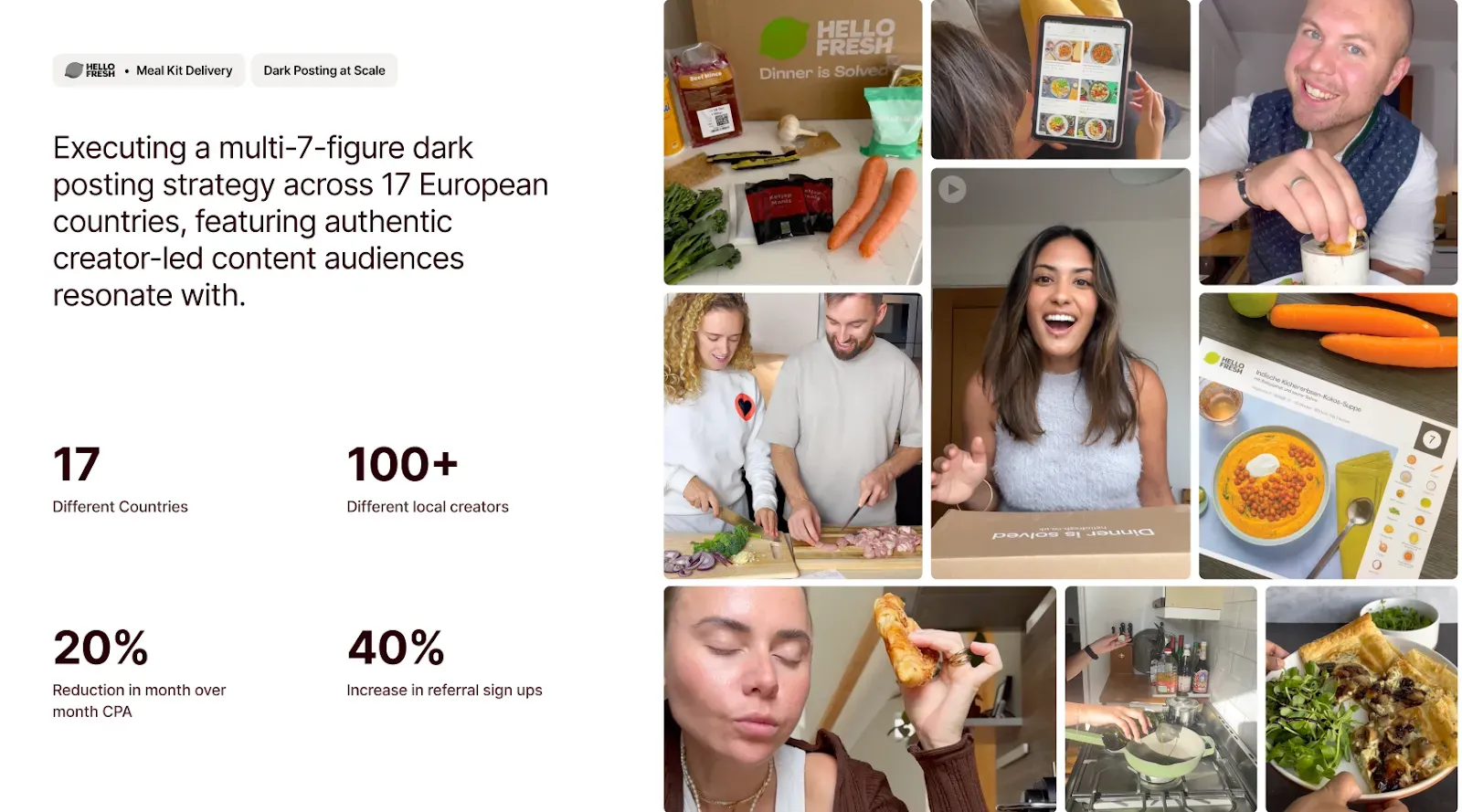
For example, with HelloFresh, we supported sign-ups across 17 countries using 100+ local creators through dark posts. As a result, the campaign drove 20% lower CPA and 40% more referrals, without adding pressure to internal teams.
The same principle applies at the city level. In a Nordstrom in-store launch with Wildfang, we cast creators in multiple cities to produce on-brand photo and video content. That effort delivered 50+ assets and reached roughly 750,000 people, which drove community engagement across locations at the same time.

A Simple Franchise Marketing Framework
Having a clear framework helps you move fast without losing control. So, here’s a practical way to structure franchise marketing so it works across locations:
- Set brand rules once: Start by locking tone, visuals, and guardrails. This gives teams clarity and reduces back-and-forth later.
- Build flexible templates: Then create assets that local teams can adjust safely. Templates keep content marketing consistent while allowing local context.
- Enable local teams: Next, give locations clear launch paths. When teams know what to run, then speed replaces hesitation.
- Add local creators: From there, layer in creators who speak the local language. This strengthens digital marketing without forcing custom builds.
- Support with paid media: After that, amplify what works using Google Ads or social boosts tied to clear campaign goals.
- Track performance centrally: Finally, measure results in one marketing platform. Patterns surface quickly, and fixes scale cleanly.
Franchise Marketing Best Practices
Strong franchise marketing depends on consistency, clarity, and a shared plan between brand owners and local operators.
Hence, you want customers to recognize the brand anywhere, while still feeling like each location understands its community. The most effective approach blends national strategy with local activity so every outlet benefits.
Here are the franchise marketing best practices:
- Keeping all logos, colors, slogans, and messaging consistent across locations so customers instantly recognize your brand.
- Giving franchisees a ready-to-use library of marketing assets such as social media visuals, copy templates, and promo materials.
- Running national campaigns while also supporting franchisees with local ads, Google Business Profiles, review requests, and community promotions.
- Training franchisees on how to run social media, respond to reviews, and use paid ads without needing expert-level marketing skills.
- Tracking performance (such as leads, foot traffic, and revenue) so you can see which locations need extra support.
How the Right Partners Help Franchise Brands Scale
Franchise growth usually hits a ceiling when internal teams try to do everything alone. As locations add up, planning, approvals, and execution compete for attention. At that point, speed drops, local insight gets lost, and performance data becomes harder to connect across markets.
This is where outside partners add real value. With the right support, you move faster without losing control. Local knowledge fills gaps that central teams cannot cover, while shared systems keep work aligned.
Just as important, performance data stays visible, so decisions rely on results rather than assumptions. For franchise owners, this balance reduces friction and protects long-term value by keeping franchisee acquisition costs in check.
How inBeat Supports Scalable, Local-First Execution
At inBeat, we help franchise brands scale local execution without adding pressure to internal teams. Our work focuses on multi-location creator campaigns that feel native in each market while staying aligned with the brand.
Local and multi-lingual execution allows campaigns to reflect real language, culture, and context. And throughout, performance stays central, with results tied directly to demand and social proof. This approach has proven effective across global and city-level launches.
For example, in our work with NielsenIQ, we produced localized content across 19 countries in more than 15 languages. We coordinated over 100 creators and remixing assets with native voiceovers. As a result, our team delivered region-specific creative at scale while keeping costs low.
Here's what we did for them:
Turn One Brand Into Many Local Wins
At the core, strong franchise marketing gives you one brand name that shows up clearly, while still letting each location win trust locally. That outcome does not come from isolated tactics. Instead, it comes from a system that connects rules, execution, and feedback across markets.
So take a moment to audit how your current setup works in practice. Look at where speed slows, where local teams guess, and where results stop tying back to demand. From there, growth becomes more predictable, and consistency stops feeling like a trade-off.
At inBeat, we help you turn that structure into action through scalable, local-first digital marketing strategies and credible social proof. If this direction fits where you want to go, reach out and start the conversation with us.
FAQs
What is the meaning of franchise marketing?
Franchise marketing is how one brand grows demand across many locations. It splits responsibility between central teams and local operators, so campaigns stay consistent while still working in each local market.
What is a franchise with an example?
A franchise is a business model where a company lets independent owners use its brand, systems, and support in exchange for fees. For example, Anytime Fitness operates as a global gym franchise with over 5,000 locations worldwide. Each gym is owned locally, while the parent company provides branding, training, and a proven operating system.
Why is franchise marketing important?
As networks grow, weak coordination creates uneven results. Franchise marketing matters because it protects brand trust, supports local execution, and keeps brand awareness campaigns effective across every location.
What are the 4 P's of franchising?
In franchising, the four P’s usually mean product, process, people, and profit. Together, they define whether your system can scale and stay consistent.
How to market a franchise?
You market a franchise by setting clear brand rules, then giving locations simple tools to act locally. Focus on local search, reviews, paid ads, and creators. Meanwhile, you need to track results centrally so every location moves fast and stays aligned.