.svg)
.svg)
.svg)
.svg)


.svg)







If you’re a performance marketing manager or growth marketer running campaigns, you’ve probably experienced ad fatigue at some point. You know when click-through rate drops, cost-per-acquisition rises, and return on ad spend decreases.
Enter Dynamic Creative Optimization (DCO). It’s the solution for it all: ad fatigue, targeting optimization, and personalization.
It’s a sophisticated adtech approach that turns to algorithmic automation and real-time technology to assemble, personalize, and deliver ad content tailored to each user.
At inBeat, it’s been the winning formula for many social media ad campaigns on platforms like Facebook, Instagram, and TikTok. It works because it’s highly data-driven.
And 89% of marketers believe that data-driven advertising has better return on investment (ROI).
In this article, we’ll walk you through what DCO really is, how it works, and how you can implement it to keep your ad content fresh, relevant, and high-performing.
P.S. Want to work with the best on your next DCO-enabled paid campaigns? Discover the Top Dynamic Creative Optimization Companies.
TL;DR
Dynamic Creative Optimization (DCO) automates the assembly and optimization of ad creatives so each user sees the most relevant version in real time.
It combines creative templates, creative assets, first-party data, audience segmentation, and machine-learning algorithms. And it helps advertisers fight ad fatigue, boost ROAS, and scale personalization across display ads, social, video, and programmatic advertising.
DCO pulls from product feeds, user data, geographic locations, browsing history, and behavioral data to tailor ad components such as main images, headlines, and CTA buttons.
Platforms like Google DV360, Meta Advantage+ Creative, Amazon DSP, and Adobe Advertising Cloud offer built-in dynamic creatives, while creative management platforms like Criteo and Zuuvi help automate creative development at scale.
What Is Dynamic Creative Optimization?
Dynamic Creative Optimization (DCO) is a type of programmatic advertising that enables advertisers to automatically tailor ad creatives, like images, headlines, CTA buttons, and layout, in real time, using audience data and context.
Unlike static ads (which deliver the same creative regardless of who sees them), DCO uses a ‘creative-management platform” or specialized ad server to assemble dynamic creatives from a pool of creative assets and templates.
With DCO, each impression becomes personalized based on signals like user behavior, browsing history, geographic data, device type, or even time of day. And, as we said above, all of that is happening in real-time.
The outcome is that ads feel relevant to each individual rather than generic to all.
TL;DR: DCO basically turns a single campaign into a dynamic system of multiple ad variations. It uses the right creative for the right user at the right time.
How Does Dynamic Creative Optimization or DCO Work?
In simplest terms, DCO works by combining creative assets, real-time data, and automation so that each ad impression can be tailored to the viewer automatically.
Warning: Not all work is automatic. You do need to create the base creative assets like images/videos, ad copy, CTA buttons, etc.
Now, you can tap DCO on the demand-side platform (DSP) you’re using. This technology is also baked into social ad platforms of giants like Meta and TikTok. We’ll discuss all those in detail later on.
Here’s a step-by-step breakdown of how DCO typically runs.
Template and Ad Assets
You start by building flexible ad templates using a creative management platform or an ad server.
These templates are not rigid ads. Instead, they include placeholders for changeable pieces, like product images, headlines, price, calls to action (CTAs), backgrounds, or layout.
Into these templates, you upload a pool of creative assets: multiple main images or banners, alternate copies, different CTA buttons, and any branding elements (logo, colors, fonts).
Here’s an example of a DCO template structure:
This modular setup transforms creative development from ‘make one ad per campaign’ to ‘assemble many variants from a core set of assets.’
The ad assets, of course, depend on what you’re selling and what the underlying purpose is: awareness, retargeting, or conversion.
Here’s how DCO combines assets differently depending on the viewer.
Data Collection
DCO platforms ingest audience data and data signals, such as:
- Browsing history
- Previous purchases or product interest
- Device type
- Geographic data
- Possibly time of day or seasonality
This data can come from first-party sources (CRM, website behavior, previous interactions) or from integrated data management platforms (DMPs) within your adtech stack.
Based on these inputs, the system segments your audience (into buyer personas, interest-based, or behavior-based groups), which helps tailor which ad version to serve to whom.
This is the core component of DCO and what it’s about: segmentation enables personalization. Businesses that segment customers can generate 10-15% more revenue.
Product Feed Integration
If you’re an ecommerce or retail advertiser, you’ll want to add product feed integration to further improve ad creative use.
That’s because your products themselves can be dynamically featured in ads.
DCO can pull directly from a product feed (SKUs, images, prices) and dynamically populate creatives. For instance, the DSP or social media platform could show the exact product someone viewed or added to cart, with the current price or discount.
This makes your ads highly relevant, which increases the chances of engagement or conversion, especially in retargeting campaigns.

Personalization
When a user visits a site, or the system is about to serve an ad (an “ad request”), the DCO engine uses machine-learning algorithms to decide, in real time, which combination of creative elements (from your templates + assets + feed) will likely perform best for that specific user (with data like age, gender, past visits/purchases, etc. where that kind of data is available).
In practice, this means that rather than simply rotating a few static banner ads or doing manual A/B testing, you’re automatically running multivariate testing at scale.
And the system is personalizing ads in real-time based on audience signals.
Optimization
In addition to personalization through ad creatives and products, DCO also optimizes ads based on contextual signals such as device type, geographic location, and time. In some instances, an ad can even be localized based on the user’s location or default language settings.
Also, as the system explores many combinations, learns from performance data (click-through rate, conversions, engagement), it progressively serves the best-performing combinations.
Pro-tip: The level of personalization and optimization depends on the data the DSPs have, so it’s important to feed as much first-party data as you can.
Dynamic Delivery
Once the decision engine picks the ‘winning’ creative variation, the ad serves instantly just before display. This happens in real time, even within the milliseconds of an ad request/bid in a programmatic auction.
Because this happens automatically and at scale, you don’t need to manually build hundreds of creatives to reach multiple audiences or segments. Instead, the system dynamically constructs what’s required.
What Are the Benefits of Dynamic Creative Optimization?
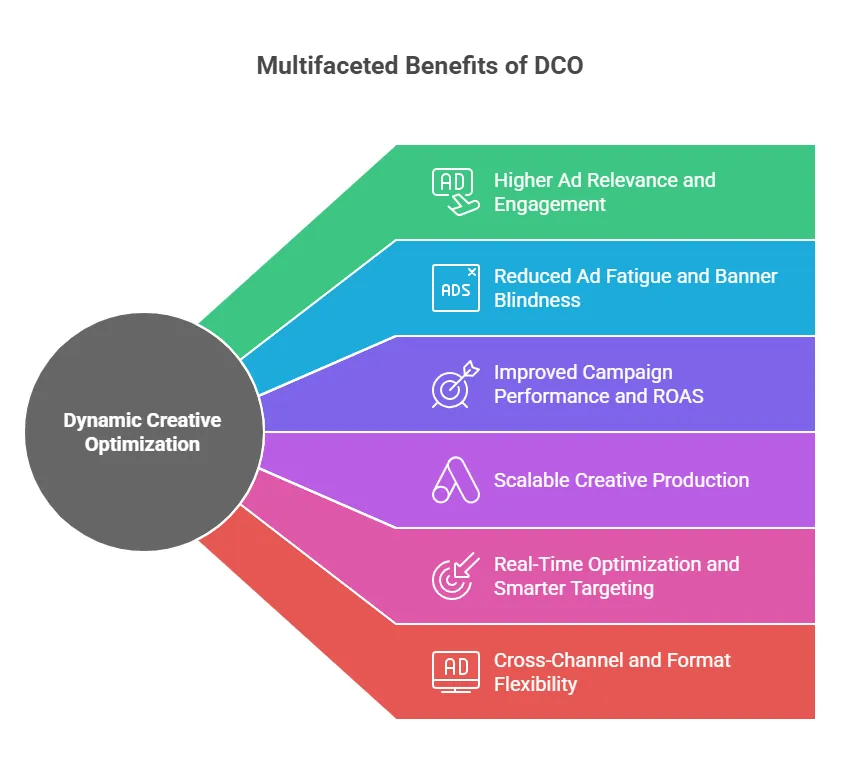
The advantages of flexible Dynamic Creative Optimization adoption are significant. When done right, DCO can unlock new levels of efficiency, relevance, and performance. Here’s how:
- Higher ad relevance and engagement: Because DCO assembles ads from different creative elements (images, headlines, copy, CTA buttons) tailored to each user’s preferences, it increases the ads' relevance for the audience. An IAB research found that almost 90% of consumers are interested in personalized ads, and 87% are more likely to click through.
- Reduced ad fatigue and banner blindness: With static ads, repeated impressions can cause audience burnout or invisibility due to creative fatigue. You need some creative refresh to fight that, and DCO does that automatically over time. That way, the same audience doesn’t see the same ad again and gain.
- Improved campaign performance and stronger ROAS: Dynamically optimized ads simply do better because they target better and are more likely to get clicks. The State of Creative Optimization Report 2025, which focused on mobile app ads, found creative optimization resulted in install lifts of 33% on ad networks and 65% on socials.
- Scalable creative production: You don’t need to design hundreds or thousands of ad variations per campaign manually. A DCO-enabled creative management platform can reuse a base set of creative assets and dynamically assemble variants. That can dramatically reduce time for marketers, and campaigns can go live rather quickly.
- Real-time optimization and smarter targeting: DCO integrates data signals to serve the “right ad version” per impression automatically. This adaptability means your campaigns respond in real time to changing user behavior and context. This ability particularly comes in handy for retargeting. And retargeting can increase conversion rates by as much as 150%.
- Cross-channel and format flexibility: DCO with DSPs is not limited to social or display banner ads. It can power ads across display campaigns, programmatic advertising networks, and video formats. Even DOOH advertising can use dynamic content, though it isn’t DCO in the strict sense because it doesn’t personalize ads at a user level. That means you can coordinate broader media strategies while maintaining consistent, personalized ad creative across different channels and formats.
Dynamic Creative Optimization Examples
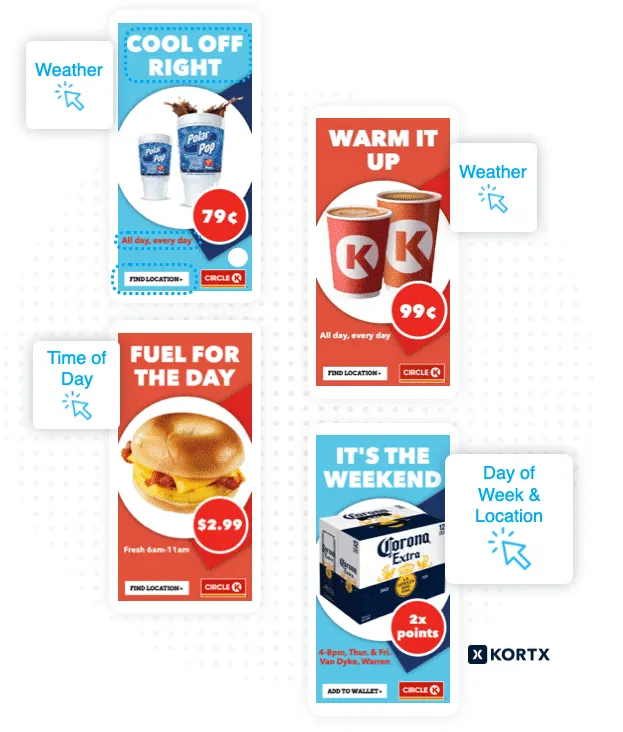
DCO-featuring platforms can perform a wide range of real-time adjustments to an ad's creative elements to personalize it for each user and context. Here is a list of common DCO optimizations:
Product/Item Retargeting
This is one of the most common DCO use cases. The platform dynamically displays the exact products a user previously viewed on a website but did not purchase.
We advise you to use this high-relevance approach to re-engage the users and nudge them toward completing the transaction. You’ll typically feature the product that they have explored before, using images and details from the product feed.

Geolocation
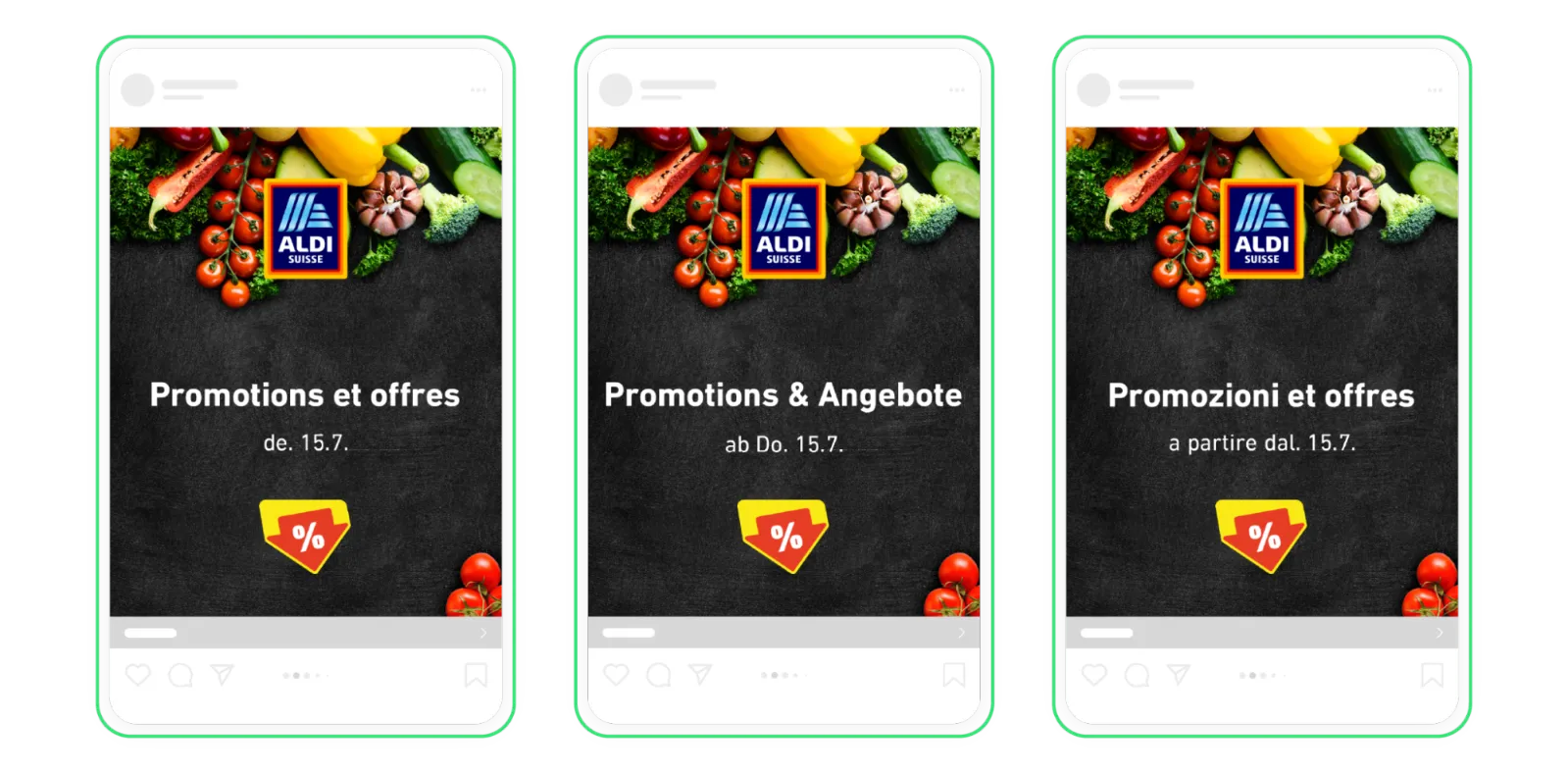
The ad creative is adjusted based on the user's real-time location or even local weather conditions. For example, a restaurant chain might show an ad for a location nearest to the user, or an apparel brand might promote rain jackets during a storm or ice cream on a hot day.
You can also use location-based creative optimization for real-time localization of ad language. You can translate the same ad copy into the local language based on the user’s city or country, for instance.
Messaging and Call-to-Action (CTA) Testing
DCO automatically tests and serves the most effective headline, body copy, or CTA button for a specific user segment or campaign goal. It can rotate between CTAs like "Shop Now," "Learn More," or "Get 20% Off" to determine which drives the highest conversion rate.

Dynamic Pricing and Offers
The ad creative can be instantly updated to reflect current inventory, sale prices, or promotional offers pulled directly from a product feed. This ensures your ad is always accurate and creates a sense of urgency with phrases like "Limited Stock!" or "Sale Ends Today."
From our experience, this can come in handy when prices are fluctuating, or you’re running limited-time offers.

Behavioral Signal Optimization
Ads are optimized based on real-time user signals like the type of content they are viewing on the webpage or the time of day. For instance, an ad may show a more visually exciting creative to a user who is browsing an entertainment site versus a more informative, text-heavy creative to a user on a financial news site.
Platforms and Tools for Dynamic Creative Optimization
If you’re looking to implement DCO at scale, you have several options based on the type of ads you want to run and the channels you wish to use. The good news is that DCO is a core offering by several DSPs that power programmatic advertising. In addition, major ecommerce, search, and social media platforms also offer DCO capabilities in some shape or form for advertisers.
Below are several widely used solutions that advertisers (especially ecommerce, retail, or high-volume brands) turn to.
- Criteo DCO+: Criteo is one of the most established programmatic DCO platforms. We like that it uses AI-powered decision engines to generate real-time ad content personalized for each shopper. Their system reportedly analyzes over 120 “shopper intent signals” to decide which creative variation to show and can boost click-through rates (CTR) by up to 31% compared with static ads.
- Zuuvi (integrated with Google Studio and other ad servers): This platform is useful if you manage large product catalogs or many geographic/localized offers. You’ll appreciate how it links product feeds or store-level data (inventory, local promotions, store hours, etc.) to creative templates. You can create thousands of accurate, highly targeted ads in minutes.
- Adobe Advertising Cloud: Adobe Advertising Cloud does not provide native, full-scale DCO anymore, but it integrates with third-party dynamic creative partners (such as Flashtalking or Jivox) to support dynamic templates and personalized ad assembly within its DSP workflow. It connects directly to Adobe Experience Cloud for segmentation, personalization, and real-time data signals. We’ve used it before to manage creative templates, responsive formats, and localization across display and video campaigns for several of our clients.
Besides DSPs, you also have DCO features from Amazon, Google, and Meta.
- Amazon Ad Server (formerly Sizmek Ad Suite): It offers advanced dynamic creatives, feed-based personalization, and rule-based optimization across display ads, video, and rich-media formats. We like how it supports full creative component swaps (images, text, pricing, CTA buttons) and integrates with Amazon DSP for dynamic bidding + dynamic creative in a single workflow.
Pro tip: The Amazon DSP bidding algorithms operate separately. The system doesn’t merge bidding and creative decisioning into one unified engine.
- Meta Advantage+ Creative: Meta’s native DCO system is now built into the Advantage+ suite. It automatically varies creative elements (backgrounds, formats, text placements, music, and responsive layouts) using machine learning. And those changes are based on its own audience data, user activity, interest signals, and behavioral data to create the best-performing ad combinations in real time.
- Google Display & Video 360: DV360 supports dynamic display campaigns when paired with Google Studio or Campaign Manager 360 (Google’s ad server), which handle the actual dynamic creative assembly. DV360 itself is responsible for delivery and optimization, not the creative decisioning layer. It pulls from product feeds, profile fields, and first-party data.
- Google Display Ads (Google Ads Dynamic Display): Google Ads dynamic display campaigns mainly support retail, travel, hotels, real estate, and other feed-based verticals. Local services aren’t part of Google’s dynamic vertical templates. This technology automatically assembles creative assets using your creative feed or product catalog. It also considers objectives (CTR, conversions, ROAS) for creative optimization. We typically recommend this for smaller teams that don’t need Google’s larger DSP setup.
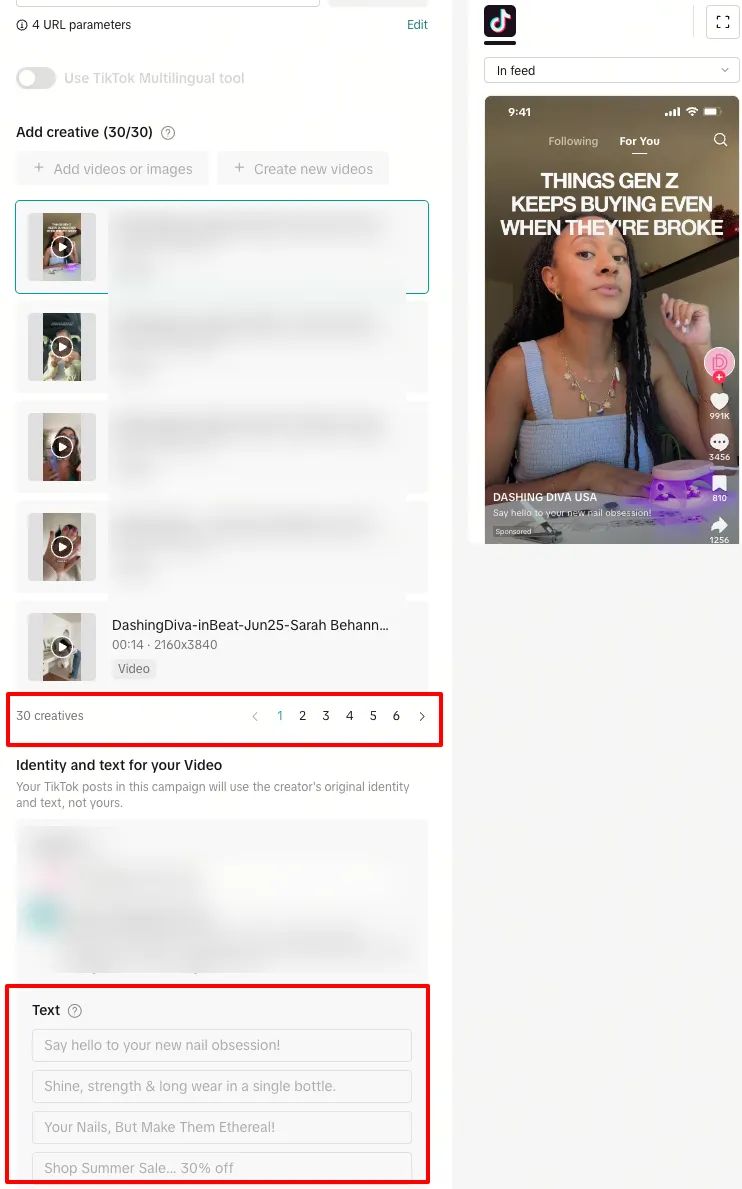
- TikTok Smart+ Campaigns: This AI-powered automation solution simplifies and optimizes ad performance across objectives such as driving sales, app installs, or lead generation. Advertisers provide their business goals, budget, and creative assets. TikTok's machine learning algorithms automate targeting, bidding, and delivery, but they rotate complete creatives rather than dynamically recombining elements. It’s automation, not full DCO.
At inBeat, we constantly use features like TikTok Smart+ Campaigns for paid social media ads to fine-tune targeting, retargeting, and personalization dynamically. It’s one of the many ways we make sure CPA stays low even as campaigns continue to run for months.
And as a creator-focused agency, we frequently use UGC assets as creative, which can be much more impactful.
Check out our complete guide for TikTok advertising.
Trends in DCO
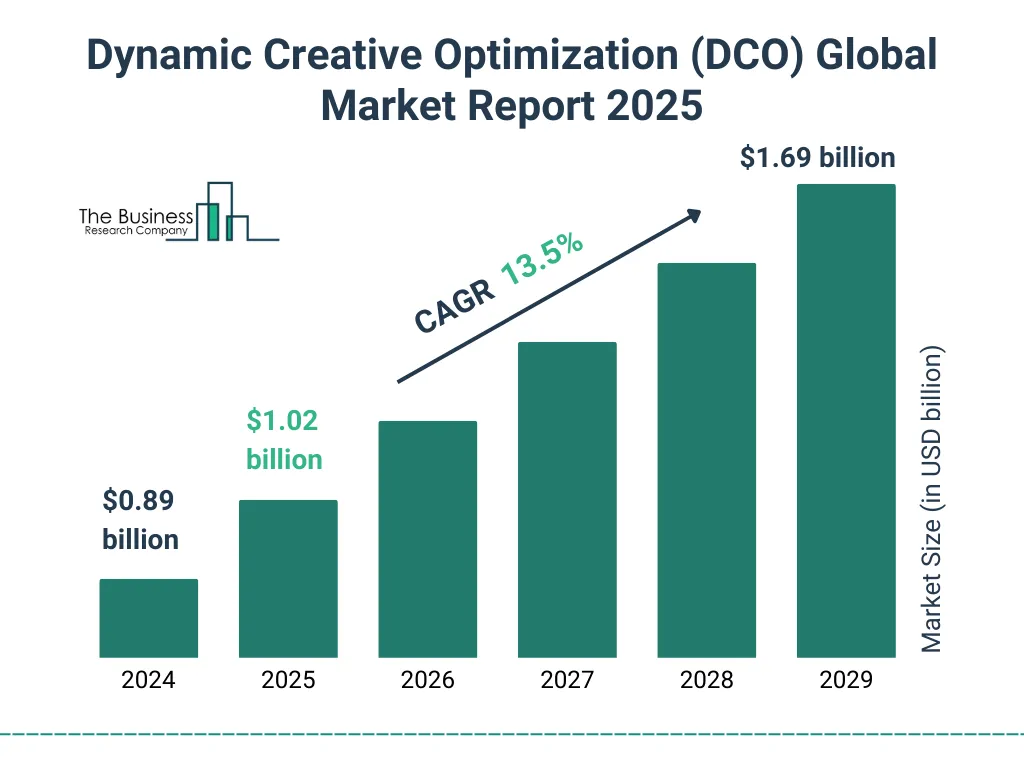
The global DCO market is projected to grow from roughly US$1.02 billion in 2025 to US$1.69 billion by 2029.
This growth indicates that more advertisers and media-strategy teams (including ecommerce, SaaS, financial services, consumer packaged goods, and more) are recognizing the value of dynamic creatives, feed integration, and real-time optimization across programmatic advertising, as well as other types of display ads and video campaigns.
Marketers are using it to transform full-funnel advertising by tapping data points from the customer journey to dynamically optimize ad creatives.
That’s why the ad may look very different for a user who is already familiar with the brand and has engaged with it before, compared to someone stumbling upon it for the first time.
So the same campaign could be used to target audiences at different stages of the funnel. This can be particularly beneficial for B2B marketing scenarios because:
- B2B buying cycles are longer and involve multiple decision-makers.
- Retargeting plays an important role in B2B.
- Higher deal values justify personalization.
- B2B buyers revisit content multiple times.
- Also, account-based marketing (ABM) aligns perfectly with DCO.
Privacy will also impact DCO significantly going forward because, for the most part, it relies on consumer tracking.
With third-party cookies declining, it will be consensual zero and first-party data that will power DCO efforts by advertisers.
Here’s what Dev Sharma, an ad tech expert, says:
“DCO technology is evolving to leverage privacy-friendly data sources, like contextual targeting and non-identifying data patterns, to deliver relevant ads without compromising compliance. Privacy-first DCO solutions that utilize AI to interpret audience behavior in a non-invasive way are expected to become industry standards, allowing marketers to personalize at scale while respecting user privacy.”
How inBeat Agency Does DCO
We have harnessed the power of DCO in many social media campaigns, particularly those centered on conversions. In fact, DCO is a part of our strategy for almost all paid media, not just socials.
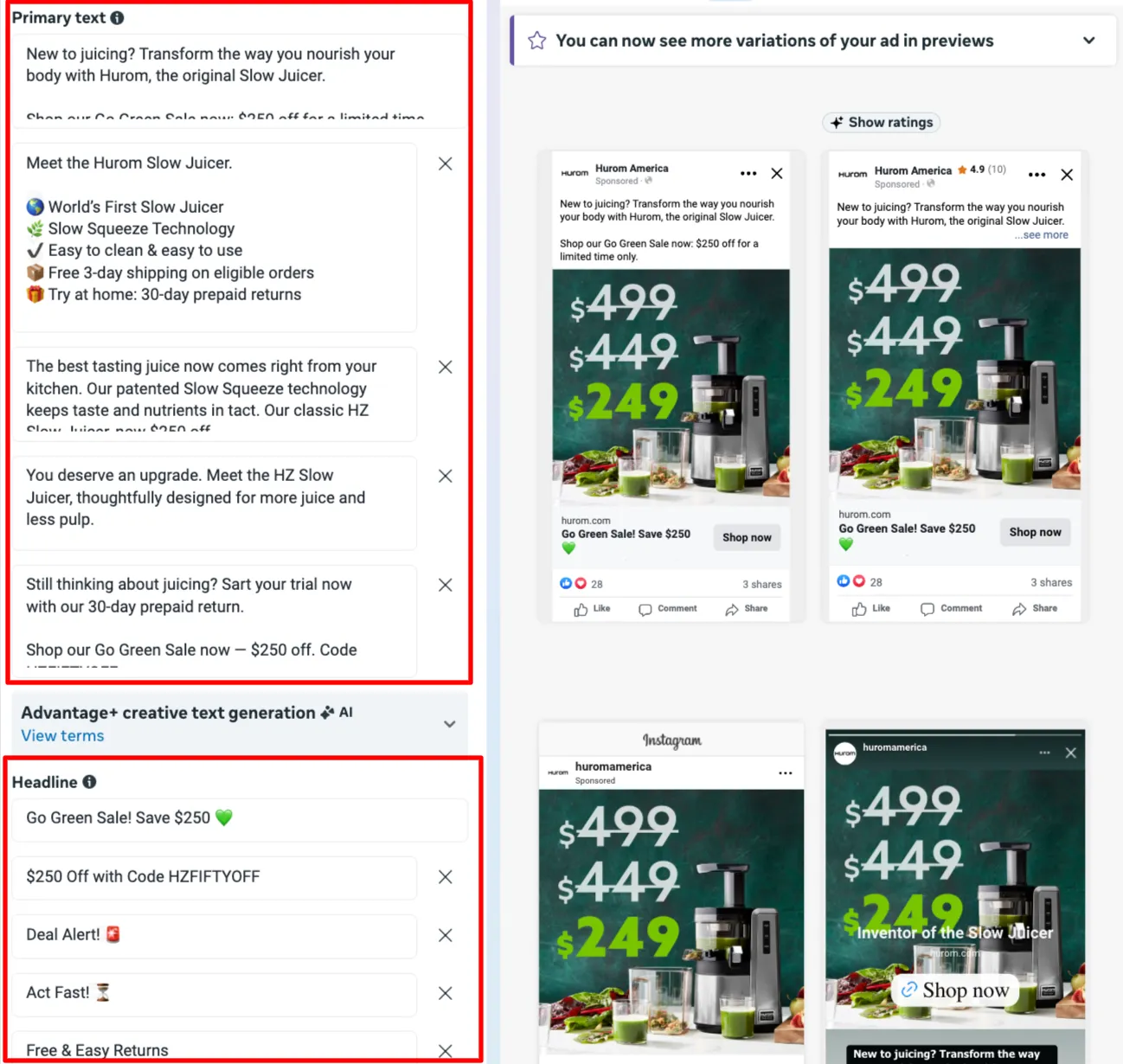
We typically use one image or video with different versions of the headline and CTAs.
For more flexible campaigns (that are primarily visibility and awareness focused, like on TikTok), we also use multiple assets like branded videos and UGC, so the same campaign rotates through different videos. That helps minimize fatigue without necessarily setting up a new campaign altogether.
Here’s an example of creative optimization for Hurom’s Facebook campaigns:
For larger display and retail campaigns, we turn to more sophisticated ad tech platforms, particularly DSPs with built-in DCO tools that can scale creative optimization and personalization across channels.
We’ve been consistently managing a paid media spend of $20 million each month for a variety of brands: consumer goods, services, SaaS, and more. And we go the extra mile to ensure each dollar works for our client’s goal.
We’re pros with creator-led social campaigns and leverage native DCO functions on Meta and TikTok to keep campaigns fresh and optimized.
Want to find out what we can do for your brand? Book a call today!
FAQ
What’s the difference between dynamic creative and dynamic creative optimization?
Dynamic creative simply assembles ad variations automatically (for example, swapping creative elements like main images, copy, or CTA buttons). Dynamic creative optimization goes further by using machine-learning algorithms, performance data, and user data to optimize which ad variation is shown. That helps improve CTR and ROAS over time.
Does dynamic creative optimization require cookies?
Not necessarily. Modern DCO works with first-party data, contextual data signals, profile fields, and browsing history where consent exists. As cookie-less advertising expands, DCO is shifting toward privacy-safe signals (geographic data, device type, session context) rather than relying on third-party cookies.
What are the challenges of DCO?
The biggest challenges of implementing DCO are:
- Ensuring you have clean first-party data and accurate audience segmentation.
- Preparing modular creative assets so the algorithm can build meaningful ad variations.
- Avoiding creative assets that break brand consistency when mixed dynamically.
- Managing the complexity of feeds, dynamic templates, and reporting and analytics across DSPs, ad servers, and creative management platforms.
When should you use dynamic creative optimization?
Use DCO when you manage many audiences, products, or geographic locations. You can also use it when you see ad fatigue in display campaigns, especially on platforms like Facebook and TikTok. It’s particularly effective with large creative feeds, high-volume ad campaigns, and performance-driven media strategy.
How can I get started with DCO?
Start with a small set of modular creative assets (main images, backgrounds, copy blocks), connect your first-party data or creative feed, and run initial A/B testing inside your DSP or ad server to validate combinations. Most advertisers begin with built-in DCO tools in platforms such as Facebook, Google DV360, or Amazon DSP before investing in a full creative management platform.