.svg)
.svg)
.svg)
.svg)


.svg)




%20(1).png)

In an economy where digital ad costs rise faster than conversion rates, the smartest brands are finding leverage in one another instead.
That leverage takes shape as brand partnerships, a marketing strategy that exchanges competition for collaboration and shared growth.
Pro tip: If you want to do brand partnerships the right way, we reviewed the best brand marketing agencies on the market.
What Are Brand Partnerships?
For e-commerce brands and agencies alike, brand partnerships mean tapping into new audiences and leveraging credibility while offloading some of the costs associated with reach.
When two brands join forces, something interesting happens: people remember them.
One study found that 47% of consumers recalled a brand after seeing it in a collaboration, compared to just 38% when the brand appeared on its own. That kind of lift is the outcome of two brands aligning their goals, their audiences, and the story they’re trying to tell.
While this may sound great in theory, there is also the other side of the coin: partnerships that are done poorly can backfire just as quickly without a strategy. What may look like one of the most promising collabs of all time can turn into a cringe headache at best, or a branding nightmare at worst.
Now, the good news is that building and scaling meaningful brand partnerships is a learnable, repeatable process, one that turns collaboration into a performance channel.
This guide breaks down the process into practical steps, from defining your "why" to measuring results.
TL;DR
- Brand partnerships turn collaboration into growth by sharing audiences, trust, and resources.
- The best ones start with a clear purpose: reaching new audiences, cutting acquisition costs, or co-creating products.
- Fit beats fame - the right partner aligns in values, vision, goals, audience, and execution capacity, among other aspects.
- Clear KPIs and communication keep both sides accountable and productive.
- Agility post-launch (testing, feedback, and adaptation) separates success from noise.
- Partnerships fail when they are treated as campaigns instead of genuine relationships.
- Alignment first, activation second - that's the foundation of every lasting collaboration.
What Brand Partnerships Really Are
Brand partnerships are strategic alliances between two or more brands that share resources, audiences, or goals to create mutual value. Unlike sponsorships or paid endorsements, a partnership implies symmetry.
And we like how each side brings something distinct to the table, whether that's distribution power, reach, content creation, or customer trust.
In practice, brand partnerships come in many forms.
- Some are as simple as a co-branded giveaway.
- Others evolve into long-term product integrations or joint campaigns.
For example, Nike's collaboration with Apple on the Nike+ fitness line is a classic: hardware meets lifestyle branding, forming an ecosystem that serves both audiences.
The reason it's a classic is that Nike and Apple’s partnership dates back much further than the Apple Watch. In 2006, they launched the Nike + iPod Sport Kit, which embedded a sensor in running shoes to wirelessly sync workout data (distance, pace, calories) into an iPod.
Then, one decade later, in 2016, they relaunched the collaboration with the Apple Watch Nike+, bringing together Apple’s high-performance wearable tech (with GPS, water resistance, and a brighter screen) and Nike’s fitness-obsessed audience.
This partnership succeeded because it combined Apple’s hardware and software sophistication with Nike’s athletic credibility. Basically, it created an ecosystem where users don't simply track their workouts; they do so as part of a running community.
It's why alignment is so important. It became clear to both brands that the best way to achieve success was to build a community around shared goals.
More recently, Adidas & Gucci have shown how even high-end and streetwear brands can merge their style languages to capture overlapping demographics.
The collection features bold stripes, color-blocked fabrics, and co-branded graphics that fuse Gucci’s interlocking “G” with Adidas’s iconic trefoil and three stripes. In terms of accessories and footwear, you have pieces like the Gazelle sneaker, which now features Gucci’s GG monogram alongside Adidas branding.

The success of this partnership lies in its seamless blending of heritage: Adidas brings its streetwear reach and sporty DNA, while Gucci brings luxury flair. Together, they tapped into overlapping audiences that crave both performance and prestige.
It was a different way to build community than Apple and Nike.
While the former doubled down on its branding, Adidas sought to stand out in an avant-garde fashion (literally) from its peers. Why wouldn't sportswear also be prestigious? Why couldn't it be an object of high fashion?
As you see, these partnerships redefine what each brand represents within its culture.
So, why does this matter for marketers?
Well, realistically, your brand's perception is increasingly shaped by its associations. A good partner extends your brand's story in ways your ads alone can't. As the saying goes, you are the sum of those you surround yourself with.
Why Brand Partnerships Work
A well-matched partnership excels in many aspects, but three key areas stand out for us.
Firstly, it multiplies audience reach.
We’ve seen it happen tens of times. A strategic partner introduces you to a pool of customers who already trust someone else, and now, through that relationship, start trusting you. Think of it as permission-based expansion: their credibility becomes your key to access.
Secondly, it transfers credibility.
When a trusted brand collaborates with yours, it serves as a credibility signal, reducing the perceived risk of engagement. Research in co-branding shows that consumers interpret brand alliances as endorsements of quality and trustworthiness.
For example, when a well-recognized brand enters a joint product, consumers assume it has lent its equity, thereby increasing the new brand’s credibility.
Thirdly, partnerships drive resource efficiency by sharing production, creative, and media costs, allowing both parties to reach new audiences without incurring duplicate expenses.
We’ve seen plenty of case studies showing that partnerships and co-marketing commonly reduce customer acquisition costs when executed effectively.
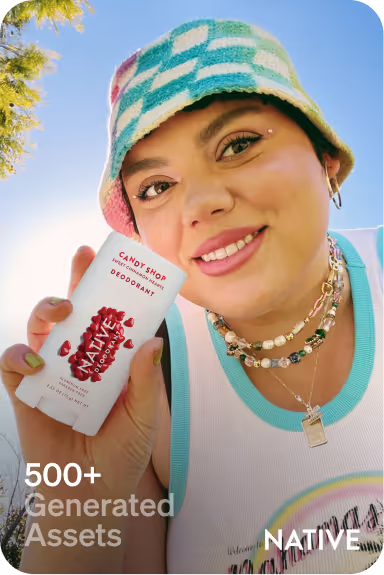
One such example is our campaign for Nordstrom teaming up with Wildfang, a lifestyle brand known for challenging fashion norms. We helped the duo launch a more inclusive, non-binary apparel line, all offered in a body-diverse range.

For that, we used influencers to engage their Gen Z consumers who increasingly demand both inclusivity and social purpose.
As it becomes increasingly apparent by this point in the article, brand partners offer the opportunity for compounded exposure.
How to Build a Successful Brand Partnership (Step by Step)
Great partnerships sometimes start with a handshake, but they still require a strategy. To move from idea to impact, brands need to align on purpose & storytelling, vet the right collaborators, design the mechanics of the relationship, launch with intention, and optimize based on real outcomes.
This section guides you through that progression and illustrates how successful collaborations are actually formed.
Step 1) Map the "Why" Behind Your Partnership
Before sending your first pitch, you need clarity. Not all partnerships are created equal, and the "why" behind yours determines everything that follows.
What does success look like to you and your partner?
The answer to that will shape both partner choice and structure.
Do you want to reach a new audience segment (A), lower acquisition costs (B), or launch a co-branded product (C)?
A) If your goal is to reach a new audience, your ideal partner should have an adjacent customer base (not identical) to yours.
You want overlap in interests but a difference in demographics. Too much similarity leads to cannibalization, while too little creates disconnect. A fitness apparel brand partnering with a nutrition company, for instance, makes far more sense than joining forces with another clothing label chasing the same buyers.
B) If your focus is to lower acquisition costs, look for partners whose credibility or community helps you convert more efficiently.
A niche tech brand could team up with a trusted lifestyle influencer network, leveraging established trust to enhance its image and reduce advertising expenses. When done correctly, this approach minimizes the cost per acquisition while adding authenticity to your outreach.
C) If your objective is to launch a co-branded product, consider aligning with a creator-driven brand that excels at storytelling but lacks your distribution strengths.
You bring the scale, they get the audience affinity, and together, the result feels organic rather than manufactured. Done well, such collaborations generate buzz and measurable sales uplift like nothing else.
Pro tip: Once you have a goal, we advise you to turn it into a measurable KPI. Avoid metrics like "increase awareness" because they're nonspecific and untrackable (technically, you can track it via impressions, but that is not a highly accurate metric when used by itself).
Instead, go with something tangible, like the following example:

Step 2) Finding and Vetting the Right Brand Partner
The best partnerships start with alignment, not opportunity. A brand might have a massive audience, but if its tone, ethics, vision, goals, or customer experience contradict yours, the fallout can be downright traumatic.
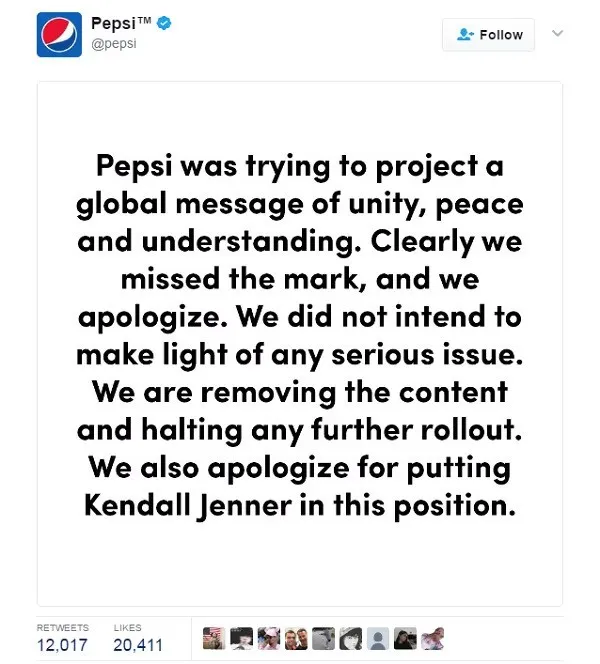
Let’s not forget the infamous Pepsi & Kendall Jenner campaign, which became a lesson in how poor alignment can turn cultural tone-deafness into a PR disaster.
What could go wrong, you ask?
Well, the campaign was widely criticized because it trivialized social justice movements. The ad showed Jenner handing a can of Pepsi to a police officer during a protest, implying that a soda could resolve tension between protesters and law enforcement.
Critics called it tone-deaf, insensitive, and out of touch with the real struggles behind activism. The backlash was immediate: social media erupted with criticism, forcing Pepsi to pull the ad and issue an apology.
To avoid such a superficial stunt, start with a simple audit, as follows:
- Audience fit: Are your customers similar but not completely identical? Then pursue complementarity, NOT duplication.
- Brand fit: Do your missions and aesthetics feel cohesive? Patagonia & REI, for example, could easily collaborate on an environmental campaign, but neither would partner with a fast-fashion retailer without risking alienation of its core customer base.
- Value exchange: What does each partner tangibly gain? What is in it for each party? One might bring creative power, the other data insights or media spend. The exchange must feel equal.
- Operational readiness: Do both sides have the bandwidth and tech stack to execute? Collaboration demands process, not just enthusiasm.
Pro tip: When vetting potential brand partners, dig deeper than mere audience overlap. Review past campaigns and consult with mutual collaborators (if any) to gauge how they handle shared successes and failures.
Step 3) Build the Partnership Structure
Every great partnership rests on a clear foundation, which includes mutual expectations, defined deliverables, and shared accountability.
- Establish goals together. Both sides must clearly articulate what "winning" looks like, whether that involves revenue, content reach, or joint product sales.
- Define ownership: who leads the creative part? Who handles reporting? Who signs off on deliverables? Outline every detail before launch. You have to be aware of what every member of both teams is handling, so it does not turn into a chaotic, endless game of telephone.
- Set timelines and checkpoints. Treat it like a campaign sprint: milestones keep both parties engaged. Not too many to become obnoxious, but not too few to lose track of the next step.
- IP rights, data sharing, and co-branding usage: all must be written. A good partnership agreement is both a safety net and a trust builder. What is written black on white can withstand any scrutiny.
Now, here’s one thing we advise you NOT to ignore.
While all of these are important, above and beyond is the fact that communication cadence determines the health of the partnership.
Weekly syncs coupled with clear KPIs lead to transparent dashboards that prevent "What’s X doing?!" moments.
Data proves this.
When it comes to business companies operating independently, those that reject silo work tend to accelerate progress. HROne shows that organizations with strong cross-functional collaboration and shared dashboards typically deliver projects 30% faster than their counterparts with siloed operations.
This stands just as true for companies collaborating across brand partnerships, and it becomes one of the factors that makes or breaks that relationship.
Step 4) Launch and Execute Your Brand Partnership: Making Collaboration Work
When launch day arrives, the real test begins: Execution.
The first 30 days of a partnership reveal whether both sides can truly operate in sync. Use a shared project management platform (such as Asana, Notion, or ClickUp) to keep tasks transparent.
That way, both teams are tagged, decisions are documented, and all revisions are clearly tracked.
Execution also relies heavily on agility (we get to use agility in its intended business form!).
Sometimes, campaign conditions change: one brand's channel outperforms another, or user feedback drastically shifts the creative direction. In branding, the best partners respond constructively, rather than react destructively.
Pro tip: Keep room in your budget and plan for optimization cycles. Never provide a blank stare or arrive empty-handed in a meeting when someone asks for a solution.
When Gymshark collaborated with various energy drink and apparel brands, they didn't lock into one creative route. They adopted agile messaging and regular creative pivots for their brand and partner collaborations.
The team constantly pivoted messaging to match what was trending on social platforms. This included rapid-fire responses to TikTok trends & memes.
Instead of sticking to a fixed campaign narrative, Gymshark continually adjusted its tone, humor, and creative assets to match emerging TikTok trends, allowing the brand to stay culturally relevant and platform-native.
This exact type of flexible approach drove strong engagement across social platforms.
That's what separates collaboration from co-chaos: flexibility backed by real-time data.
This brings us to the next point.
Step 5) Measure Brand Partnership Success and Scale What Works
Measurement tells you what truly worked and what to do next, and it is done continuously, so you may maximize & optimize your efforts. Go beyond vanity metrics, such as impressions or mentions. Focus on joint contribution: what did the partnership achieve that neither side could have done alone?
If you're unsure where to begin, here's a practical framework:
- Attribution: How many conversions or leads came from partnership touchpoints?
- Engagement lift: Did co-branded content outperform baseline brand posts?
- Cost efficiency: Did blended spend (ads + partner channels) lower your CPA (cost per acquisition) or CPM (cost per mille)?
- LTV (lifetime value) uplift: Are partner-acquired customers retaining longer or spending more?
Research and partner-marketing surveys show that documented partner programs and integrated measurement significantly improve perceived ROI and campaign effectiveness.
BUT you have to measure that ROI correctly.
Pro tip: We advise you to integrate partnership data into your CRM and attribution systems to unlock clearer incrementality. The brands we’ve seen do this usually report materially higher ROI on co-marketing.
Once you have data, decide whether to scale, sustain, or sunset the collaboration. Some partnerships are seasonal by design, while others evolve into ongoing ecosystems.
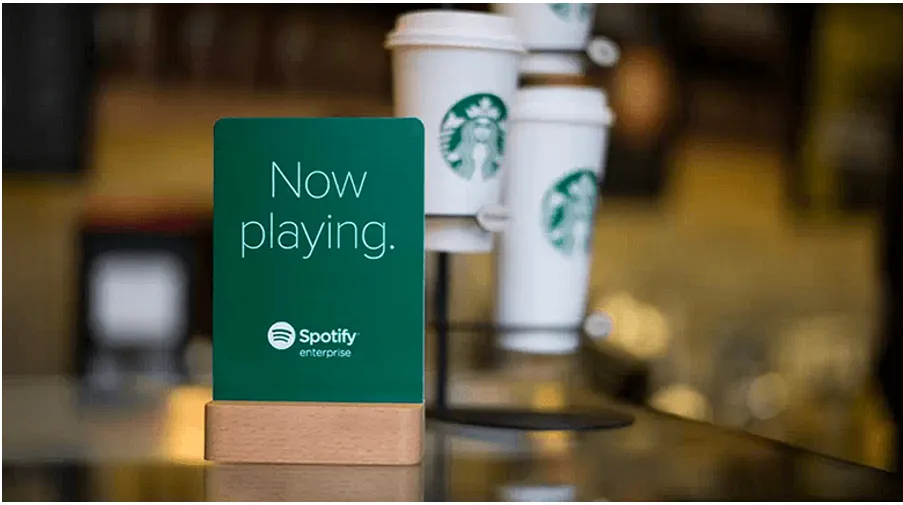
A good example is that between Starbucks and Spotify, where user playlists become a key driver of loyalty.
Remember: Document your learnings: what made communication easy, what slowed approvals, what content formats converted. Every partnership, even failed ones, serves as a blueprint for your next one.
Common Brand Partnership Fails (and How to Avoid Them)
Even seasoned marketers make mistakes, and the same few errors tend to recur across brand partnerships.
A big name or trending logo might seem tempting, but a popular brand isn't automatically a good brand partner. If their audience doesn't care about your category or doesn't see a logical connection between the two brands, exposure won't translate into sales; it'll just dilute positioning.
- Shallow KPIs are the bane of any project.
Goals like "boost awareness" or "increase reach" sound promising but mean little without measurable benchmarks. Marketers should define success in terms of numbers tied to conversions or engagement, rather than vague ambitions. A shared goal, grounded in data, prevents both parties from walking away unsure of whether the partnership was successful.
- Everyone needs to pull their weight.
That's when one brand shoulders the brunt of the workload or media spend (think 70 - 80%), while the other just cruises. Partnerships built on imbalance breed frustration and short lifespans. Equitable resource sharing and clearly outlined responsibilities help avoid that.
- Communication is essential, both for couples AND businesses.
Partnerships are living systems. Without ongoing communication or post-launch feedback loops, performance inevitably plateaus. You must schedule regular check-ins and make adaptive adjustments to keep collaborations thriving.
- Speaking of couples, a brand partnership IS a relationship.
A campaign ends; a partnership evolves. The strongest partnerships don't stop after the first press release. They build on shared wins, turning collaboration into long-term growth.
7 Real-World Brand Partnership Examples that Worked
Some partnerships have become textbook examples of collaboration done right.
1) GoPro + Redbull

Their partnership was long-running, built on shared energy, storytelling, and spectacle. Red Bull fuels the events, GoPro powers the perspective, and together they tell the same story: human adrenaline captured from every possible angle. Their audiences overlap not just demographically but emotionally - both brands celebrate action, endurance, and thrill.
2) Spotify + Uber

By allowing users to sync their playlists to their rides, the two brands created a seamless and personal user experience. It wasn't a flashy campaign: it was a UX solution that quietly improved engagement on both sides, proving that the best partnerships sometimes solve friction instead of forcing hype.
3) LEGO + NASA

Their themed sets didn't just sell; they inspired curiosity about space exploration and STEM learning among children. It's a perfect case of two brands advancing shared missions (creativity and discovery) through a tangible product.
Each of these collaborations worked because they began with alignment. Everything, from the product and content to the audience and the final goal, overlapped naturally. Activation only amplified what was already there: authentic shared purpose.
4) North Face × Gucci

The North Face (outdoor gear) teamed up with Gucci (luxury fashion) to launch a capsule collection.
This is a perfect adjacent-but-not-identical audience play in our book. Gucci gains exposure to outdoor‑wear lovers who may not normally splurge on high fashion, and The North Face taps into Gucci’s fashion-forward, luxury-consumer base. The partnership lets both brands reach overlapping yet distinct segments because they merge heritage outdoor with luxury.
5) Heinz and Absolut Vodka
Heinz also launched a Tomato Vodka Pasta Sauce in partnership with Absolut Vodka.
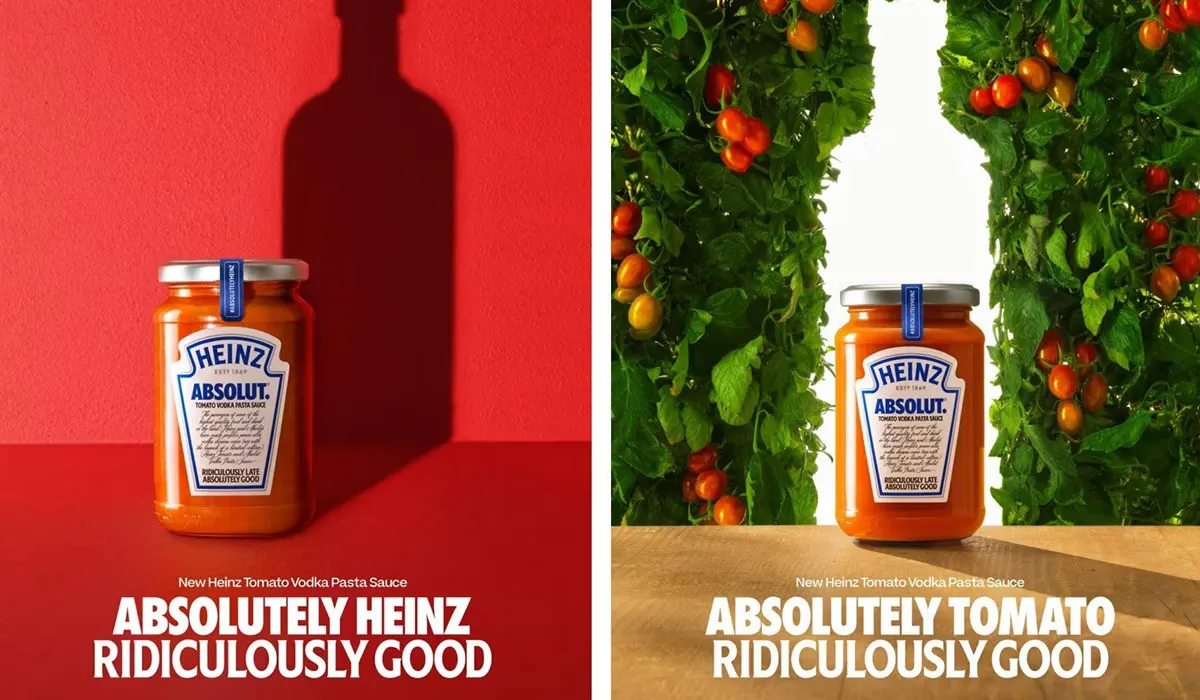
Heinz taps into drink-culture consumers via Absolut; Absolut, in turn, extends into the food aisle, allowing each brand to reach customers the other may not normally access. The collaboration drove a 50% increase in overall pasta sauce sales.
6) Persil and Siriano
In 2024, Persil (laundry detergent) partnered with fashion designer Christian Siriano for a live 24‑Hour Wardrobe Refresh Hotline.
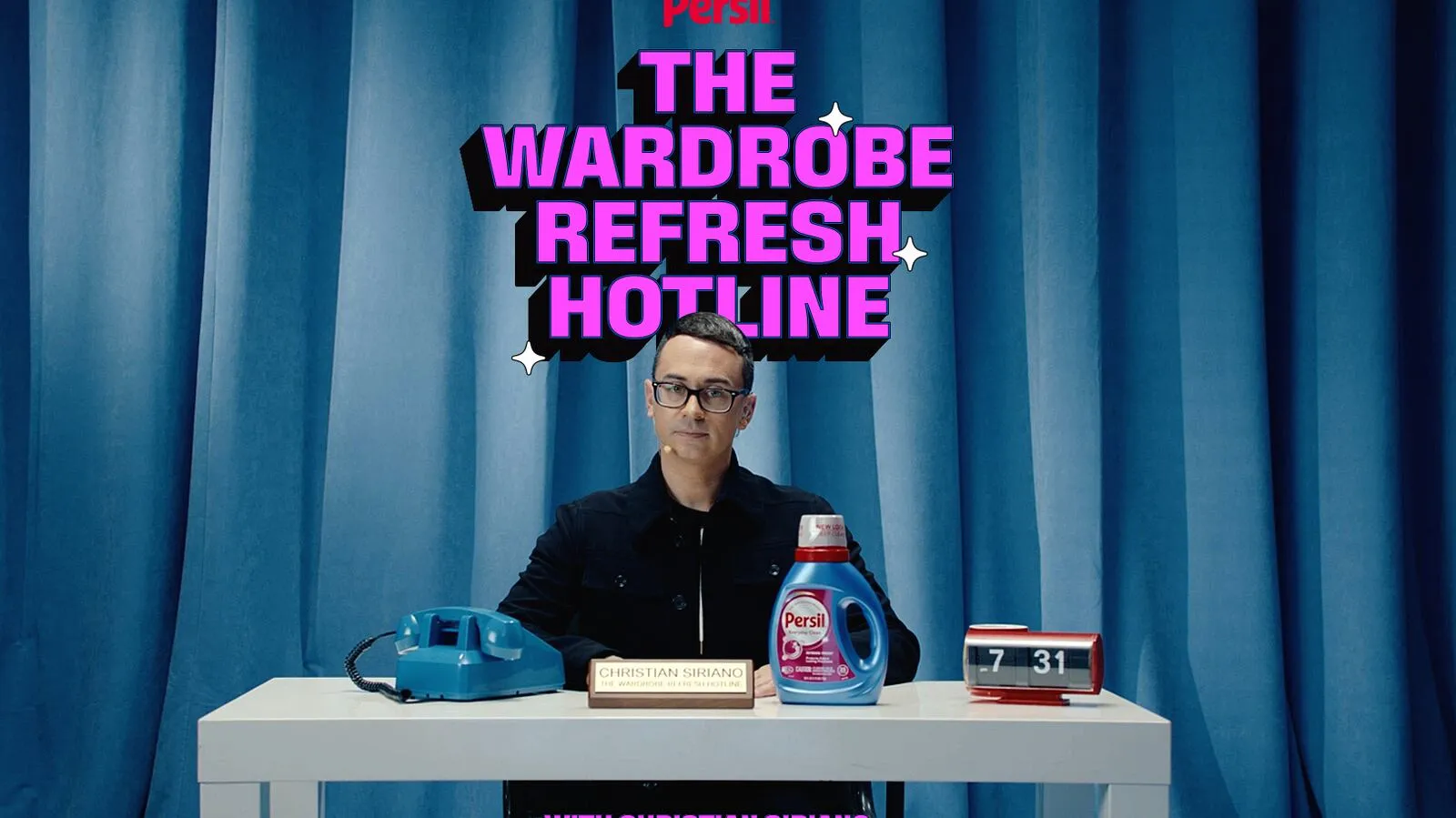
Now, normally, Persil sells detergent, which is not what you may call a “sexy” product. However, through this partnership, they’re building trust via design/fashion credibility.
Partnering with Siriano gives them relevance in fashion-style communities, so they can convert more authentically rather than through hard-sell detergent ads. This helps reduce their acquisition burdens by leaning on Siriano’s cultural capital.
7) Coca-Cola and Oreo
In 2024, Coca-Cola and Oreo teamed up to launch two co-branded products: Oreo-flavored Coca-Cola Zero Sugar and Coca–Cola–inspired Oreo sandwich cookies, introduced under their “Besties” campaign.

From our perspective, this is a brilliant co-branding play: Coca-Cola brings its mass distribution and drink expertise, while Oreo brings its snack heritage and playful identity.
Together, they created something that feels authentic (not just a logo mash-up) and drives both cultural relevance and sales.
Tools that Streamline Brand Partnerships
We know our readers expect utility, so here are some tools we use to manage brand partnerships efficiently:
- Airtable - Partnership database management and content calendar alignment.
Airtable is used to centralize partner information, track collaboration stages, manage deliverables, and align both teams around a shared content calendar. It essentially becomes the operational “source of truth” for every partnership.
- Notion - Shared planning hub for both brand teams.
Notion gives both brand teams a collaborative hub where they can outline goals, store assets, draft briefs, document decisions, and keep everyone aligned on strategy. It reduces back-and-forth and keeps the partnership organized.
- Brandwatch - Monitor co-branded campaign sentiment.
Brandwatch helps monitor how audiences react to the partnership across social media, detect emerging trends or issues, and measure shifts in sentiment. It’s invaluable for adjusting messaging mid-campaign.
- Looker Studio (formerly Google Data Studio) - Build shared performance dashboards.
Looker Studio allows you to build shared dashboards that visualize KPIs for both brands. It keeps everyone aligned on what’s working and where to optimize.
Create Stronger Brand Partnerships with inBeat Agency
Nowadays, performance is more about connection than numbers. However, brand partnerships merge these two forces seamlessly (when pulled off well).
They combine measurable impact with emotional resonance, giving marketers something algorithms alone can't: shared trust.
At inBeat, we help brands execute partnerships that develop into core memories that genuinely resonate with consumers (just like we did for Nordstrom × Wildfang.
We create campaigns that align with vision, mission, goals, purpose, audience, and product to deliver measurable results.
If you want to see how a strategic brand partnership can elevate your brand, contact us today, and let’s pave the way for another success story.
FAQ
Q: What's the difference between a brand partnership and co-branding?
Co-branding is a product-focused partnership idea, where two brands create a shared offering or piece of content. A broader brand partnership can also include co-marketing, Instagram Stories takeovers, social media channel swaps, event collabs, and longer strategic partnerships built for continuous relationships.
Q: How long should a partnership last?
It depends on the goal. A simple influencer marketing activation or short campaign may run for a few weeks, while deeper strategic partnerships, as a good rule of thumb, grow over months or even years if the relationship creates consistent value for both audiences.
Q: Should small brands pursue partnerships?
Absolutely. Smaller brands often succeed with micro-collabs, especially when the audience alignment is strong. These partnership ideas work well across social media channels, and micro-influencers can deliver major impact with authentic product mentions. Even short engagements can turn into continuous relationships when the fit is right. Our micro-influencer framework demonstrates how smaller collaborations can scale efficiently.