.svg)
.svg)
.svg)
.svg)


.svg)







YouTube Shorts was launched to keep short-form attention inside YouTube’s ecosystem, and it’s making good competition for TikTok or Instagram Reels.
This happens because fast clips hook viewers, guiding them toward long-form videos, live streams, podcasts, and other formats you publish.
That shift matters if you’re a creator trying to grow beyond one viral moment. It also matters if you’re a brand aiming to increase reach without relying solely on TikTok ads.
Shorts has become YouTube’s main entry point for discovery. Daily view counts are already massive.
YouTube continues to add longer Shorts, stronger ad placements, and clearer monetization rules to further push the format.
In this post, we will break down the numbers behind that growth and what they mean for your content and media strategy.
Pro tip: If you want Shorts to bring steady growth, not just a quick spike, inBeat Agency can help you build a strategy that turns views into real reach and engagement.
TL;DR
If you're running low on time, here are the highlights of YouTube Shorts stats:
- YouTube Shorts now averages 200 billion daily views, which is close to tripling year over year.
- YouTube is also dominating TV consumption, with 12.5% of all U.S. TV viewership in May 2025. Shorts' growth is happening inside a platform that already leads screen time.
- Around 70% of channels uploading each month are posting Shorts. The format has become standard for creators.
- Engagement is strong. Shorts average a 5.91% engagement rate, slightly higher than TikTok and Reels.
- Monetization is real, but structured differently. Shorts ad revenue is pooled, then creators receive 45% of their allocation. RPMs are lower than long-form, so volume and consistency matter.
What Makes YouTube Shorts Different?
Shorts live inside the world’s biggest video network, and that creates a clear advantage.
First, Shorts is connected to YouTube’s recommendation engine. A Short can take off quickly, and YouTube can then suggest your long-form videos to the same users.
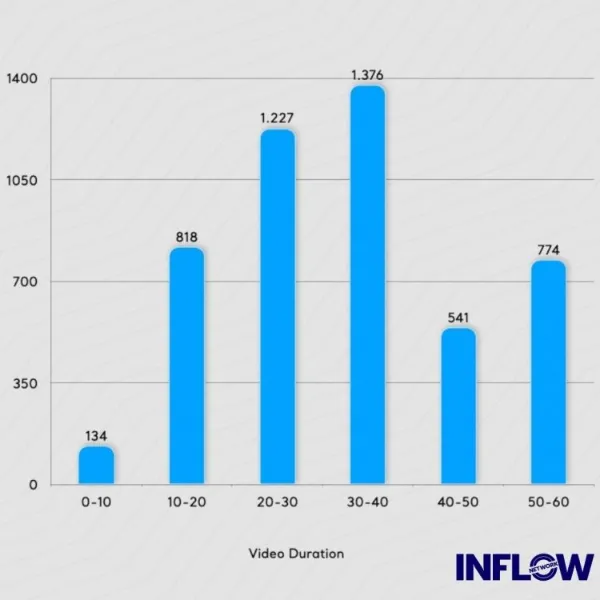
TikTok doesn’t have that long-form depth to support the same kind of follow-through.
Second, Shorts benefits from YouTube’s multiscreen reach. People watch on phones, but also on desktops and smart TVs.
And since YouTube keeps leading overall streaming share, Shorts is growing on top of an already dominant habit.
Third, YouTube is turning Shorts into a stronger business format: three-minute Shorts, premium “First Position” placements, and a clear revenue-share pipeline.
That’s why both brands and creators are investing more time there.
Pro tip: If Shorts is part of your paid plan, it helps to see how YouTube inventory works inside Google Ads and programmatic buys. This guide on programmatic advertising and YouTube placements breaks down how it all fits together.
Why YouTube Shorts Matter in 2025
Shorts changed how people find content on YouTube. The Shorts feed now works like a constant discovery engine inside the platform.
You don’t need a big subscriber base to get reach, just a clip that holds attention long enough for YouTube to keep serving it to new viewers.
Shorts also matters because it’s tied directly into the rest of YouTube. A Short can introduce someone to your channel, then push them into your long videos, lives, or series.
That flow is hard to replicate on other short-form apps.
So if you’re a creator, Shorts is a reliable entry point for new viewers.
If you’re a brand, it’s a discovery channel that sits inside a platform built for deeper intent, longer sessions, and repeat viewing.
And if you’re doing both, Shorts helps you turn fast attention into longer-term retention without jumping between apps.
YouTube’s reach and its recommendation system make Shorts a bigger strategic lever.
Pro tip: Shorts pulls fast reach, but the strongest YouTube plans connect short-form to longer storytelling. These video marketing examples on YouTube show how brands build results across formats.
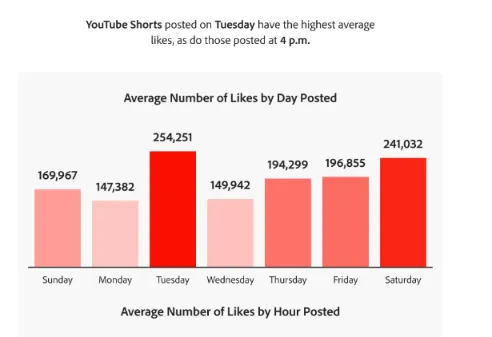
60 Key YouTube Shorts Stats You Should Know
Shorts is shaping how people consume YouTube, how creators get discovered, and how brands buy attention on the platform.
These numbers show the scale, the performance patterns, and the monetization reality you’re working with:

YouTube Shorts Growth and Reach Statistics
To understand why Shorts is worth your time, start by considering how big the format has become and how quickly it continues to expand:
1. YouTube Shorts averages over 200 billion daily views in 2025. This makes Shorts a mainstream viewing habit on the world’s largest video platform.
2. Daily Shorts views grew about 186% compared to 2024, according to The Wrap. The curve is still rising fast, not flattening.
3. The Wrap also stated that YouTube took 12.5% of total U.S. TV viewership in May 2025, leading streaming for the fourth straight month. Shorts' growth is happening inside a platform that dominates screen time across devices.
4. Over 70 billion Shorts were watched every day in 2024, Alphabet Investor Relation reports. Today’s 200B daily number builds on that base, showing how steep adoption has been.
5. Alphabet also shows that around 70% of channels uploading each month are posting Shorts. Creator adoption is now standard.
6. They also talk about how YouTube expanded Shorts length to three minutes. More time per clip allows deeper storytelling and higher watch time.
7. And also how advertisers can book First Position Shorts ad blocks in nearly 40 markets. Premium placement like this reflects the size of Shorts' inventory and demand.
8. YouTube reached 100 million paid subscribers in 2025.
9. YouTube is the world’s second most-downloaded mobile video app.
10. There are at least 910 million Shorts on YouTube, based on #Shorts-tagged uploads.
Key Takeaway: Shorts is now a mainstream format on YouTube, with daily views almost tripling year over year and creator adoption near universal.
The shift to three-minute Shorts and expanded premium ad placements shows YouTube is investing deeper into the format, and reach through Shorts will keep being a primary path to new audiences.
YouTube Shorts Popularity & Usage Statistics
11. 35% of American adults use YouTube to get their news from, which puts YouTube three percentage points behind Facebook.
12. Over 70% of YouTube users watch Shorts a minimum of once a week, according to Zebracat.
13. Estimated 175.1 million people in the U.S. used YouTube Shorts in 2025, though we can expect to see over 190 million using this channel by 2027.
14. There are over 6.5 million creators uploading YouTube Shorts every month, at least once.
15. The number of people who watch YouTube Shorts via connected TVs jumped by 2X worldwide between January and September 2023.
16. People watch over one billion hours of YouTube content each day on their TVs. (This is YouTube-wide, not Shorts, but relevant to the changes we can expect in the future.)
17. Most people watch an average of 14 minutes of YouTube shorts in a session, according to Awisee Agency. That means people are watching about 12–18 videos in that frame.
YouTube Shorts Engagement and Content Performance Statistics
Reach is only half the picture. Short's life or death depends on how people react in the first seconds and how long they stay with the clip. These statistics show what engagement looks like currently, along with the content patterns associated with stronger results:\
18. YouTube ads have a very high click-through rate of 70%, though that’s not valid in all cases.
19. YouTube Shorts has an average engagement rate of 5.91%, as per Resourcera. This is the highest among major short-form platforms.
20. Resourcera also stated that Shorts is slightly ahead of TikTok (5.75%) and Instagram Reels (5.53%), and far ahead of Facebook Reels (2.07%).
21. They also say that a 5.91% engagement rate means that for every 100 views, nearly six lead to a like, comment, or share. That’s a strong signal for a format built around fast swiping.
22. According to INFLOW Network, most Shorts fall between 20 and 40 seconds in length, with 30 to 40 seconds as the most common range. That range reflects where creators are focusing their output.
23. The same analysis from INFLOW Network shows that Shorts in the 50 to 60 second range pull the most views, reaching around 1.7 million views at the top end of the sample. Longer Shorts within the short-form window are performing well.
24. Entertainment is the leading category for successful Shorts, representing 32% of top-performing content. This is according to Market.biz.
25. They also show that Gaming follows with 21% of successful Shorts.
26. And How-to and tutorial content ranks third at 18% for YouTube shorts.
27. The average viewer retention rate for YouTube Shorts is 73%, which is over 20 percentage points above long-form YouTube videos, as per Zebracat.
28. 96% of people admit they prefer watching short-form content.
29. The average watch rate is 2.52% for YouTube Shorts, according to Medium.
30. This watch rate is behind that of Instagram Reels, which reaches 13.09%, as per Medium.
31. Medium also suggests that TikTok’s watch rate reaches an average of 9.06%, also nearly four times higher than YouTube Shorts.
32. Shorts generate comments on 0.05% of all views on average, according to Medium. That’s as much as Instagram reels, though TikTok generates almost twice as many comments.
33. Awisee Agency also notes that trending audio within the first five seconds can improve your reach by 21% on YouTube Shorts.
34. 74% of views on YouTube Shorts come from non-subscribers, according to Zebracat. To increase watch time, encourage your viewers to subscribe.
35. For each YouTube Short clip with at least 10,000 views, you will get an average of 12 to 18 new subscribers, as per Awisee Agency.
36. If you strategically add YouTube Shorts in your marketing strategy along with long-form video content, you have the chance to grow 41% faster (says Awisee Agency).
37. If you have a constant YouTube Shorts posting schedule for 6 months, you can see a 44% growth.
38. The best time to have your YouTube Short go live is at 4 PM on Tuesdays because that’s when you can get the most likes.
39. However, a solid and wider time interval to post YouTube shorts is weekdays between 12-3 pm and 7 to 10 pm.
40. YouTube Shorts about finance have ~10 times higher RPM than those in comedy or lifestyle niches.
41. According to Awisee Agency, humor is the most engaging content type at 48.2%.
42. This content tactic currently outperforms Entertainment (39.1%), Pets (27%), and Food (23.5%).
Key takeaway: Shorts is delivering the strongest engagement among short-form platforms, and the clips that win tend to sit in the 30–60 second range.
Entertainment, gaming, and how-to dominate, so your best odds come from packaging your message inside one of those viewing modes and holding attention past the first swipe window.
YouTube Shorts Audience and Demographic Statistics
Shorts is global, but the strongest pockets of growth and engagement come from specific markets and user segments.
Market.biz also shows who is watching:
43. India holds the largest share of the global YouTube Shorts user base at 24%.
44. The United States follows with 12% of the global Shorts audience.
45. Market data also shows that 54.3% of YouTube Shorts viewers are male, while 46.7% are female.
46. In September 2022, YouTube Shorts reached 29 million user engagements in the United States. This older baseline helps explain why the U.S. keeps ranking as the second-largest Shorts market now.
Key takeaway: Shorts is led by India and the U.S. in user base, with a slight male majority.
If your growth or paid strategy prioritizes either market, or if your ICP leans male, Shorts gives you a bigger runway for reach and early interaction than most short-form channels.
YouTube Shorts Monetization and Creator Earnings Statistics
Shorts can pay, but it pays differently than long-form. The revenue system rewards volume, consistency, and smart use of music.
These stats from Bosswallah show what creators are dealing with:
47. YouTube pays creators 45% of the net revenue from YouTube Premium that is allocated to Shorts. This is part of the platform’s Shorts monetization model.
48. Shorts monetization runs through a pooled revenue system. All ad revenue from Shorts goes into a shared pool before being distributed.
49. Creators’ share of that pool depends on engaged views and music usage. Shorts without music keep 100% of their associated revenue inside the Creator Pool.
50. If a Short uses one music track, 50% goes to music licensing and 50% to the Creator Pool.
51. If a Short uses two music tracks, 67% goes to licensing and 33% to the Creator Pool.
52. After allocation, creators still receive 45% of their final Shorts revenue share. That percentage is fixed.
53. Standard YouTube Partner Program access requires 1,000 subscribers plus either 10 million Shorts views in 90 days or 4,000 long-form watch hours in 12 months.
54. Expanded early-access YPP requires 500 subscribers, three uploads in 90 days, and either 3 million Shorts views in 90 days or 3,000 long-form watch hours.
Also, Web Pro News adds that:
55. Industry analysis shows Shorts RPM is low compared to long-form. Shorts in the 40-50 second range average about $0.065 RPM, while 10-20 second Shorts average about $0.055 RPM.
56. That RPM translates to roughly $50 to $70 for one million Shorts views. It’s lower per view than traditional YouTube videos, but easier to scale through volume.
57. Market.biz also adds that only 12% of Shorts-focused creators earn more than $50,000 per year. Most creators still need scale or long-form income to reach higher levels.
Other stats say that:
58. Only 8% of YouTube Shorts creators base their incomes solely on YouTube ads. The rest have other income sources, like affiliate marketing.
59. 43% of U.S. ad buyers report that their top clients use YouTube Shorts for advertising.
60. YouTube Shorts is the first short-form channel for product discovery in the EMEA region (Europe, the Middle East, and Africa).
Key takeaway: Shorts monetization is real, but the per-view payout is modest. If you want meaningful revenue, you need steady output, strong retention, and a plan for music use.
For many creators, Shorts works best as a reach engine that also feeds long-form or other income streams.
Pro tip: Shorts revenue is just one piece of the creator economy. This rundown on creator economy trends in 2025 gives the wider context on how creators are making money now.
What Do These YouTube Shorts Stats Mean For Marketers And Creators?
The stats above point to one thing: Shorts is now a primary discovery surface on YouTube. That changes how you should plan content, paid distribution, and monetization.
Here’s what this data implies in practice:
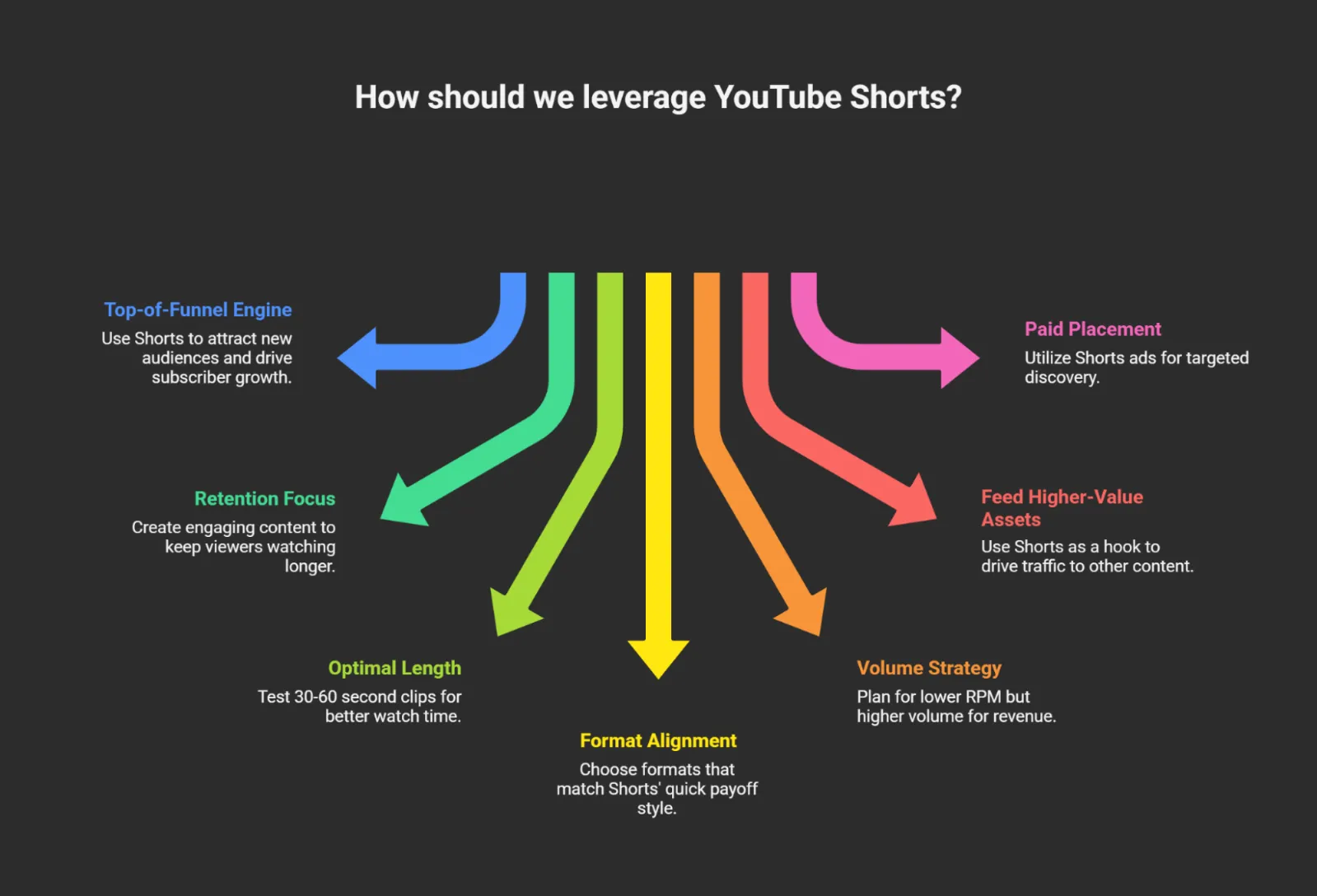
- Treat Shorts as your top-of-funnel engine: Shorts is where new audiences form habits first. If your long-form relies on subscriber growth alone, you’ll feel slower than creators who lead with Shorts.
- Retention beats everything: Shorts engagement is high, but the feed still moves fast. Your first 1-2 seconds need a clear hook, and your pacing has to keep people watching to the end. That’s how you stay in circulation.
- 30-60 seconds is a sweet spot to test: Most creators publish shorter clips, but view peaks show up closer to 50-60 seconds. If you can hold attention that long, you get more watch time per viewer and better distribution.
- Pick formats that match Shorts' behavior: Entertainment, gaming, and how-to dominate because they fit how people watch Shorts: quick payoff, clear value, and simple storylines. Brands should translate their offers into these modes instead of copying long video ads.
- Plan for lower RPM but higher volume: Shorts pays less per view than long-form, and only a small share of creators cross $50K yearly from Shorts alone. If revenue is the goal, volume and consistency are not optional.
- Use Shorts to feed your higher-value assets: Many creators win by using Shorts as the hook, then sending viewers to long-form, lives, email lists, or offers. Shorts can start the relationship, but long-form or owned channels usually close it.
- For brands, Shorts is a strong paid placement: YouTube is selling premium Shorts inventory in more markets because demand is there. If your ICP is active on YouTube, Shorts ads can help you buy discovery with clear intent signals behind it.
Shorts are the main way to get discovered on YouTube. Treat it as a real part of your strategy, post consistently, and link it to your bigger goals.
Pro tip: If you’re scaling Shorts with paid support, partner choice matters. This list of media-buying agencies with YouTube experience shows who’s driving ROAS and what to look for before you hire.
What To Track When You Post YouTube Shorts
Views are the loudest metric, but they’re not the one that tells you what to fix. If you want predictable growth, track the signals YouTube uses to decide distribution:
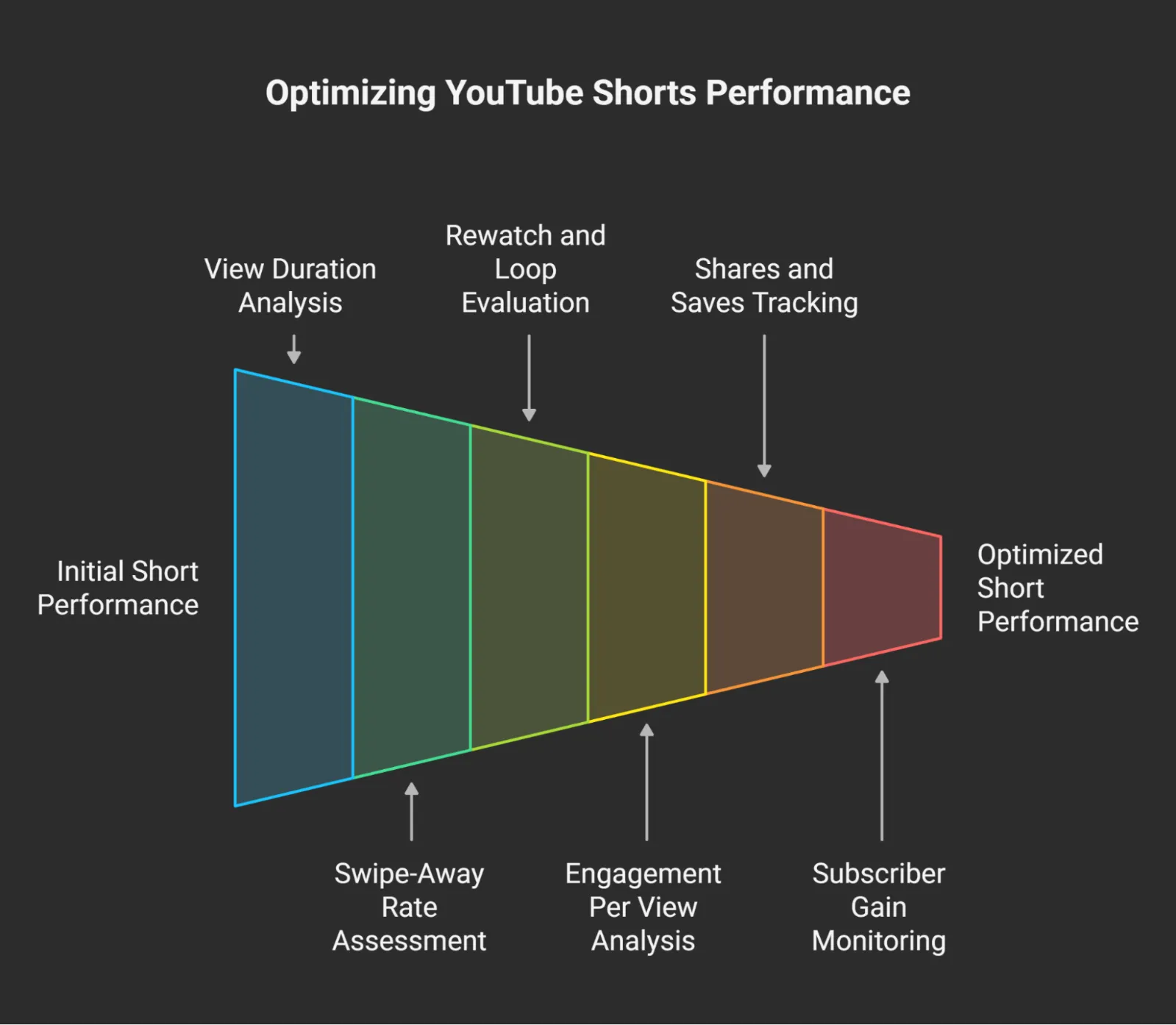
1. View duration and retention curve: Look at where people drop. If you lose most viewers in the first second, your hook is weak or unclear. If drops happen mid-clip, pacing or structure needs work.
2. Swipe-away rate: This is your “first impression” score. A high swipe-away rate means the opening framing doesn’t match what your audience wants, even if the idea is good.
3. Rewatches and loops: Shorts that get replayed signal high satisfaction. Watch for spikes in average view duration that go beyond 100%. That usually means the clip is looping well.
4. Engagement per view: Likes, comments, and shares relative to views show how strong the idea lands. A Short with moderate views, but high engagement, is a good candidate to repeat or expand.
5. Shares and saves: Shares push reach outside your current audience. Saves signal usefulness. Both are strong quality indicators, especially for education or product-focused Shorts.
6. Subscribers gained per Short: Shorts can pull massive reach without subscribers. What matters is how many viewers choose to stay. Track subscribers per view, not just total subscribers gained.
7. Follow-through to long-form or channel pages: If your Shorts strategy supports a bigger funnel, check how many viewers tap your profile or move into long videos. That’s how you measure real channel lift, not just clip spikes.
8. Topic and format patterns: Keep a simple log: hook type, length band, topic, format (talking head, captions-only, demo, POV, etc.). After 10–20 Shorts, trends show up fast. That’s your blueprint.
Track these consistently, and you’ll know exactly why a Short worked, not just that it did.
What YouTube Shorts Growth Means For Your 2025 Plan
YouTube Shorts has reached a level of scale that changes how the platform works. With daily views now in the hundreds of billions and most creators publishing Shorts regularly, this format is shaping what gets seen first.
If you’re a creator, the opportunity is direct: Shorts can open the door to new viewers faster than any other YouTube surface right now.
If you’re a brand owner, Shorts gives you short-form reach on a platform that dominates screen time across devices.
Want help turning these numbers into a Shorts strategy that fits your goals and your audience?
inBeat Agency works with creators and performance teams to build short-form systems that drive real growth. Talk to us, and let’s map out a plan that makes Shorts work for you.
FAQs
What is the success rate of Shorts on YouTube?
There isn’t one fixed success rate, because Short's performance depends on topic, hook strength, and retention. What the data shows is that this short-form video format has a strong average engagement rate (5.91%). For content creators, that means Shorts videos can gain traction fast if the opening lands and viewers stay through the clip.
How popular are YouTube Shorts compared to regular YouTube videos?
Shorts is now a daily habit a huge scale, averaging over 200 billion daily views. These short videos sit in a vertical video feed built for discovery. Long-form still drives deeper watch time and higher advertising revenue per view, but Shorts are the main entry point, pulling new viewers into channels.
How do YouTube Shorts affect overall channel growth and reach?
Shorts can push your content in front of new users fast, even without subscribers. That makes it a key part of most content strategies today. It also supports influencer marketing, sponsorship deals, and brand partnerships, since Shorts can build reach first and then send viewers toward longer content or offers.
Which types of content perform best on YouTube Shorts based on viewer statistics?
Entertainment leads, followed by gaming and how-to/tutorial Shorts videos. These formats fit Shorts' viewing behavior: fast payoff, clear value, simple story.
What are the best strategies to increase engagement on YouTube Shorts?
Start with a clear hook in the first 1-2 seconds. Keep pacing tight. Test video length in the 30-60 second range when the idea needs it, since longer clips within that average length are pulling strong views. Trending sounds can help retention, but stick to original content so you stay eligible for monetization.