.svg)
.svg)
.svg)
.svg)


.svg)




%20(1).png)

New York is one of the most competitive markets for eCommerce brands. Customer acquisition costs keep rising, and audiences move fast across trends, platforms, and products.
What works today can lose performance in a matter of weeks.
Paid social has become a core growth channel in this environment because it directly influences how people discover and buy products.
Around 58% of shoppers in the U.S. say they have purchased a product after seeing it on social media, which shows how closely social platforms are tied to purchase decisions.
At the same time, competition on these platforms is getting more intense. Social ads already account for 3 out of every 10 dollars spent on digital advertising, which means more brands are fighting for the same attention.
For NYC eCommerce brands, this creates a different kind of challenge. You are competing against brands with strong creatives, fast testing cycles, and well-structured funnels.
If your paid social strategy lacks structure, costs increase quickly, and performance becomes harder to control. You’re on the right page to prevent that.
In this guide, we’ll cover:
- Setting clear goals and aligning them with each stage of your paid social funnel
- Structuring campaigns across prospecting, retargeting, and retention
- Choosing the right platforms based on your product and audience behavior
- Building an audience targeting approach using first-party data and platform signals
- Managing budget, scaling campaigns, and improving performance over time
P.S. Are your paid social campaigns getting more expensive without consistent growth? inBeat Agency helps NYC eCommerce brands build structured paid social systems that improve ROAS and scale revenue more predictably. Book a free strategy call now.
TL;DR
- Paid social performance depends on having a clear funnel structure.
- Strong creatives play a bigger role than targeting in driving results across most platforms.
- Aligning goals with funnel stages helps you measure performance and optimize more effectively.
- Top-of-funnel campaigns should focus on attention rather than immediate conversions.
- The middle of the funnel is critical for building trust through education and social proof.
- Bottom-of-funnel campaigns should remove friction and push users toward action.
- First-party data improves targeting accuracy and helps you build more stable campaigns.
- Consistent testing and creative refresh cycles are essential to maintain performance.
Why Paid Social Is Critical for NYC eCommerce Brands
If you are running an eCommerce brand in NYC, paid social is not optional anymore. It plays a central role in how you acquire customers, test messaging, and scale revenue in a market that moves fast.
Here’s why it matters so much in this environment:
- High CAC due to dense competition: Customer acquisition in NYC is expensive. You are competing with both local brands and national players targeting the same audiences. As more brands invest in paid social, auction pressure increases, and costs rise. A structured approach helps you control CAC and get more value from your spend.
- Trend-sensitive, fast-moving audiences: NYC audiences respond quickly to trends, particularly on platforms like TikTok and Instagram. What performs well this week may slow down next week. You need a system that allows you to test creatives continuously and adapt without slowing down your campaigns.
- Mobile-first consumer behavior: Most users discover and shop from their phones. In fact, mobile devices now account for 73% of eCommerce sales worldwide. Your creatives, landing pages, and offers need to match that behavior. Short-form videos, clear messaging, and fast-loading pages directly impact performance.
- Faster testing compared to SEO: SEO is important, but it takes time to see results. Paid social gives you immediate feedback. You can test new creatives, offers, and audiences within days and use that data to make better decisions quickly.
- Stronger creative leverage compared to search ads: Search ads capture existing demand, but they don’t create it. Paid social helps you create demand through strong creatives. With the right messaging and content, you can influence buying decisions earlier in the customer journey and stand out in a crowded market.

Paid Social Strategy for NYC eCommerce: Step-by-Step Plan
Now that you understand why paid social matters in NYC, the next step is building a strategy that actually works in this environment.
Below, we have shared a step-by-step plan to help you structure your paid social campaigns effectively.
1. Set Goals for Your Paid Social Strategy
Before you launch campaigns or test creatives, you need clarity on what you want your paid social efforts to achieve.
This is where most teams get it wrong. They jump straight into campaign setup without defining what success actually looks like, which makes performance harder to measure and optimize.
However, clear goal-setting directly impacts results. According to CoSchedule, marketers who set clear goals are 377% more likely to report success.
Most NYC eCommerce brands focus on a mix of short-term revenue and long-term growth. Your goals should reflect both.
Common eCommerce objectives include:
- Revenue growth: Driving consistent sales through paid social campaigns
- Customer acquisition: Bringing in new customers at a sustainable cost
- Retention and LTV: Increasing repeat purchases and maximizing customer value over time
Each of these objectives plays a different role in your growth. When you focus only on immediate sales, it can limit long-term performance, particularly in a competitive market like NYC.
Map goals to funnel stages
Your goals should also align with different stages of the funnel, so your campaigns work together instead of competing for the same outcome.
- Awareness: Reaching new audiences and building initial interest
- Traffic: Driving users to your website or product pages
- Conversion: Turning visitors into customers
- Retention: Re-engaging existing customers and increasing lifetime value
At inBeat Agency, we noticed that when brands align goals with funnel stages, decision-making becomes much clearer. You can quickly identify where performance is strong and where adjustments are needed.
2. Set a Paid Social Funnel Structure for Your NYC eCommerce Brand
Once your goals are clear, the next step is structuring your campaigns in a way that supports them.
This is where your paid social funnel comes in.
From what we have seen, many brands run campaigns without a clear funnel structure. As a result, different campaigns end up competing for the same audience or objective, which drives up costs and limits performance.
A well-defined funnel helps you guide users from discovery to purchase and beyond.
Top of Funnel (TOFU): Prospecting Campaigns
At this stage, your focus is on reaching new audiences and generating initial interest in your brand.
- Broad targeting vs interest stacks: Broad targeting has become more effective as platform algorithms improve. Strong creatives now do most of the heavy lifting. Interest stacks can still work, but they require more testing and refinement.
- Lookalike audiences (NYC vs nationwide): You can build lookalikes based on your NYC customers for local relevance. Once you see what’s working, you can scale to nationwide audiences. This matters because lookalike audiences can increase conversion rates by up to 70% compared to cold targeting.
- Creative types: UGC formats, lifestyle content, and problem-aware messaging perform well at this stage because they introduce your product in a relatable way.
To give you a clearer picture of how UGC formats and problem-ware messaging work, here’s what we did with Unroll.Me. We created problem-focused TikTok UGC ads designed to hook users instantly.
Insider tip: At the top of the funnel, your goal is not immediate conversions. You are building awareness and feeding your retargeting audiences for the next stages.
Middle of Funnel (MOFU): Consideration Campaigns
After users have interacted with your brand, the focus shifts to building trust and helping them move closer to a purchase.
This stage is where you turn initial interest into real consideration.
Many brands underinvest here and push too quickly for conversions. This usually leads to lower efficiency and higher acquisition costs.
At this point, you are working with warmer audiences who already know your brand to some extent.
- Nurture engagers, video viewers, site visitors: These include users who have interacted with your ads, watched your videos, or visited your website. They are more likely to convert than cold audiences, so your messaging should reflect that familiarity.
- Continue product education and social proof: This is where you explain how your product works and why it stands out. Customer reviews, testimonials, before-and-after results, and product demos help reduce hesitation and build confidence.
Here’s a real example from our work with Prose, where we used before-and-after social proof to drive consideration.
We have noticed that when brands invest properly in this stage, conversion performance improves significantly in the bottom of the funnel.
Consumer behavior studies strongly support this approach. Research shows that 93% of consumers say online reviews influence their purchasing decisions. And around 60% of consumers check reviews at least weekly before buying.
Bottom of Funnel (BOFU): Conversion Campaigns
At this stage, your focus shifts to turning high-intent users into customers. These are people who already know your brand, have explored your products, and are close to making a decision.
This is usually where the biggest revenue gains come from. You are working with your warmest audiences, so even small changes in messaging or offers can make a noticeable difference.
- Retargeting (cart abandoners, product viewers): this includes users who viewed products, added items to cart, or visited key pages but didn’t complete a purchase.
They already have intent, which is why retargeting is so effective. Data shows that retargeted users are around 70% more likely to convert than new visitors, so your focus here should be on removing friction and giving them a clear reason to come back and buy
- Offers, urgency, and testimonials: This is where you push users toward action. Limited-time offers, discounts, free shipping, or low-stock messaging can create urgency. Testimonials and reviews also help address last-minute doubts and reinforce trust.
A good example of this approach comes from our client Hurom, where they used time-sensitive offers and countdown messaging to drive conversions.
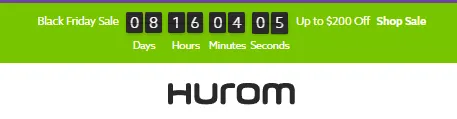
We suggest paying close attention to this stage because it directly impacts your return on ad spend. When your BOFU campaigns are dialed in, you rely less on constantly bringing in new traffic and get more value from users already in your funnel.
Retention & Loyalty Layer (Often Ignored)
Once a customer makes a purchase, most brands shift all their attention back to acquisition. This is where a lot of revenue gets left on the table.
As per our experience, retention is one of the most underutilized parts of paid social. You have already paid to acquire these customers. The opportunity now is to increase their lifetime value.
- Existing customer upsells: This includes promoting complementary products, bundles, or higher-value items to customers who have already purchased from you. Since they already trust your brand, it is easier to drive additional purchases compared to acquiring new users.
- Subscription and repeat purchase strategies: If your product supports it, subscriptions can create predictable revenue. Even without subscriptions, you can run campaigns that remind customers to restock or reorder based on their purchase cycle.
We recommend treating retention as a separate layer in your paid social strategy. When done right, it reduces your reliance on constant acquisition and helps you build more stable, long-term growth.
3. Pick the Best Paid Social Platforms for NYC eCommerce Brands
The next step is choosing the right platforms to run your campaigns. Remember, not every platform plays the same role, and your performance depends on how well you match platform strengths with your goals.
A mistake a lot of brands make is trying to be everywhere at once. This usually just spreads your budget too thin and slows down learning.
It is better to focus on a few platforms and scale what works.
| Platform | Primary Role | Strengths | Best Use Case |
|---|---|---|---|
| Meta (Facebook & Instagram) | Conversion + retargeting | Strong optimization, advanced retargeting, scalable campaigns | Driving consistent sales and scaling winning campaigns |
| TikTok Ads | Discovery + creative testing | Trend-driven reach, fast testing cycles, creative-first delivery | Testing new creatives and reaching new audiences quickly |
| High-intent discovery | Users actively searching for ideas and products | Capturing demand and driving mid to lower funnel conversions | |
| Snapchat | Younger audience reach | Strong engagement with younger demographics | Targeting Gen Z and building awareness with native content |
Meta (Facebook & Instagram)
Meta remains one of the most reliable platforms for eCommerce growth, particularly when your goal is to drive consistent conversions.
- Best for scalable conversions: Meta’s optimization system allows you to scale campaigns once you find winning creatives and audiences.
- Strong retargeting opportunity: Meta really shines when it comes to retargeting. You can build audiences based on site visits, video views, add-to-carts, and more.
TikTok Ads
TikTok plays a different role. It is where discovery happens and where creative performance can scale quickly. In fact, 61% of TikTok users have discovered new brands or products on the platform.
- Ideal for trend-driven NYC audiences: NYC audiences are highly responsive to trends, and TikTok is built around that behavior.
- Creative-first algorithm: On TikTok, your results depend heavily on your creatives. And strong hooks and native-style content perform best here.
Pinterest & Snapchat (Niche but Powerful)
These platforms are mostly overlooked, but they can deliver strong results when used strategically.
- High intent (Pinterest): Users come to Pinterest with a discovery mindset, mostly looking for products and ideas. This makes it a strong platform for conversion-focused campaigns. In fact, research shows that 83% of weekly Pinterest users have made a purchase based on content they saw from brands on this channel.
- Younger demographics (Snap): Snapchat gives you access to a younger audience that’s harder to reach elsewhere. And it’s not small: Snapchat reaches over 75% of 13–34-year-olds in key markets. So, if your product targets Gen Z or younger millennials, this can be a strong channel.
We suggest starting with one or two core platforms, then expanding once you have consistent performance and a clear understanding of what works.
4. Audience Targeting Paid Social Strategy for NYC eCommerce
Once your platforms are set, the next step is deciding who you target and how you structure those audiences. This is where your strategy can either improve performance or quietly drain your budget.
Many brands overcomplicate targeting. They rely too much on narrow interests and miss the bigger picture.
Strong performance today comes from combining solid data with the right creative approach.
Geo-Targeting NYC vs Broader US
Your location strategy plays a big role in how you scale.
- When to stay local: If your brand has strong NYC relevance, faster shipping, or a physical presence, it makes sense to focus on local audiences first. This helps you build traction and validate your messaging.
- When to expand nationally: Once you identify winning creatives and consistent performance, you can scale to a broader U.S. audience. This is where you usually unlock higher volume and growth.
First-Party Data Strategy
Your own data is one of your strongest assets, especially as privacy restrictions grow.
In fact, 87% of marketers believe first-party data is critical for delivering personalized experiences, which shows how central it has become to modern targeting strategies.
- Email and SMS audiences: These include subscribers, past customers, and engaged users. You can retarget them directly or use them to build stronger audience segments.
- Customer list segmentation: Note that not all customers are the same. Therefore, we suggest segmenting by purchase behavior, order value, or frequency to make your messaging feel more relevant.
Lookalike Audiences (LAL) that Actually Work
As we have discussed above, lookalikes are still effective when built from the right data.
- High-value customer LALs: Create lookalikes based on your best customers, not just all purchasers. This helps you attract users with higher potential value.
- Event-based LALs: Build audiences from key actions like purchases, add-to-cart events, or high engagement. These usually perform better than generic seed lists.
5. Budget and Scale Your Paid Social Campaigns
After putting your targeting and creatives in place, the next step is managing your budget and scaling what works. This is where many brands either grow efficiently or start wasting spend.
We have seen that scaling too early or without structure is one of the fastest ways to lose performance. You need a clear system for testing, learning, and then increasing spend.
How to allocate the initial budget
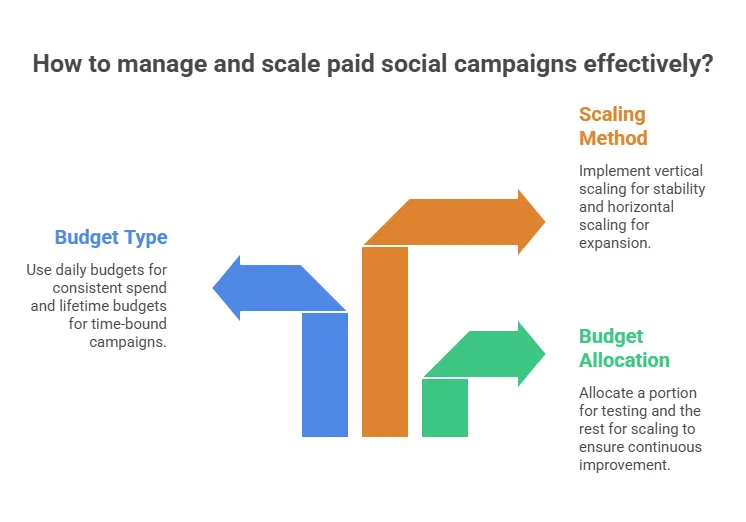
- Testing (20–30%) vs scaling (70–80%): Allocate a portion of your budget to test new creatives, audiences, and messaging angles. The remaining budget should go toward campaigns that are already delivering results.
We recommend protecting your testing budget. Without it, performance can plateau, and it becomes harder to find new winning creatives.
Daily vs lifetime budgets
- Daily budgets: Use these when you want consistent spend and tighter control over day-to-day performance. This works well for always-on campaigns.
- Lifetime budgets: Use these for time-bound campaigns like promotions or seasonal offers, where the platform can optimize spend across a defined period.
Scaling methods
- Vertical scaling (budget increases): Increase the budget gradually on high-performing campaigns to maintain stability.
- Horizontal scaling (new audiences or creatives): Expand by testing new audience segments or launching additional creatives based on what is already working.
During our decade of work at inBeat, we have noticed that steady, controlled scaling delivers more consistent results. When budget increases are too aggressive, performance typically becomes unstable.
Read Next: Paid Social Strategy: How to Allocate Budget Across Meta, TikTok, and Snapchat
6. Track and Optimize Paid Social Performance
Once your campaigns are live, the real work begins. Tracking performance and making the right optimizations is what keeps your results consistent.
Many teams track metrics, but not always the right ones. When you focus on the wrong signals, it becomes harder to understand what is actually driving performance.
Paid Social KPIs by funnel stage
Each stage of your funnel has a different purpose, so your metrics should match that.
| Funnel Stage | Key Metrics | What to Focus On |
|---|---|---|
| TOFU | CPM, CTR | Reach and attention. CPM measures cost efficiency, while CTR shows how well your creatives capture interest. |
| MOFU | CPC, engagement rate | Deeper interaction. CPC reflects how efficiently you drive traffic, while engagement rate shows audience interest. |
| BOFU | CPA, ROAS | Conversions and revenue. CPA tracks acquisition cost, while ROAS measures return on ad spend. |
In our daily work, we rely on this structure to quickly identify where performance is dropping and where to focus optimization efforts.
Creative refresh cycles
Creative performance drops faster than most teams expect, particularly in competitive markets like NYC.
Most brands start to see performance decline within 7 to 14 days on high-spend campaigns. If you are scaling aggressively, that window can be even shorter.
In fact, data shows that performance can drop by up to 45% after just 4 exposures to the same creative, which shows how quickly creative fatigue (Meta guide) can set in.
A practical approach is to introduce new creatives every 1 to 2 weeks. This does not mean replacing everything. You can test new hooks, formats, or messaging angles while keeping top performers running.
Insider tip: At inBeat Agency, we build a steady pipeline of creatives for our clients. This helps you stay ahead of performance drops instead of reacting to them.
NYC eCommerce Paid Social Campaigns Examples
To give you a clearer picture, here are a few in-house examples from inBeat Agency that show how these paid social strategies perform in real campaigns.
1. Dahsing Diva
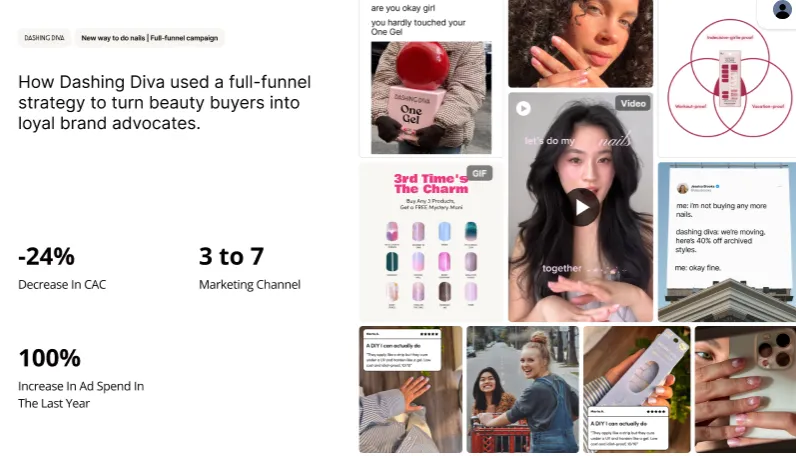
At inBeat, we partnered with Dashing Diva to build a full-funnel paid social strategy designed to turn first-time buyers into repeat customers.
Our team structured campaigns across the funnel, starting with UGC and lifestyle creatives at the top to capture attention, followed by product education and social proof in the middle to build trust. At the bottom, we focused on retargeting high-intent users with strong offers and testimonials to drive conversions.
As we identified what was working, we scaled campaigns across multiple channels to expand reach while maintaining efficiency. This approach led to:
- A 24% decrease in CPA
- Growth from 3 to 7 marketing channels
- A 100% increase in ad spend year over year without compromising performance.
2. The Farmer’s Dog
We partnered with The Farmer’s Dog to scale customer acquisition through creator-led paid social campaigns.
Our team focused on producing high volumes of performance-driven UGC, using real customer stories and relatable pet-owner moments to connect with audiences across platforms. This approach allowed us to continuously test new creatives and quickly identify what resonated.
As we scaled, we expanded campaigns across multiple channels while maintaining strong engagement and efficiency. This strategy supported over $20M+ in annual ad spend, with 70+ creative assets produced monthly, and 10+ channels utilized.

3. HelloFresh
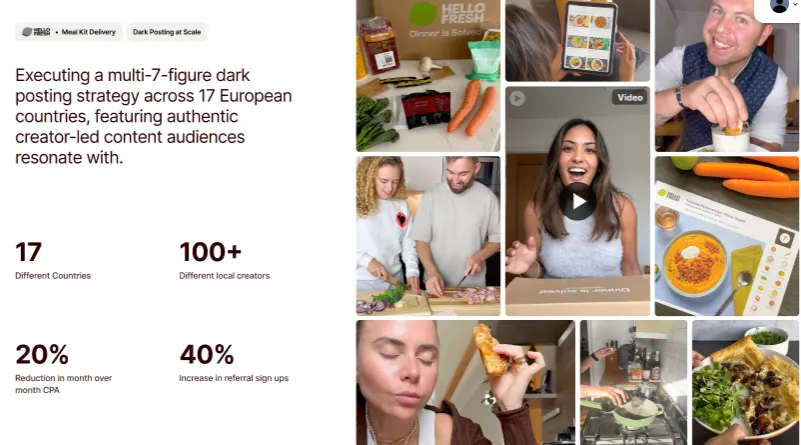
HelloFresh engaged us to execute a large-scale dark posting strategy across multiple European markets. Our team worked with local creators to produce authentic, platform-native content that felt relevant to each audience. This allowed us to maintain creative diversity while ensuring a solid performance across regions.
Plus, combining creator-led content with a structured paid social approach is how we were able to scale efficiently across markets. This resulted in campaigns running across 17 countries, collaboration with 100+ local creators, a 20% month-over-month reduction in CPA, and a 40% increase in referral sign-ups.
Scale Your NYC eCommerce Paid Social Strategy with inBeat Agency
Paid social for NYC eCommerce brands requires more than just running ads. You need a structured system that connects targeting, creative, budget allocation, and optimization across the entire funnel.
When each part of your strategy works together, it becomes much easier to control costs, test faster, and scale consistently in a highly competitive market.
If you are looking to build a structured paid social strategy that drives consistent growth, our team at inBeat Agency can help. We work with eCommerce brands to design, test, and scale campaigns that improve performance across the funnel.
Book a free strategy call now!
FAQ’s
How much should NYC eCommerce brands spend on paid social?
Your budget depends on your margins, goals, and growth stage. Many scaling brands reinvest around 20–30% of their revenue into paid social to support consistent growth.
What is the best-paid social platform for eCommerce brands?
Meta (Facebook and Instagram) is typically the most effective platform for driving conversions and scaling campaigns. TikTok works well for discovery and creative testing, particularly if your audience is younger.
Should I target only NYC or the entire US?
If your brand has strong local relevance or logistics advantages, it makes sense to start with NYC. Once you identify winning creatives and profitable audiences, you can expand to a broader U.S. market.
How long does it take to see results from paid social ads?
You can usually start seeing initial performance signals within 7 to 14 days. Reaching consistent profitability usually takes 4 to 8 weeks of testing and optimization.
What is a good ROAS for eCommerce paid social campaigns?
A good ROAS typically ranges from 2.1 to 4.1, depending on your margins. Subscription-based brands may accept a lower ROAS if their lifetime value is higher.
What makes inBeat Agency different from other paid social agencies in NYC?
At inBeat Agency, we focus on building structured paid social frameworks instead of running isolated campaigns. We combine creative production, media buying, and performance tracking into one process, which helps you test faster, scale efficiently, and maintain consistent results.
Does inBeat Agency handle both creative production and media buying?
Yes, our team handles both creative production and media buying. We produce performance-focused creatives, including UGC and creator-led content, and manage campaigns in-house to keep everything aligned and improve overall performance.
Appendix
- https://salesso.com/blog/social-media-ecommerce-statistics/
- https://sproutsocial.com/insights/social-media-statistics/
- https://www.tekrevol.com/blogs/mobile-device-website-traffic-statistics/
- https://coschedule.com/marketing-statistics
- https://www.linkedin.com/pulse/scaling-meta-ads-e-commerce-brands-strategies-insights-dadhich-yw7gc
- https://www.appier.com/en/blog/what-is-retargeting
- https://www.thedrum.com/news/online-reviews-impact-purchasing-decisions-over-93-consumers-report-suggests
- https://hookagency.com/blog/online-reviews-statistics/
- https://ads.tiktok.com/business/en/blog/discovery-search-brands-break-through
- https://support.bigcommerce.com/s/article/Pinterest-for-Business
- https://forbusiness.snapchat.com/
- https://porchgroupmedia.com/blog/first-party-data/
- https://admanage.ai/blog/facebook-ads-creative-fatigue
- https://www.alexanderjarvis.com/what-is-paid-social-roas-in-ecommerce/