%20(1).png)

California isn’t just the largest state by population–it’s one of the most influential social media markets in the world.
In fact, it created the social media as we know it today. Remember Facebook, which kind of started it all? It started in California.
But it’s not that the state is home to social media and tech companies.
It also boasts a large online population, a giant entertainment industry, a thriving small business community, and lots of tourist attractions. All of these factors make it an incredibly important place for brands and social media marketers.
So, in this article, we’ll look at numbers to see just how big social media is in the Golden State and how its users interact with it. But more importantly, we’ll talk about how marketers can cater to those users.
Looking to turn out profitable paid social media campaigns in California? Work with the Top Social Media Agencies in Los Angeles.
California in Numbers (Why It's Such a Big Market for Social Media Marketing)
California is a huge, highly diverse state in the US. It’s a true powerhouse no matter how you look at it. Besides having the largest population, even higher than many countries, it’s an economic hub with big names in technology, entertainment, and services.
Let’s take a glance at the demographics of this state:
- Population size: California remains the most populous U.S. state, with around 39.5 million residents as of 2025.
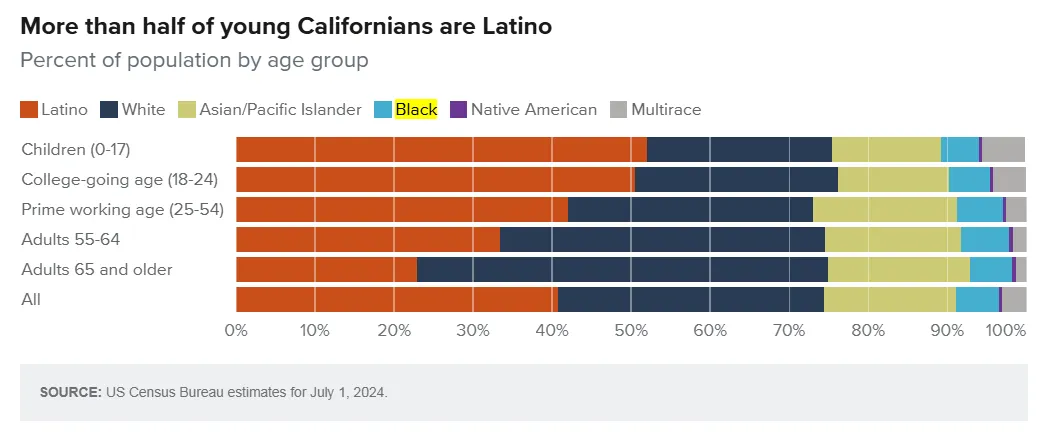
- Age diversity: The state has a broad age distribution with roughly 21% under 18 years and a large working-age population spanning young adults to middle age.
- Racial and ethnic diversity: The state’s population is highly diverse, with significant representations including White (about 38-44%), Asian (about 15-16%), Black or African American (5-6%), and Hispanic or Latino groups making up a large share (40%+).
- Foreign-born residents: California has one of the highest shares of foreign-born residents in the nation, with about 28% of residents born outside the U.S. (nearly twice the national average).
- Income and economic standing: With a median household income of $95,000+, and substantial numbers of high-income households, Californians have notable purchasing power that varies across regions and demographic groups. Also, the state is the fourth-largest economy in the world (on its own), with a GDP of $4.1 trillion.
These figures are more than just numbers. They paint a picture of a massive, multicultural, and economically varied audience, which is exactly the kind of audience marketers want to connect with on social media.
California’s immense population and rich demographic mix make it a strategic priority for brands looking to grow influence and revenue through social channels. Its large youth and young adult segments offer fertile ground for engagement on platforms like TikTok, Instagram, and YouTube.
Meanwhile, businesses can tailor content across multiple languages and cultural contexts thanks to its diverse ethnic makeup. In short, it’s a market worth exploring and focusing on.
10 California Social Media Statistics Marketers Should Know
Social media plays an important role in the lives of Californians, as numbers show. While usage is high across most major platforms, some social media apps are more popular than others.
Here are some important statistics about social media in California and its major hubs, like Los Angeles, San Francisco, and San Diego, that marketers might find very interesting.
1. There are over 24 million social media users in California.
According to Start.io, the state of California has a social media user base of 24,561,399. That’s a huge number and puts the percentage of active users at roughly 61% of the population.
Given that nearly half the population is under 35, it’s easy to see why social media use is so high across the state. That means simply targeting the population in this state or its many cities can expose a brand to a big audience.
2. 60% of social media users in California are male.
Most of the social media users in the Golden State are male. The female audience makes up about 39.9% of the user base. Interestingly, the gender breakdown of the total population is almost 50-50. The male population is 50.02%, and the female population is 40.98%.
That means that for every 10 active social media users, six are male. That’s not a huge difference, but it's still worth noting for brands that may be targeting a specific gender.
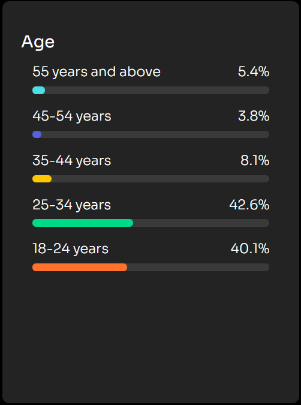
3. 42.6% of social media users in California are aged 25-34 years.
Start.io data show that 42.6% of California’s social media users are aged 25-34, followed by 18-24 at 40.1%. That shows that over 82% of the state's social media users are under 35, a relatively young population.
4. 45- to 54-year-olds make up the smallest share of the social media audience at 3.8%.
5. California has the highest engagement across most social media platforms.
Having a social media account and being active on it are two different things. Ideally, marketers want to target highly engaged users, and California has plenty of them. According to one survey, California ranked first in social media engagement. That applies across the board, with most users on platforms like Facebook, Instagram, X, and TikTok showing higher engagement.
New York and Texas have the second and third-highest social media engagement, respectively. That checks out, given that these states are large population centers with a lot of young people.
Further Reading: Learn how to start and manage high-performing social media campaigns.
6. 96% of Californians have access to the Internet, and 72% of those use social media platforms.
California is highly connected. According to the Public Policy Institute of California, the state has a record-high rate of Internet use, with 96% of people having Internet access at home. Of these people, 72% use social media platforms. That shows that most people with an Internet connection have some level of online presence. Here are the 2023 figures compared with those in 2019:
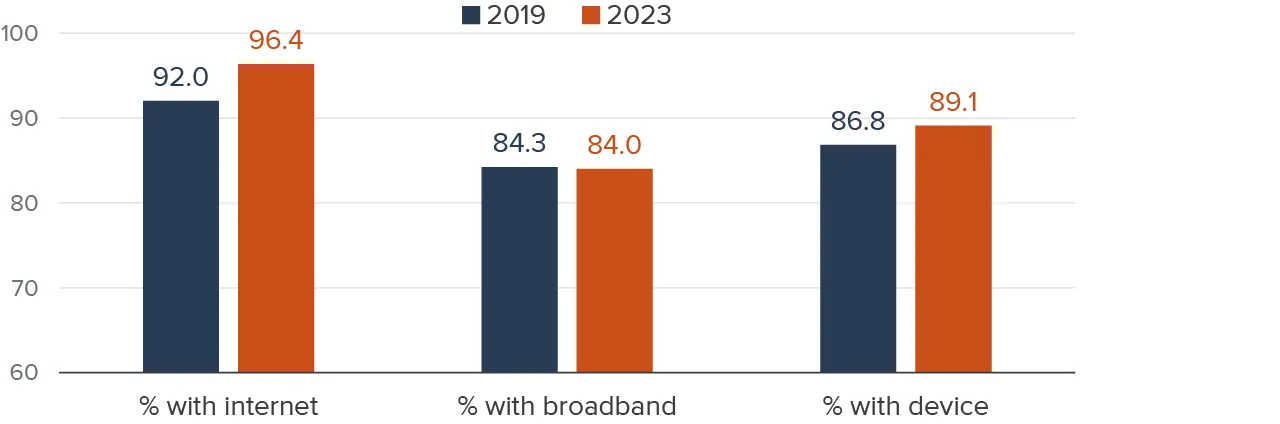
The findings also reveal that Californians use the Internet for a variety of purposes. Most use it for communication, commerce, and social services. And over 50% of people use the Internet for essential services like banking, paying bills, and accessing healthcare records.
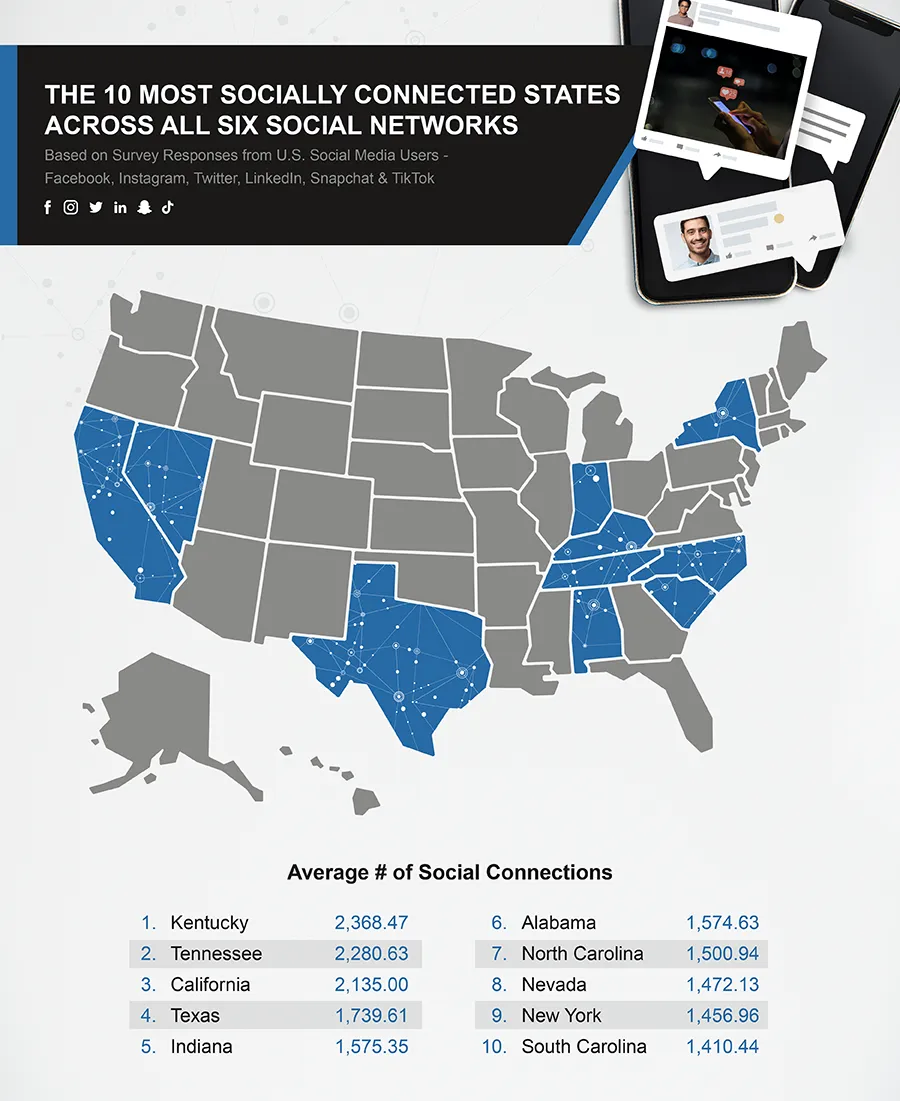
7. Californians have the third-highest number of connections on major social media platforms.
Teneo conducted a survey to find the most connected states in the US. They asked users across different states about the number of followers, friends, or connections they have on six of the major social media platforms (Facebook, Instagram, LinkedIn, X, Snapchat, and TikTok).
California ranked third, with Kentucky and Tennessee taking the top two spots. The average number of social connections for California users is 2,135. Kentucky reported 2,368 connections, and Tennessee reported 2,280.
The research also found that, among the six platforms, Facebook had the most connections (friends) for Californians. They have an average of 722 friends.
8. California is the most TikTok-obsessed state.
To hardly anyone’s surprise, California is considered the most TikTok-obsessed state in the US. According to 2024 Google search data, Californians showed the most interest in the social media platform that has taken the country by storm over the past five years.
California’s pristine coastline, many state and national parks, and cities that drive cultural conversations provide the perfect backdrop for viral TikTok trends. From dances to commentary, TikTok sparks a lot of activity in the state
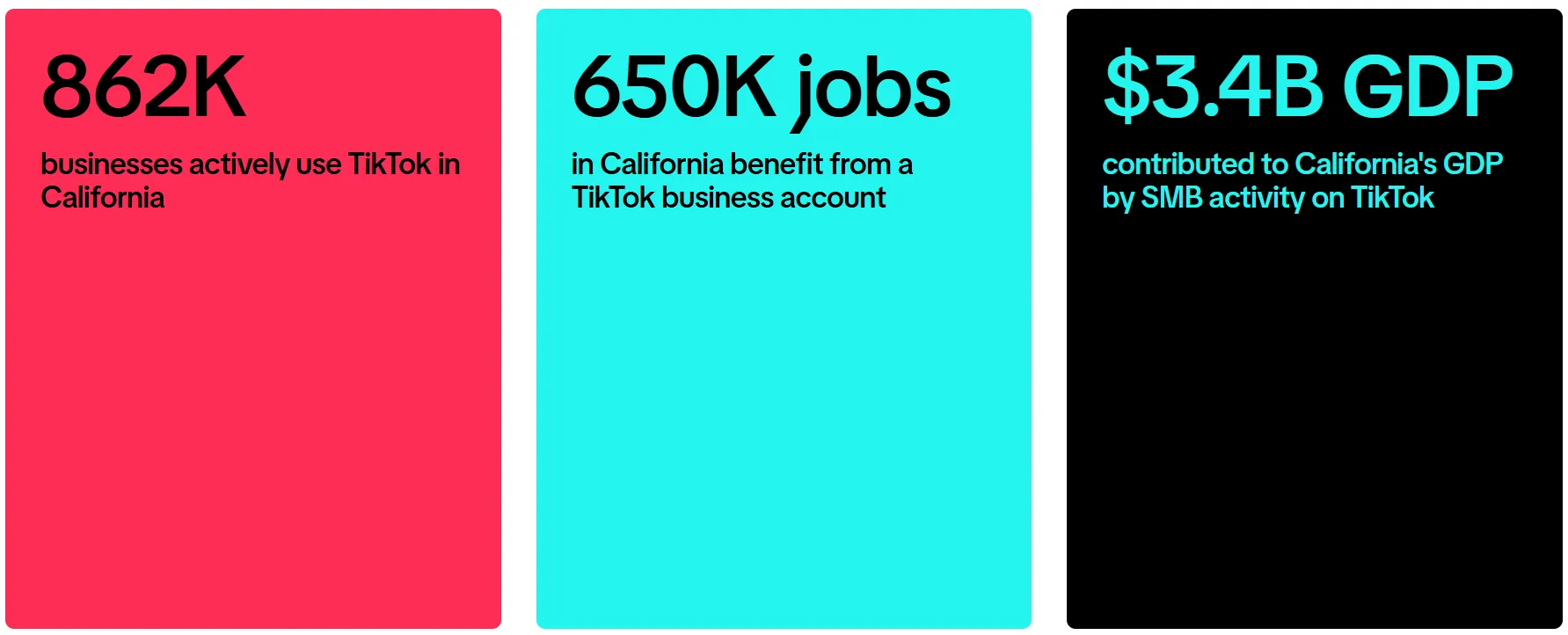
9. 864K businesses in California use TikTok. And the platform contributed $3.4 billion to the Golden State’s GDP.
TikTok has had a significant impact on businesses, especially small businesses in California. The platform has helped many entrepreneurs showcase their products (and even sell them) through the platform. In fact, TikTok’s own data points out that a whopping 862,000 businesses across the Golden State actively use TikTok. It also states that around 650,000 jobs in the state benefit from TikTok business accounts.
And here’s the cherry on top. The platform has contributed $3.4 billion to the local economy, mainly through small-business activity on the platform.
All these numbers make it clear that TikTok advertising is indispensable for small businesses, in general, but even more so in a large, saturated state like California. The platform is a way for such businesses to get discovered and sell directly to their audience. In fact, 96% of Cali businesses reported being sold out of a product because of TikTok.
10. Hispanic teens have the highest rate of social media usage of all ethnicities.
When it comes to race and ethnicity in teenage social media usage, Hispanic teens lead the count. A Pew Research Center survey found that Hispanic teens have the highest social media use. 55% of Hispanic teenagers said they’re online most of the time.
And they saw TikTok as their go-to platform for scrolling. However, YouTube was the most prominent among teenagers.
While this survey wasn’t focused exclusively on California, it’s an important insight into the state’s broader social media use. That’s because the Latino or Hispanic communities make up over 40% of the state’s population.
11. Los Angeles is the top city for social media influencers.
Los Angeles is the mecca of influencers. Many of the most famous influencers on Instagram and TikTok are based in the city. It ranked as the top city for influencers, with thousands calling it home.
Other cities that rank high on the list include Miami (no surprise there), New York City, Seattle, and Atlanta.
As an entertainment and cultural hub, Los Angeles has attracted a wide range of opinion leaders, especially in niches like beauty, fitness, health, food, and travel. The city itself is a tourist attraction, so it also attracts influencers from other cities and countries who go there to make content, attend events, and showcase the city through their reels, Shorts, and TikTok videos.
The Takeaways for Marketers
California’s social media numbers reinforce one clear reality: this is a scale-and-impact market where reach, engagement, and cultural influence intersect.
With more than 24 million active social media users and over 80% under 35, brands have an unprecedented opportunity. They’re engaging a highly active, trend-aware audience that shapes platform behavior nationwide.
For marketers, this means California campaigns are rarely “local.” They can and do go viral. What resonates here spills over into broader national conversations, especially on visual and short-form platforms like TikTok and Instagram.
And it’s where trends emerge, with cities like Los Angeles hosting major events across verticals like fashion, entertainment, music, and sports.
Here are the most important takeaways:
- The data highlight the importance of precision targeting. A slightly male-skewed user base, a dominant 25-34 age cohort, and strong engagement among Hispanic and Latino communities point to opportunities for nuanced creative, language localization, and culturally relevant messaging.
- Correct social media marketing can boost revenue. California’s high internet penetration and deep integration of social media into everyday activities prove social platforms are not just discovery channels, but conversion and retention engines.
- TikTok dominates the state. Platform-wise, California’s dominance on TikTok and its dense influencer ecosystem, particularly in Los Angeles, make creator-led and community-driven strategies especially effective. Winning in California requires meeting users where they already are and treating social media as a core growth channel with the help of user-generated content and influencer marketing.
Tap Creative Growth with inBeat
If you’re a business based in California or you’re a brand targeting the state and its millions of residents, you need to make social media part of the grand scheme of things. For most niches and verticals, social media marketing works. It’s where people are, and with modern tools, it’s easier to target relevant users and prevent waste in ad spend.
At inBeat, we’ve seen social media transform businesses and put them on the trajectory for growth. And we’ve seen it play out best with creator-led advertising.
Influencer and user-generated content have the potential to really convert an audience. People listen to suggestions from other people. But here’s where brands go wrong. When it comes to creator-focused marketing, fit beats fame. At inBeat, we’ve helped many brands tap microinfluencers to create authentic, long-lasting connections (check our work).
The results in such campaigns speak for themselves, with lower acquisition costs and higher returns.
When you’re ready to leverage social media to grow your brand, get in touch.
FAQ
Which social media platforms are most popular in California?
California users are active across all major platforms, but engagement is especially high on TikTok, Instagram, YouTube, and Facebook. TikTok is particularly popular, with California consistently ranking as the most TikTok-engaged state.
Why is California such an important market for social media marketing?
California combines a massive population with high internet penetration, a young and diverse demographic, and some of the highest engagement levels in the U.S. Trends that gain traction in California, especially in cities like Los Angeles and San Francisco, can influence national social media behavior.
How should brands approach targeting audiences in California on social media?
Successful targeting in California typically requires segmentation by age, culture, and location. With a large share of users under 35 and strong engagement among Hispanic and Latino communities, brands benefit from culturally relevant messaging, bilingual content where appropriate, and platform-specific creative tailored to short-form and video-first formats.
Is influencer marketing more effective in California than in other states?
While we don’t have any studies specifically covering California, multiple studies and surveys of consumers show that influencer marketing is generally effective. Brands may use California-based influencers to launch campaigns, test messaging, or build credibility. And it doesn’t have to be large-scale influencers–even micro or nano influencers can be incredibly beneficial for marketing.