

Success in the quick-service restaurant world depends on more than good food and fast service.
Digital investment keeps climbing across the category: Qu's 2026 State of Digital report, based on 168 brands and 91,000 locations, found 54% of QSR operators plan to increase digital and technology spend in 2026, with 57% naming digital guest experience their top investment priority. So, choosing a marketing agency with deep digital expertise is a competitive necessity now.
Behind every fresh campaign or viral menu launch that you see online, there's usually an agency working with ambitious QSR teams. They are pushing boundaries and getting results that make a difference.
If you're looking for partners with proof behind the promise, you're in the right place.
This list is for operators, franchise leads, and marketing heads looking for a QSR marketing agency that consistently delivers.
Here's what you'll find:
- Agencies with real traction in the QSR space
- Their standout qualities and what makes them worth a closer look
- Industries and clients they've proven themselves with
Dive in and discover which partner will fuel your next growth phase.
P.S. Want more options beyond QSR? Check out our full list of best influencer marketing agencies; we've got you covered.
Methodology: How we chose these QSR agencies
Running the same campaign across dozens or hundreds of locations breaks most generalist agencies. Franchise co-ops, local store marketing, and a menu drop that has to go live in every market at once need a different operating model, one that restaurant experience alone can't prove on a slide.
The agencies below are scored against four things:
- A real QSR or restaurant case study with a number attached
- Genuine multi-location or franchise experience
- The actual breadth of what's offered
- How central QSR is among the industries each one lists
You can also read more about our ranking methodology here.
Disclaimer: inBeat Agency, who publishes this article, is included on this list. We've evaluated it against the same criteria as every other entry below, and would encourage you to weigh that placement the same way you would any other.
Best QSR marketing agencies at a glance
| Agency | Primary specialization | Multi-location / franchise experience | Standout proof point |
|---|---|---|---|
| Bolt PR | Restaurant PR and content | Yes, franchise and multi-unit | 54 media placements in under 60 days for a single-market grand opening |
| Viant | Programmatic DSP (media-buying platform, not an agency) | Yes, enterprise QSR chains | 3x category-benchmark sales lift for an international QSR chain |
| inBeat Agency | Creator-led performance creative and UGC | Some (HelloFresh, multi-country) | 20% lower CPA, 40% more referrals for HelloFresh across 17 countries |
| Reshift Media | Franchise digital marketing platform and services | Yes, 200+ franchise clients, 22 countries | Franify platform (2026), Pizza Hut as a named client |
| Be Found Online | SEO and paid media | Yes, "nationally local" model | Cut rebrand recovery time by 75% for one client |
| Site-Seeker | Full digital marketing | Yes, restaurant chains and manufacturers | Took CoreLife Eatery from 1 to 60 locations in five years |
| KORTX | Hyperlocal data-backed advertising | Yes, franchise chains | 156% lift in in-store visits, 32x ROAS for a fast-food franchise |
| Delicious PR | Hospitality PR | Yes, UK franchise brands | Led Tim Hortons' Birmingham launch |
| Brandience | Full-service franchise / restaurant marketing | Yes, 20+ years | 150% sales lift on Papa John's crisis-recovery campaign |
Full-service QSR marketing agencies
1. Bolt PR
Bolt PR is a restaurant and QSR PR agency with 19 years in business and team members across a dozen-plus US markets. For a single-market restaurant launch, the team ran a VIP preview and grand-opening weekend that landed 54 media and influencer placements in under 60 days and pushed wait times to two hours.
- Best for: a launch or reputation moment that needs press and influencer coverage alongside paid media
- QSR evidence: Qdoba and El Pollo Loco, plus Yogurtland and Broken Yolk Cafe
- Store-traffic levers: PR, influencer events, local and national media relations, content, digital and paid social
- Operating scale: single-unit through national franchise systems
2. Viant
Viant is a publicly traded programmatic DSP built for media buying. It doesn't run creative or PR the way the agencies above do. Brands and their agencies use Viant's platform to buy cookieless, identity-based media across CTV, mobile, and digital out-of-home. In one international QSR chain campaign, two six-week programs tied media exposure to offline sales and delivered a 3x lift over category benchmark.
- Best for: a brand or its agency that needs the media-buying layer specifically: identity-based CTV, mobile, and DOOH
- Technology fit: household-based identity resolution, cookieless targeting, CTV and DOOH inventory
- Measurement: ties ad exposure directly to offline purchase and foot-traffic data
- Reconsider if: you need a partner to also produce creative, run PR, or manage the account end to end, Viant is the buying layer other agencies plug into
3. inBeat Agency
inBeat Agency runs creator-led social and UGC production for QSR and fast-casual brands, pairing high-volume influencer partnerships with PPC, SMS, and email to turn menu-launch buzz into repeat orders. For HelloFresh, the team ran a dark-posting campaign across 17 countries with 100+ local creators, landing a 20% lower CPA and 40% more referrals. See their full QSR marketing service breakdown for the complete channel list.
- Best for: brands that need fast, high-volume performance creative
- QSR evidence: HelloFresh (17-country creator campaign); most other named clients sit outside food service
- Store-traffic levers: UGC, influencer marketing, paid social, PPC, SMS and email retention
- Reconsider if: you need in-store/drive-thru technology specifically, both outside inBeat's current scope
4. Reshift Media
Reshift Media is a Toronto-based franchise digital marketing firm supporting 200+ franchise clients across 22 countries. In 2026 the company launched Franify, a unified platform succeeding its earlier Brand Amplifier and Social Brand Amplifier tools, letting franchise systems manage local social and ad campaigns from one dashboard. For Pizza Hut, Reshift's localized campaigns won a 2025 platinum industry award.
- Best for: franchise systems that want franchisee-level self-serve campaign tools alongside agency-run campaigns
- QSR evidence: Pizza Hut, M&M Food Market, Menchies
- Technology fit: Franify, built on Brand Amplifier and Social Brand Amplifier
- Operating scale: 200+ franchise clients, 22 countries
5. Be Found Online
Be Found Online is a Chicago-based agency running SEO and paid media for restaurants under a nationally local model, adapting national strategy to per-location targeting. For one client going through a full rebrand and domain switch, the team recovered rankings in six weeks, three-quarters faster than typical.
- Best for: a brand mid-transition, a rebrand, domain change, or market expansion, that needs SEO recovery speed
- Store-traffic levers: local SEO, paid media, Meta ads, content marketing
- Local execution: per-location targeting under one national strategy
- Reconsider if: your primary need is creative or PR work, search and paid media are the actual specialty here
6. Site-Seeker
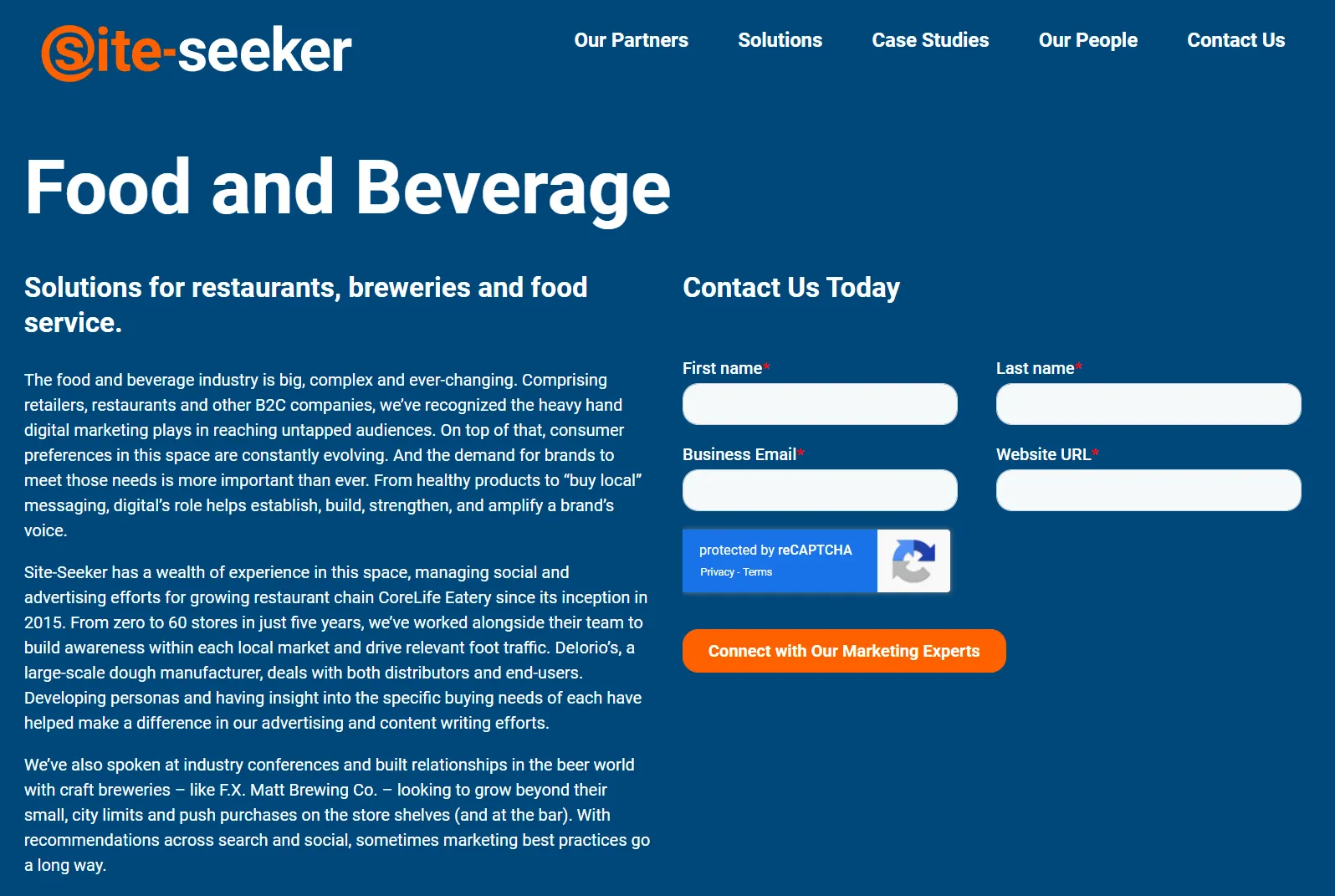
Site-Seeker has run digital marketing for food and beverage brands since 2003. For CoreLife Eatery, the team supported growth from a single location to 60 locations in five years, handling the social and advertising work behind each opening.
- Best for: a growing chain that needs one partner across the full expansion curve, from single location to multi-unit
- QSR evidence: CoreLife Eatery, DeIorio's
- Operating scale: single-location startups through multi-location chains and manufacturers
- Reconsider if: you need a single-channel specialist, this team runs SEO, PPC, and social as one combined service
7. KORTX
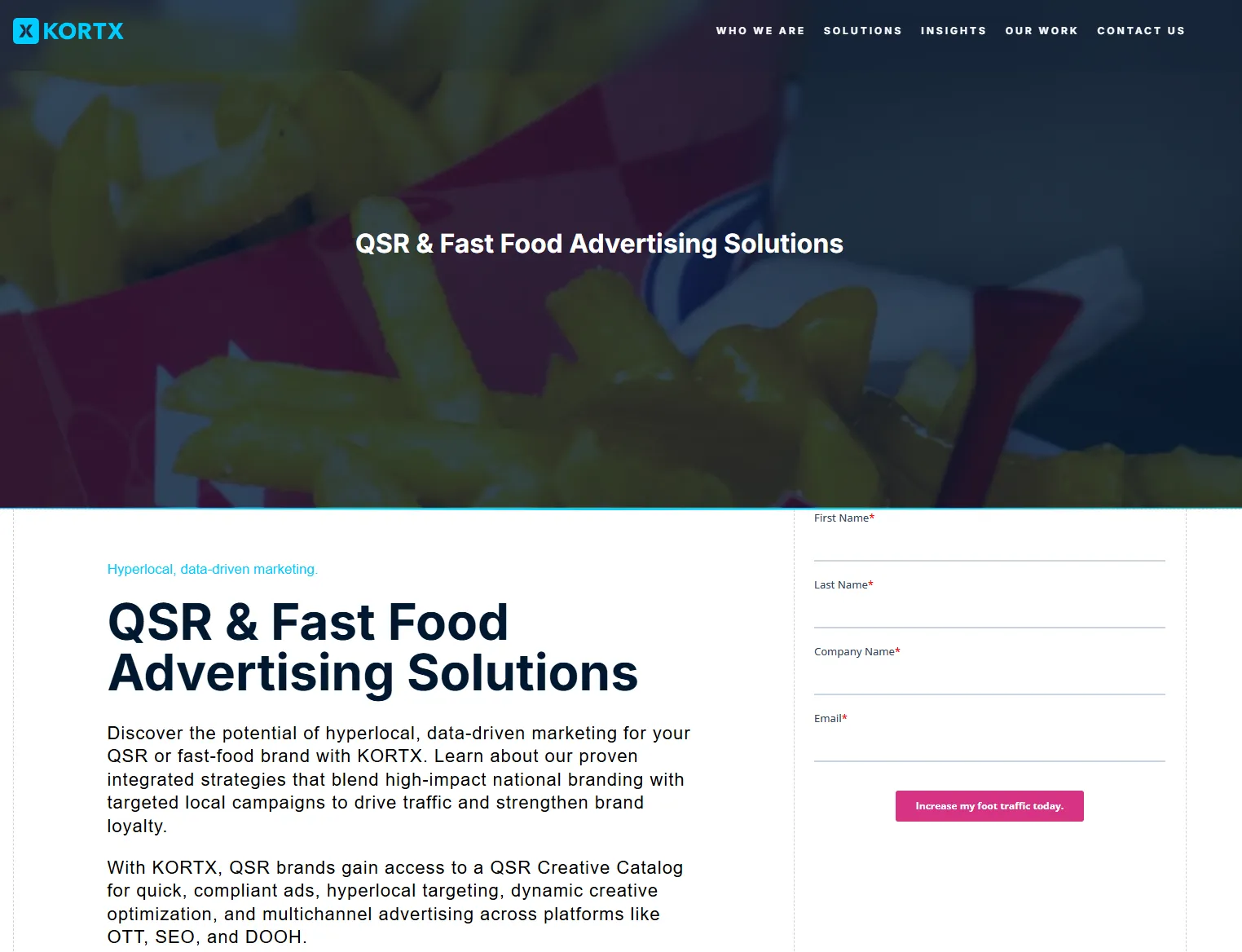
KORTX runs hyperlocal, data-backed advertising for QSR and fast-food brands out of Detroit, using its own Axon Audience Framework and Kampus platform. For one multinational fast-food franchise, a cross-platform breakfast campaign lifted in-store visits 156%, cut cost-per-visit 60%, and returned 32x ROAS.
- Best for: a franchise chain that wants hyperlocal targeting tied to a specific, trackable campaign moment
- Store-traffic levers: OTT, DOOH, SEO, mobile, real-time creative optimization
- Measurement: real-time campaign tracking tied to in-store visits and cost-per-visit
- Technology fit: proprietary audience and campaign-management platforms
8. Delicious PR
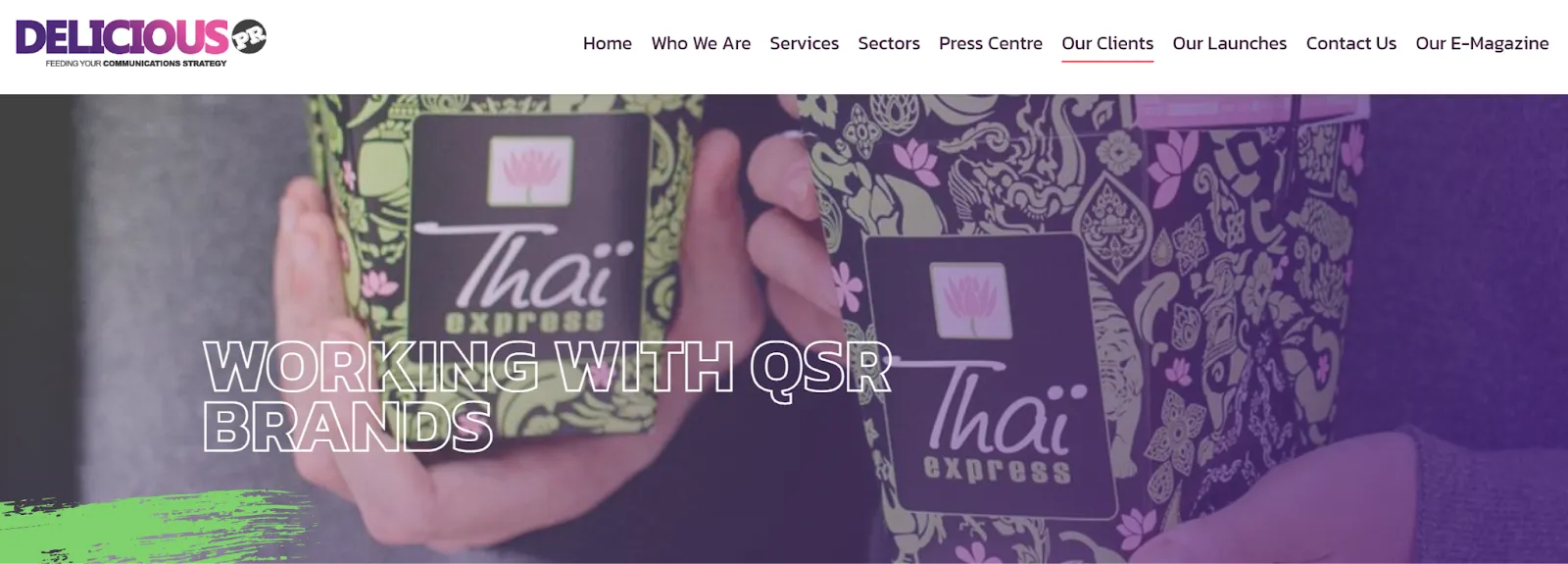
Delicious PR is a Birmingham, UK hospitality PR agency with 18+ years of experience and 100+ brand launches. The team led Tim Hortons' flagship Birmingham launch and Leicester's opening as the UK's largest coffee shop.
- Best for: a QSR or hospitality brand entering or expanding in the UK market specifically
- QSR evidence: Tim Hortons, Wrapchic, Thai Express
- Store-traffic levers: PR, influencer campaigns, event production, crisis response
- Operating scale: UK market only, national campaigns within it
9. Brandience
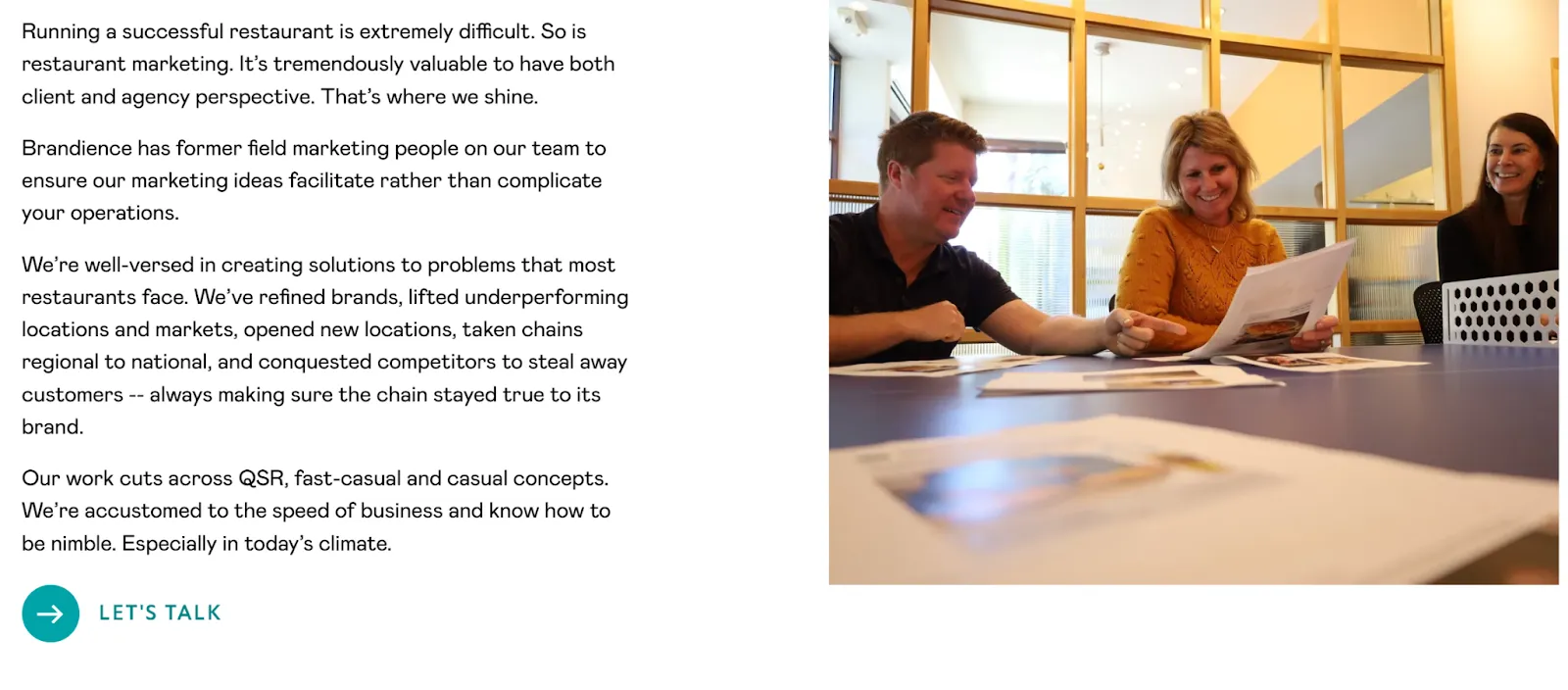
Brandience is a Cincinnati-based agency with 20+ years in restaurant, franchise, and retail marketing. For Papa John's, a "Buy One GIVE One Free" crisis-recovery campaign drove a verified 150% sales lift over a two-week test. For Tropical Smoothie Cafe, the team ran grand openings across a 1,000-plus-location chain at 40% above average sales.
- Best for: a franchise brand managing a reputational crisis or a high-volume grand-opening calendar
- QSR evidence: Papa John's, Tropical Smoothie Cafe, Skyline Chili
- Operating scale: 20+ years, national and local campaigns for multi-unit systems
- Local execution: local-market messaging built on national brand strategy
In-store technology and signage vendors
These three aren't marketing agencies in the same sense as the entries above, they're technology vendors that QSR chains layer in for the physical in-store and drive-thru experience. Worth knowing about, worth budgeting separately.
10. XME Solutions
XME Solutions, part of Exela Technologies, manages digital signage, loyalty automation, and omnichannel campaign execution across roughly 75,000 media channels for QSR and several other industries.
- Best for: a chain that wants one platform spanning campaign planning, production, and analytics
- Technology fit: branded storefronts, omnichannel campaign management, POS-connected reporting
- Reconsider if: you need strategy or creative direction, XME is closer to execution infrastructure than an agency relationship
11. Spectrio
Spectrio delivers in-store marketing technology, digital signage, kiosks, Wi-Fi marketing, and audio and scent marketing, across more than 150,000 locations worldwide.
- Best for: improving the physical in-store or drive-thru experience itself
- Technology fit: digital menu boards, interactive kiosks, AI-driven audience analytics
- Reconsider if: your gap is media, creative, or PR work, this is in-store hardware and content specifically
12. Mood Media
Mood Media designs in-store sensory experiences, digital signage, music, scent, and drive-thru technology, across more than half a million commercial locations in 40+ countries.
- Best for: a chain standardizing the in-store sensory environment across a large, multi-country footprint
- Technology fit: digital menu boards, Mood TV, drive-thru headsets and timers, licensed audio
- Reconsider if: you need campaign strategy or media buying, this is physical-environment infrastructure specifically
How to choose a QSR agency: Match it to your QSR growth constraint
Choose a QSR agency based on the business constraint preventing store-level growth. Diagnose whether the problem is acquisition, repeat visits, owned-channel adoption, local execution, franchise participation, or new-location demand.
- If awareness is high but store traffic is flat: prioritize agencies that connect media exposure to location-level visits or matched-market lift. More reach won't fix an inability to convert local demand.
- If first visits are strong but repeat frequency is weak: look for loyalty, CRM, personalization, and offer-testing capability. Another acquisition-only media partner won't move this number.
- If delivery aggregators own the customer relationship: the agency should support direct ordering, app acquisition, branded search protection, and offers that pull customers toward owned channels.
- If national campaigns underperform in individual markets: prioritize DMA-level planning, local creative adaptation, location-based budget allocation, and reporting that flags which stores need intervention.
- If franchisees resist centralized campaigns: the agency needs a franchise-ready operating model: approved templates, local customization rules, budget controls, and reporting individual operators can actually read.
- If new locations launch without sustained demand: look for a repeatable opening playbook covering pre-launch awareness, local creator activity, geo-targeted media, opening offers, and post-launch retention.
What to ask during a QSR agency pitch
Use the agency pitch to test operating capability, data access, and measurement discipline. Strong answers should explain how the team manages individual locations, supports franchisees, integrates restaurant systems, allocates local budgets, and separates tracked visits from incremental growth.
| Question | What a strong answer sounds like | Red flag |
|---|---|---|
| Can you report by location or market? | Reporting connects media to location-level visits, orders, or sales | One national dashboard with no store breakdown |
| How do you support franchisees? | A defined activation process, local controls, training, and adoption reporting | "We provide templates" |
| Which restaurant systems can you integrate? | Named POS, loyalty, ordering, and analytics integrations | Reliance only on ad-platform data |
| How do you measure incremental visits? | Holdouts, matched markets, or another documented lift method | Every tracked visit treated as incremental |
| How do you launch an LTO across markets? | A central creative system with local offers, inventory, and timing controls | One campaign duplicated across every location |
| Who owns the advertising accounts and data? | The QSR brand holds full administrative ownership | Agency-owned accounts or restricted access |
| How do you allocate budget by location? | Demand, store maturity, capacity, competition, and performance inform allocation | Equal spend across every store |
How to measure whether a QSR campaign actually worked
Connect media exposure to store visits, POS transactions, direct orders, loyalty activity, and same-store sales, then validate the lift through matched markets or holdouts.
Remember:
- A platform-reported visit count on its own doesn't prove anything.
- A store visit isn't automatically an incremental visit.
A customer who saw an ad and then visited the restaurant might have visited anyway, existing customers, nearby commuters, and seasonal demand all produce the same visit without the campaign's help.
Ask specifically how an agency connects media data to data you actually own: POS transactions, loyalty IDs, app activity, direct orders, offer redemptions, location-level sales. Comparing similar markets, locations, or time periods is what separates a real lift estimate from a correlation.
Match the metric to what the campaign was actually designed to change. A new-store launch, an LTO push, and a loyalty reactivation program shouldn't share the same primary KPI.
How Much Does a QSR Marketing Agency Cost?
A QSR marketing agency typically costs $1,500 to $5,000 per month for a focused local or single-channel engagement. Integrated, multi-location programs commonly move into the $5,000 to $20,000+ monthly range, excluding media spend and production.
Treat these as planning ranges; they're not fixed industry averages.
Current pricing guides place paid search and paid social management around $1,500-$5,000 per month and broader multi-channel engagements around $5,000-$20,000 or more. Restaurant-specific guidance similarly notes that agency retainers can reach several thousand dollars monthly, depending on scope (according to Tenet and DishPair).
Location count matters, but pricing is not always calculated by multiplying one retainer by every restaurant. Multi-location QSRs may pay a central strategy and management fee, with additional charges for local campaigns, franchisee support, creative adaptation, or store-level reporting.
QSR Agency Cost by Engagement Level
| Engagement Level | Estimated Monthly Agency Fee | What It Typically Covers | Best Fit |
|---|---|---|---|
| Focused Local Engagement | $1,500–$3,000 | One primary channel, local search or paid media management, basic reporting, and limited creative support | Independent QSRs, single locations, or franchisees testing one acquisition channel |
| Multi-Channel Growth Program | $3,000–$8,000 | Two or three channels, campaign strategy, recurring creative tests, local media, reporting, and light loyalty or ordering support | Established restaurants and small multi-unit operators |
| Regional or Enterprise Program | $8,000–$20,000+ | Central strategy, multiple markets, high-volume creative, location-level reporting, loyalty and ordering integrations, and franchise support | Regional chains, franchise systems, and corporate QSR brands |
What should the first 90 days with a QSR marketing agency look like?
Days 1-30, establish the store-level baseline: audit accounts, tracking, listings, loyalty, and ordering data. Segment stores by market, maturity, format, and performance. Identify data gaps and review the promotional and LTO calendar. Set location-level baseline metrics before any campaign launches.
Days 31-60, launch controlled market tests: select representative pilot markets and test creative, offers, audiences, and channels. Verify POS and ordering reconciliation, and document the franchisee approval and activation process alongside the campaign work itself.
Days 61-90, scale what survives the test: compare pilot markets against control or matched markets. Stop tactics that only improved platform-reported metrics without moving store-level numbers. Expand what worked to comparable locations and finalize the reporting and budget-allocation framework for the next quarter.
Conclusion: build your shortlist around the growth goal
- For net-new store traffic: prioritize geo-targeted acquisition and incrementality measurement.
- For repeat visits: prioritize loyalty, CRM, offers, and first-party personalization.
- For direct ordering: prioritize app acquisition, branded search, and aggregator conversion.
- For franchise systems: prioritize local activation, adoption tracking, and location-level reporting.
- For new-store launches: prioritize a repeatable market-entry playbook and post-launch retention.
- For national QSR brands: prioritize centralized measurement with controlled local flexibility.
Pick the constraint that actually matches your numbers right now. The agency with the flashiest case study isn't automatically the right fit.
Book a call if you want a second opinion on where yours sits.
Frequently asked questions
Can one QSR marketing agency run both corporate-owned and franchised locations?
Yes, most full-service QSR agencies run both under one program, with national creative and media plus local execution layered on top. Confirm whether co-op spend gets reported separately per franchisee, a single blended report satisfies neither side.
Who controls national campaign decisions, and what can individual locations customize?
The agreement should name who owns positioning, channel strategy, creative standards, and measurement at the national level, and separately spell out what franchisees can change locally: offers, budgets, images, copy, targeting radius, and timing.
How do QSR marketing agencies report co-op fund spend to franchisees?
Standards vary widely. Some agencies provide per-franchisee dashboards tied to local spend and results; others fold co-op reporting into the same summary as the corporate program. Ask for a sample report before signing if this matters to your system.
Do QSR marketing agencies need access to our POS, ordering platform, or delivery aggregator accounts?
For attribution work, yes, at least read access. Measuring foot-traffic and sales lift depends on tying ad exposure to POS or ordering data.
Will a QSR marketing agency work with a competing chain at the same time?
Ask directly, category exclusivity isn't standard across this space. Some specialists limit themselves to one account per sub-category, others run competing accounts with separate teams.
Who owns the creative a QSR marketing agency makes for us?
Spell this out in the contract. Confirm specifically whether content made for one campaign, especially UGC or influencer content, can be reused across every location and by individual franchisees.
Should we hire one integrated agency, a roster of specialists, or a lead-agency hybrid?
One integrated agency works best when internal coordination is limited and you want a single partner across creative, media, local execution, and franchise support. A roster of specialists works when your team can coordinate strategy and measurement across partners. A lead-agency hybrid puts one partner in charge of planning and measurement while specialists handle individual channels or markets.
What's the typical contract length for a QSR marketing agency retainer?
Most run three to six months at minimum, with many agencies preferring a full year to justify the ramp-up on POS integration and local-market setup. A shorter initial pilot is a reasonable ask.