.svg)
.svg)
.svg)
.svg)


.svg)


Most online "top agency" lists are padded to hit a round number and rarely acknowledge that every agency has real weaknesses. This one tries to be shorter and more honest.
The fourteen entries below cover the large creative networks you already know, a handful of strong independents, and three specialists. Each covers what the agency actually does day to day, who it suits, and where it falls short.
Quick pick by need
- Consumer brand work at scale: Wieden+Kennedy, Droga5, BBDO, 72andSunny
- Category-defining US independent creative: Anomaly, Goodby Silverstein & Partners, The Martin Agency
- Global integrated network: Ogilvy, Havas
- UK and European challenger work: VCCP
- US multi-office digital and brand: AMP Agency
- Creator-led paid social: inBeat
- US franchise or multi-unit restaurant marketing: Brandience, ARSNL Media
The List
1. Wieden+Kennedy
Est. 1982 · Portland, OR · Independent
An independent creative agency based in Portland, Oregon. W+K has held the Nike account since 1982, which is unusual at that scale. Recent work that broke beyond the industry includes long-form spots for Old Spice, McDonald's, and Ford.
Suits consumer brands with real budget that want a defining creative platform rather than quick-turn performance creative. The tradeoff is equally clear. W+K is expensive, the process is slower than most clients expect, and the past few years have seen the shop lose some of the cultural edge it had in the 2000s and 2010s.
Address: 224 NW 13th Ave, Portland, OR 97209. Offices in New York, London, Amsterdam, Tokyo, Shanghai, Delhi, São Paulo.
Notable clients: Nike, Old Spice, Ford, McDonald's, Coca-Cola, Bud Light.
Core services: creative, brand strategy, production, media planning.
2. Droga5
Est. 2006 · New York, NY · Part of Accenture Song
Part of Accenture Song since the 2019 acquisition. Founder David Droga has since moved into a broader role at Accenture, which has visibly changed the agency's operating rhythm. Recent high-profile work includes OpenAI's first Super Bowl spot. Less flattering context: a 4 percent layoff in the New York office in late 2024, and notable senior departures over the past two years.
The real pitch is Accenture-adjacency. For enterprise clients running a brand refresh alongside a digital or technology transformation, having the creative team inside the consulting firm is genuinely useful. For a brand that only wants a campaign, the surrounding machinery is probably overkill.
Address: 120 Wall Street, 11th Floor, New York, NY 10005. Offices in London, Dublin, Tokyo, São Paulo, Australia, New Zealand.
Notable clients: Amazon, JPMorgan Chase, Meta, Hershey, LVMH, Maserati, The New York Times.
Core services: creative, brand strategy, experience innovation, production, communications strategy.
3. Ogilvy
Est. 1948 · New York, NY · WPP Network
WPP's flagship creative network, with offices in roughly 90 countries. Ogilvy currently ranks first on WARC's global network ranking for creative effectiveness, which weighs business outcomes against awards. The breadth of capability across advertising, PR, experience, health, and consulting is genuinely useful for multinational clients that need coordinated output.
The tradeoff is the usual holding-company one. Expect many people on calls, longer timelines than a boutique, and account leadership that may change between the pitch and the live work. Best for Fortune 500 brands that need consistent output across many markets and are willing to pay for that coordination.
Address: 3 World Trade Center, 175 Greenwich Street, New York, NY 10007.
Notable clients: IBM, Coca-Cola, Unilever, American Express, Dove, Nestlé.
Core services: advertising, brand strategy, PR and influence, digital transformation, experience design, health marketing, consulting.
4. BBDO
Est. 1928 · New York, NY · Omnicom Network
Omnicom's flagship creative network, and now the home of FCB following the 2025 Omnicom-IPG merger. BBDO has been at or near the top of the Cannes Lions Network of the Year rankings for over a decade. In Super Bowl 60 it produced six spots, more than any other agency.
The strengths are traditional craft at scale (TV, film, platform campaigns) and depth across most consumer categories. The weakness is the reverse. BBDO is slower on the social-native and performance-creative end of the market than younger shops. If the brief is a 60-second brand film, it belongs on the shortlist. If the brief is running 40 UGC variants a week, it does not.
Address: 1285 Avenue of the Americas, New York, NY 10019.
Notable clients: Pepsi, Mars, Visa, Ford, AT&T, Guinness, Bayer.
Core services: creative, brand strategy, integrated campaigns, production, content.
5. 72andSunny
Est. 2004 · Los Angeles, CA · Stagwell
Founded in 2004 by three former Wieden+Kennedy Amsterdam leaders. Now part of Stagwell. 72andSunny is credited with Samsung's "Apple Fanboys" work in 2012, which ran ahead of Samsung overtaking Apple in phone shipments, and with the NFL's 100th-anniversary campaigns.
The work tends to sit in the culture and entertainment zone: Activision Call of Duty, Paramount+, the NFL. Good for brands that want campaigns with genuine entertainment value, not just advertising literacy. Worth noting that the agency has faced creative-appropriation complaints over the years. Strong work, but the shop is not flawless.
Address: 6300 Arizona Circle, Los Angeles, CA 90045. Offices in New York, Amsterdam, Sydney.
Notable clients: Samsung, Google, Activision Call of Duty, United Airlines, Etsy, Indeed, Paramount+, NFL.
Core services: creative, brand design, production, social, communications planning.
6. Anomaly
Est. 2004 · New York, NY · Independent
A New York-based independent founded in 2004, with offices in Los Angeles, Toronto, London, Berlin, and Shanghai. Roughly 600 staff globally. Named Adweek's 2022 US Agency of the Year and Ad Age's 2017 Agency of the Year.
The distinguishing trait is a flat operating model (single global P&L, no office-level politics) and a willingness to build products and IP as well as campaigns. Recent Super Bowl work for Liquid I.V., Kinder Bueno, and Grubhub drew solid reviews. Limitation: the "new model" positioning works better when clients actually want a non-traditional relationship. Brands looking for a standard agency-of-record rhythm sometimes find the approach hard to procure through.
Address: 536 Broadway, Floor 11, New York, NY 10012.
Notable clients: AB InBev, Diageo, Google, Lululemon, Visa, Amazon, LVMH, Starbucks, Chevrolet.
Core services: creative, brand strategy, product and IP development, content, communications planning.
7. Goodby Silverstein & Partners
Est. 1983 · San Francisco, CA · Omnicom Boutique
San Francisco independent, founded 1983, owned by Omnicom since 1992 but still operated under the founders' original name and culture. Best known for the "Got Milk?" campaign and a long run of sharp brand work for BMW, Liberty Mutual, PepsiCo, Cheetos, Doritos, and Comcast. Named Advertising Age's Agency of the Decade for the 2000s.
The San Francisco office is the only office, which matters. Work moves through one creative bench rather than being handed between cities. The limitation is reach. GSP does not have the international spread of the big networks, so multinational clients typically pair it with other agencies for non-US markets.
Address: 720 California Street, San Francisco, CA 94108.
Notable clients: BMW, Liberty Mutual, PepsiCo, Doritos, Cheetos, Comcast, Adobe.
Core services: creative, brand strategy, research and analytics, design, production, media and communication strategy.
8. The Martin Agency
Est. 1965 · Richmond, VA · Omnicom Boutique
A Richmond, Virginia agency, arguably the only ad agency where the single best-known piece of IP (the Geico gecko) is more famous than the shop itself. Named Ad Age's 2020 Agency of the Year. Work outside Geico includes DoorDash, UPS, Oreo, and Ritz. Following the 2025 Omnicom-IPG merger, Martin is now one of Omnicom's twelve creative boutiques rather than an IPG agency.
A good option for brands that want long-form characters and brand platforms with staying power, the kind of work that runs for years rather than quarters. The Richmond location keeps overhead lower than New York or LA, which shows up in more accessible rates at the mid-market end. The tradeoff: clients that want a daily physical presence in New York may find the commute inconvenient.
Address: One Shockoe Plaza, Richmond, VA 23219.
Notable clients: Geico, DoorDash, UPS, Oreo, Ritz, Solo Stove.
Core services: creative, brand strategy, integrated campaigns, media planning, PR.
9. Havas
Est. 1835 · Puteaux, France · Publicly Traded
French-owned network, publicly traded on Euronext Amsterdam since its 2024 spinoff from Vivendi. Havas operates an integrated "Village" model in most major cities, where creative, media, health, and PR teams share a building. That makes coordination across disciplines easier than in networks where each capability is a separate agency under the same holding company.
The integrated pitch is real. The caveat is that Havas is not usually the first-pick network for a brand looking specifically for best-in-class creative. Clients tend to choose Havas for breadth and reliability. Worth noting: in 2024, four Havas agencies lost their B Corp certification following work for Shell. Readers should weigh that against their own position before engaging.
Address: 29-30 quai de Dion-Bouton, 92800 Puteaux, France. US flagship at 200 Madison Avenue, New York, NY 10016.
Notable clients: Reckitt, Adidas, Hyundai, Sanofi.
Core services: creative, media, brand consultancy, health comms, PR, production.
10. VCCP
Est. 2002 · London, UK · Independent Network
London-based challenger network. Built its reputation on Compare the Market's meerkats, Cadbury's "Mum's Birthday," and the long-running O2 brand platform. Strong on work that feels like UK advertising at its best. Tight craft, humour that lands, media planning that respects the audience.
The US office exists but is much smaller than the London operation, so VCCP is stronger for UK and European briefs than for US-led multinational ones. A sensible pick when a mid-size independent with genuine creative teeth is the answer.
Address: 66 Berners Street, London W1T 3NL, UK. Offices in Madrid, Prague, Stoke-on-Trent, New York, San Francisco, Singapore, Shanghai.
Notable clients: Virgin Media O2, easyJet, Cadbury, Compare the Market, Domino's, Canon, White Claw.
Core services: advertising, brand strategy, customer engagement, digital transformation, media planning and buying.
11. AMP Agency
Est. 1995 · Boston, MA · Independent
A US full-service agency with five offices, founded in Boston in 1995. The client list skews larger than most independents (LinkedIn, Maybelline, Amazon, Hasbro) without being a holdco network. AMP describes its work as "brand ecosystems," which is agency language for integrated programmes across brand, digital, and experience.
A solid choice for US retail, CPG, and franchise brands that want one partner covering brand, media, and in-store, and would rather not retain a holdco. Not the first pick for pure-play performance marketing or for work requiring coordination across 20+ markets.
Address: 3 Center Plaza, Suite 505, Boston, MA 02108. Offices in New York, Seattle, Los Angeles, Austin.
Notable clients: LinkedIn, Maybelline, Amazon, Hasbro, Maruchan, Mission Foods, Primrose Schools.
Core services: strategy, creative, experience design and development, analytics, social, retail activation.
12. inBeat
Est. 2018 · New York, NY · Publishing Brand
inBeat is the agency publishing this list. It is not a full-service advertising agency. The work is narrower: creator-led UGC advertising, paid social, and micro and nano influencer campaigns. Most clients are DTC, apps, or CPG brands dealing with creative fatigue on Meta and TikTok.
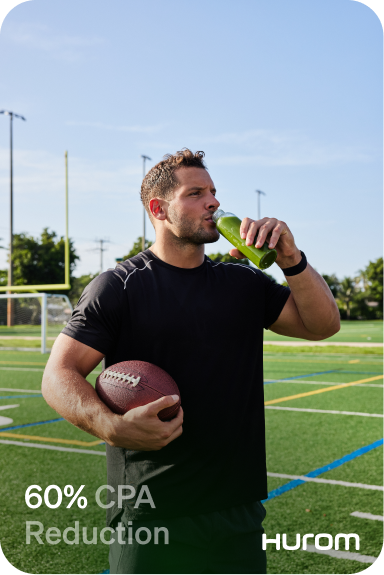
One verifiable case: for Hurom, the team reduced CAC by 36 percent over 12 months and lifted ROAS 2.5x after shifting the ad mix from studio creative to UGC-first variants. The scope limitation is the same as the specialism. If the problem is a brand platform, a national TV campaign, or B2B demand generation, look at any of the other thirteen agencies on this list. inBeat is relevant if the specific problem is volume creative for paid social.
Address: 90 Broad Street, Floor 2, New York, NY 10004. Additional presence in Montreal and Chicago.
Notable clients: Hurom, New Balance, Hopper, Linktree, Nissan.
Core services: paid social (Meta, TikTok, Snapchat), UGC production, micro and nano influencer marketing, creative strategy.
13. Brandience
Est. 2003 · Cincinnati, OH · Independent
A Cincinnati-based agency working exclusively with multi-location brands: restaurant chains, franchise systems, retail, and healthcare. Client work includes Papa Johns, where local-market messaging shifted from discount-led to quality and value, and Tropical Smoothie Cafe, where the agency ran grand openings across a 1,000-plus-location chain at 40 percent above average sales.
Suits US franchise and multi-unit restaurant brands that need one partner balancing national brand consistency with local execution. Not a fit for a single-location business or a brand chasing a creative swing over measurable, per-location performance.
Address: 720 E. Pete Rose Way, Cincinnati, OH.
Notable clients: Papa Johns, Tropical Smoothie Cafe, Kroger, Smithfield Foods.
Core services: franchise and multi-location marketing, local store marketing, paid and traditional media, brand strategy.
Further reading: Franchise systems and restaurant chains carry a different set of problems, co-op funds, local store marketing, grand-opening playbooks, that a generalist creative shop usually treats as an afterthought. For the fuller picture of what that involves, see our QSR marketing services breakdown.
14. ARSNL Media
Miami Lakes, FL · Independent
A Miami Lakes agency built specifically around QSR and multi-unit restaurant brands, corporate-owned, franchised, and hybrid alike. Client work includes Bubbakoo's (140-plus locations), BurgerFi (120-plus), and Smokey Bones (40-plus), where an ARSNL media program broke a multi-year negative same-store-sales trend.
Suits US restaurant chains that want one agency of record running strategy, media, creative, social, and reporting as an ongoing program. A grand-opening package or paid-media audit is also available as a standalone project. ARSNL's other verticals, hospitality, spirits, healthcare, run as separate specialisms from its restaurant work.
Address: 15175 NW 67th Ave, Suite 207, Miami Lakes, FL 33014.
Notable clients: Bubbakoo's, BurgerFi, Smokey Bones, Wing Experience, Burger Experience.
Core services: paid media planning and buying, creative and social content, grand-opening campaign systems, restaurant-specific performance reporting.
Frequently asked
How does a holding-company network compare to an independent agency in practice?
A holding-company network gives consistency across markets and depth of specialist capability (PR, health, experience, production, consulting under one roof). The tradeoff is process weight. Expect more people on calls, layered approvals, and account leadership that may change during the engagement. Senior partner time on your business is rare once the relationship stabilises.
An independent usually means the founder-creatives still touch the work, fewer layers between brief and output, and faster decisions. The tradeoff is reach. If the campaign needs to land across fifteen countries at once, an independent either partners out non-domestic work or runs thinner in those markets.
A useful middle ground: holdco-owned independents that still operate under their original name and founder culture. They benefit from holding-company scale and back-office support while keeping the creative bench that made them worth acquiring.
How are agency fees actually structured?
Four common structures, usually mixed:
- Retainer. Monthly fee against committed resourcing. Most common for ongoing brand and media work. Mid-size integrated retainers typically run USD 25,000 to 100,000 per month. Large network retainers start at USD 100,000 and climb.
- Project fee. One-off price for a defined deliverable. Ranges from USD 50,000 for a small campaign to several million for a platform launch with production.
- Value-based or outcome-based. Fees tied to business outcomes like revenue lift or brand recall. More agencies talk about this than actually do it. Harder to structure fairly when the brand controls factors outside agency influence.
- Media commission. Older model, still used on heavy media engagements. Roughly 3 to 7 percent of spend, declining as direct-to-platform buying grows.
Most large relationships blend retainer plus project plus a small performance component. Fee transparency has improved, but hourly rates and margins are still rarely disclosed.
How long should a proper pitch process take?
Eight to sixteen weeks from first conversation to signed contract is realistic for an integrated retainer. Rough phases: credentials review, RFP responses, chemistry meetings with the named team, final pitch against a real brief, negotiation and contract.
Clients who compress this to four weeks usually end up choosing on pitch-deck polish rather than how the team actually works. A clearer brief, fewer agencies invited (three to five, not ten), and an honest timeline produce better matches than a longer list rushed through.
One lead agency, or a roster of specialists?
A single lead agency (usually a full-service creative network) gives one set of eyes across brand, media, and execution. Fewer briefs, less interpretation loss, one set of quarterly reviews. Good fit when brand consistency matters more than channel optimisation.
A roster (for example a creative lead, a media agency, a performance specialist, and a social creator shop) gives best-in-class depth in each area. Good fit when one channel dominates the P&L or when a business is rebuilding capabilities category by category. The cost is coordination: more meetings, more briefs, more risk of the story fragmenting.
Most large brands run a hybrid. One lead agency owns the brand platform. Specialists handle narrow problems (performance creative, influencer, B2B demand). Someone inside the brand organisation owns the integration rather than delegating it to an agency.
How does the recent holding-company consolidation affect my shortlist?
The late-2025 merger between two of the largest holding groups created the biggest agency company in the industry, with combined revenue around USD 25 billion. Several long-established network brands are being retired through 2026 and folded into the surviving creative networks. Roughly 4,000 roles were cut in the first wave, on top of cuts already announced earlier in 2025.
Practical implications if you are shortlisting right now:
- If an agency you are considering lost its parent brand in the consolidation, ask for the new reporting lines and the named team. Do not assume the team you met last year is still intact.
- If you are a mid-size client (media spend below roughly USD 100 million) inside a newly consolidated network, consider whether a smaller independent would give you senior attention you may no longer get.
- Expect some client-roster reshuffling through 2026 as conflicts surface. Two competing brands inside the same holding company typically means one moves agencies.
Picking an agency is less about finding the best one and more about finding the one whose operating model matches how your team already works. Brief three. Use the same brief. Compare how each one interprets it. That single test reveals more than any awards page.
What if my business is too small for the agencies on this list?
Most of the agencies above are built for real budgets: retainers in the tens of thousands of dollars a month, or project fees starting around USD 50,000. If that's outside your range, a smaller, category-specific specialist is usually a better match than trying to squeeze into the bottom tier of a shop built for enterprise clients. Look for an agency whose entire pitch is your specific channel or vertical, a single-platform paid social shop, a local-market specialist, instead of a generalist offering a discounted starter package.
How is an advertising agency different from a marketing agency?
In practice the line has blurred, but the traditional distinction still holds as a rule of thumb. An advertising agency is built around paid media and campaign creative, the ads themselves. A marketing agency usually covers a wider mix: SEO, email, content, marketing strategy, sometimes paid media too, without necessarily having deep creative production capability. Most of the agencies on this list would describe themselves as full-service, meaning they blend both, but ad production and media are still the core strength.